
This guide has all the information you need about liveaboard diving in Komodo National Park, including how long the trips last, what to expect, and helpful recommendations for first-time liveaboard divers. A Komodo liveaboard gives you access to one of the most biodiverse underwater habitats in the world. You can chase manta rays at cleaning stations or float past grey reef sharks at secluded pinnacles.
Komodo National Park, which became a UNESCO World Heritage Site in 1991, has more than 1,700 square kilometers of islands, reefs, and open water. Day visits from Labuan Bajo aren't practicable for serious exploration because the top diving sites, like Batu Bolong, Castle Rock, and Manta Alley, are so far apart. A liveaboard puts you in the right place at the right time, so you wake up anchored near the dive site instead of spending hours getting there.
- Daily schedule: Most Komodo liveaboards have a defined schedule for diving in Komodo: wake up at sunrise, dive 3–4 times a day (usually includes at least one night dive), eat between dives, lounge on deck at sunset, and get full briefings in the air-conditioned salon before each site.
- Land excursions: Almost all itineraries offer at least one chance to see Komodo dragons on Rinca Island or Komodo Island, as well as short hikes to overlooks like Padar Island when the weather and park rules allow.
- Diving variety: You can expect a mix of high-adrenaline drift dives through channels with strong currents, relaxing reef explorations, devoted trips to manta cleaning stations, and macro "critter hunts" on black sand slopes for nudibranchs and pygmy seahorses.
- Flexible itineraries: Tides, currents, and surface conditions determine the routes. Every day, experienced cruise directors make small changes to the schedule for safety and the best experiences, therefore the actual order of dives may be different from what is shown on the sample itinerary.
- Number of dives: A 6-night liveaboard vacation usually has 18 to 22 dives, which is about three times as much time at the bottom as day trips, which only have two or three dives.
- Crew support: Professional dive guides handle entry, exits, and underwater navigation in Komodo's tough currents. They give briefings that are appropriate for divers of all skill levels, from advanced recreational divers to technical hobbyists.

Komodo Underwater: Conditions & Marine Life
Komodo is where the Indian and Pacific Oceans meet. The waters there are full of nutrients, which makes for a lot of different types of coral and fish. This confluence makes diving in Komodo a world-class experience, but it also means that you need to be careful of changing currents and temperatures.
- Visibility: It ranges from 15 to 25 meters at the center places and goes up to 30 meters or more in the northern areas, like Crystal Rock. Visibility sometimes goes down near plankton blooms, which are the same nutrient surges that bring in mantas and other pelagic animals.
- Water temperatures: The northern areas around Gili Lawa Darat and the nearby islands tend to be milder, between 27 and 29 degrees Celsius. The southern areas, including Manta Alley and Horseshoe Bay, can get as low as 22 to 26 degrees Celsius because of cold upwellings from deeper water.
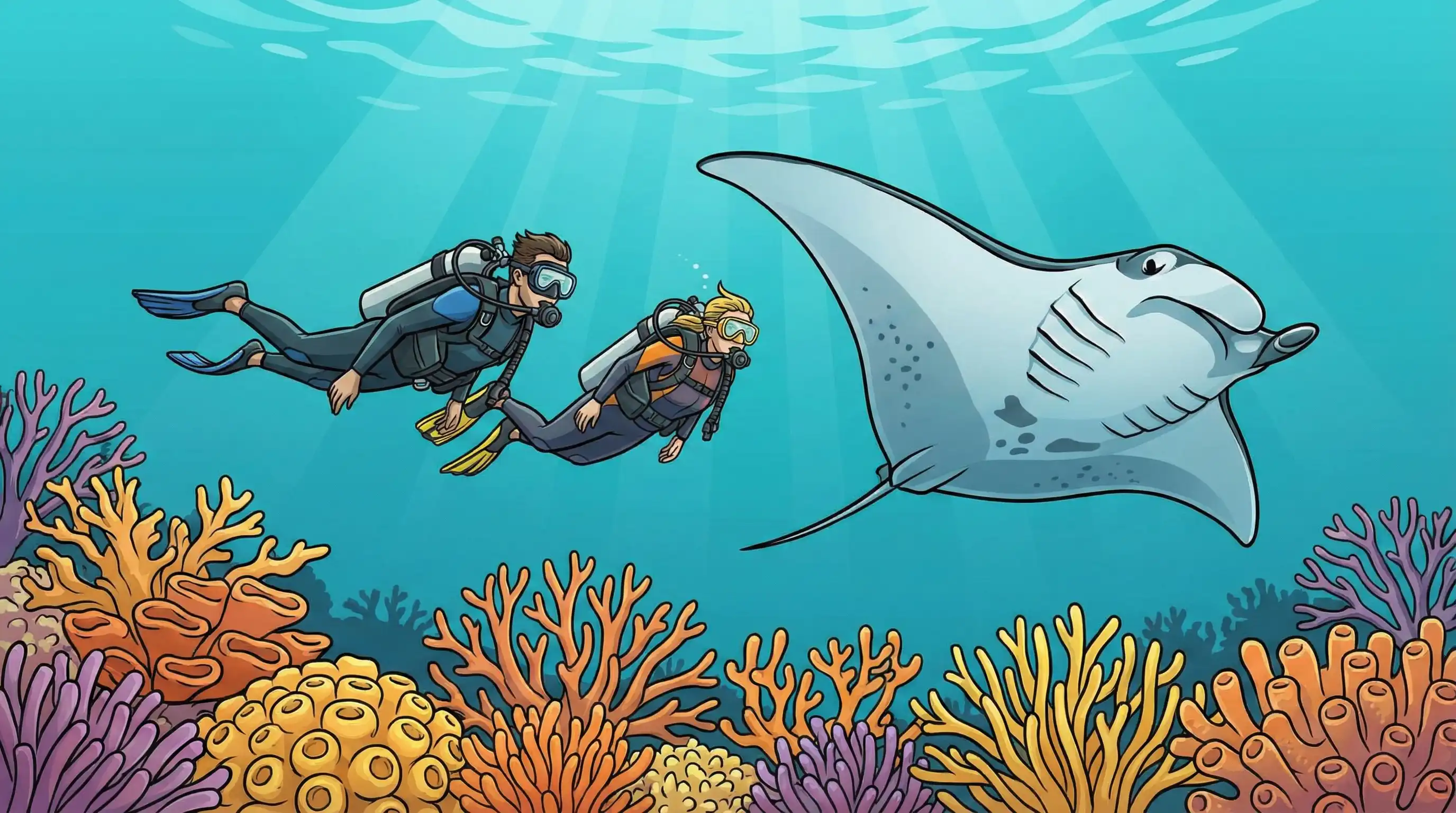
Pelagic encounters: Reef mantas gather at Manta Point and Mawan, and sometimes oceanic mantas show up too. Reef sharks, such as white tip, black tip, and grey reef sharks, swim over the tops of the reefs with schools of trevally, tuna, and barracuda. Mobula rays, eagle rays, and, in rare years, whale sharks and dolphins come to visit throughout certain times of the year.
Komodo has a lot of different marine species, even the small ones. You might see pygmy seahorses hanging on gorgonian fans, flamboyant cuttlefish on sandy slopes, frogfish lurking in sponges, ornate and strong ghost pipefish, and Coleman shrimp sitting on fire urchins. The variety of nudibranchs is as great as that of places that are only for muck diving.
- Current conditions: Strong currents affect every dive. At exposed places, there may be down currents, upwellings, and "washing machine" effects. Skilled guides time dives to hit slack water or controllable flow, but adventurous divers should be ready for anything.
- Underwater photography: When taking pictures, make sure to include both wide-angle sets (for mantas, reefs, and schooling fish) and macro lenses (for animals and soft coral details). Most liveaboards have camera tables, rinse tanks, and charging stations to help dedicated underwater photographers.
Key Komodo Dive Sites on Liveaboard Itineraries
A normal Komodo liveaboard trip lasts 6 to 8 nights and visits 15 to 20 different sites, which are chosen dependent on the weather, currents, and park rules. Every day, captains and cruise directors change the itineraries to make sure everyone is secure and has the best chance of seeing underwater life. When you dive in Komodo, these are the places you are most likely to see:
Komodo Dive Sites in the North
- Crystal Rock and Castle Rock, which are near Gili Lawa, are two seamounts that are known for their schools of fusiliers, giant trevally hunting in the blue, reef sharks patrolling the slopes, and napoleon wrasse cruising the pinnacles. These are some of the best places for advanced drift diving because the currents are strong.
- Shotgun (between Gili Lawa Laut and Gili Lawa Darat): A natural canal where currents push divers through a "rollercoaster" of fish. There are a lot of manta sightings here, and when the conditions are right, the drift can be really exciting.
Central Komodo Sites
- Batu Bolong: A tall coral peak with very healthy reefs, clouds of anthias, green and hawksbill turtles, and reef sharks swimming around it. Because the currents around here are perilous, there are strict rules for getting in and out. Pay close attention to your guide's briefing.
Siaba Besar and Siaba Kecil: These are protected areas that are often utilized for check dives or training. They have sandy areas, turtle sightings, and easy drift dive practice in currents that aren't too strong. - Tatawa Besar is a great place to dive in the middle of Komodo National Park. It is known for its colorful coral gardens and wide range of marine life. This place has stunning underwater terrain with steep cliffs and peaks covered in colorful soft corals and sponges. This makes it a great home for many different kinds of animals.
- Manta Point and Mawan are sandy-bottom cleaning stations where several manta rays get together to have cleaner fish get rid of parasites. Both divers and snorkelers can see these gentle giants from a safe distance.
Komodo Dive Sites in the South
- Manta Alley lies at the far south of Komodo. The waters here are cooler and full of nutrients, and during the right season, there are famed manta gatherings here.
- When divers go to Cannibal Rock, they can expect to see schools of jacks, trevally, and barracuda, as well as grey reef sharks and other reef sharks that patrol the region. The strong currents that are common in southern Komodo make the dive more thrilling, which is why experienced divers love to go there for dynamic drift dives.
Macro and Muck Komodo Dive Sites
- Wainilu (next to Rinca Island): A macro paradise with nudibranchs, frogfish, uncommon crustaceans, and elegant ghost pipefish hidden in the coral and rubble.
- Bima Bay or Sangeang Island (if you have time to visit): Black sand muck diving and volcanic bubble fields where hot springs under the water make strange visual illusions.
Land Attractions
- Komodo Dragons: Guided hikes on Rinca Island or Komodo Island to see the world's biggest lizards in their native habitat. These walks usually happen between dives or as half-day trips.
- Padar Island is a popular climb that leads to a viewpoint with great views of Komodo's famous multi-colored beaches. People often go there during surface intervals.
- Pink Beach is a beautiful beach known for its unusual pink sand. It's a great place to snorkel and rest between dives on Komodo liveaboard vacations.
When the sun goes down, thousands of flying foxes take off from Kalong Island, filling the sky with their huge wings. It's a beautiful natural spectacle. Visitors to the Komodo National Park area should not miss this amazing event.
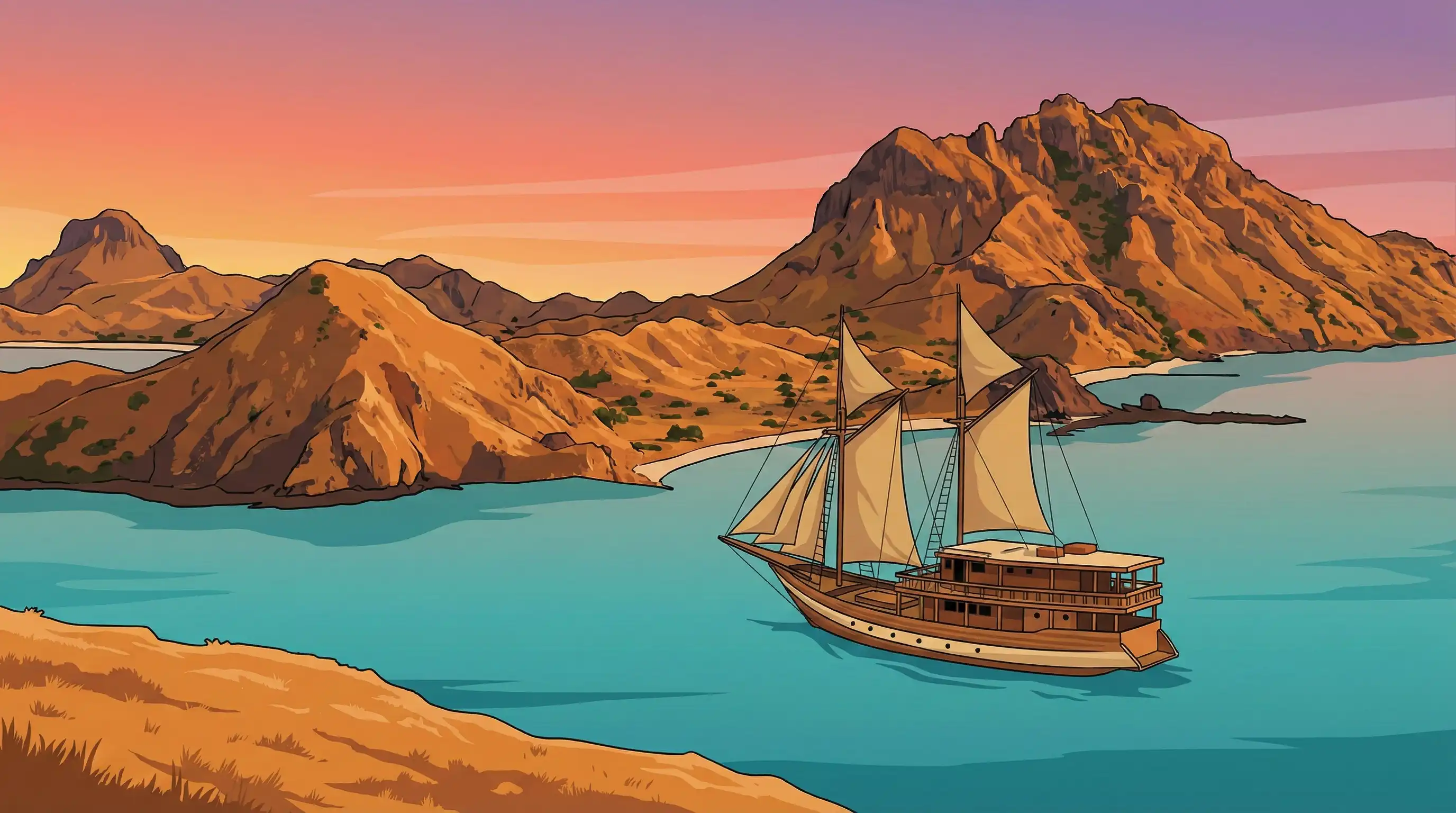
Trip Durations & Typical Komodo Liveaboard Itineraries
Most liveaboard trips to Komodo go between 3 and 10 nights, with 4 to 7 nights being the most popular length for dedicated diving. Your option depends on how much of the park you want to see and how many dives you want to do.
Common Trip Durations
- 3–4 nights: "Short taste" trips that go to the middle and northern parts of Komodo. Perfect for people who want to go on a dive trip and a bigger vacation in Bali or Flores. You should expect to go on 10 to 14 dives and see places like Castle Rock and Manta Point.
- 6–7 nights: The standard route that takes you through the northern, central, and some southern highlights. Around 18 to 22 dives, with time to go on land trips to visit Komodo dragons and Padar Island.
- 8–10 nights: Longer trips that go to more isolated places, including extra macro dives at places like Wainilu or Bima Bay, and let you go on more land excursions without having to push the timetable.
Sample 6–7 Night Structure
This is how a typical liveaboard voyage might go:
- Day 1: Arrive in Labuan Bajo, board the ship, get a safety briefing, and do a check dive near Sebayur or Siaba Besar.
- Days 2 and 3: Exploring the north surrounding Gili Lawa—Castle Rock, Crystal Rock, and Shotgun, with probable night dives
- Days 4–5: When the weather is good, head south toward Manta Alley and Horseshoe Bay, stopping at central pinnacles along the way.
- Day 6: Walk with dragons on Rinca or Komodo Island, see the scenery from Padar Island, and do your last dives near Batu Bolong. Day 7: Do your last dive in the morning and then get off the boat in Labuan Bajo.
Operator-Specific Notes
- Komodo Sea Dragon lives in Komodo National Park Komodo all year, thus itineraries can be adjusted based on the season. For example, during the dry season when the seas are calmer, more southern sites can be visited, and when conditions call for it, more protected northern routes can be taken.
- King Neptune is part of Komodo Resort & Neptune Liveaboards, and they often provide excursions that start or conclude with optional stays at Komodo Resort on Sebayur Island. This makes it easy to switch between resort and liveaboard experiences. King Neptune also works in other parts of Indonesia where people dive, like Raja Ampat, Banda Sea, Wakatobi, and more.
Important Note: All routes that have been released are just "samples." The tides, weather, and rules of the park determine the actual diving sequences. Every day, captains and cruise directors change things around for safety and to keep crowds away from popular places.
Featured Komodo Liveaboards: Komodo Sea Dragon & King Neptune
There are a lot of boats that perform liveaboard trips in Komodo, but this guide concentrates on two that are very dedicated to Komodo National Park: Komodo Sea Dragon and King Neptune. Both offer great diving experiences, but they have different ways of doing things.
Komodo Sea Dragon
The Komodo Sea Dragon only works in Komodo all year long. It doesn't move to Raja Ampat or the Banda Sea during the off-season. This year-round concentration means that the team has an unrivaled level of local knowledge. They know Komodo's currents, seasonal patterns, and secret locations inside and out all year long.
- Maldivian-style dhoni diving: The Komodo Sea Dragon is the only liveaboard in Indonesia that uses a Maldivian-style dhoni (doni) as a specialized dive tender. The main "mother ship" stays still while the fast dhoni takes divers to other dive spots, keeping living and diving areas separate.
- Less noise in the cabins: The engines, compressors, and tank fills all place on the dhoni, which is separate from the main hull. This makes it quieter and less shaky for guests who are sleeping between dives, which is a big comfort benefit for vacations that last more than one night.
- Small diving groups: Because there are just a few guests, each one gets more personal attention, there are fewer people at the locations, and the group can change its dive plans dependent on how experienced the members are.
- Dedicated dive deck: The dhoni has a large room for storing gear, a sheltered area, and easy entry and exit ports that work well in Komodo's changing weather.
King Neptune
The "crown jewel" of Komodo Resort and Neptune Liveaboards is the King Neptune, which is their flagship ship. It was made to go perfectly with a stay at a resort and gives a complete way to dive in Komodo and Indonesia.
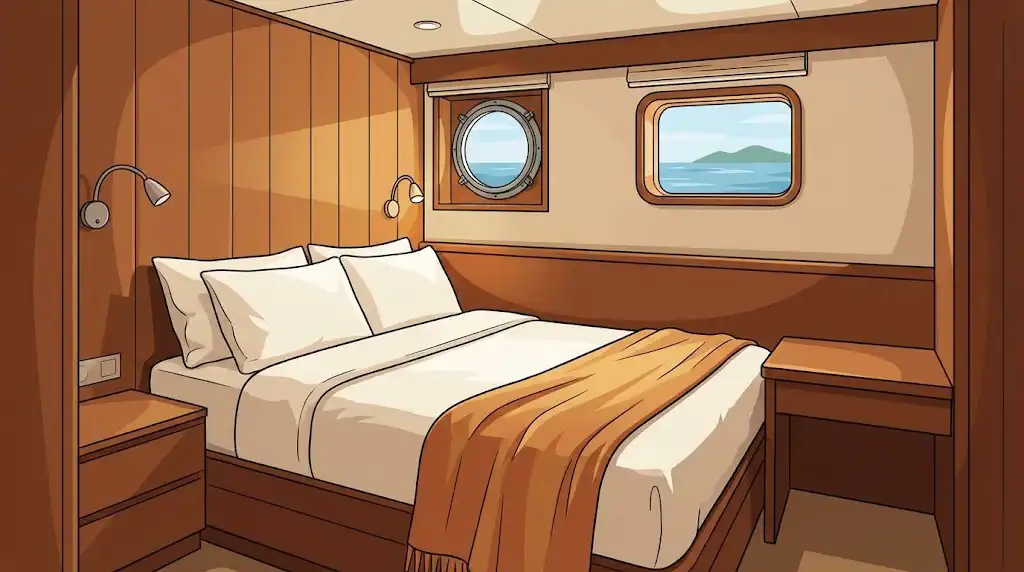
- Comfort features: Ensuite accommodations with air conditioning, a climate-controlled lounge, an outdoor dining area, and nitrox availability make it easy to dive for long periods of time.
- Resort integration: A lot of divers choose to split their vacation between a few nights at Komodo Resort on Sebayur Island (for house reef dives and day outings) and a multi-night King Neptune cruise into the more remote regions of the national park.
- King Neptune is a good place for dive groups of all skill levels to tackle Komodo's tough currents since it has low diver-to-guide ratios, thorough briefings, and a focus on safety.
Best Time to Dive Komodo by Liveaboard
Komodo is a year-round destination since boats run all year, but the weather and what you see change a lot according on the season. Knowing these patterns will help you pick the best time for your next vacation.
April–August (Core Dry Season)
- Prime liveaboard season for most liveaboards and many divers: generally calmer seas in the north, good visibility, and frequent manta encounters at central and southern sites
- July–August can bring cooler thermoclines and nutrient surges that improve big-fish action but may require thicker exposure suits (5mm + hooded vest)
- Peak season means more boats at popular sites—booking well in advance is recommended
September–October
- Often combines excellent visibility with slightly warmer water temperatures than mid-summer
- Fewer boats than peak July–August, offering more relaxed conditions at popular sites
- Currents remain strong; reef conditions are typically excellent with mixed pelagics and macro opportunities
- Transitional weather can bring occasional afternoon showers
November–February (Rainy Season)
- Wetter months with potential wind and swell affecting itinerary flexibility
- Some operators reduce schedules or focus on more sheltered northern and central areas
- Trips still run successfully, but expect possible rain, choppier crossings, and occasional site substitutions
- First divers to Komodo might find these conditions more challenging; experienced divers may enjoy quieter sites
March (Transition Month)
- Operators ramp up schedules as the rainy season fades
- Variable conditions but the chance for less crowded sites before the main season begins
- Good value period for flexible travelers comfortable with some weather uncertainty
Helpful Tips: Talk to the boat you want to charter about your priorities. Divers who want to see mantas might like to go from April to June, while those who want to witness large currents and pelagic action would want to go from July to September. April and May are more likely to have calm seas and circumstances that are good for beginners.
Skill Level, Safety & First-Time Liveaboard Tips
Komodo is known for having strong currents, thus it's best for certified divers who are already competent, not complete beginners. Knowing what you need to do and getting ready for it makes diving safer and more fun.
Skill Level Requirements
- Certification: Most operators want you to have at least 30 to 50 logged dives and Advanced Open Water (or an equivalent) before you try exposed sites like Castle Rock or Batu Bolong.
- Essential skills: Being able to handle negative entrances, rapid descents, controlling buoyancy in current, and deploying an SMB (surface marker buoy) are all very important.
- Drift diving experience: It's highly advised that you have done drift diving before; at places like The Cauldron, the currents can reach speeds of over 4 knots. Less experienced divers can still have fun in Komodo by asking for easier profiles or skipping dives that are too hard for them.
Safety Practices
- Equipment essentials: Always dive with a computer, carry a DSMB and whistle, and listen carefully to briefings covering current direction, exit points, and potential down currents
- Communication: Signal problems early. Guides can adjust plans mid-dive if divers are struggling
- Air management: Komodo’s currents demand efficient air consumption; work on breathing techniques before your trip
- Buddy system: Stay close to your buddy and guide; separation in current can quickly become dangerous
- Surface support: Boats maintain VHF radios, GPS tracking, dinghies for quick pickups, and DAN-trained staff for emergencies
Etiquette and Group Dynamics
- Punctuality: Be on time for briefings and dive calls—the schedule depends on tides, and delays affect everyone
- Photography etiquette: Don’t crowd mantas or block other divers for the shot; maintain respectful distances from marine life and Komodo dragons during land excursions (5-meter minimum from dragons)
- Communication with guides: Clear, early communication about comfort levels makes Komodo’s challenging dives safer and more enjoyable for everyone
What to Pack for a Komodo Liveaboard
Domestic flights to Labuan Bajo often have 15–20 kg checked baggage limits, so packing smart is essential. Here’s what to bring—and what most boats provide.
Dive Gear
| Item | Notes |
|---|---|
| Exposure suit | 3–5mm full wetsuit for most months; hooded vest or extra layer for cooler southern dives |
| Mask and snorkel | Personal fit matters; bring a backup mask if you have prescription lenses |
| Fins and booties | Booties recommended for rocky entries and zodiac transfers |
| Regulator and BCD | Rentals available but personal gear ensures proper fit and familiarity |
| Dive computer | Essential for managing repetitive profiles over multiple days |
| SMB and whistle | Mandatory safety equipment for Komodo’s currents |
| Reef-safe sunscreen | Protect yourself and the reefs; non-nano zinc formulas preferred |
Photography Gear
- Camera, housing, and strobes (wide-angle for mantas and reefs; macro for critters)
- Spare O-rings and silicone grease
- Desiccant packs for housing
- Multiple memory cards (you’ll shoot more than expected)
- Power adapters for Indonesian sockets (Type C/F, 220V)
Clothing & Personal Items
- Light, quick-dry clothing for between dives
- Warm hoodie or light jacket for windy evenings on deck
- Hat and polarized sunglasses for sun protection
- Reef-safe toiletries (biodegradable soap, shampoo)
- Small first-aid kit and any prescription medications (carry in hand luggage)
- Seasickness medication (Dramamine, Bonine, or prescription scopolamine patches)
Documents & Money
- Passport with at least 6 months validity
- Dive certification cards (physical or digital via app)
- Logbook or digital log
- Dive insurance details (DAN or equivalent)
- Indonesian Rupiah (IDR) in cash for park fees, crew tips, and small purchases
Electronics
- Power strip or multi-USB charger (outlet access may be limited)
- Offline entertainment (books, downloaded shows) for surface intervals
- Noise-isolating earplugs (helpful if generators run at night or early morning)
How to Get to Your Komodo Liveaboard
Most Komodo liveaboards leave from Labuan Bajo on Flores Island. You have to take a domestic airplane to get there; there are no direct international flights to this small gateway town.
Flight Options
- Main gateways: Most travelers connect through Denpasar (Bali) or Jakarta (Java) with daily flights to Labuan Bajo (airport code: LBJ)
- Airlines: Garuda Indonesia, Batik Air, Wings Air, and Lion Air operate routes; schedules and carriers may vary by season
- Timing: Book morning or early afternoon flights to allow buffer time for delays and baggage issues—afternoon weather in Flores can cause disruptions
Arrival in Labuan Bajo
- The airport is approximately 10–15 minutes by car from the harbor
- Taxis and hotel transfers are readily available; most liveaboard operators arrange pickup
- Consider staying at Komodo Resort before your liveaboard if you plan to arrive a few days earlier especially if you need to shake off jet lag.
Embarkation Day
- Typical process: Liveaboard crew or resort staff meet guests at the airport or hotel, transfer to the harbor, and handle luggage loading
- Check-in: Complete registration forms, present dive certifications, and sign liability waivers
- Departure: Boats usually depart mid-afternoon, with a safety briefing and sometimes a short check dive near Sebayur or similar sheltered sites before heading to the first overnight anchorage
Disembarkation & Onward Travel
- No-fly interval: Avoid booking same-day international connections after disembarking; respect 18–24 hour no-fly times after your last dive
- Post-trip stays: Plan at least one night on land after the liveaboard ends.
- Connections to Bali: Afternoon flights back to Denpasar are common, with onward international connections the following day
First-Time Liveaboard Diving Tips for Komodo
Going on your first liveaboard diving trip to Komodo is a wonderful adventure, but it also has its own set of challenges and things to think about. Here are some important things for first-time liveaboard divers to know to get ready and have a great time:
Preparation and Packing
- Gear check: Bring your own well-maintained dive gear if possible, especially your mask, fins, and dive computer. While rental gear is available, personal equipment ensures comfort and familiarity.
- Exposure protection: Water temperatures vary from 19 to 30°C (66 to 86°F). Pack a 3-5mm wetsuit and consider a hooded vest for cooler southern dives.
- Safety essentials: Carry a surface marker buoy (SMB) and whistle for safety in Komodo’s strong currents.
- Seasickness remedies: The waters can be choppy; bring medication like Dramamine or natural alternatives such as Ginger tea to prevent seasickness.
- Internet connectivity can be limited or non-existent. If you are required to work online, you should take this in consideration for Komodo liveaboard diving.
Onboard Etiquette and Safety
- Punctuality: Liveaboard diving schedules are tight and depend on tides; always be on time for briefings and dive calls.
- Listen to guides: Follow dive briefings carefully, respect current directions, entry/exit points, and stay close to your buddy and guide underwater.
- Respect wildlife and fellow divers: Maintain distance from marine life and avoid crowding mantas or other divers, especially during land excursions to see Komodo dragons.
Maximizing Your Experience
- Stay hydrated and well-rested: Drink plenty of water and get enough sleep to combat seasickness and fatigue.
- Take advantage of briefings: Use pre-dive talks to ask questions and understand the dive plan and safety procedures.
- Photography: If bringing a camera, familiarize yourself with your setup before the trip and respect guidelines to avoid disturbing marine life.
- Land excursions: Don’t miss guided visits to Komodo and Rinca Islands to see the dragons and scenic hikes like Padar Island.
First-time divers can have a safe, comfortable, and exciting Komodo diving trip if they get ready and embrace the unique liveaboard lifestyle.
Choosing the Right Komodo Liveaboard for You
Your budget, how comfortable you want to be, how much diving experience you have, and how long your vacation will be will all affect which Komodo liveaboard is perfect for you. Komodo can be tough, so it's important to choose the appropriate fit instead of just choosing the cheapest or most expensive choice.
Experience Level
- If you're a beginner diver or haven't been in currents before, pick boats that are known for careful dive planning, small groups, and extra guide support. King Neptune and Komodo Sea Dragon's partnership with Komodo Resort gives guests a safety net. They can build their confidence on gentler house reef dives before moving on to more exposed liveaboard destinations.
- Experienced divers should look for trips that specialize specifically on advanced locations, lengthy drifts, and remote sites in the south. Our liveaboard Komodo Sea Dragon, which focuses on Komodo all year round, can make routes that are perfect for experienced parties.
Boat Style & Layout
- Traditional phinisi schooners: Beautiful wooden vessels with character; some may have more noise and vibration from onboard engines
- Modern or hybrid hulls: Steel construction with purpose-built dive platforms
- Dhoni diving advantage: Komodo Sea Dragon’s Maldivian-style dhoni separates the dive boat from living quarters, reducing noise and improving dive operations organization
Duration & Focus
| Goal | Recommended Duration |
|---|---|
| Sample Komodo highlights | 3–4 nights |
| Full park overview | 6–7 nights |
| Deep exploration + macro | 8–10 nights |
- Ask operators how many dives per day they typically offer (3–4 is standard)
- Clarify whether park fees and nitrox are included or charged separately
Integration with Resort Stays
- Pairing a liveaboard like King Neptune with a stay at Komodo Resort creates flexibility for mixed groups—some guests may want fewer dives or more time relaxing
- This approach also provides a comfortable base for pre-trip equipment checks and post-trip decompression before flying
Wrapping Up Your Komodo Liveaboard Adventure
A liveaboard vacation to Komodo is the best way to experience adventure, see animals, and do scuba diving in one of Indonesia's most beautiful marine ecosystems. Every dive is a new adventure, whether you're floating next to beautiful manta rays or exploring colorful coral reefs full of all kinds of marine life. Add amazing land trips to your underwater adventures to see the famous Komodo dragons and beautiful views of the islands.
A Komodo liveaboard is the best place for you to go if you are an experienced diver looking for difficult currents and pelagic species or an adventurous visitor who wants to explore the underwater environment. These programs provide you the most time to dive and explore the isolated and pristine spots in Komodo National Park. They have customizable itineraries, skilled guides, and pleasant places to stay.
Plan ahead to pick the right time of year and liveaboard boat for your level of diving and interests. Get your gear ready, get ready for the exhilaration of drift diving, and get ready to make memories that will last a lifetime. Your next liveaboard trip to Komodo is coming up. Dive in and see the amazing underwater environment of Komodo National Park.