
Komodo National Park is one of the few places on earth where you can stand on a ridgeline above three bays of different coloured sand in the morning, drift along a current swept pinnacle at midday with schooling fish boiling overhead, and finish the day with a night dive among rare nudibranchs and torpedo rays. It is a UNESCO World Heritage Site, a national park, and a cornerstone of the Coral Triangle. For many visitors, the most efficient way to experience that density of dive sites, marine life, and land excursions is simple, a Komodo cruise on a Komodo liveaboard built for scuba diving, snorkeling, and exploration.
This guide explains what liveaboard cruises Komodo itineraries typically include, how Komodo liveaboard diving differs from resort based diving, what snorkelers can expect on a Komodo liveaboard snorkeling trip, and how the park’s geography, from Komodo north to the southern region, shapes the underwater world you will see. If you are planning to visit Komodo National Park for the first time or you are comparing options before you book, you will leave with a clear picture of famous sites like Manta Alley and Castle Rock, quieter locations where you may find fewer boats, and the topside experiences that make a Komodo cruise more than a dive trip.
Why Komodo National Park Belongs on Every Diver’s Short List
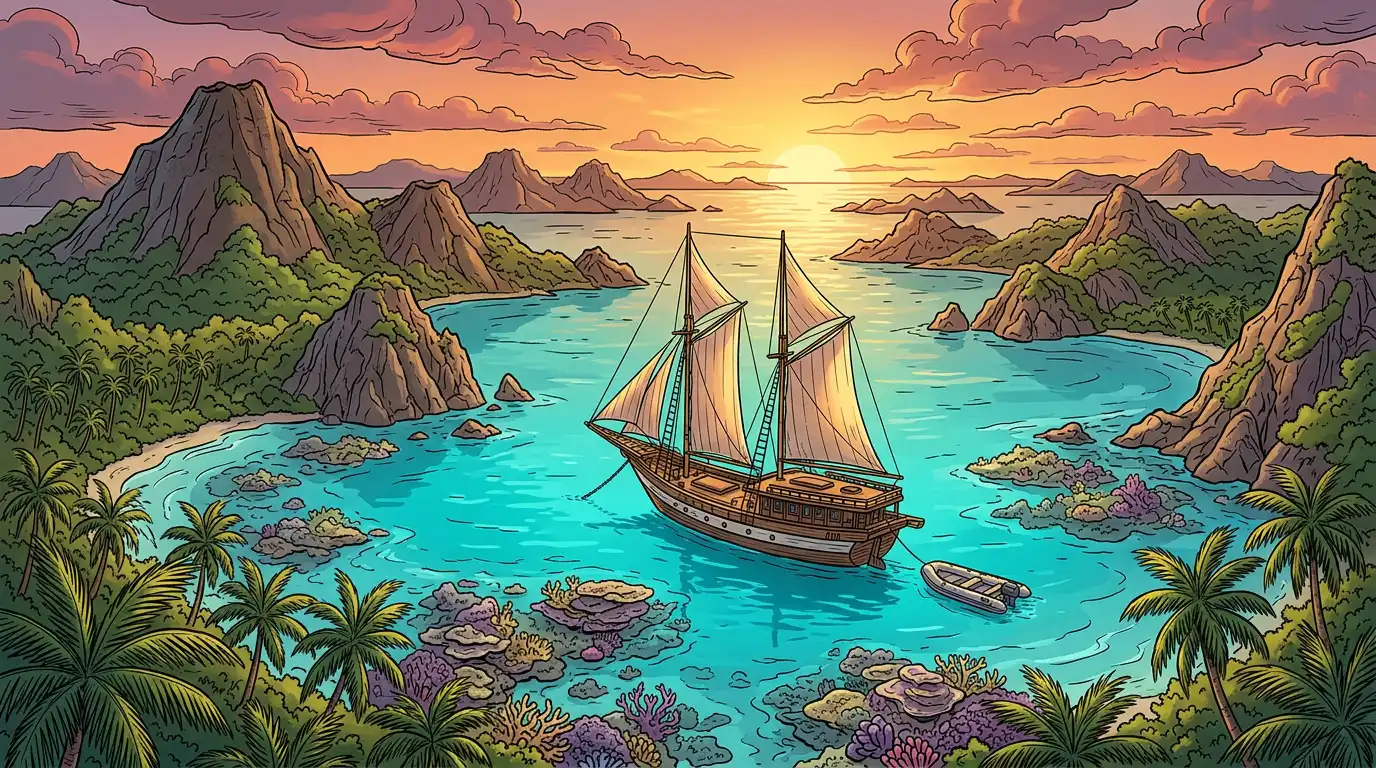
Komodo National Park sits in the Indonesian archipelago east of Bali, with Labuan Bajo as the main gateway town on Flores. The park is not one island. It is a maze of islands and channels where nutrient rich waters from deep basins meet shallow reefs, creating the conditions that support vibrant coral reefs, big marine life, and the kind of drift dives that adventurous divers travel across continents to experience.
When people say they want to dive Komodo, they usually mean a mix of three things at once:
- High energy blue water diving where currents concentrate schooling fish, attract grey reef sharks, and keep reefs irrigated with food.
- Manta ray cleaning and feeding stations where manta rays appear predictably enough to plan a trip around them, especially in famous areas linked to Manta Alley style diving.
- Land excursions that are genuinely world class, including viewpoints on Padar Island, Pink Beach, and encounters with Komodo dragons on Komodo Island or Rinca Island.
That combination is why Komodo liveaboards remain popular even as new destinations appear on social media. A Komodo cruise is not only about one species or one reef. It is about a full park experience.
Liveaboard Cruises Komodo: What “Komodo Liveaboard” Actually Means
A Komodo liveaboard is a boat based itinerary where you sleep onboard, eat onboard, and move between dive sites while the vessel repositions overnight or between dives. Liveaboard diving Komodo routes are usually structured around multiple dives per day, often three or four, plus optional snorkeling for non divers or for divers who want surface time in shallow vibrant reefs.
Liveaboard cruises Komodo trips vary in length. Common schedules include:
- Shorter Komodo cruise options focused tightly on central Komodo and nearby highlights, ideal if you have limited time but still want a true liveaboard rhythm.
- Longer Komodo liveaboard itineraries that extend into South Komodo National Park and may include more remote corners where you may encounter fewer boats, depending on season and routing.
- Expedition style routes that connect Komodo with broader regions such as the Banda Sea or routes near volcanic islands, sometimes including sites influenced by an active volcano or volcanic terrain, depending on the operator’s licensing and seasonal planning.
If you are comparing a day boat from Labuan Bajo to a Komodo liveaboard, the trade off is usually range versus comfort rhythm. Day boats can reach many famous dive sites, but a liveaboard often wins on time diving, meaning you spend less of your holiday commuting and more of it in the water, especially for sunrise dives, afternoon dive windows, and night dive opportunities far from town.
Komodo Liveaboard Snorkeling: Not “Second Best,” Often Spectacular
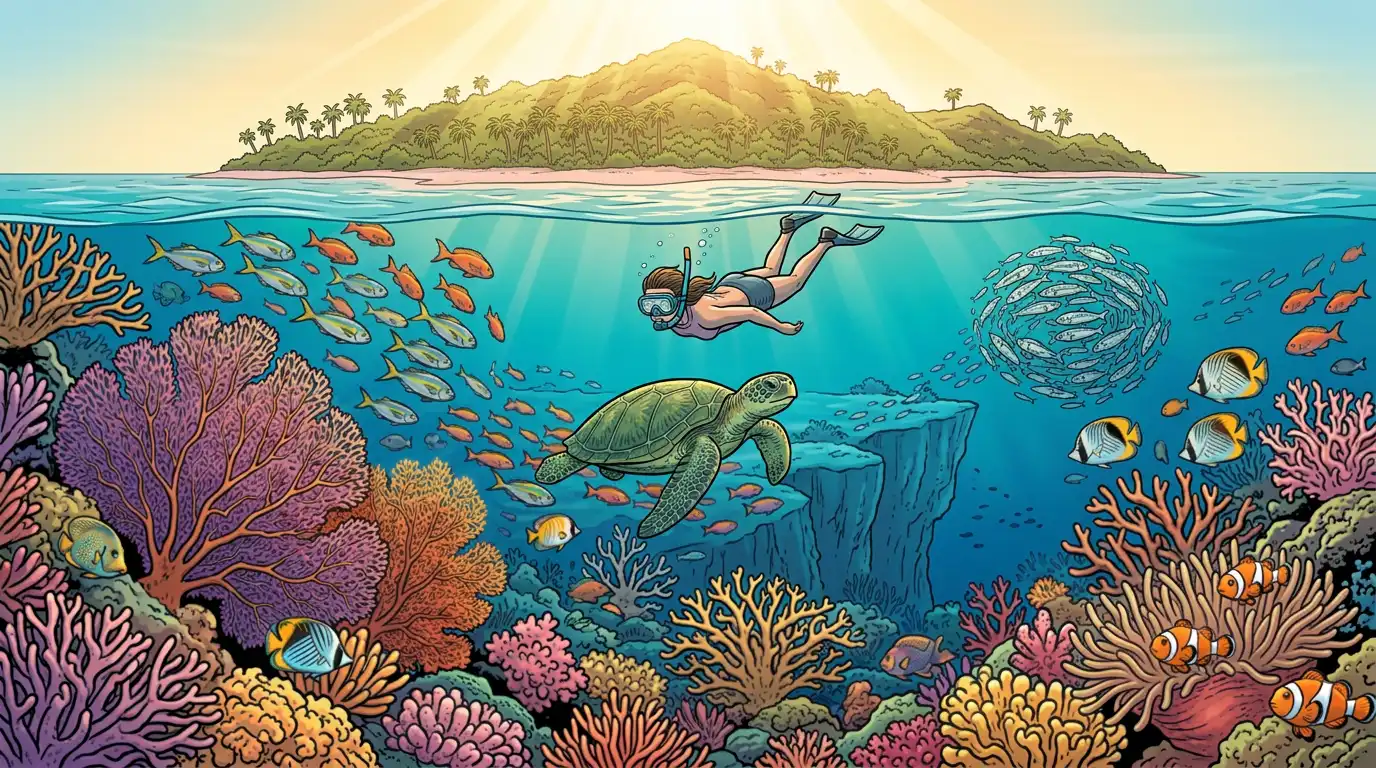
Komodo liveaboard snorkeling is a serious product, not an afterthought. Many shallow sites in Komodo National Park feature hard and soft corals so healthy that snorkelers float above colourful reefs packed with tropical fish. Green and hawksbill turtles are commonly seen on shallow slopes, and eagle rays may cruise past in the blue.
Snorkel friendly highlights often include:
- Pink Beach and other shallow coral gardens where the reef begins close to shore.
- Gili Lawa viewpoints and nearby bays where snorkelers can enjoy clear water and dramatic island scenery.
- Manta focused areas, where snorkelers can sometimes observe manta rays near the surface, conditions permitting and under guide supervision for safety.
If you are traveling with a partner who does not scuba dive, a Komodo cruise that supports strong snorkeling logistics can be the difference between a shared holiday and a split holiday.
North Komodo, Central Komodo, and South Komodo National Park: How the Park Changes Underwater
Komodo National Park is large enough that divers talk about it in regions. The experience in Komodo north can feel different from the southern region, not because one is always “better,” but because currents, topography, and seasonality shift.
Komodo North and Famous Sites Near Gili Lawa
Komodo north is known for dramatic landscapes above water and fast paced diving below. Areas around Gili Lawa Darat and Gili Lawa are famous for scenic hikes, sunset viewpoints, and diving on slopes and channels that can deliver big marine life and strong drift diving patterns.
This is the kind of area where you understand why Komodo is often described as a place for adventurous divers. The reward is vibrant marine life, schooling fish, and encounters with reef sharks in healthy ecosystems.
Central Komodo: The Busy Heart of Many Liveaboard Routes
Central Komodo is where many itineraries concentrate because the density of famous dive sites is high. You will hear names repeated in dive shop conversations and trip briefings:
Castle Rock is a pinnacle style site associated with current, big fish action, and the chance to see grey reef sharks, giant trevally, and massive schools of fish moving in coordinated bursts. It is the kind of site that can feel like a wall of life, especially when nutrient rich waters are moving.
Cannibal Rock is a name that sounds intimidating, but the site is often celebrated for vibrant corals, sea apples, rare macro life, and the kind of biodiversity that makes you slow down and hunt for pygmy seahorses and rare nudibranchs on the same trip where you also want big marine life.
Batu Bolong is one of the most famous dive sites in Indonesia, a small pinnacle surrounded by deep blue. The reef can be packed with hard and soft corals, dense schools of fish, and predators hunting at the edges. It is also a site where operators emphasize careful planning because conditions can be intense. When it is “on,” it is unforgettable.
South Komodo National Park: Remote Feeling, Sometimes Fewer Boats
South Komodo National Park includes areas that feel more remote, with sites that can deliver pristine coral reefs, colourful reefs, and a sense of space. Depending on Komodo diving season and routing, you may find fewer boats, not because the diving is lesser, but because distances and conditions filter crowds.
If your priority is to avoid the most heavily trafficked pinch points, ask operators how they schedule south Komodo national park days and whether they plan dives at times that reduce overlap.
Signature Dive Sites and What You May See
Komodo liveaboard diving is famous for combining wide angle excitement with macro surprises. Even “big fish” divers should pack a macro mindset, because Komodo’s nutrient rich waters support amazing critters.
Manta Alley and Manta Focused Diving
Manta Alley is part of the Komodo conversation the way certain names become shorthand for an experience. Manta rays are a major reason people choose a Komodo cruise, and cleaning stations can produce close range encounters that feel humbling. Always remember mantas are wild animals, and encounters vary by day, season, and conditions.
Drift Dives and Current Management
Drift dives are central to the Komodo identity. Instead of fighting current, skilled divers use it as transport, staying shallow or deep as briefed, using reef features as shelter, and maintaining awareness in blue water moments. If you are newer to drift diving, be transparent with your guide. A check dive early in the trip helps everyone calibrate expectations.
Night Dive Potential
A night dive in Komodo can reveal an entirely different cast: moray eels hunting, colourful crustaceans, flamboyant cuttlefish in some habitats, ghost pipefish tucked near crinoids, and torpedo rays on darker sand slopes. Night diving is also when “rare macro life” becomes easier to spot because behaviour changes and beams of light reveal texture.
Muck Diving and Macro in Komodo
Komodo is not only walls and fish tornadoes. In the right bays, muck diving style environments host pygmy seahorses, rare nudibranchs, and strange small organisms that macro photographers chase for entire trips. If you love muck diving, tell your cruise team early so they can align site selection when conditions allow.
Marine Life: From Reef Sharks to Sea Turtles
Komodo National Park supports a long species list. On a typical Komodo liveaboard itinerary, divers hope for:
- Manta rays, especially around cleaning and feeding contexts
- Grey reef sharks and reef sharks patrolling current lines
- Eagle rays passing in blue water
- Green and hawksbill turtles on reefs and slopes
- Giant trevally hunting in schools of fish
- Tropical fish in clouds of colour around healthy coral
- Pygmy seahorses, ghost pipefish, and flamboyant cuttlefish for macro lovers
Whale sharks deserve a careful explanation. Komodo National Park is not primarily known as Indonesia’s most reliable whale shark destination compared to some other regions. However, marine travellers sometimes use the keyword “whale sharks” when researching Indonesia broadly, and some longer liveaboard routes that depart from or connect with wider Indonesian cruise planning may include regions where whale shark encounters are more common. If whale sharks are your top priority, ask operators explicitly whether your chosen route and season realistically targets them, so expectations match planning.
Land Excursions: Komodo Dragons, Padar Island, Pink Beach
Liveaboard cruises Komodo itineraries often include land excursions because the park is not only underwater. The famous Komodo dragons are monitored on guided walks on Komodo Island and Rinca Island, with ranger leadership for safety and conservation.
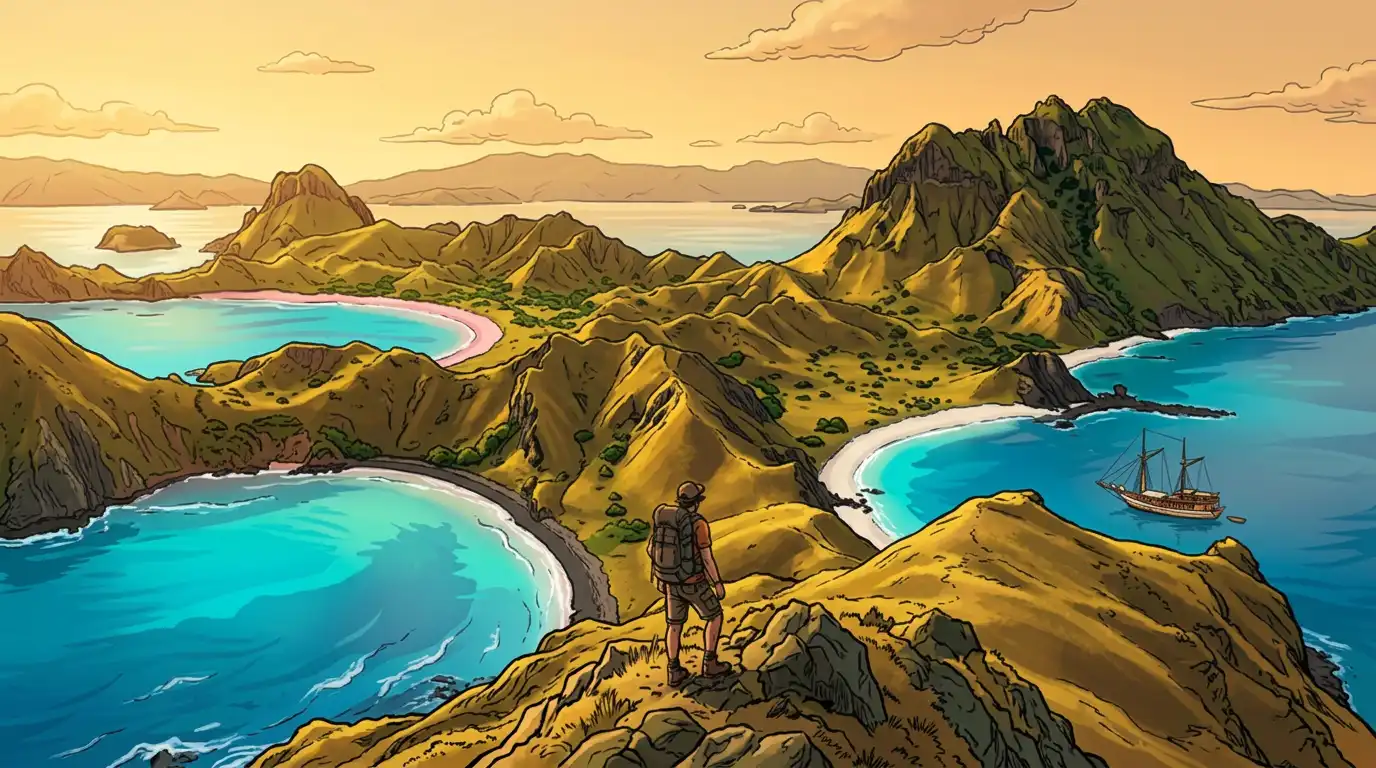
Padar Island is the iconic viewpoint hike where many guests capture the three bay panorama. It is a highlight of visit Komodo national park planning even for non divers.
Pink Beach is both a snorkel and photo location and a classic stop for tropical colour. The pink tint comes from fragments mixed into sand, and the scene is unmistakable.
These land excursions matter because they break up time diving, they connect you to the UNESCO world heritage site story, and they remind you that Komodo is a national park first, a tourism destination second.
Nearby Names You May See on Extended Itineraries
Some Komodo liveaboards advertise add on regions depending on trip length. You may encounter references to Moyo Island, Satonda Island, Banta Island, Bima Bay, Horseshoe Bay, or volcanic geography linked to Sangeang volcano on broader routes. These names belong to a wider map of Indonesia’s scuba diving universe. If your itinerary includes them, you are usually looking at a longer expedition style Komodo cruise rather than a compact park only loop.
Labuan Bajo: Gateway, Airport, and the Start of the Story
Most guests begin in Labuan Bajo, a harbour town with an airport connection hub for Flores. From Labuan Bajo, boats depart toward the park, and liveaboard guests typically board in the afternoon, unpack, meet the crew, and often complete a check dive nearby if time and conditions allow.
Understanding Labuan Bajo matters because it sets expectations about transfers, local services, and the shift from travel mode to ocean mode.
Water Temperatures, Seasonality, and Planning Your Komodo Cruise
Water temperatures in Komodo can vary more than some beginners expect because upwelling and currents bring cooler nutrient rich waters at times. That variation is part of why the reefs can look so vibrant, but it also means packing exposure protection appropriate for your personal cold tolerance.
Seasonality also influences conditions, crowds, and the balance between accessibility and comfort. Liveaboard operators adjust routes for safety, so the “best” season for you may depend on whether you prioritise calmer seas, manta ray probabilities, or fewer boats.
Liveaboard Diving Versus a Resort Base Inside the Park
Liveaboard diving Komodo itineraries maximise mobility. You wake up closer to remote sites, you can run an afternoon dive rhythm that fits tides, and you can sometimes access areas with fewer boats depending on routing.
A resort stay inside Komodo National Park offers a different value: stable luxury accommodation, consistent service, and daily diving without sleeping on a boat. Komodo Resort on Sebayur Island sits within the park environment and supports divers who want comfortable rooms, resort dining, and access to Komodo’s underwater world with a land based home base. Many travellers combine ideas across trips, a liveaboard for range, a resort for recovery, or the opposite, depending on schedule.
If you want the feeling of Komodo liveaboard snorkeling and diving but prefer not to commit your entire holiday to boat life, a park based resort can be the right balance, especially for mixed groups where some guests want shorter boat days or more privacy between activities.
Safety, Skill Level, and Being Honest About Drift Dives
Komodo is not only for technical divers, but it rewards honest self assessment. Drift dives, current, and blue water moments require solid buoyancy, good air consumption, and calm decision making. If you are still building confidence, consider extra training before the trip and communicate with guides about comfort levels.
Respect park rules, follow ranger instructions on land excursions, and treat wildlife responsibly. Mantas, sharks, and turtles are not props. Distance and calm behaviour produce better encounters for everyone.
What to Pack for Komodo Liveaboard Diving and Snorkeling
Think in layers: reef hooks only if your training and operator policy support them, surface signaling devices, a torch for night dive plans, and macro tools if you chase pygmy seahorses and rare nudibranchs. For snorkeling, a well fitting mask and fins matter more than fancy extras.
Final Word: Komodo as a Full Spectrum Destination
A Komodo cruise is an efficient way to compress maximum adventure into a short window. Komodo liveaboards exist because the park rewards mobility. Komodo liveaboard snorkeling proves the park is not only for scuba divers. Liveaboard cruises Komodo itineraries remain popular because they deliver a UNESCO world heritage site experience that is both marine and terrestrial, both big and small, both adrenaline and wonder.
Whether you come for Manta Alley style moments, for Castle Rock currents, for Cannibal Rock critter hunts, for Pink Beach and Padar Island views, or for Komodo dragons on Rinca Island and Komodo Island, you are choosing one of Indonesia’s most intense and rewarding regions. Dive Komodo once, and you will understand why so many divers return, not to chase a single animal, but to feel that deep blue pull again.