Komodo Boat Tour Options: Day Trips, Liveaboards and Private Charters
There are three genuinely different ways to see the park by boat, and they are not competing versions of the same product. They suit different trips.
A day trip leaves in the morning, visits two to four stops and returns the same evening. It is the right choice if you want the headline sights, if you are travelling with people who do not dive, or if you would rather sleep on land. A liveaboard sleeps aboard for several nights and moves while you eat and sleep, which is the only practical way to reach the far south and the remote north of the park. A private charter is a day trip or a multi-day trip with the itinerary under your control, which matters more than people expect once you have seen how tightly the popular stops are scheduled.
The mistake we see most often is booking a single long day trip out of town and expecting it to cover the park. It cannot. The park is too big, and most of the day goes into transit.
Where You Start Matters More Than Which Boat You Book
This is the part most guides skip, and it is the single biggest factor in how good your day on the water is.
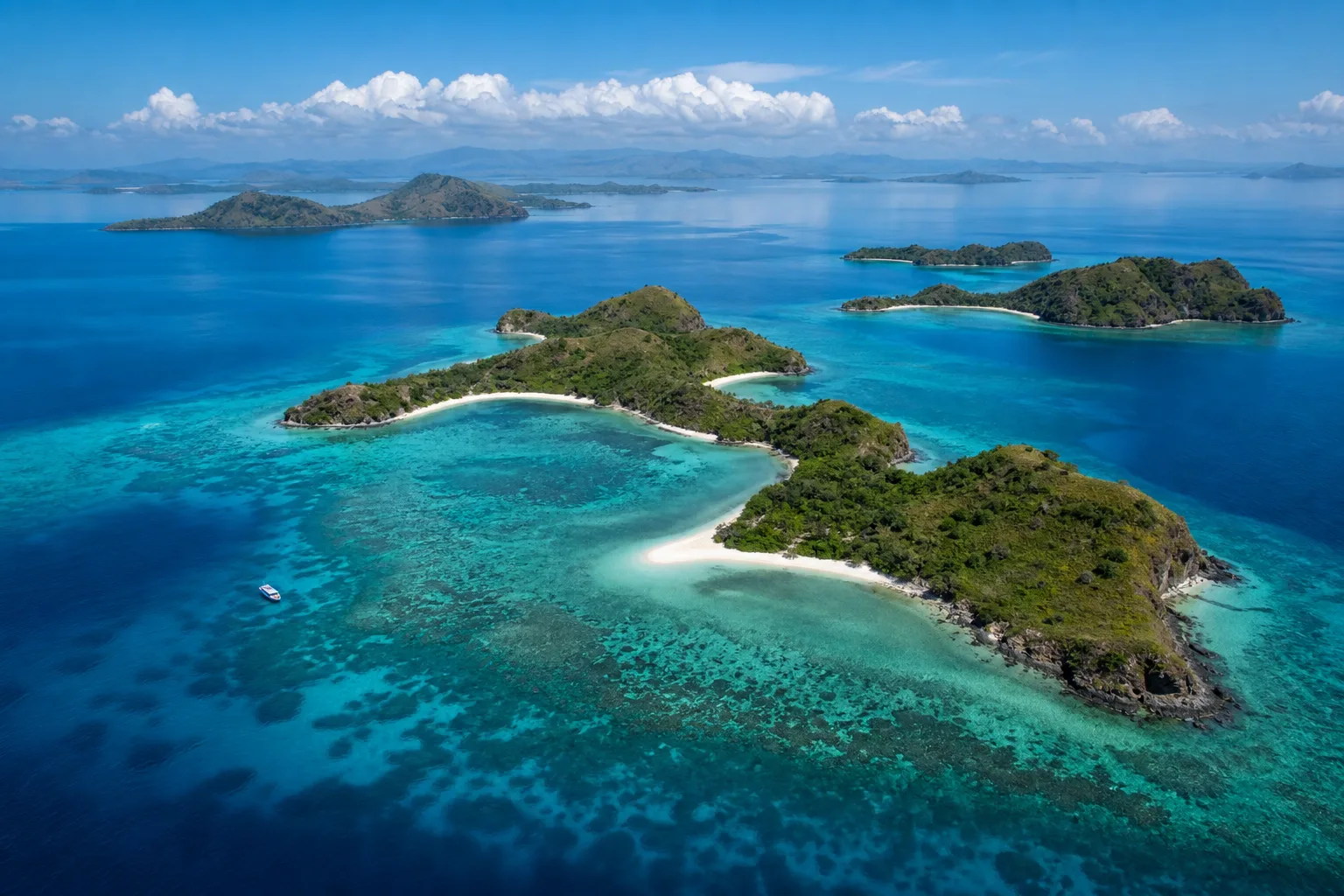
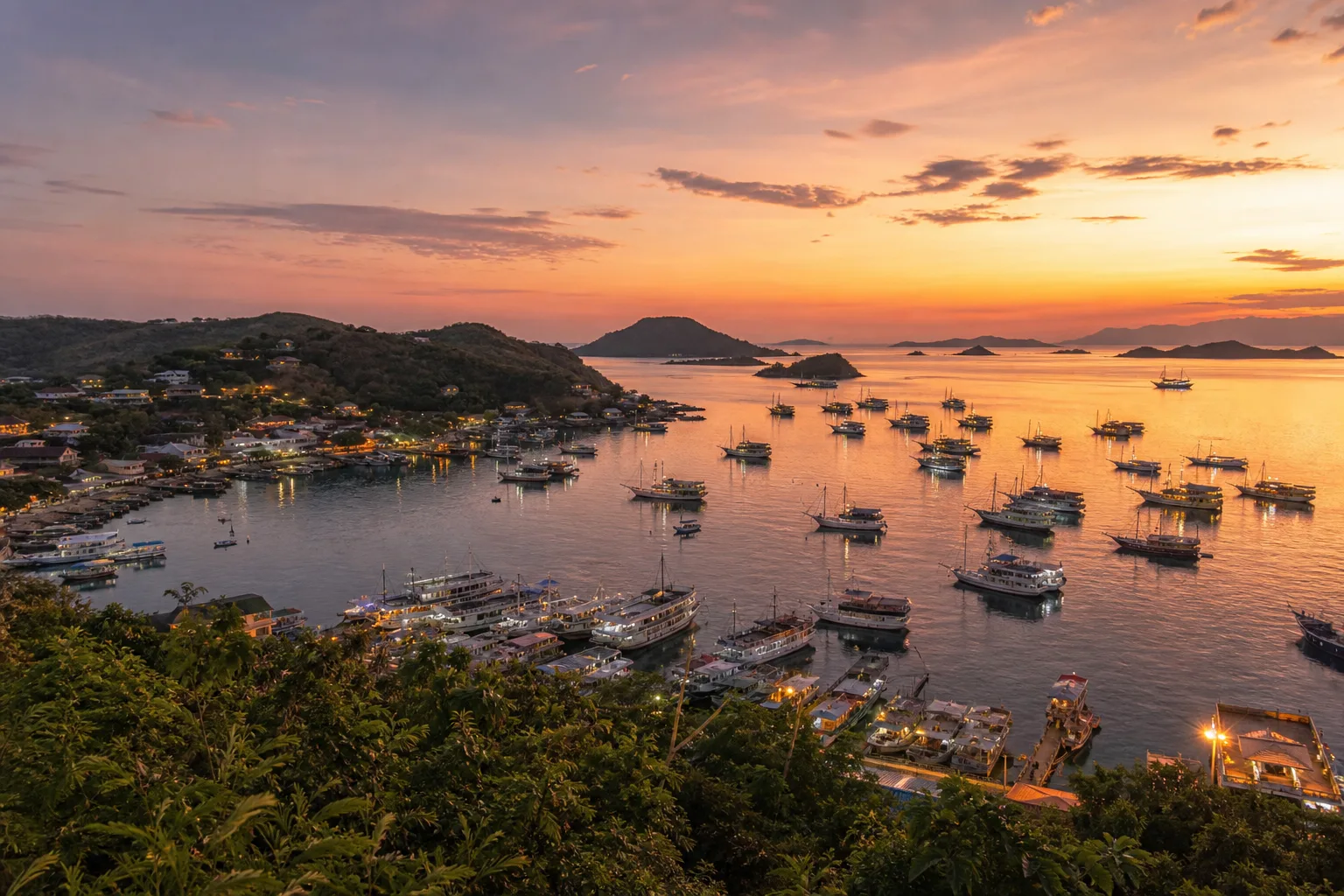
Boats leaving from Labuan Bajo face a run of roughly 1.5 to 2.5 hours each way to reach the central park sites. That is three to five hours of your day spent getting there and back, on a boat, before you have swum anywhere. It also means you arrive when everyone else does, because every boat in town left at roughly the same time.
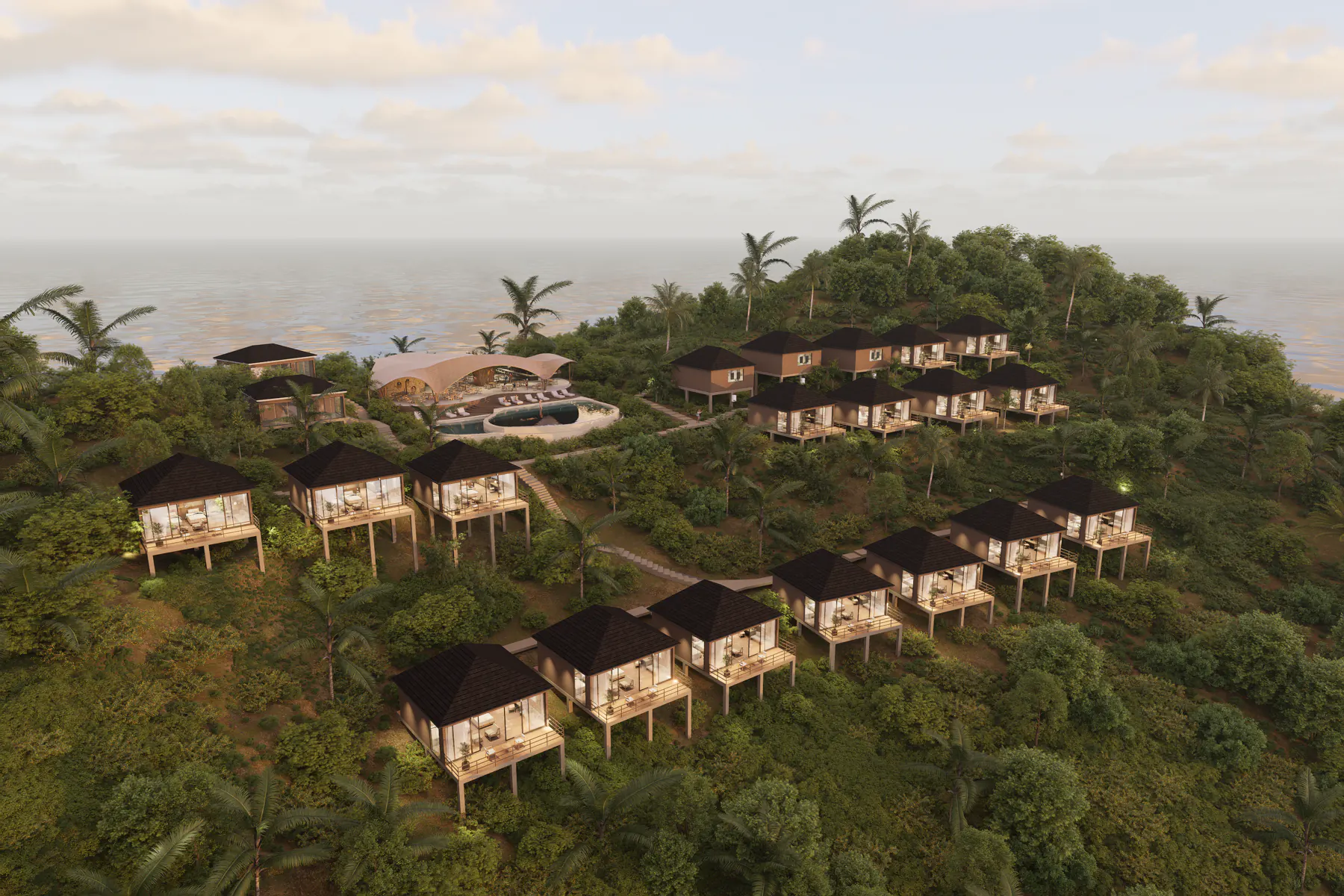
Our boats leave from our own jetty on Sebayur Island, inside the archipelago and already past most of that transit. Central sites are minutes away rather than hours. In practice this means we can be at Padar or a dive site before the town fleet arrives, come back for a proper lunch, and go out again in the afternoon. Guests staying in our bungalows do this on repeat for a week without ever doing a long crossing.
If you are weighing up staying inside the park against commuting from town, our guide to where you can sleep in the park covers the trade-offs in detail.
Day Trips: Speedboat or Wooden Boat
Both work, and the choice is about pace and sea state rather than quality.
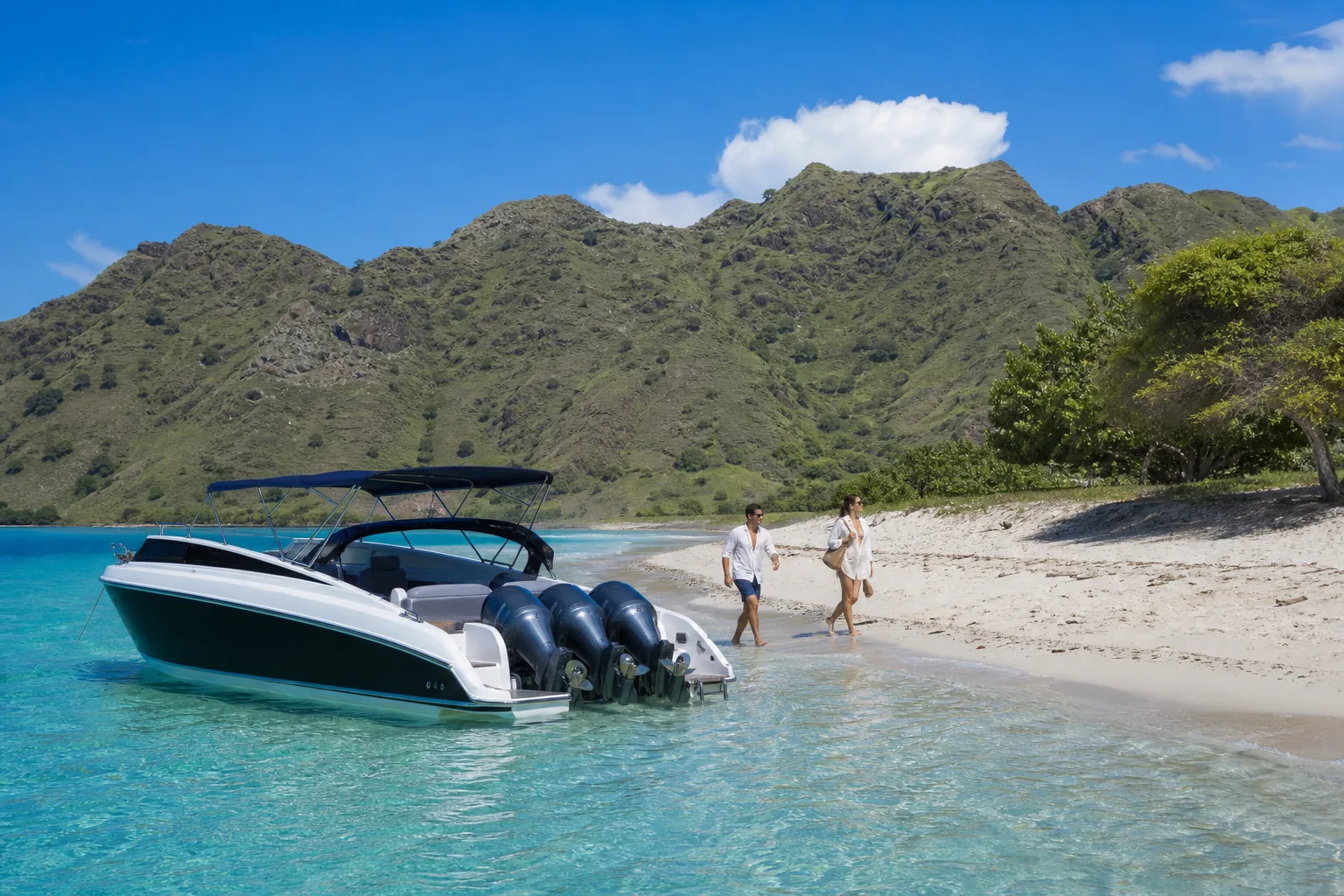
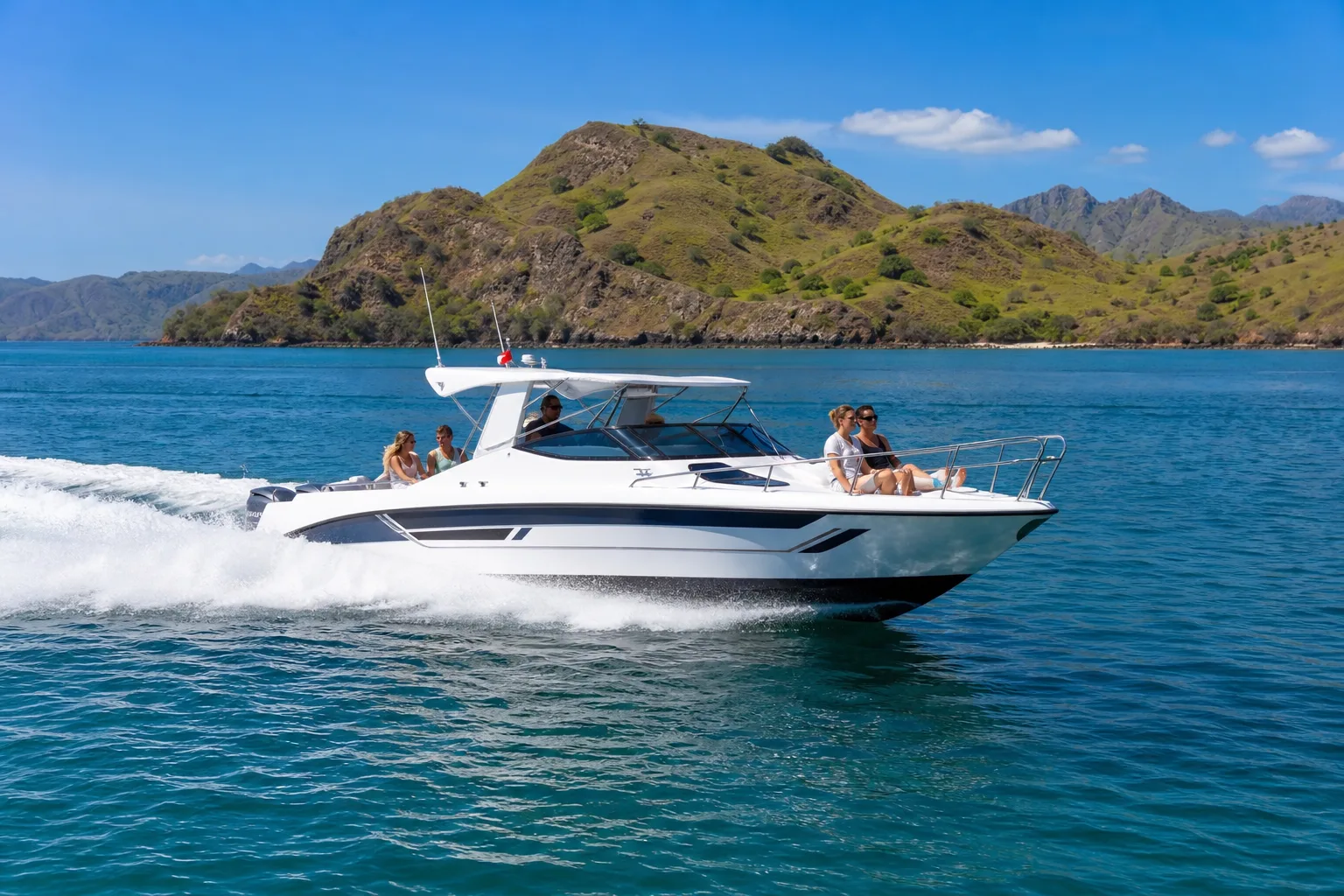
Speedboats cover ground quickly, which buys you more stops in a day and less time watching the horizon. They are the better choice when you want to fit Padar, a dragon trek and a snorkel stop into one day. The trade-off is that they take chop harder, so a windy day is noticeably less comfortable.
Wooden boats move slower and sit far more kindly in a swell. They have shade, room to lie down and space to spread gear out, which makes them the better platform for a diving day or for anyone who is uneasy at sea. If seasickness is a concern for you, it is worth reading our guide to avoiding seasickness on Komodo boat trips before you pick.
We run both from the resort and choose based on the day's conditions and where the group wants to go. Shared departures cost less per person; if you want a fixed itinerary and nobody else aboard, a private boat is the way to get it. Budget travellers comparing shared options should also look at our guide to open trip Komodo boat tours.
Liveaboards: The Only Way to Reach the Whole Park
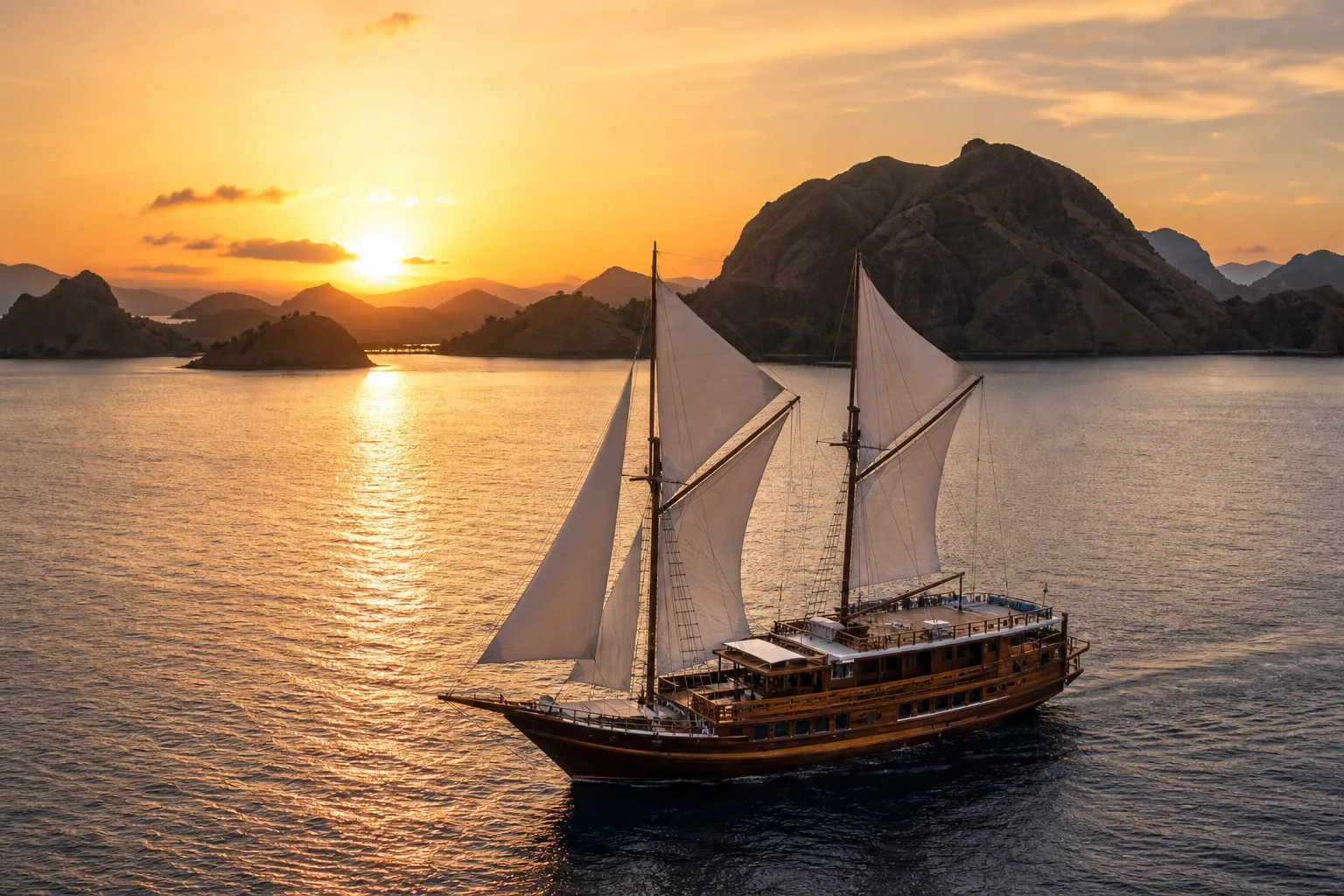
Day trips out of anywhere, including our island, are limited to the north and centre of the park. The southern sites and the far northern reefs are simply too far to reach and return from in a day. A liveaboard solves that by moving overnight.
Our Komodo Sea Dragon runs four to eight day itineraries with a maximum of twelve guests, and the King Neptune covers the longer diving-focused routes. Because capacity is small, cabins sell out well ahead, particularly for the July and August departures.
A liveaboard also unlocks things a day boat cannot: three or four dives a day instead of two, dawn dives before any other boat is on the site, and night dives inside the park. The trade-off is commitment. You are on the boat for the duration, and if the weather turns you go where the captain judges it safe rather than where the brochure said.
Diving on a Komodo Boat Tour
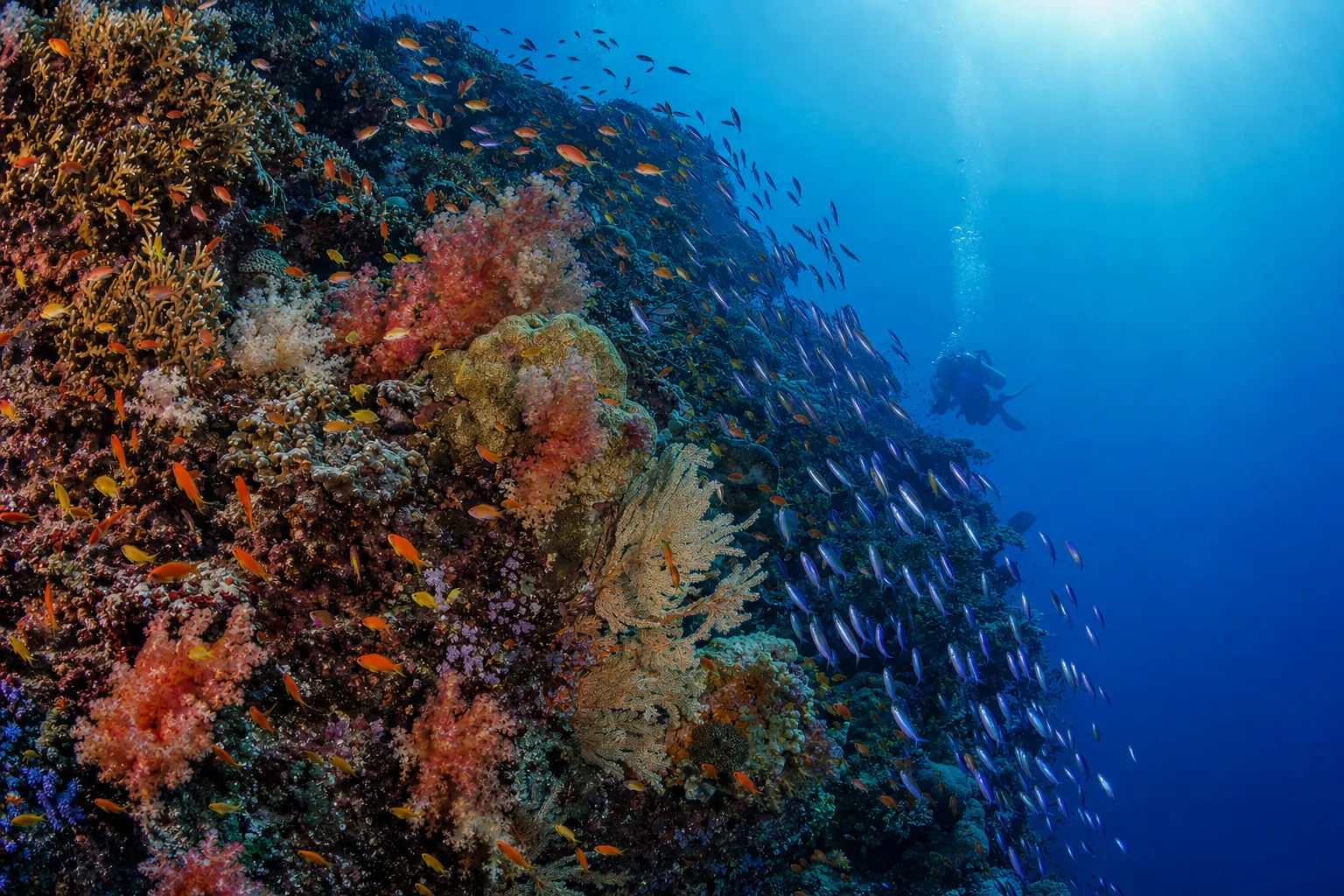
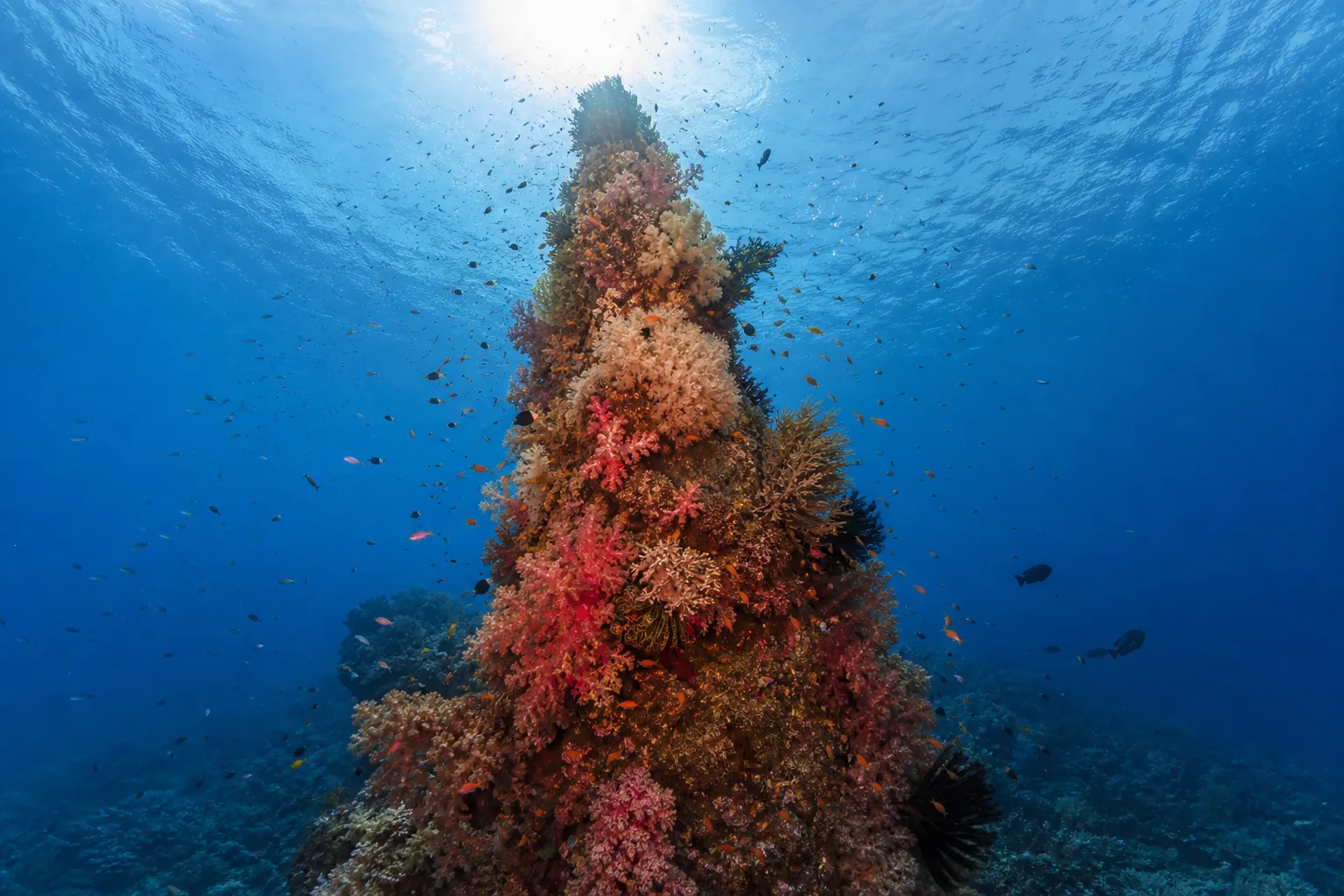
For a lot of visitors the boat is really just transport to the diving, and Komodo is one of the strongest dive destinations in the world. It is also one of the more demanding, because the same tidal currents that feed the reefs decide which sites are safe on any given day.
Our standard diving day is two tanks in the morning, back at the resort for lunch, with an optional afternoon dive at 14:30. Guides work to a maximum of four guests each and group divers by experience, which is what lets us take confident beginners and current-hungry veterans out on the same boat without compromising either. Our full dive site guide covers the park site by site, and diving Komodo's currents covers the skills that actually matter here.
Manta Point (Karang Makassar)
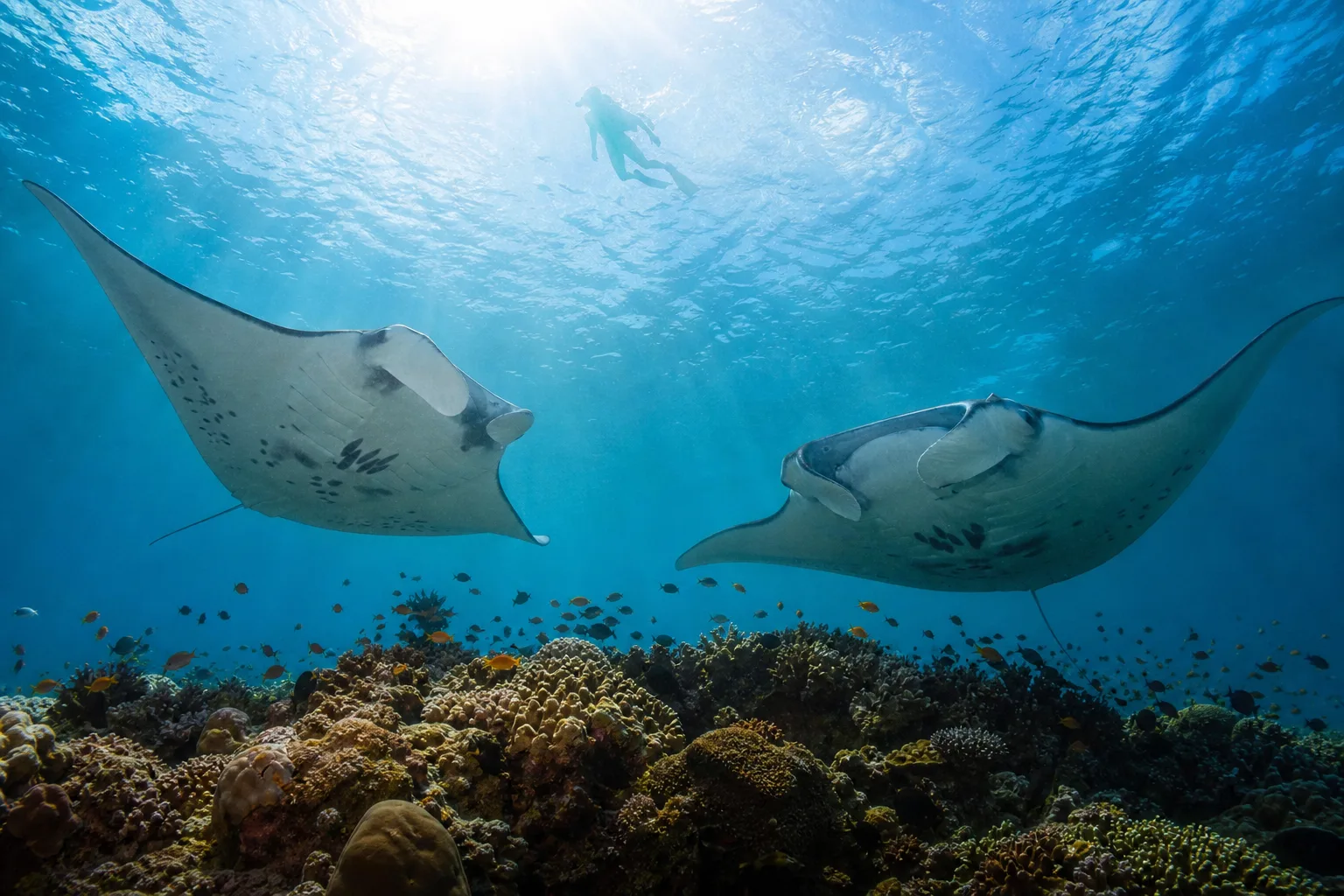
A long, shallow rubble drift where reef mantas come to feed and be cleaned. It is the most reliable big-animal encounter in the park and, because it is shallow, it works for snorkellers as well as divers, which makes it the rare site that suits a mixed group.
Reef mantas are resident here year round, so no month writes the site off. Numbers do move with the plankton: the biggest feeding aggregations come in the wet season from roughly December to February, the dry months from June to September produce mantas most days in smaller groups but noticeably clearer water, and the shoulders either side are the best all-round compromise. Our guide to swimming with manta rays in Komodo goes further into the etiquette that decides whether they stay or leave.
Batu Bolong, Castle Rock and the Current Sites
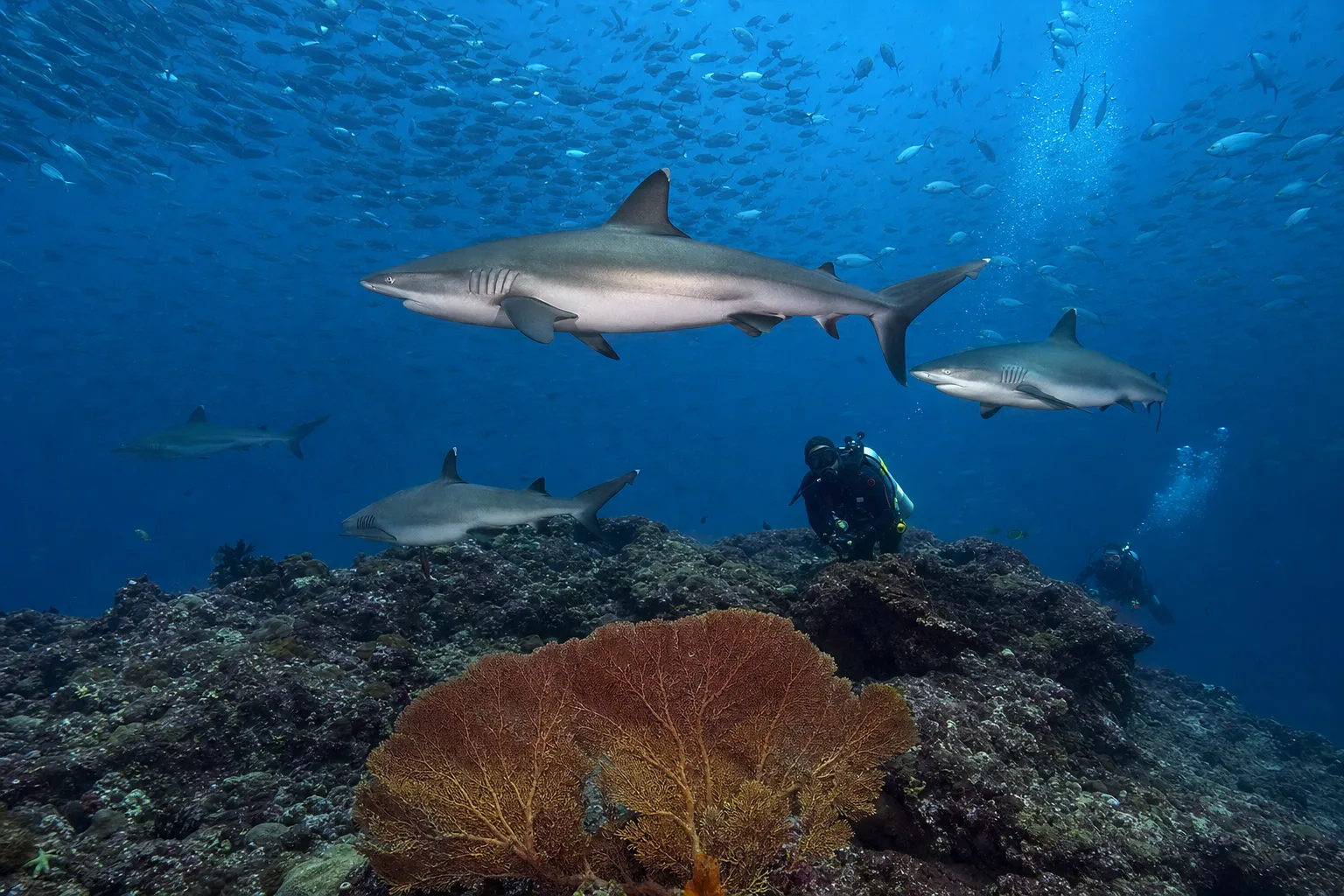
These are the dives Komodo is famous for, and they are all advanced.
Batu Bolong is a rock in mid-channel that drops vertically on both sides, carrying some of the densest fish life in the park on its sheltered face. Drifting off that face into the moving water is the standing hazard, so the dive is run tight against the rock. Castle Rock and Crystal Rock are submerged seamounts in the northern channel where groups descend fast on a negative entry to get below the flow, and where grey reef sharks and trevally hold station in the current. Shotgun, in the channel at Gili Lawa, is exactly what the name suggests: a drift that fires you through a gap and up over a plateau.
We recommend an Advanced Open Water certification and recent current experience for these. That is not gatekeeping for its own sake; the sites are timed against the tide and the window can be narrow. Not sure where you sit? Our overview of certification levels explains what each one prepares you for.
Calmer Sites, and Where Beginners Start
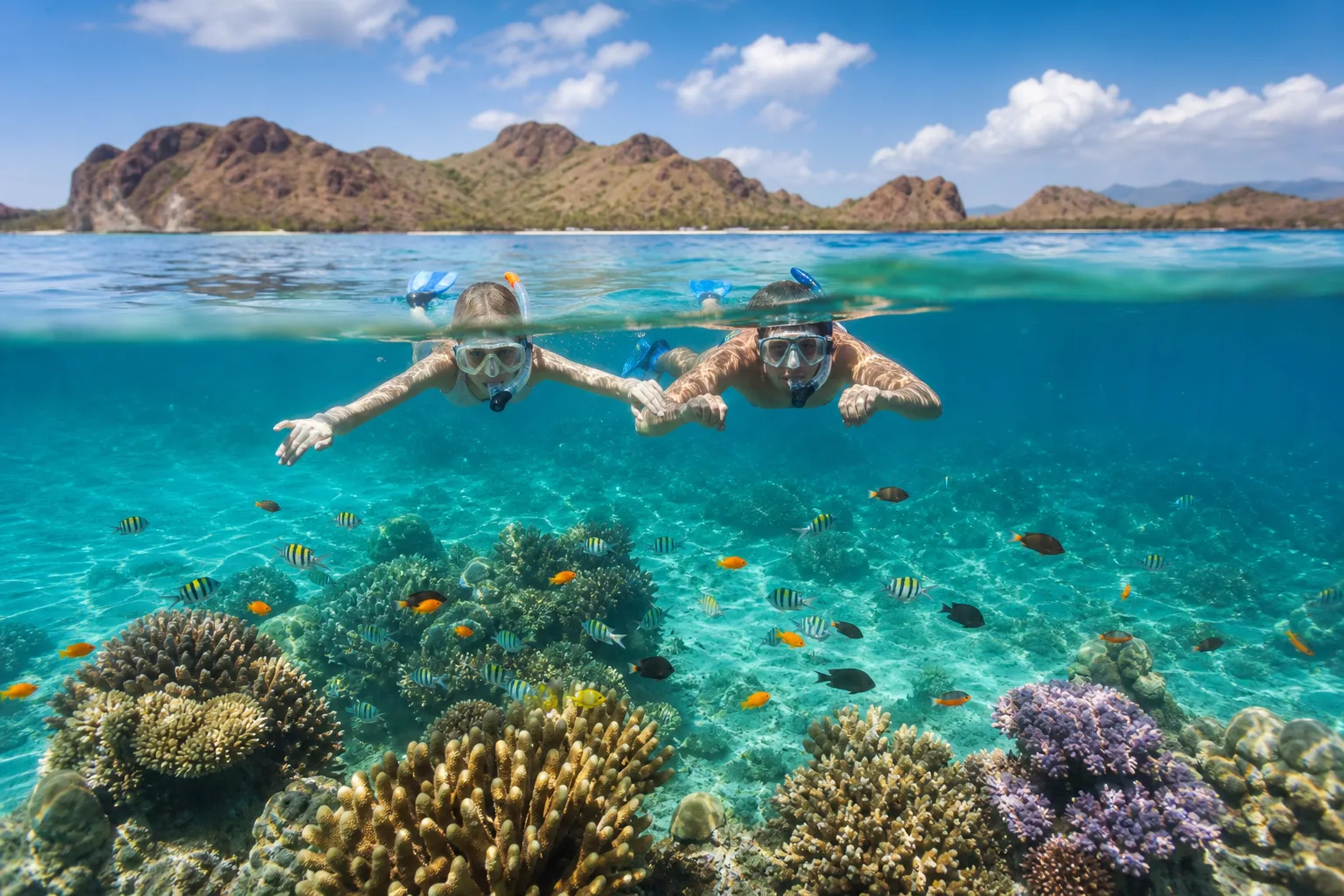
Komodo has a reputation for ripping current that puts beginners off unnecessarily. Plenty of the park is gentle.
Siaba Besar is a sheltered bay with turtles on almost every dive and barely any flow. Mawan is a calm slope that mantas also visit. Tatawa Besar is a soft coral drift you ride rather than fight, and our own house reef runs about a kilometre along Sebayur Island with turtles, reef sharks and healthy coral, reachable on foot from the jetty.
That house reef is where we run try dives and Open Water courses, because you can walk in, practise, and surface next to your room. Note that Tatawa Kecil, despite the similar name, is the opposite: an advanced site known for split currents and downcurrents that has to be timed to slack tide.
If You Would Rather Snorkel
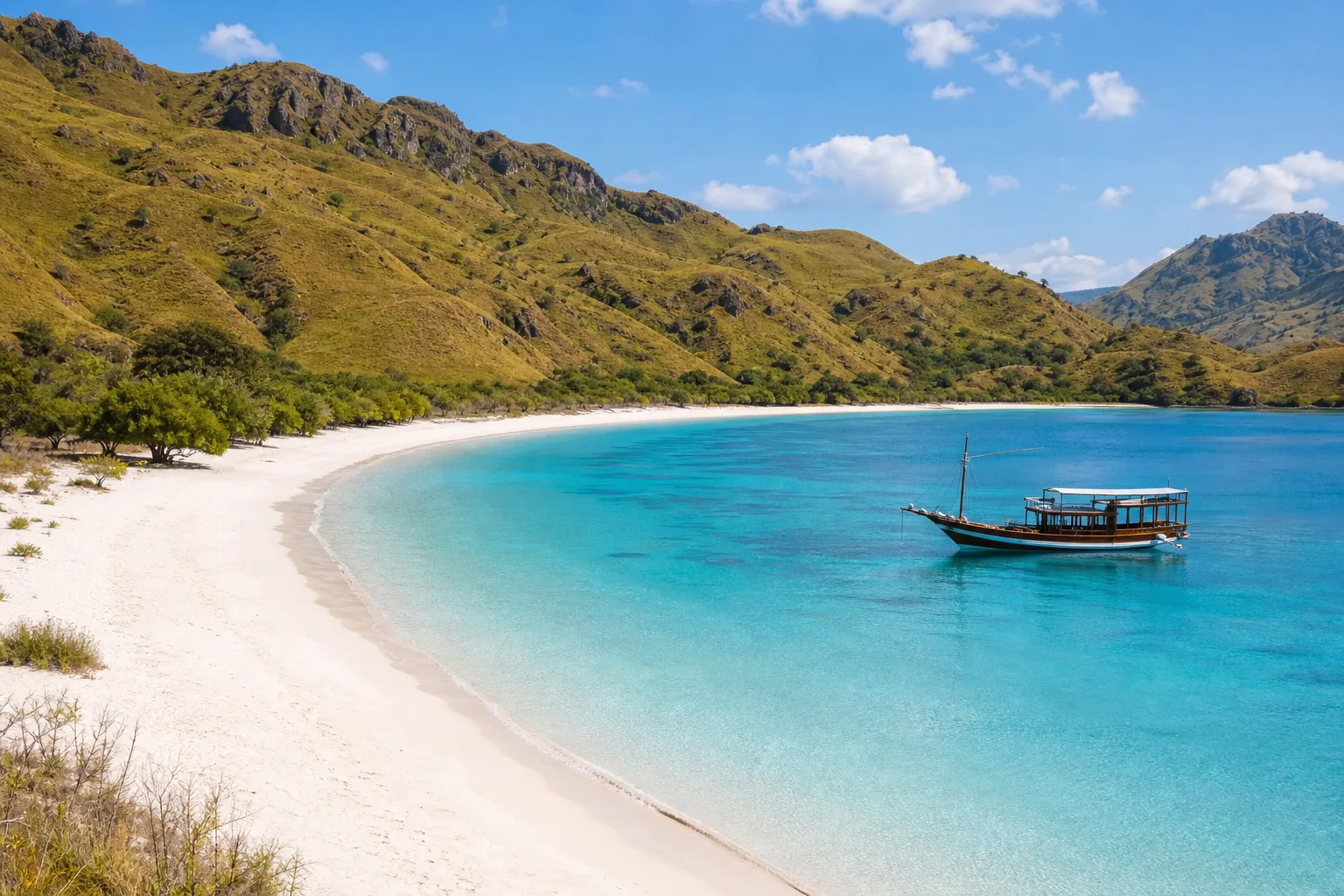
You lose less than you might think. Much of what makes Komodo remarkable sits in the top ten metres, and several of the best sites are shallow enough that snorkellers and divers see the same animals.
Karang Makassar is the obvious one: the mantas feed near the surface, and a snorkeller drifting quietly overhead often gets a longer look than a diver on the bottom. Pink Beach, Kanawa, Kelor and the reef in front of the resort are all excellent from the surface. Our snorkelling trips run on the same boats as the diving, so mixed groups do not have to split up.
The Island Stops Worth Your Time
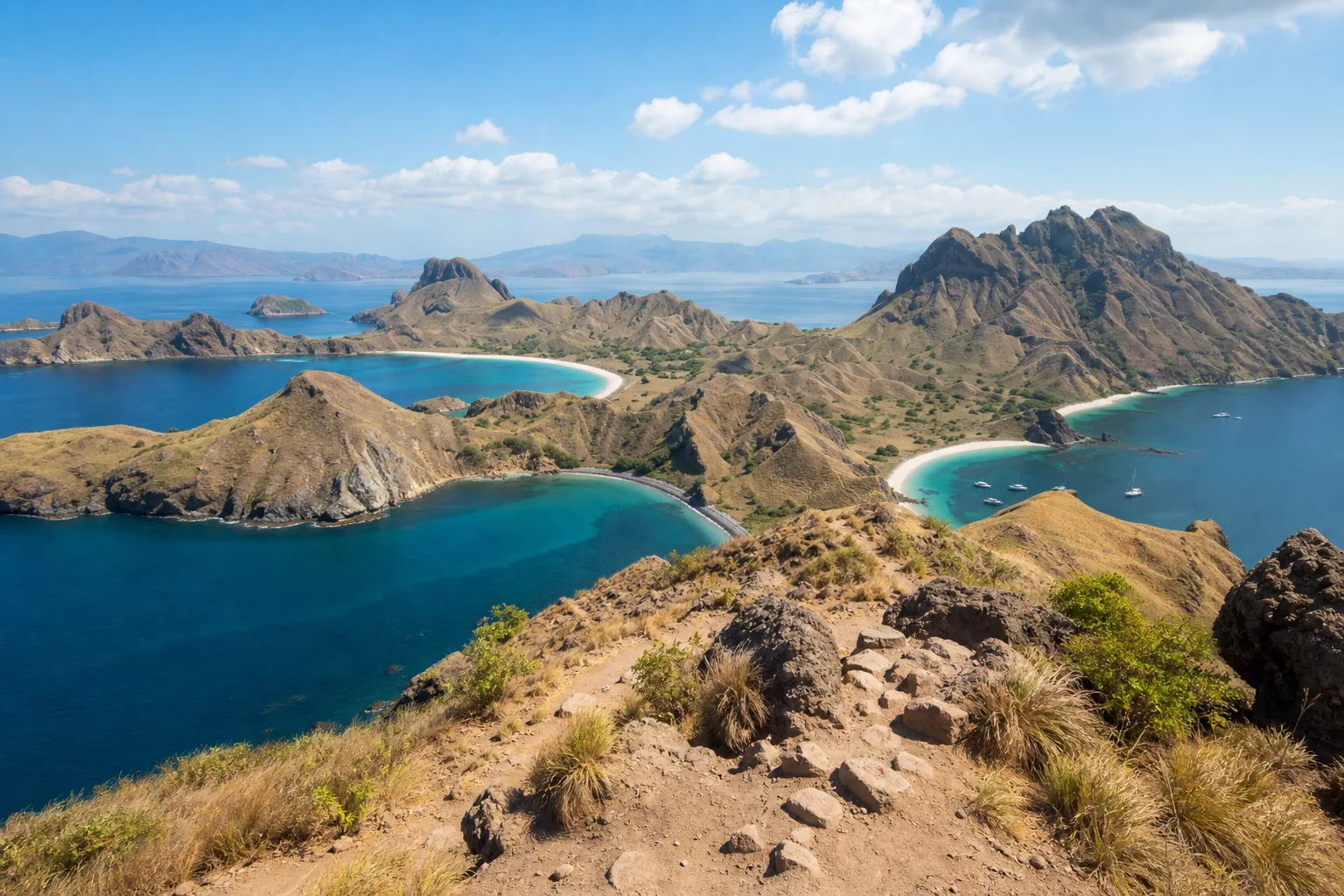
Every operator sells a broadly similar list. These are the ones that earn their place, and what to actually expect at each.
Padar Island
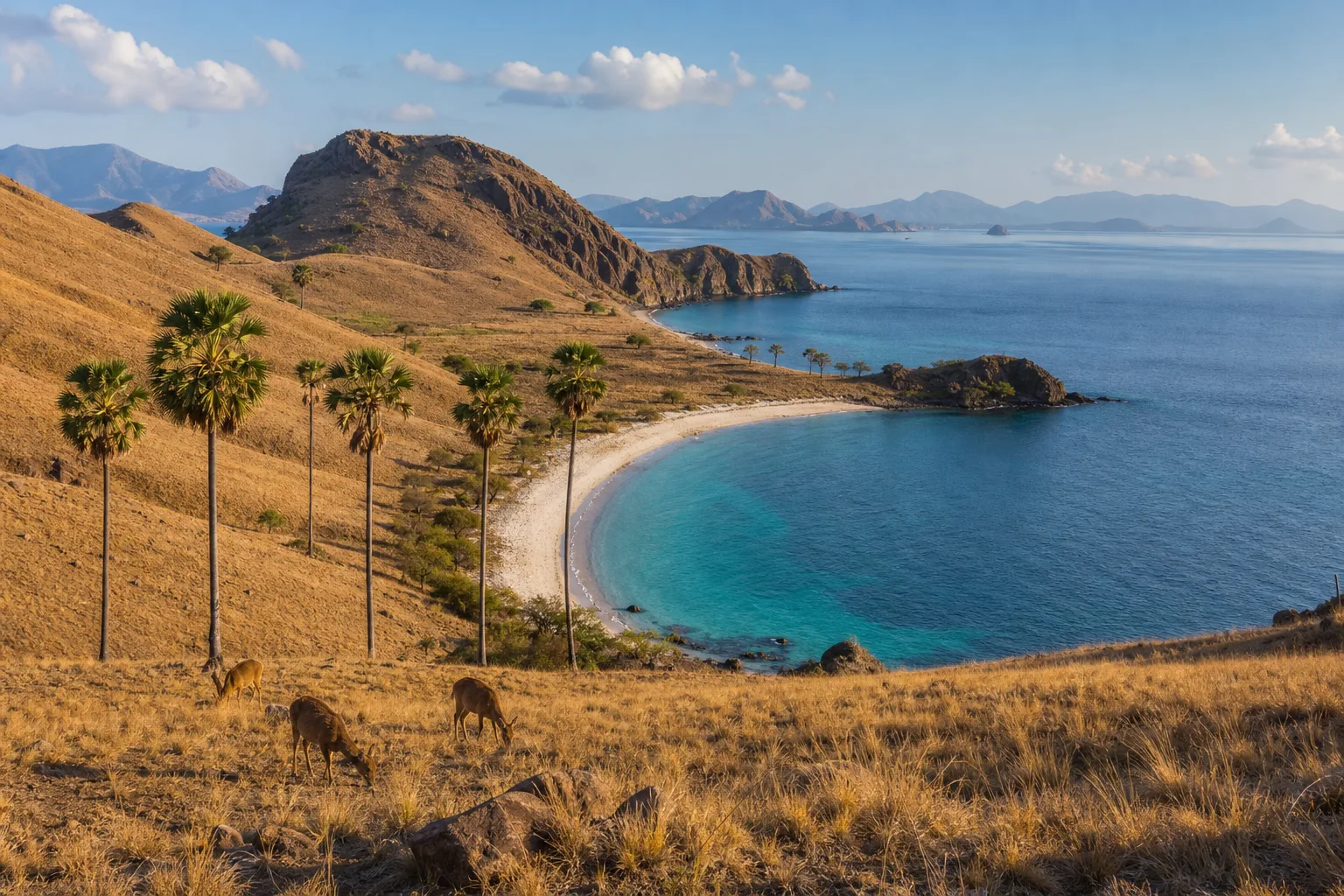
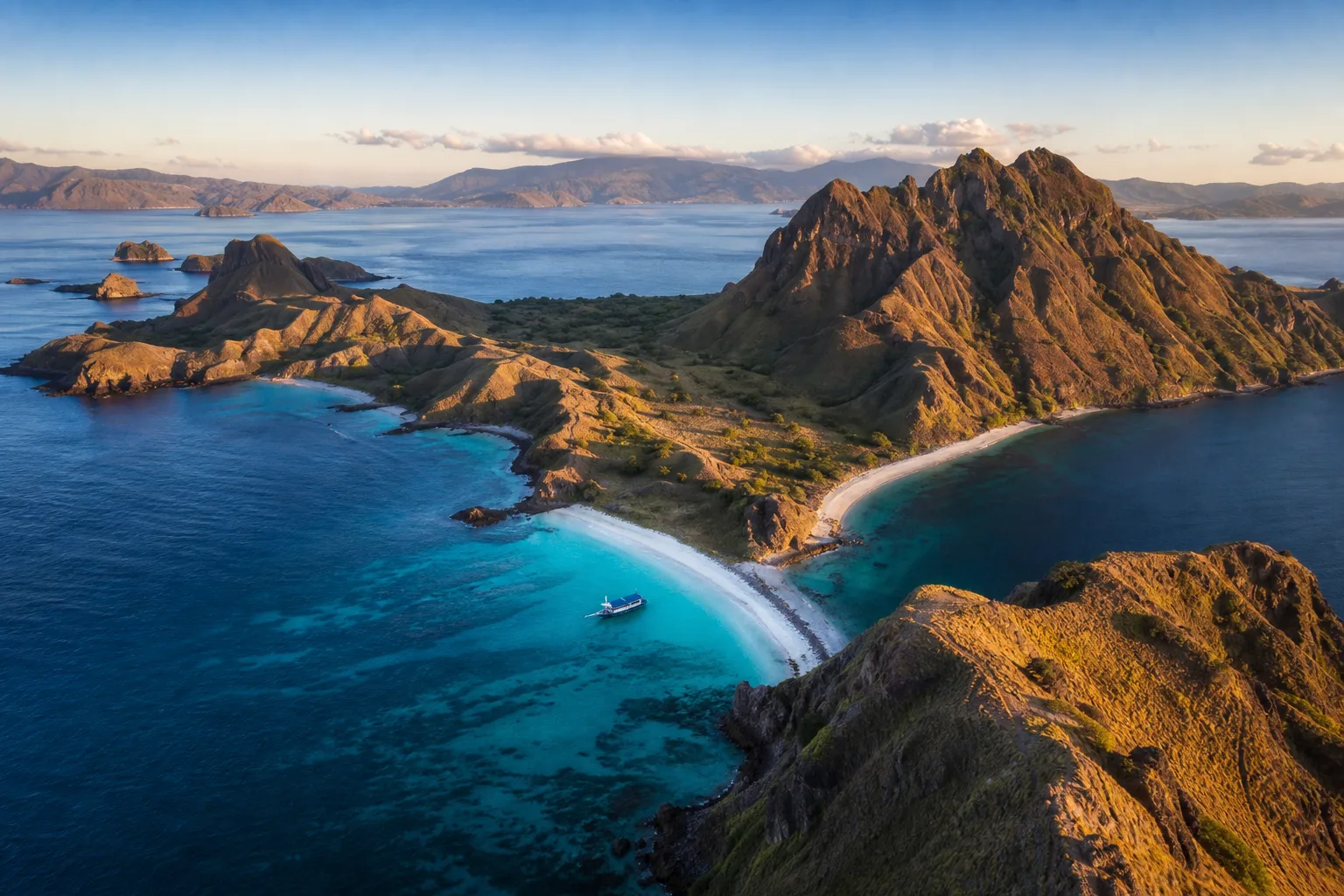
The view that became the postcard image of Komodo: three curving bays meeting below a ridge. It is a genuine highlight and it is also a real climb, on steps and loose ground in heat, taking most people 30 to 45 minutes up.
Go at sunrise if you possibly can, both for the light and because the ridge gets crowded and hot later. Anyone with knee problems or unmanaged asthma should think carefully; there is no shade and no shortcut down.
Komodo and Rinca: Seeing the Dragons
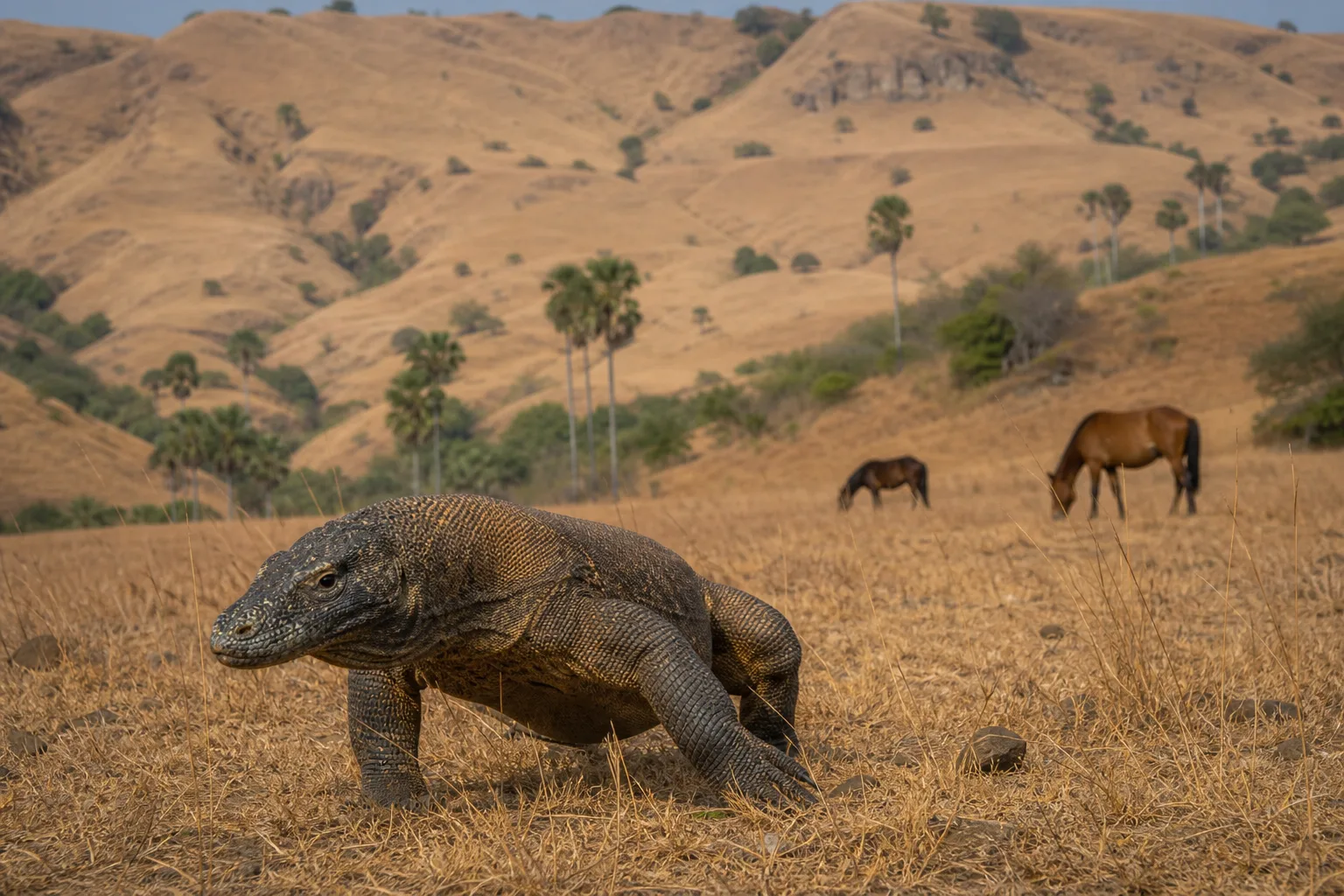
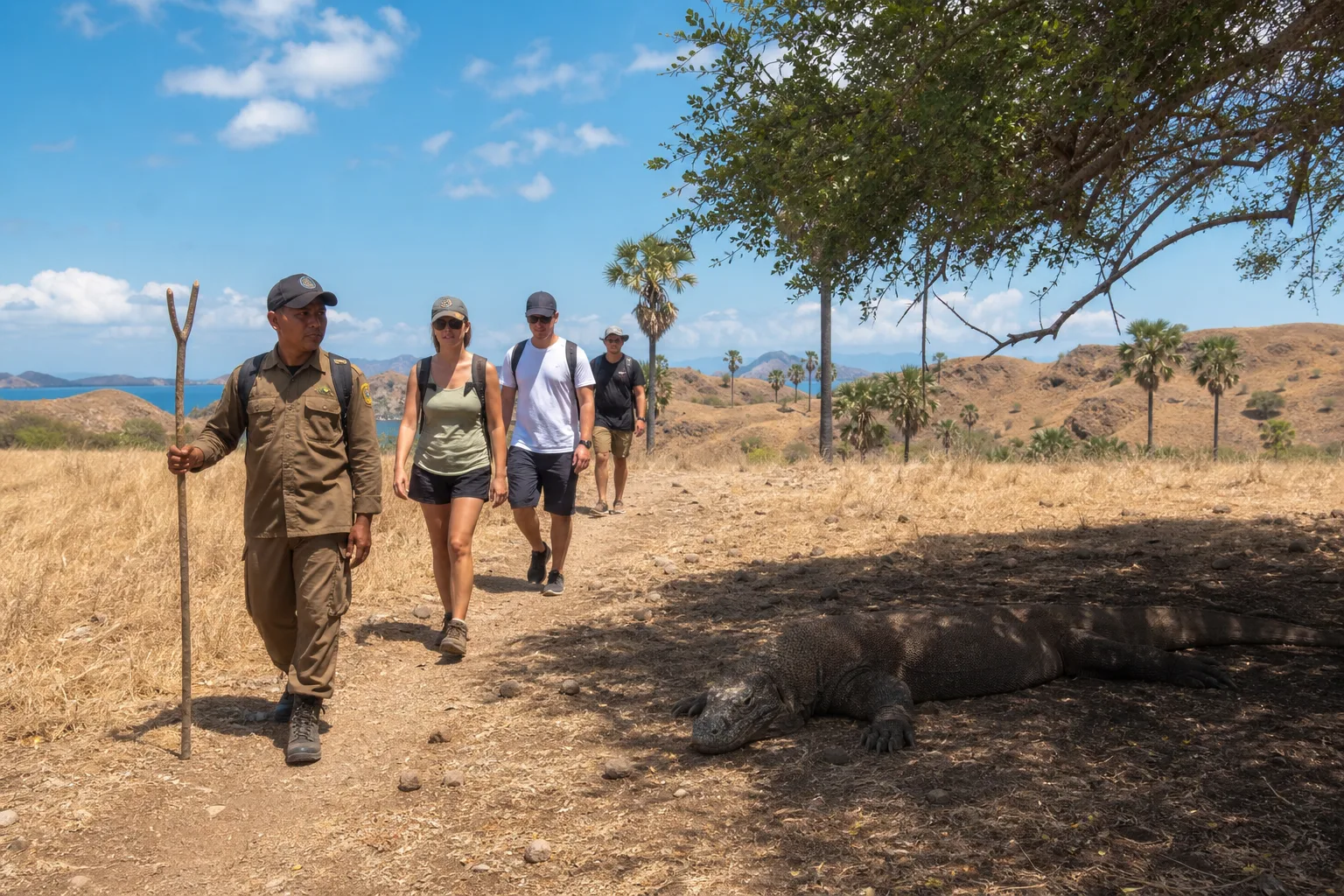
Both islands have dragons and both are walked with a park ranger, which is compulsory and not negotiable. The difference is character.
Komodo Islandfeels wilder and the trek takes you into the animals' habitat; the medium loop of about an hour is the sweet spot. Rinca has been built up with walkways and viewing infrastructure, which makes sightings easier and more predictable but the experience more managed. Rinca is also closer to town, so short trips tend to go there.
Dragons are wild predators and the rangers are there for a reason, which we cover in are Komodo dragons dangerous. Trekking options are set out on our dragon tours page.
Pink Beach
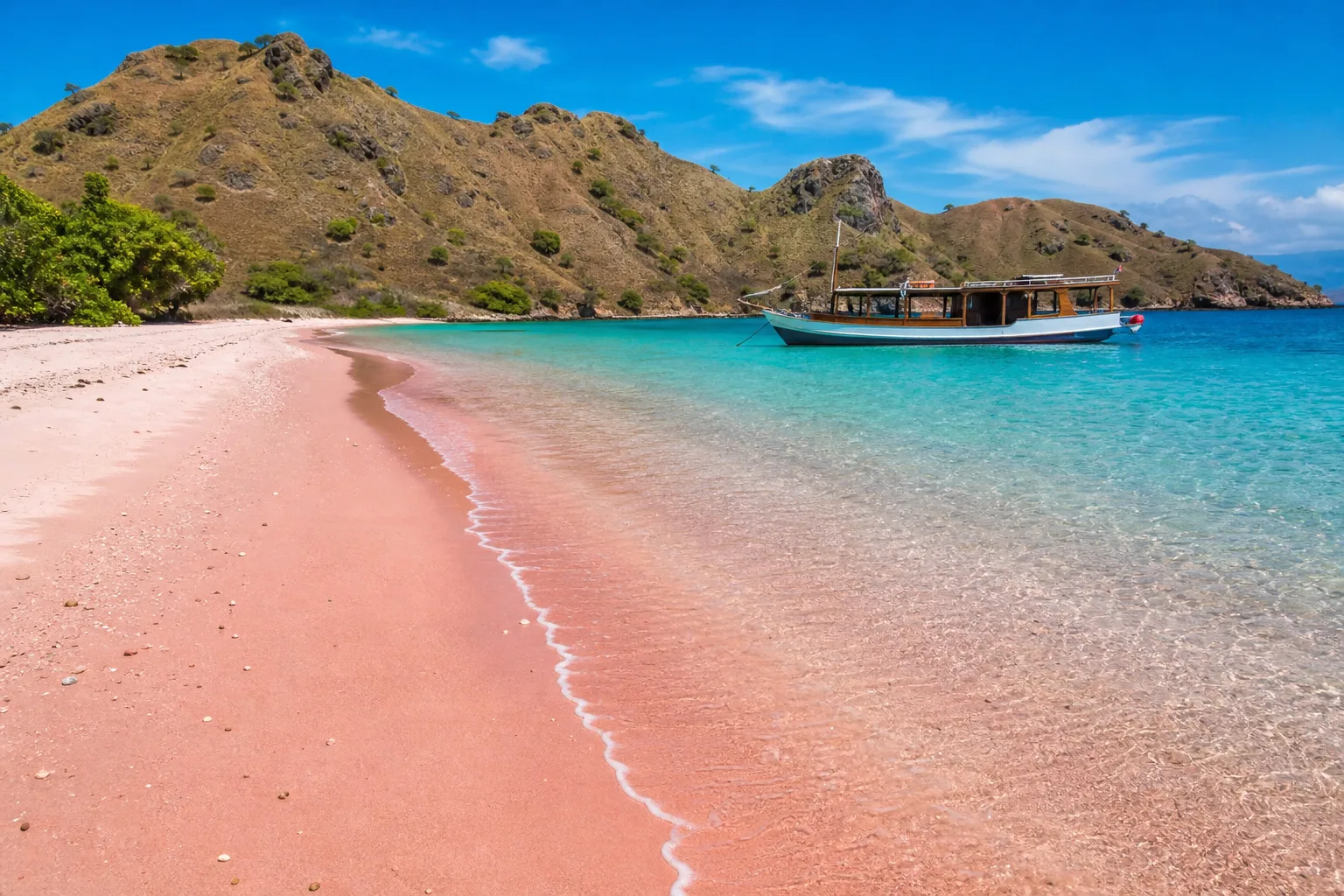
One of a handful of pink sand beaches in the world, coloured by red-pigmented foraminifera broken down among the white sand. The colour is real but subtle, and it reads strongest in soft light and when the sand is wet, which is worth knowing before you feel let down by it at noon.
The snorkelling straight off the beach is better than the photographs suggest, with healthy coral a short swim out.
Kalong, Kanawa, Kelor and Bidadari
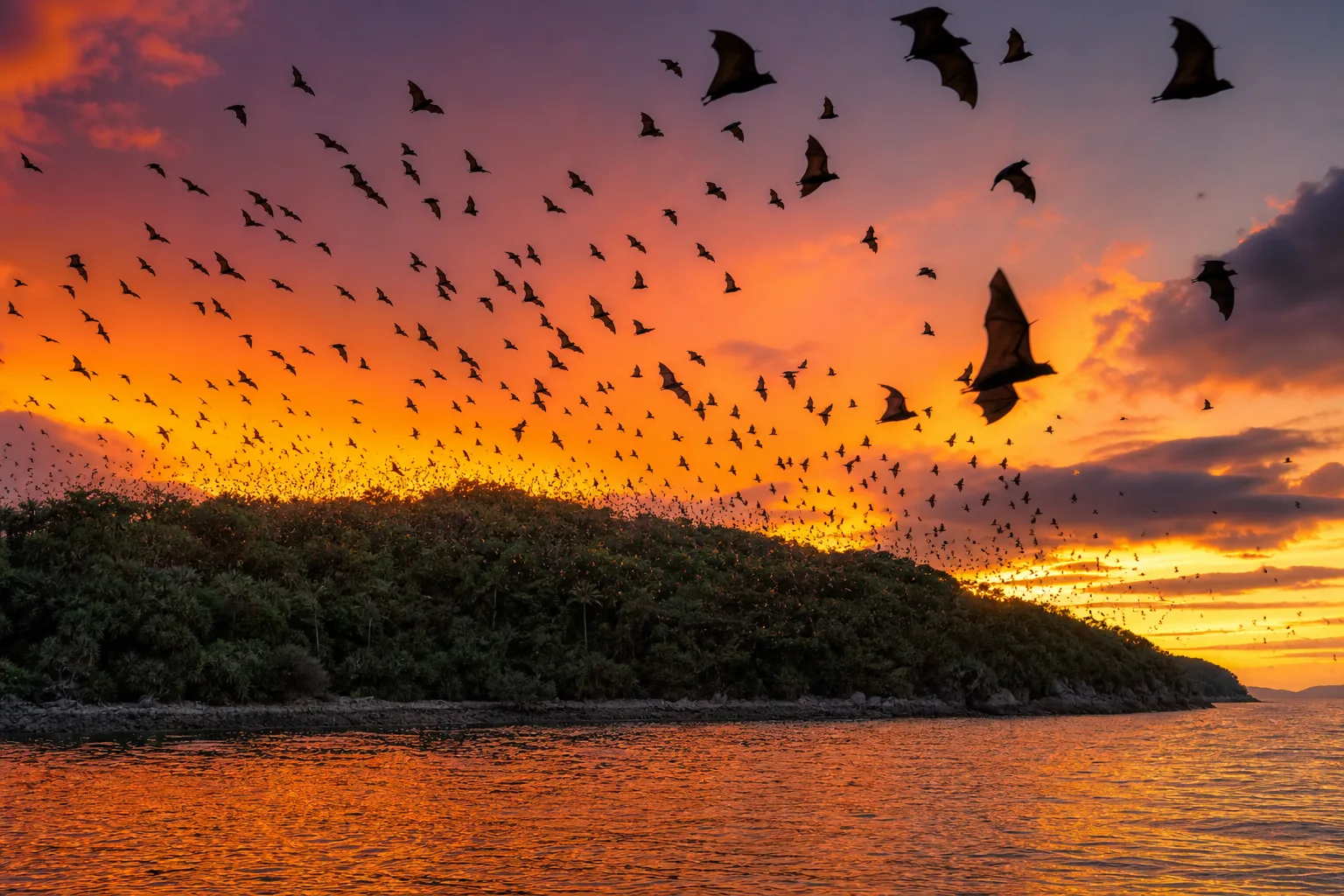
Kalong is the sunset stop: thousands of flying foxes lift off the mangroves at dusk and stream across the sky toward Flores, and it is one of the genuinely unforgettable half hours in the park.
Kanawa, Kelor and Bidadari are small islands close to Labuan Bajo with clear water and easy reefs. They are the standard filler on short trips, pleasant rather than remarkable, and useful when the weather closes the longer crossings.
When to Go
The park is open and worth visiting all year. What changes is sea state, visibility, crowding and price, and those pull in different directions.
April to November gives the calmest, clearest conditions and the most reliable access to the whole park. July and August are the busiest and most expensive weeks of the year, with the popular stops genuinely crowded and accommodation tight. The shoulder months either side, particularly October and November, keep most of the good conditions while the crowds and rates drop away. January and February bring the biggest manta aggregations along with rain, wind and softer visibility.
Our month-by-month guide breaks the year down properly.
What a Komodo Boat Tour Costs
Prices vary enormously by boat quality, group size and what is included, so treat any single figure with suspicion. For reference, these are our own current rates from the resort, per person:
Two morning dives IDR 2,500,000. A full diving day of three dives IDR 2,900,000. A single afternoon dive IDR 1,225,000. A night dive IDR 1,700,000. A try dive for complete beginners IDR 1,600,000. Snorkelling on a shared boat IDR 2,200,000. A private guide is IDR 2,000,000 per day, and nitrox IDR 130,000 per tank.
Two things routinely surprise people. First, park fees are separate from the boat and are charged per person per day, with an extra permit for diving. Second, the cheapest shared boats out of town are cheap for a reason, usually crowding, minimal safety kit and a lot of transit. Our guide to park entrance fees sets out what you will actually be charged, and money in Labuan Bajo covers cash, cards and tipping.
Choosing a Boat You Can Trust
Komodo has a long tail of very cheap operators, and boat safety in the region has a patchy history. A few questions sort the serious from the rest.
Ask how many passengers the boat takes and how many are actually booked. Ask whether there are life jackets for everyone, a working radio and a tender. For diving, ask whether there is oxygen aboard, what the guide-to-diver ratio is, and how they decide whether a site is safe on the day. An operator who answers those crisply is telling you something; one who deflects is also telling you something.
Then look at the itinerary against the clock. If a one-day trip out of town promises Padar, Komodo Island, Pink Beach, Manta Point and Kalong, the maths does not work and something will be cut short.
What to Bring on the Boat
Sun is the main hazard and people consistently underestimate it, because the breeze on a moving boat hides how hard it is working on you. Reef-safe sunscreen, a hat that will not blow off, a long-sleeved rash top and sunglasses do more for your day than anything else you can pack.
Beyond that: more water than you think, closed shoes with grip for the Padar steps and the dragon treks, a dry bag for anything electronic, motion sickness tablets taken before you leave rather than once you feel it, and cash for park fees. Our Komodo packing list covers the full picture.
How We Run Boat Tours from Sebayur
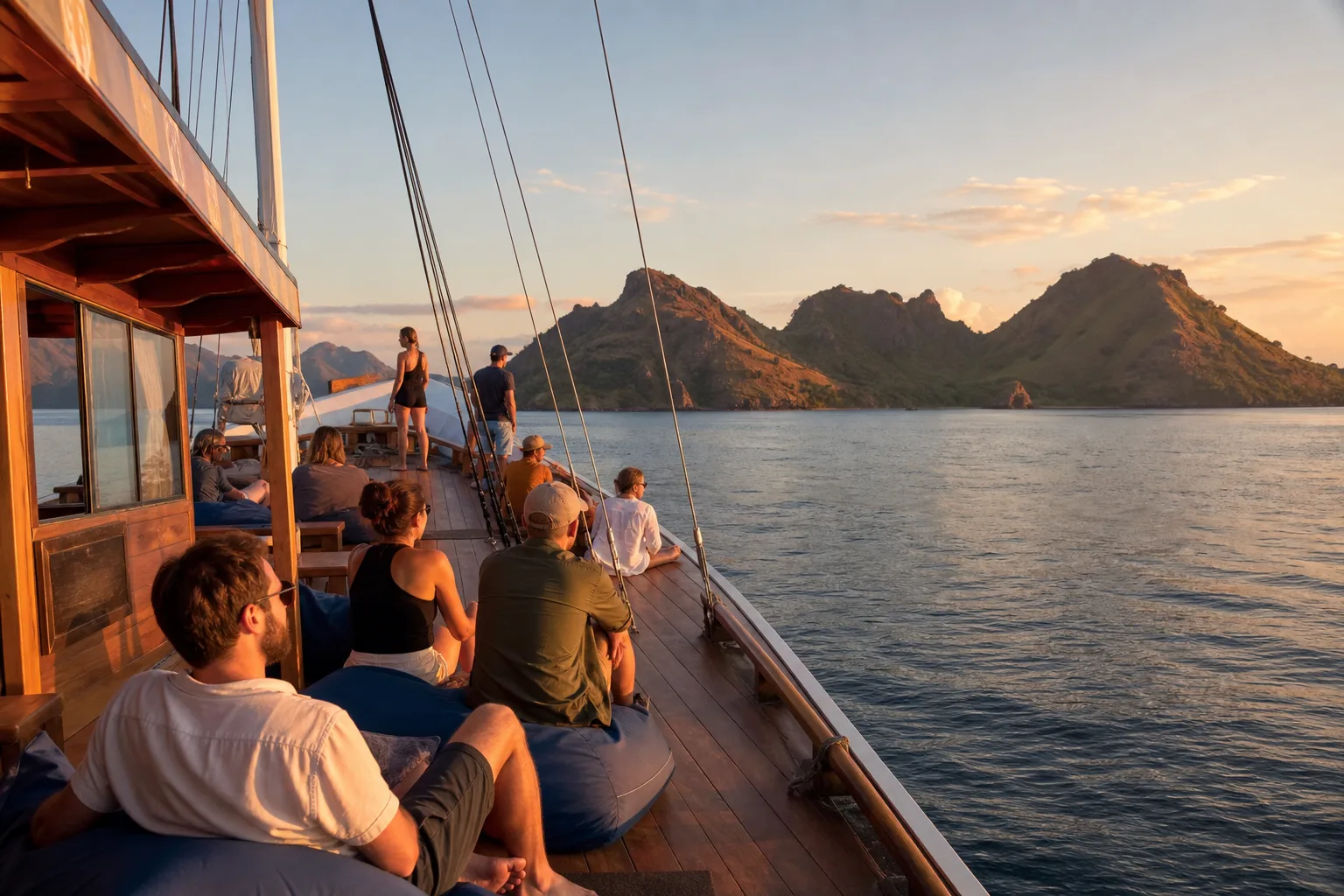
We keep a fleet of small boats at the resort so trips can be built around what guests want on the day rather than a fixed weekly schedule. Diving runs every morning at 08:00 with an optional afternoon dive; island-hopping trips leave early enough to reach Padar ahead of the town fleet.
Because we are already inside the archipelago, a change of plan is cheap. If the wind gets up we move to a sheltered site rather than cancelling, and if mantas are being seen we can go back the next morning. Guests combine it however they like across a stay, which is set out on our park tours page and our Komodo island tour guide. To put a trip together, just get in touch.
Frequently Asked Questions
Plan Your Trip
Ready to Get on the Water?
Tell us your dates and what you want to see, and we will put the right boat and itinerary together from our island.
Plan My Boat Tour