首页   > 科莫多龙

科莫多龙

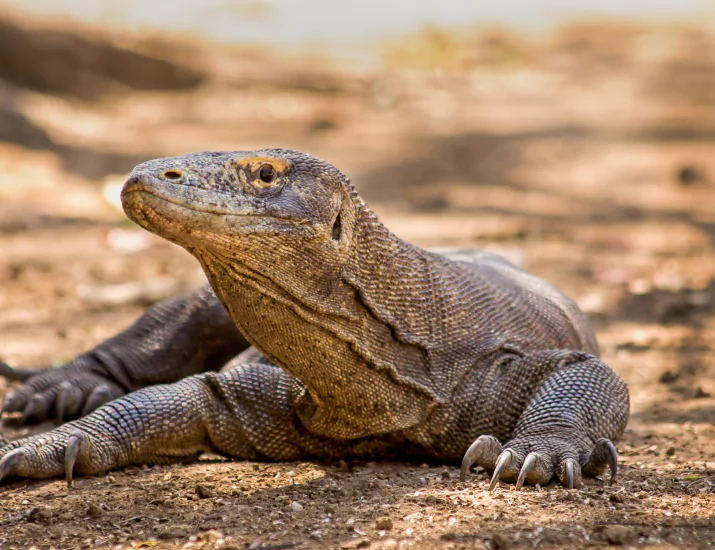
Komodo dragon closeup

科莫多龙

The Komodo dragon (Varanus komodoensis) stands as a creature that has enraptured the curiosity of both scientific minds and the wider populace. Distinguished as the largest lizard to grace our planet, this extraordinary species claims residence in the remote corners of Indonesian islands, with a primary stronghold on Komodo Island. The amalgamation of immense proportions, formidable might, and distinctive conduct exhibited by the Komodo dragon has elevated it to an emblem of enigma within the animal realm. Within this comprehensive exploration, we shall embark on a profound journey through the captivating realm of the Komodo dragon, delving into its biological intricacies, behavioral peculiarities, conservation status, and the ceaseless endeavors aimed at safeguarding this living legend.

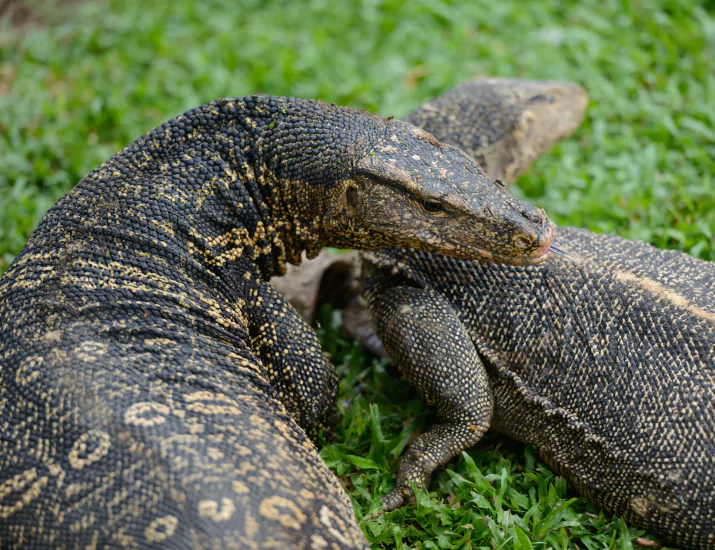
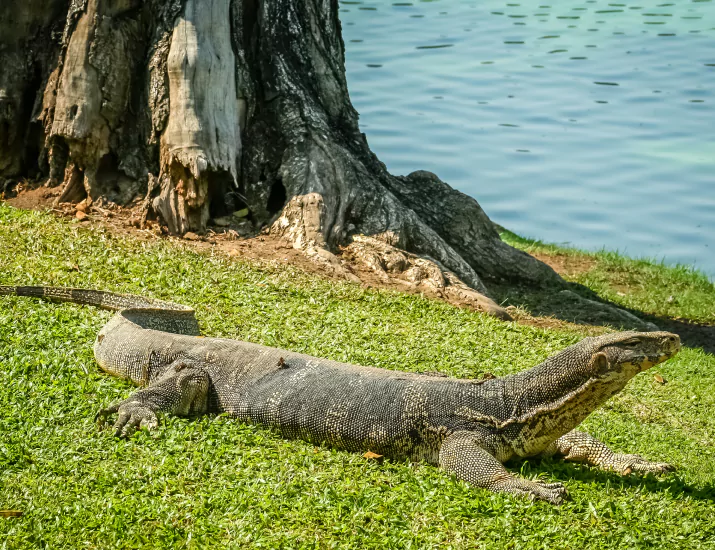
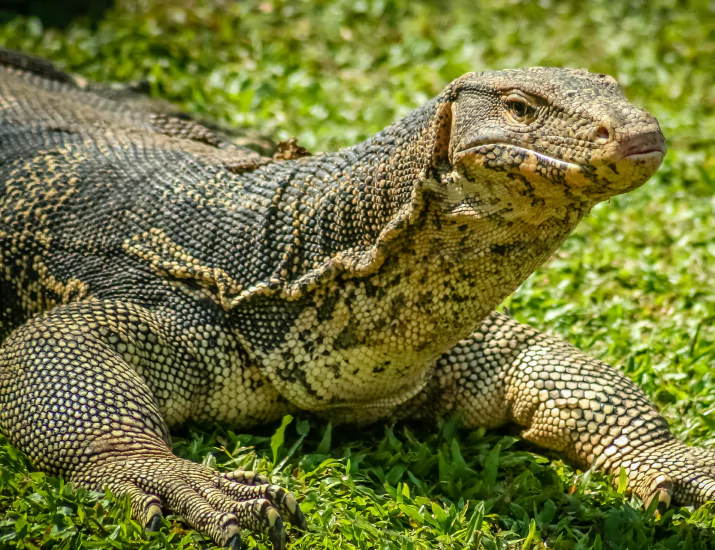
Two lizards walking around the grass

物理特征

The Komodo dragon possesses an extraordinary physical presence. These creatures have the potential to reach an impressive length of 10 feet (3 meters) and can tip the scales at a staggering 300 pounds (136 kilograms). Their immense stature and ancient visage contribute to their captivating nature as a species.

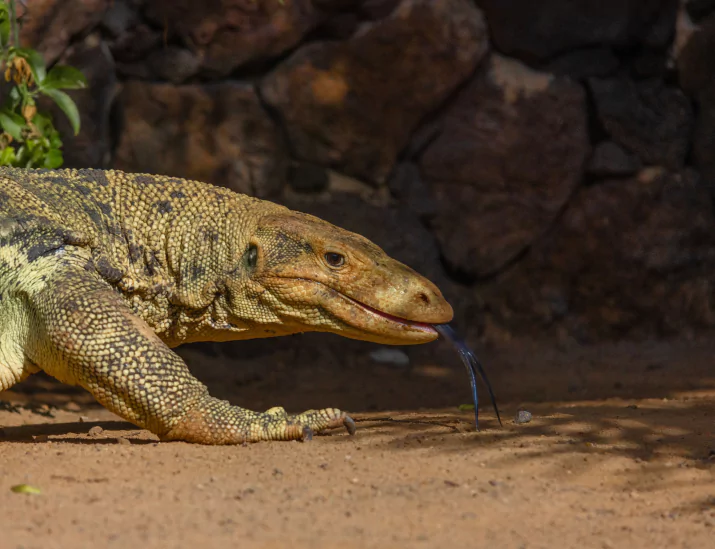
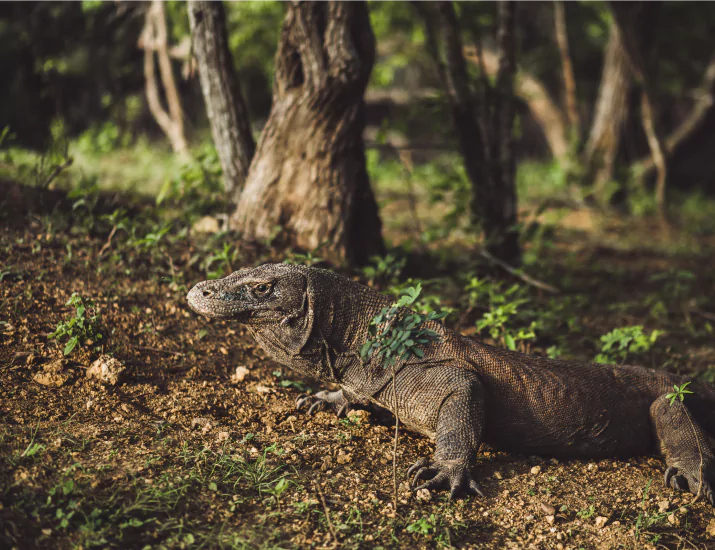
Closeup of a komodo dragon lizard

鳞甲

The Komodo dragon possesses distinctive physical attributes that set it apart from other creatures.
Its skin boasts a formidable covering of resilient, armor-like scales, serving as a dual-purpose shield against both injury and bacterial infections. These scales exhibit a striking yellowish-brown or grayish hue, perfectly suited to their harsh, volcanic habitat. What truly distinguishes these scales is their ingenious combination of safeguarding capabilities and flexibility, endowing the dragon with remarkable agility. These scales cleverly overlap one another, forming an intricate protective layer that shields the dragon from external threats.
However, the remarkable features of these scales do not end there. They also play a crucial role in regulating the dragon’s body temperature. Komodo dragons, being ectothermic or cold-blooded creatures, rely on external heat sources to elevate their body temperature. The dark pigmentation of their scales enhances their ability to absorb solar heat efficiently, while the overlapping pattern aids in heat retention, ensuring optimal thermoregulation.

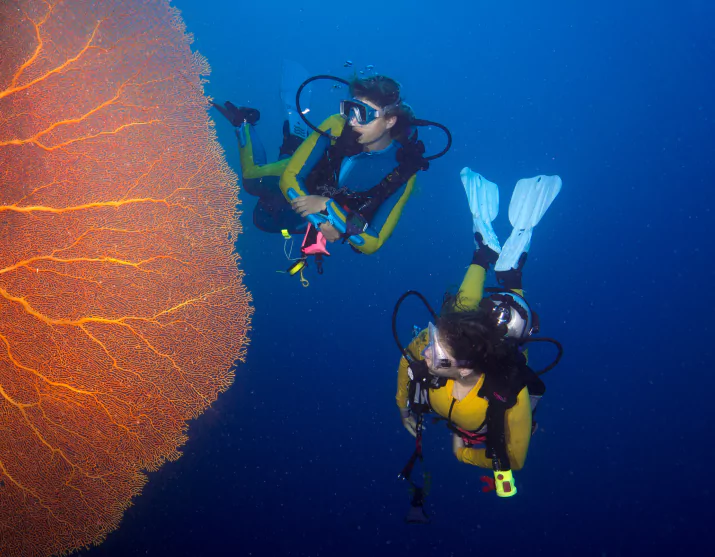
Scuba divers in coral reef

可怕的爪子和尾巴

Their long, muscular tails and sharp claws are well-suited for their predatory lifestyle. The tails serve as a counterbalance to their large bodies when they move at speed or make sharp turns during chases, and their claws are formidable tools for both hunting and defense. Each claw is curved and razor-sharp, capable of inflicting serious damage to prey or rivals.

Sunset over the islands of halong bay

用于气味探测的叉舌

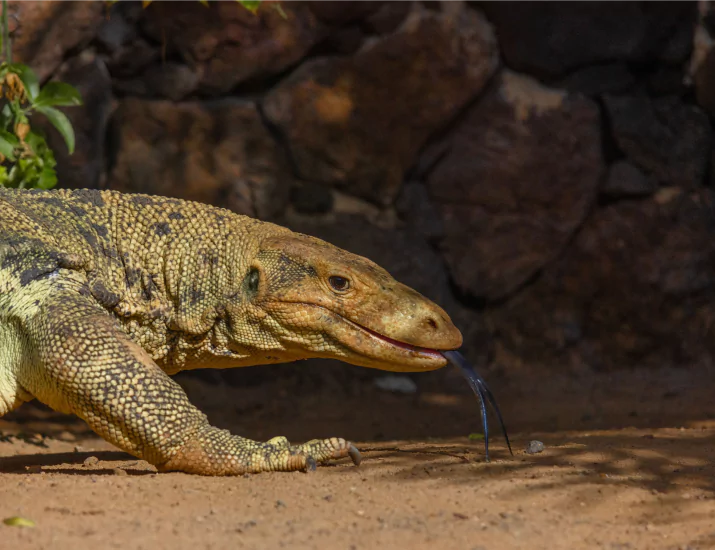
Perhaps the most striking feature of the Komodo dragon is its tongue, which is forked like that of a snake. This adaptation allows them to detect scent particles in the air and locate prey from great distances. Their keen sense of smell is essential for their survival in the wild. This forked tongue is often seen darting in and out as they sample the air for the scent of potential prey or carrion.

Double sided sandy beach

行为和饮食

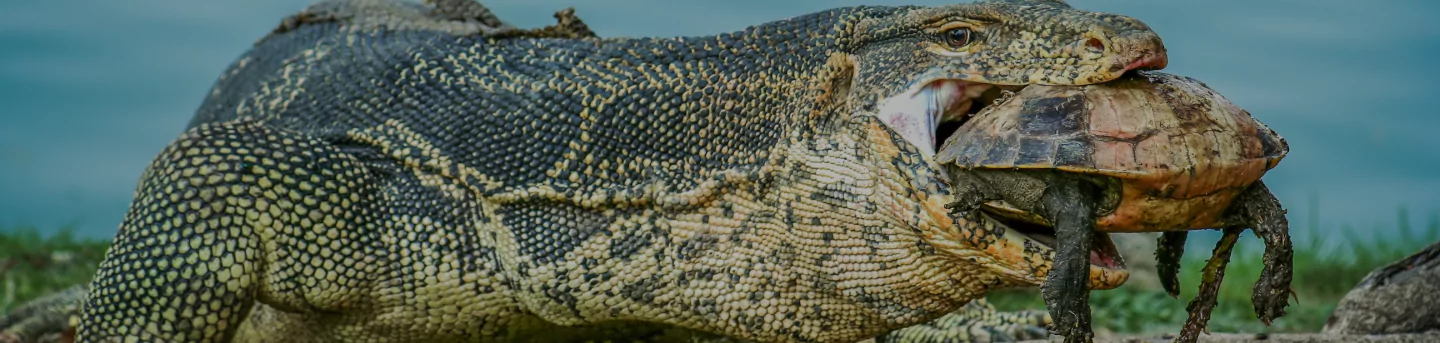
Komodo dragons stand as the supreme predators within their natural habitat, holding the highest position in the food chain. They possess an insatiable hunger and exhibit opportunistic hunting behavior. Their dietary preferences primarily revolve around scavenging carrion, although they display the ability to capture live prey, such as deer, wild boar, and even water buffalo.

Rocky coast

致命的狩猎策略

One of the most extraordinary facets of the Komodo dragon’s hunting approach lies in its capacity to conquer significantly larger prey. Employing a combination of formidable mandibles, razor-sharp fangs, and a potent bacterial blend secreted in their saliva, these dragons render their victims helpless. The dragon’s bite introduces a lethal bacterial concoction into the wounds, resulting in a gradual and excruciating demise for the unfortunate quarry. Over the span of numerous days, the Komodo dragon meticulously shadows its debilitated target until it eventually succumbs to the ravages of infection and depletion.
Their jaws are equipped with serrated teeth, perfectly adapted for tearing into flesh. The dragons can exert immense bite force, allowing them to rend apart their prey. They have around 60 teeth in their mouths, and these teeth are continually replaced throughout their lives. This constant replacement ensures that they always have sharp teeth ready for hunting and scavenging.

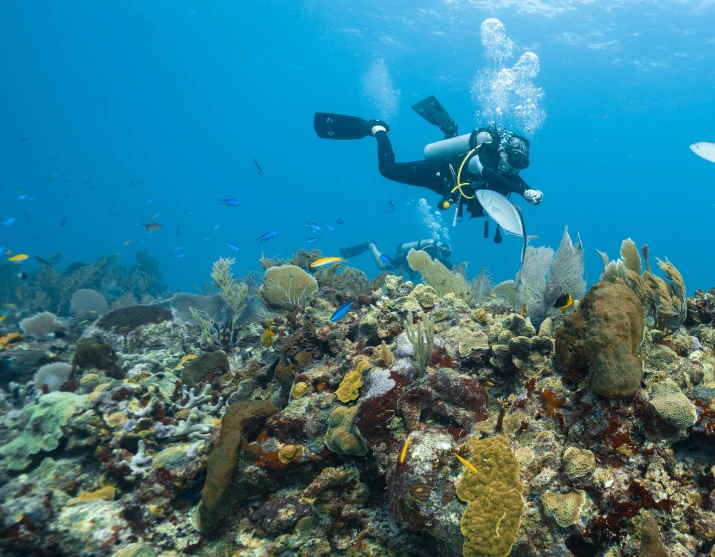
Divers among corals and fishes

食腐和伺机取食

Despite their fearsome reputation as predators, Komodo dragons are also known to scavenge, and they are not above stealing kills from other predators. This scavenging behavior allows them to conserve energy and obtain sustenance in the harsh, unpredictable environment they call home. Their willingness to feed on carrion further highlights their adaptability and resourcefulness.

Sailboat in sea on background of mountains

栖息地和分布

Komodo dragons can be found naturally on a select few Indonesian islands, such as Komodo, Rinca, Flores, Gili Motang, and certain regions of western and northern Timor. These islands boast rugged topography, volcanic scenery, and a climate that oscillates between periods of rainfall and drought. The dragon’s remarkable capacity to thrive in these demanding environments serves as a testament to their enduring resilience and evolutionary triumph.

Aerial view of fishing boats

多用途栖息地

Their natural habitat encompasses arid grasslands, expansive savannas, lush tropical forests, and coastal regions, enabling them to exploit both terrestrial and marine resources. This remarkable adaptability to a spectrum of environments endows them with unparalleled versatility as apex predators. These creatures can be encountered at elevations spanning from sea level to altitudes exceeding 2,000 meters, a testament to their remarkable resilience across the diverse landscapes of the islands they inhabit.
Komodo dragons exclusively inhabit the Lesser Sunda Islands, an archipelago extending from Bali in the west to Timor in the east. These islands are distinguished by their volcanic origins, which have sculpted the terrain and provided distinctive ecological niches for these apex predators. Despite their confinement to a relatively compact geographic area, these dragons have evolved to thrive in a wide array of ecosystems within this limited range.

Aerial view of large white ship at sunset

保护状况

While the Komodo dragons enjoy a celebrated reputation, they confront numerous challenges to their existence. The peril of habitat depletion, driven by human actions like deforestation and farming, looms large. With the ongoing expansion of Indonesia’s human population, an increasing amount of land transforms for human purposes, causing the disintegration and devastation of the Komodo dragon’s native environment.

Big lizard closeup

非法宠物贸易

The illicit commerce in exotic pets has exacerbated the decline in their numbers. The fascination with owning a Komodo dragon as a companion has incentivized unlawful hunters to capture these animals and surreptitiously trade them in underground markets. This unethical activity not only diminishes the wild dragon populations but also inflicts significant duress on the captives, who are poorly adapted to life in captivity. The illicit exotic pet trade not only jeopardizes the well-being of the dragons but also disrupts their ecosystems, as poachers frequently disturb nesting sites and natural habitats during their illicit operations.

Lizard

气候变化

Nonetheless, the gravest concern arises from the looming specter of climate alteration, a peril that threatens to imperil the dragons’ already constrained abode and sustenance reservoirs. The escalating ocean levels and disrupted precipitation regimes hold the potential to unsettle the intricate equilibrium within their environments, thereby reducing the availability of prey and intensifying the challenges of locating suitable nesting grounds for these awe-inspiring creatures.
The repercussions of climate variation extend their tentacles to the dragons’ endurance indirectly by impacting their prey species. As temperature and precipitation patterns undergo transformation, the geographical distribution and population size of the dragons’ food sources may experience a shift, ultimately influencing the sustenance of these remarkable reptiles. In such a manner, the Komodo dragons find themselves susceptible to the far-reaching consequences of climate fluctuations throughout their entire ecosystem.

Aerial view of cliffs

保护工作

In response to these challenges, dedicated endeavors have been undertaken to safeguard the Komodo dragon and its surroundings. In the year 1991, the establishment of the Komodo National Park marked a significant milestone in ensuring the safety of these magnificent reptiles. This park has earned recognition as a UNESCO World Heritage site and enforces stringent regulations to minimize human intervention, thus safeguarding the natural abode of these dragons. Furthermore, collaborative efforts between international conservation bodies and local authorities have been diligently orchestrated to combat illicit poaching activities while simultaneously raising awareness about the imperative need to preserve these extraordinary creatures.
The conservation initiatives pertaining to Komodo dragons encompass a multifaceted approach, encompassing habitat preservation, population monitoring, and educational endeavors. Collaborative efforts between park rangers and researchers play a pivotal role in studying and safeguarding these creatures and their environments. Equally critical are educational programs aimed at both local communities and tourists, which serve as a cornerstone for garnering support for conservation endeavors and promoting responsible tourism practices.

Komodo dragon

正在进行的研究

Ongoing scientific investigations into Komodo dragons persistently unveil fresh revelations regarding their biological characteristics, behavioral patterns, and ecological significance. Recent research has divulged novel insights into their reproductive processes, navigational abilities, and intricate social dynamics. These endeavors not only enrich our comprehension of this remarkable species but also play a pivotal role in the formulation of efficacious conservation initiatives.

Lake view

单性生殖

Researchers unveiled a fascinating revelation concerning Komodo dragons. It has come to light that these remarkable reptiles possess the capacity for parthenogenesis, a form of reproduction that allows females to produce offspring independently of mating with males. This adaptation may serve as a valuable advantage in supporting their survival within remote and isolated environments, where finding a mate might pose considerable challenges. Parthenogenesis endows a female with the ability to generate offspring from her own genetic material, presenting a viable method of reproduction even in the absence of male counterparts.
Although parthenogenesis has been observed in captive Komodo dragons, it remains a rare occurrence in their natural habitats. Nonetheless, this extraordinary reproductive strategy underscores the species’ capacity to adapt to demanding conditions. This distinctive method of reproduction might also contribute to the preservation of genetic diversity within isolated populations.

Komodo dragon

游泳水平

Another fascinating element of Komodo dragon behavior is their skill in traversing open water to access various islands. Although it was previously believed that their swimming abilities were lacking, recent studies have unveiled their proficiency in crossing brief water expanses. This capability enables them to establish presence in new regions and uphold genetic diversity among their populations, a crucial factor for their sustained survival.
It was previously assumed that Komodo dragons could only disperse to neighboring islands if land bridges or drifting debris facilitated their journey. However, recent studies have provided evidence of their swimming capabilities, challenging our understanding of their dispersal and adaptation strategies.

Big lizard

社会动态

Moreover, investigations have shed light on the communal aspects of these solitary predators. Komodo dragons are recognized for their territorial and independent nature, yet they intermittently engage with other members of their species, often in the context of mating or conflicts related to food resources. Analyzing these social tendencies can offer invaluable insights into their preservation, as it aids in pinpointing the elements that contribute to successful reproduction and survival.
Exploration of Komodo dragon communal conduct has unveiled that while they predominantly hunt alone, they occasionally assemble in larger numbers when there is available carrion. These congregations can be fraught with tension, as individuals compete for access to the food source. Observations of social exchanges and hierarchies of dominance within these gatherings furnish valuable information for conservation initiatives and the administration of protected regions.
The Komodo dragon stands as a living marvel in the realm of wildlife—a creature that has captivated and intrigued humans across generations. Its imposing stature, distinct hunting strategies, and resilience in harsh environments embody the essence of untamed wilderness. Yet, these magnificent beings confront an array of challenges to their survival , encompassing habitat degradation, illicit trade, and the impact of climate change.
What exactly is a Komodo dragon, and in which geographical regions can they be located?
The Komodo dragon stands out as a colossal reptile, holding the title of the Earth’s largest lizard.
What sets Komodo dragons apart in terms of their appearance?
Komodo dragons possess remarkable physical characteristics, with lengths reaching up to 10 feet and weights comparable to a small automobile. Their rugged, scale-covered exterior not only provides protection but also aids in retaining heat.
How do Komodo dragons hunt, and what do they eat?
Komodo dragons eat both dead animals and live ones like deer. They have strong jaws and sharp teeth.
What are the primary challenges endangering Komodo dragons, and what conservation efforts are being employed to support their survival? Komodo dragons face threats due to habitat destruction, illegal pet trade, and climate change. Conservation initiatives like Komodo National Park have been established to safeguard their habitats.

关于在印度尼西亚潜水的常见问题
科莫多龙的确切定义是什么?在世界的哪些角落,你能遇到这些壮观的生物?"
科莫多龙是一种巨大的爬行动物,其栖息地仅限于印度尼西亚,尤其是科莫多岛、林卡岛等岛屿。"
科莫多龙的身体特征有何不同?"
科莫多龙以其非凡的体型而闻名,其特点是有坚固的鳞片、锋利的爪子和有助于嗅觉的分叉舌头。"
这些龙如何捕食,喜欢吃什么?"
科莫多龙是熟练的猎手,以鹿等动物为食。它们独特的捕猎策略是咬住猎物,引入有害细菌,削弱猎物的力量,然后将猎物吃掉。"
科莫多龙面临的主要危险是什么,正在采取哪些措施来确保对它们的保护?"
科莫多龙面临着栖息地破坏和非法宠物交易的威胁。保护措施包括建立科莫多国家公园等保护区、打击非法贸易和开展研究,以帮助保护这些非凡的生物。"

联系我们

连接天堂--科莫多度假村等待您的梦幻之旅。我们的预订服务员和前台将为您提供超快的服务。立即联系我们!
An unhandled error has occurred. Reload 🗙