
Bali is magnificent. Its terraced rice paddies, sea temples, and surf breaks have earned it a permanent place on every Southeast Asia itinerary, and for good reason. But here is the truth that seasoned travellers discover sooner or later: Bali is one island in an archipelago of more than 17,000, and some of the most awe-inspiring experiences in Indonesia lie far beyond its shores.
The Indonesian archipelago stretches over 5,000 kilometres from the tip of Sumatra to the jungles of Papua. Within that vast span sit volcanic crater lakes, prehistoric dragons, ancient Hindu-Buddhist temples, pink sand beaches, the most biodiverse coral reefs on the planet, and islands so remote that foreign visitors are still a novelty. If you have already fallen in love with Bali, or if you simply want to see what most tourists miss, this guide reveals the best places to visit in Indonesia besides Bali, region by region, island by island.
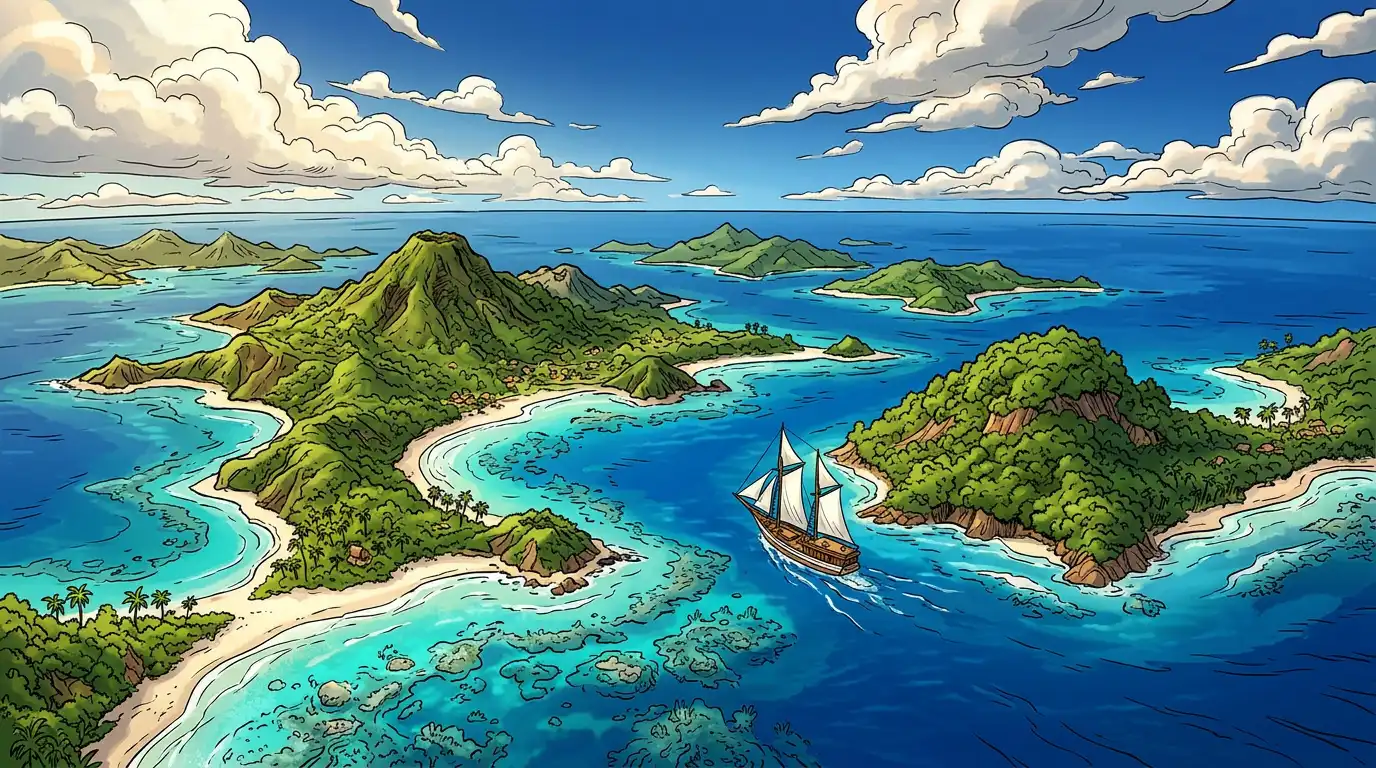
Komodo National Park - Dragons, Dive Sites, and the World's Most Beautiful Islands
No list of the best places to visit in Indonesia besides Bali can begin anywhere other than Komodo National Park. Located in East Nusa Tenggara, this UNESCO World Heritage Site is home to the Komodo dragon, the largest living lizard on earth, and some of the most spectacular landscapes and marine environments in the entire Coral Triangle.
Komodo Island and Rinca Island
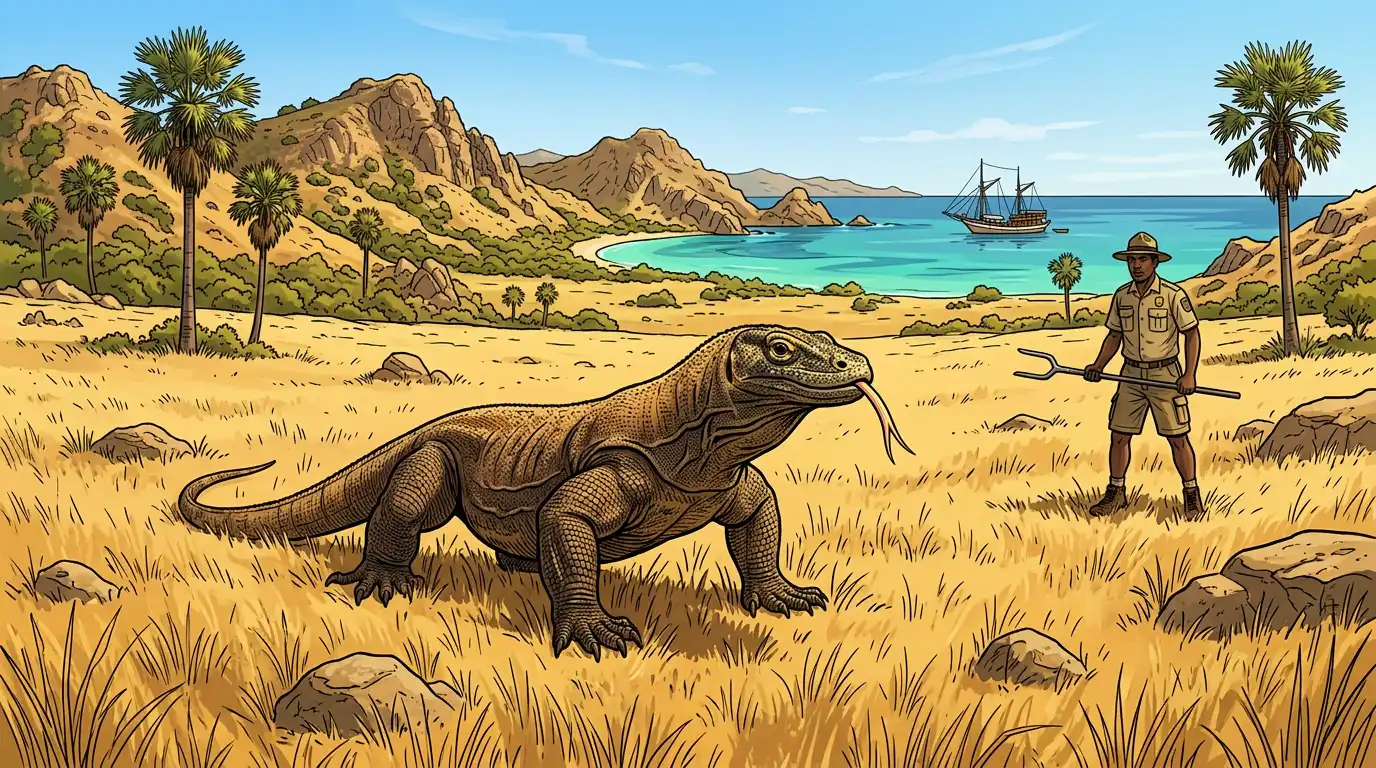
Komodo Island and Rinca Island are the two main locations where visitors can observe Komodo dragons in the wild. Guided treks led by experienced park rangers take you through dry savannah, monsoon forest, and creek beds where these apex predators hunt, rest, and nest. Watching a three-metre Komodo dragon move through its natural habitat, powerful, unhurried, and ancient, is a visceral reminder that the natural world still holds genuine wonders.
Rinca Island is often preferred for dragon trekking because it is closer to the main harbour town of Labuan Bajo and because dragon sightings around the ranger station are almost guaranteed. Komodo Island itself is larger, wilder, and requires a longer boat journey, but the experience of setting foot on the island that gave these creatures their name carries a weight of its own.
Padar Island
Padar Island may be the single most photographed viewpoint in Indonesia. A moderately steep hike of about thirty minutes leads to a summit ridge that reveals a panorama almost too perfect to believe: three crescent-shaped bays spread out below, each with a different colour of sand, white, pink, and black volcanic, curving between jagged green ridges that plunge into turquoise water. At sunrise, the light paints the hills in gold and the bays glow like liquid gemstones. Padar Island has no Komodo dragons and no villages, it exists purely as a landscape, and what a landscape it is.
Pink Beach
Within Komodo National Park, several shores carry the distinctive blush of Pink Beach. The colour comes from microscopic red organisms called foraminifera, whose shell fragments mix with white sand to produce a soft rose hue. The effect is subtle but unmistakable, especially when the sand is wet. Snorkelling directly off Pink Beach is outstanding, healthy coral begins in knee-deep water, and colourful reef fish dart through the shallows just metres from shore. Pink Beach is one of only a handful of naturally pink sand beaches in the world, and experiencing it firsthand is far more striking than any photograph.
Scuba Diving in Komodo
The waters surrounding Komodo National Park are where nutrient-rich currents from the Indian Ocean and the Flores Sea collide, creating an underwater environment of staggering richness. The diving here is legendary. Batu Bolong, a submerged pinnacle surrounded by deep blue water, is covered in soft corals so dense the rock beneath is invisible, with reef sharks, giant trevally, and Napoleon wrasse patrolling the drop-offs. Castle Rock and Crystal Rock deliver schools of fusiliers and surgeonfish so thick they block out the sun. Manta Point and Manta Alley are regular gathering spots for reef manta rays, where divers can watch these graceful giants glide in for cleaning or feeding.
Komodo diving is not always gentle. Currents can be powerful and unpredictable, particularly around full and new moons, which is what makes the marine life so abundant. For experienced scuba divers, these conditions produce the kind of diving that you spend the rest of your life comparing everything else to.
Staying at Komodo Resort
Komodo Resort sits privately on Sebayur Island, a small coral-fringed island within Komodo National Park itself. Waking up inside the national park, rather than commuting from the mainland, means shorter boat rides to dive sites, early access to locations before day-trippers arrive, and evenings spent watching the sunset from a quiet beach with the silhouettes of Komodo's islands on the horizon. The resort operates its own dive centre with experienced guides who know every current, every cleaning station, and every manta ray aggregation site in the park. For anyone serious about exploring Komodo, above and below the water, staying at Komodo Resort transforms a day trip into a genuine immersion.
The Gili Islands - Three Islands, No Cars, Endless Charm
A short boat ride from Lombok, the Gili Islands are among the most beloved island destinations in Southeast Asia. What makes them special is their simplicity: no motorised vehicles are permitted on any of the three islands. Transport is by foot, bicycle, or horse-drawn cidomo. The result is an atmosphere of unhurried calm that feels increasingly rare in the modern world.
Gili Trawangan
Gili Trawangan, universally known as Gili T, is the largest and most energetic of the three. It has earned a reputation as a party island, and the eastern strip of bars and restaurants delivers on that promise after dark. But Gili T has more depth than its party reputation suggests. The western coast is quiet and undeveloped, offering some of the most beautiful sunset views in Indonesia, the sky blazing orange and purple with Mount Agung's silhouette rising across the strait. The diving and snorkelling around Gili T are excellent, with sea turtles appearing on almost every outing and the famous underwater NEST sculpture garden attracting photographers from around the world.
Gili Air
Gili Air is the closest Gili to Lombok and strikes the most appealing balance for many travellers. It has enough restaurants, yoga studios, and beachfront bars to keep things interesting without ever feeling crowded or commercialised. The local Sasak community gives Gili Air an authenticity that the other two Gilis sometimes lack, and the snorkelling on its eastern shore, particularly around the jetty area, is superb. For travellers who want the Gili Islands experience with a little more substance and a little less volume, Gili Air is often the perfect choice.
Gili Meno
Gili Meno is the smallest, quietest, and most romantic of the three. Honeymoon couples, introverts, and anyone craving genuine solitude gravitate here. The island has a saltwater lake, a turtle sanctuary, and beaches so empty you can walk for twenty minutes without seeing another person. The snorkelling on Gili Meno's west coast, where turtles graze on seagrass in crystal clear shallows, is among the most effortless marine encounters you will find anywhere in Indonesia.
Lake Toba - Sumatra's Volcanic Masterpiece
In the highlands of North Sumatra, Lake Toba is one of the most dramatic natural wonders in all of Southeast Asia. It is the largest volcanic lake in the world, roughly 100 kilometres long and 30 kilometres wide, formed by a cataclysmic supervolcanic eruption approximately 75,000 years ago that was so powerful it affected the global climate for years afterward.
Samosir Island
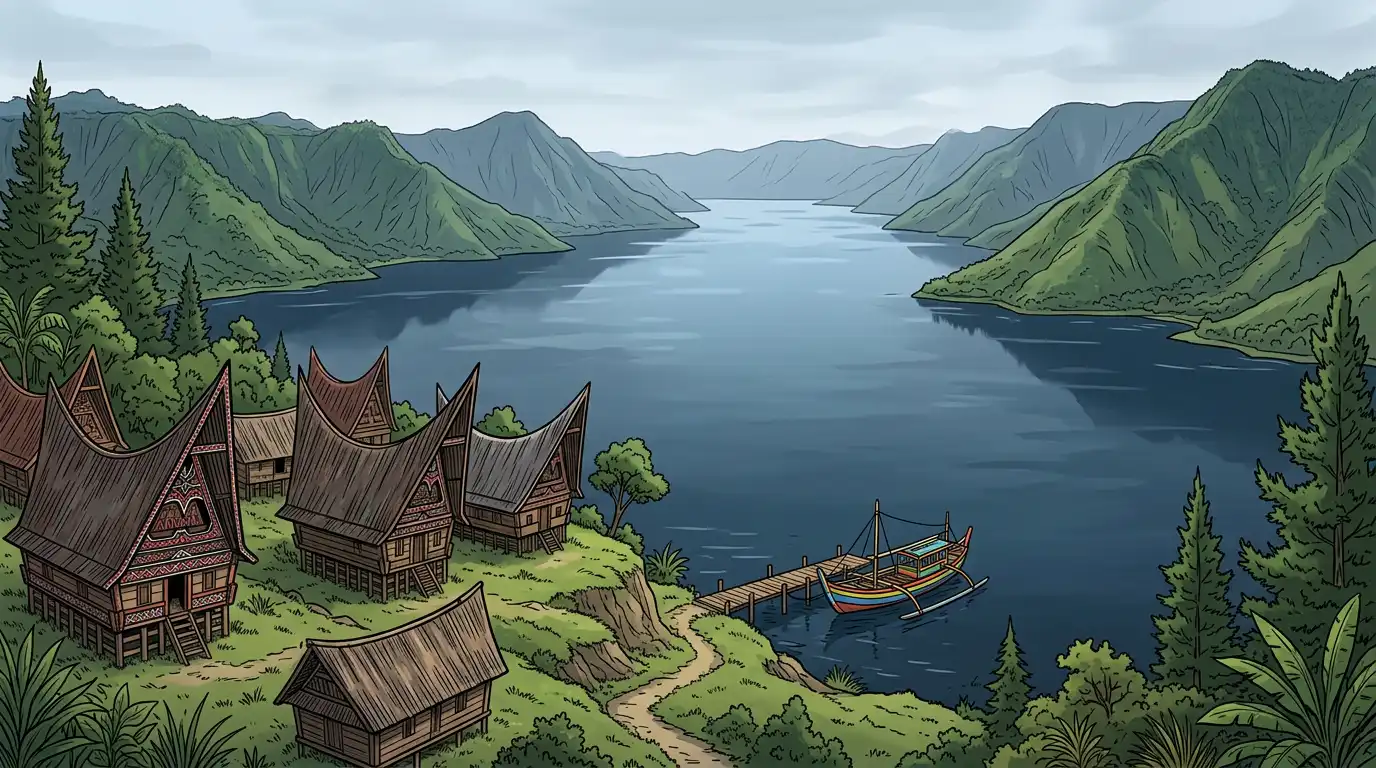
At the centre of Lake Toba sits Samosir Island, an island within a lake within a volcano, a geological nesting doll that is almost absurd in its grandeur. Samosir is the heartland of the Batak Toba people, one of Sumatra's most culturally rich ethnic groups. Traditional Batak houses with their soaring boat shaped roofs and carved wooden panels line the villages. Music and dance are central to Batak culture, the gondang ensemble, with its drums and reed instruments, accompanies ceremonies and celebrations that have continued for centuries.
Staying on Samosir means waking up to cool mountain air and the sight of Lake Toba stretching to volcanic ridges on every horizon. The pace of life is deliberately unhurried. Swimming in the lake, cycling through rice fields, visiting ancient stone tombs and carved royal seats, these are the simple pleasures of a place that trades spectacle for soul. Lake Toba is one of the best places to visit in Indonesia besides Bali for travellers who want depth, silence, and cultural immersion.
Central Java - Ancient Temples and Living Traditions
While Bali is famous for its Hindu temples, Central Java holds two of the most important ancient temples in all of Southeast Asia, monuments that predate Angkor Wat and rival it in ambition and beauty.
Borobudur
Borobudur is the world's largest Buddhist temple, a colossal ninth-century structure made of two million volcanic stone blocks, arranged in nine stacked platforms crowned by a central dome. The temple is covered in 2,672 relief panels and 504 Buddha statues, and its design represents the Buddhist cosmological journey from earthly desire to enlightenment. Walking the ascending terraces at sunrise, with the surrounding volcanoes emerging from mist and the stone Buddhas gazing serenely over the Kedu Plain, is one of the most moving cultural experiences in Indonesia.
Prambanan
Just an hour east of Borobudur, Prambanan is the largest Hindu temple complex in Indonesia. Its towering spires, dedicated to Brahma, Vishnu, and Shiva, rise 47 metres above a sprawling campus of smaller temples and shrines. The Ramayana Ballet, performed on an open-air stage with the floodlit temple as its backdrop, is one of Java's most celebrated cultural performances. Together, Borobudur and Prambanan represent over a thousand years of Javanese civilisation.
Yogyakarta and Taman Sari Water Castle
The cultural capital of Java, Yogyakarta, affectionately known as Jogja, is the base for exploring both temples. The city itself is deeply rewarding: batik workshops, wayang puppet performances, and the kraton (sultan's palace) all reveal a living culture that stretches back to the Mataram Kingdom. Taman Sari Water Castle, a partially ruined 18th century royal garden and bathing complex within the kraton grounds, is a haunting and beautiful site. Its underground mosque, elevated walkways, and ornamental pools were designed as a retreat for the sultan and his court, and today they form one of Jogja's most atmospheric historical landmarks.
Raja Ampat - The Pinnacle of Marine Biodiversity
For scuba divers, there is Raja Ampat and there is everywhere else. Located off the coast of West Papua in eastern Indonesia, Raja Ampat sits at the absolute centre of the Coral Triangle and holds the highest marine biodiversity ever recorded. Over 1,500 species of fish, more than 600 species of coral, and an extraordinary variety of invertebrates inhabit these waters, numbers that eclipse any other region on earth.
Diving and Snorkelling
Cape Kri holds the world record for the most fish species counted on a single dive, 374 at last count. Manta rays congregate at cleaning stations in such numbers that divers must queue to avoid crowding the animals. Pygmy seahorses no larger than a grain of rice cling to gorgonian sea fans. Walking sharks, endemic to this region, hunt across shallow reef flats at night. The diving in Raja Ampat is not merely excellent; it is the global benchmark against which all other diving is measured.
But you do not need to be a certified diver to experience Raja Ampat's riches. The snorkelling is equally phenomenal. Many of the best reef systems begin in waist-deep water, and the clarity is so extraordinary that you can photograph coral detail from the surface.
You can explore Raja Ampat with our liveaboard King Neptune.
Above the Surface
Raja Ampat's landscape is as surreal above water as below. Mushroom-shaped karst limestone islands, hundreds of them, rise from lagoons so still and clear they look like polished glass. The Pianemo and Wayag viewpoints offer panoramas that seem digitally manipulated but are entirely real. Hidden lagoons, accessible only by swimming through narrow rock passages, open into private worlds of calm water, birdsong, and towering cliff walls.
The Nusa Islands - Bali's Eastern Frontier
While technically part of Bali's administration, the Nusa Islands, Nusa Penida, Nusa Lembongan, and Nusa Ceningan, feel like a world apart. Nusa Penida in particular has exploded in popularity thanks to its jaw-dropping cliff scenery, but the island's infrastructure remains relatively basic, preserving a rugged authenticity that Bali's south coast lost decades ago.
Kelingking Beach, the famous T-Rex cliff viewpoint, is the headline attraction, but Nusa Penida offers far more: the natural rock arch of Broken Beach, the turquoise pool of Angel's Billabong, the towering tree house viewpoints of Atuh Beach, and some of the most exciting diving in Bali's waters. Manta Point delivers near-guaranteed encounters with reef manta rays, while Crystal Bay is one of the few places on earth where you can encounter the bizarre oceanic sunfish (mola mola) during the season from July to October.
Nusa Lembongan and Nusa Ceningan, connected by a yellow suspension bridge, offer a more relaxed alternative, mangrove kayaking, seaweed farming villages, cliff jumping at the Blue Lagoon, and excellent surf at Playgrounds and Lacerations.
Wakatobi - Pristine Reefs in Absolute Solitude
South of Sulawesi, the Wakatobi archipelago is named after its four main islands, Wangi Wangi, Kaledupa, Tomia, and Binongko, and encompasses one of Indonesia's largest marine national parks. Wakatobi's reefs are in immaculate condition, protected by strict conservation policies that have kept destructive fishing at bay.
What sets Wakatobi apart from other Indonesian dive destinations is the quality of its house reefs. You can walk off the beach into waist-deep water and find yourself surrounded by pristine hard and soft corals, reef fish in staggering variety, and visibility that regularly exceeds 30 metres. There are no challenging currents to contend with, no long boat rides to reach the good stuff, the reef is right there, immediately accessible, in better condition than most divers have ever seen.
Wakatobi also offers cultural richness. The Bajo sea nomad communities, people who have lived their entire lives on and above the water, inhabit stilt villages perched over the reef. Visiting a Bajo village is a window into a maritime way of life that has survived, against all odds, into the modern age.
Halmahera - Indonesia's True Last Frontier
In the northern Maluku Islands, Halmahera is one of the largest and least explored islands in the entire Indonesian archipelago. Shaped like a smaller, wilder version of Sulawesi, Halmahera is cloaked in dense tropical rainforest, studded with active volcanoes, and surrounded by reefs that fewer divers have seen than almost any other coastline in Southeast Asia.
Halmahera has no resort strips, no beach clubs, no tourist infrastructure to speak of. What it has is raw, untouched Indonesia: volcanic hot springs, spice plantations dating back to the colonial era, endemic bird species found nowhere else, and communities that greet visitors with warmth and genuine surprise. The diving around Halmahera and the nearby volcanic islands of Ternate and Tidore is exploratory, sites are still being discovered, named, and mapped.
For adventurous travellers who have already ticked off Bali, Komodo, and Raja Ampat, Halmahera represents the next frontier. It is the Indonesia that existed before tourism arrived, and visiting now, before it inevitably changes, is a privilege.
The Maluku Islands - Spice, History, and Hidden Reefs
The Maluku Islands, the original Spice Islands, occupy a vast stretch of the Banda Sea between Sulawesi and Papua. These are the islands that drew Portuguese, Dutch, and British traders across the globe, sparking colonial wars fought over the cloves, nutmeg, and mace that grew here and nowhere else on earth.
The Banda Islands
The Banda Islands are the historical heart of the spice trade. Tiny, volcanic, and surrounded by deep blue water, the Bandas are hauntingly atmospheric. The ruins of 17th-century Dutch forts crumble on hillsides above harbours where sailing ships once loaded nutmeg by the tonne. The diving around the Banda Islands is outstanding, healthy walls, strong currents bringing pelagics, and an almost complete absence of other divers. The islands are remote and require effort to reach, but for those who make the journey, the Bandas reward with a combination of history, beauty, and solitude that is unmatched in Indonesia.
Ambon
Ambon, the capital of Maluku province, is famous in the diving world for one tiny creature: the psychedelic frogfish, found only in Ambon Bay and discovered as recently as 2009. The muck diving in Ambon's harbour is world class, producing rare macro species that draw underwater photographers from around the globe.
Maratua and the Derawan Archipelago - East Kalimantan's Secret
Off the eastern coast of Borneo, the Derawan archipelago is one of Indonesia's most underrated marine destinations. Maratua, the largest island in the group, is a curved atoll with dramatic reef walls, whitetip sharks, massive barracuda schools, and a turquoise lagoon that looks like it belongs in a fantasy novel.
Nearby Kakaban Island holds a landlocked marine lake filled with millions of stingless jellyfish, one of only two such lakes on earth. Swimming among these translucent, pulsing creatures is utterly surreal. Sangalaki Island offers shallow water manta ray encounters and is one of the most important green sea turtle nesting sites in Indonesia, with hatchlings emerging at dawn during nesting season.
The Derawan Islands remain firmly off the beaten path. Access requires a flight to Berau in East Kalimantan followed by a boat transfer, but for divers and wildlife enthusiasts, the effort is rewarded with experiences that rival the most famous marine destinations in the Coral Triangle.
Sumba - Megalithic Culture and Empty Beaches
South of Flores and Sumbawa, Sumba is an island unlike anywhere else in Indonesia. While its neighbours have embraced tourism to varying degrees, Sumba has remained culturally distinct and fiercely traditional. Stone megalithic tombs weighing several tonnes sit at the centre of villages. Traditional houses with towering thatched roofs rise two or three storeys high. The Pasola, a mounted jousting festival held annually, is one of the most dramatic traditional events in Southeast Asia.
Sumba's western coastline hides some of Indonesia's most beautiful and empty beaches. Weekuri Lagoon, a natural saltwater pool enclosed by rock, glows turquoise against barren savannah. Nihiwatu Beach (now Nihi Sumba) has been repeatedly named one of the best beaches in the world. Mandorak Beach offers crescent sand, rock formations, and barely a footprint.
Sumba is the antithesis of Bali, raw, traditional, uncrowded, and deeply rewarding for travellers who value cultural authenticity over convenience.
Sumbawa - Volcanoes, Surf, and Solitude
Between Lombok and Flores, Sumbawa is an island that most travellers simply fly over on their way to Komodo. That is a mistake. Sumbawa is wild, mountainous, and home to Mount Tambora, the volcano whose 1815 eruption was the most powerful in recorded history, causing a global "year without a summer." Today, you can trek to Tambora's enormous caldera rim and peer into a crater six kilometres wide.
Sumbawa's southern coast is studded with world class surf breaks, particularly around Hu'u and Lakey Peak, where consistent Indian Ocean swells produce powerful barrels that draw serious surfers. The island's interior is rugged and sparsely populated, with traditional villages, buffalo-racing festivals, and landscapes that feel genuinely untouched.
The Mentawai Islands - World Class Waves and Ancient Culture
Off the western coast of Sumatra, the Mentawai Islands are sacred ground for surfers. Consistent, powerful swells from the Indian Ocean produce some of the most perfect waves on the planet, Macaronis, Rifles, Hollow Trees, and dozens of other breaks that appear in every serious surfer's dream.
But the Mentawai Islands harbour something equally extraordinary beneath their jungle canopy. The indigenous Mentawai people maintain one of the oldest continuous cultures in Indonesia, with traditions of full-body tattooing, shamanic healing, and communal living in longhouses that predate outside contact by thousands of years. Visiting a Mentawai community, with respect and through culturally sensitive guides, is one of the most profound human encounters available in the Indonesian archipelago.
How to Plan Your Indonesia Itinerary Beyond Bali
The key to visiting Indonesia beyond Bali is accepting that you cannot see everything in one trip. The archipelago is too vast, too diverse, and too spread out. Instead, choose a region that matches your interests and commit to exploring it properly.
For marine adventures and Komodo dragons: Fly from Bali to Labuan Bajo and base yourself at Komodo Resort on Sebayur Island. Spend your days diving the park's legendary sites, trekking with dragons on Rinca, watching sunrise from Padar Island, and snorkelling Pink Beach, all without the daily commute from the mainland.
For cultural depth: Combine Lake Toba in North Sumatra with the ancient temples of Central Java, Borobudur, Prambanan, and the royal city of Yogyakarta with its Taman Sari Water Castle.
For world-class diving: Raja Ampat, Wakatobi, and the Banda Islands represent the pinnacle of underwater exploration in the Coral Triangle.
For adventure and solitude: Halmahera, the Derawan Islands, Sumba, and Sumbawa offer frontier experiences far from any tourist trail.
For surf: The Mentawai Islands and Sumbawa deliver world class waves in stunning tropical settings.
Indonesia rewards those who look beyond the obvious. Bali may be the door, but the best places to visit in Indonesia besides Bali are the rooms, corridors, and hidden gardens that lie beyond it, each one more extraordinary than the last.