
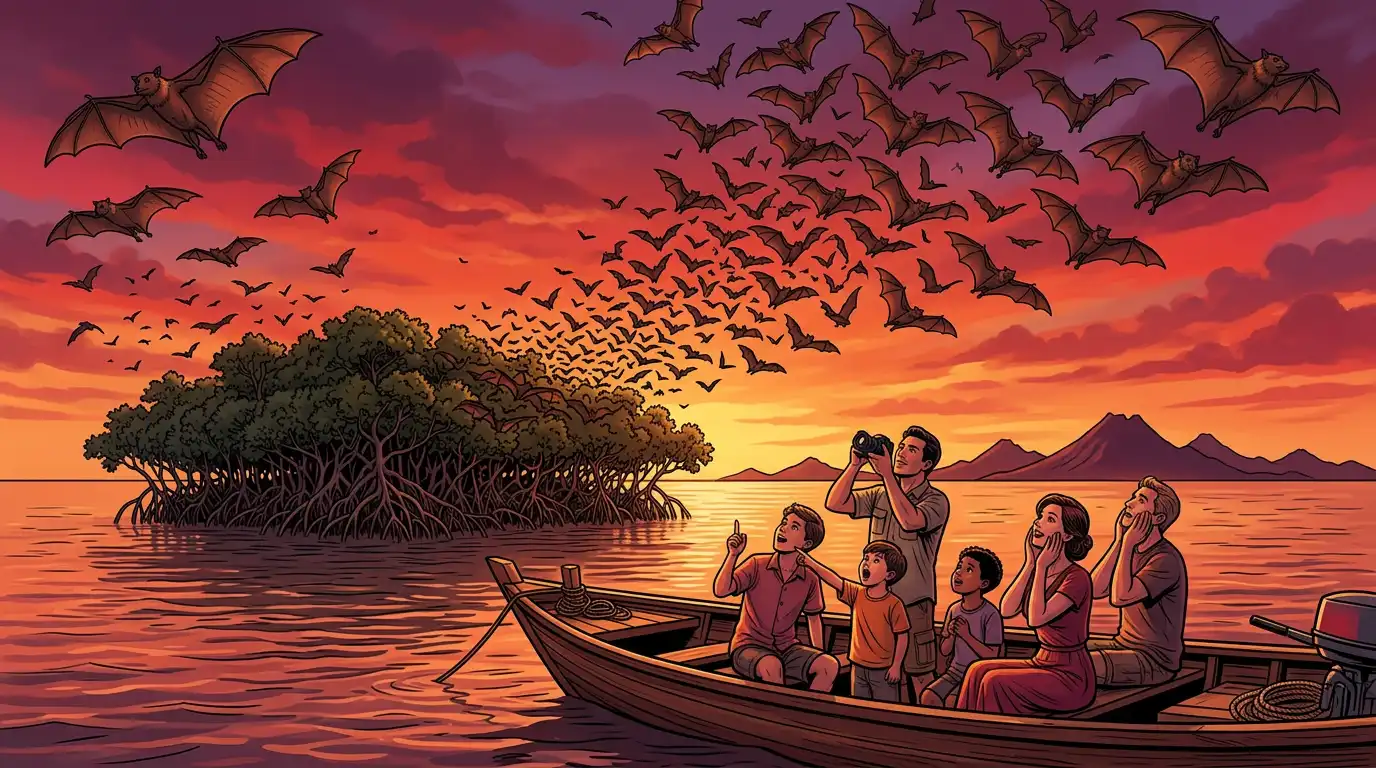
There are sunsets, and then there is the sunset at Kalong Island. As the sky over the Komodo archipelago turns from blue to amber to deep crimson, thousands of giant fruit bats emerge from the dense mangrove canopy and take flight across the horizon in an unbroken, swirling stream of dark silhouettes. It is one of the most extraordinary natural spectacles in Indonesia, a nightly exodus that has been happening for centuries yet still leaves every first-time witness speechless.
Kalong Island, known locally as Pulau Kalong, is a small mangrove-covered island in Komodo National Park that serves as a daytime roost for an enormous colony of flying foxes. The name itself gives the secret away, "kalong" is the Indonesian word for fruit bat. While the island may lack the dramatic savannah landscapes of Rinca Island or the iconic status of Komodo Island, it offers something entirely unique: a front-row seat to one of nature's most mesmerizing aerial displays.
This guide covers everything you need to know about the Kalong flying fox colony, what to expect when you visit Kalong Island, how to get there, the best time to witness the bat exodus, and why this stop deserves a place on every Komodo itinerary.
What Is Kalong Island?
Kalong Island is a small, uninhabited island situated in the strait between Flores Island and the larger islands of the Komodo archipelago. It sits roughly midway between the town of Labuan Bajo and Rinca Island, making it a natural stopover point for boats traveling into the heart of Komodo National Park.
The island is not large, you could walk its perimeter in under an hour if landing were permitted. But its modest size is precisely what makes it so remarkable. Almost the entire island is covered in thick mangrove forest, and this dense, tangled canopy provides the perfect roosting habitat for one of the largest colonies of flying foxes in the region. The mangroves' roots reach down into the shallow tidal waters, creating a protected, predator-free environment where thousands of bats can rest undisturbed during the daylight hours.
There are no trails, no visitor facilities, and no structures on Kalong Island. Visitors do not set foot on the island itself. Instead, boats anchor offshore at a respectful distance, and guests watch the spectacle unfold from the water. This hands-off approach is part of what makes the experience so special, you are observing a completely wild, undisturbed colony behaving exactly as it has for generations.
The island is sometimes referred to as Bat Island by English-speaking travelers and tour operators, a straightforward translation that captures its defining characteristic. Whether you call it Kalong Island, Pulau Kalong, or Bat Island, the experience it offers is the same: an unforgettable encounter with one of the Komodo region's most charismatic and underappreciated species.
Understanding the Kalong Flying Fox
Before diving into the logistics of a visit, it is worth understanding exactly what you are going to see. The Kalong flying fox colony is composed primarily of large fruit bats belonging to the genus Pteropus, commonly known as flying foxes due to their fox-like facial features, large eyes, pointed ears, and elongated snouts covered in fine reddish-brown fur.
What Are Flying Foxes?
Flying foxes are among the largest bats in the world. The species found on Kalong Island can have wingspans reaching up to 1.5 meters, roughly the height of a small adult human, making them a genuinely impressive sight when seen up close or silhouetted against the sky. Despite their intimidating size, flying foxes are gentle, fruit-eating animals that pose no threat to humans whatsoever.
Unlike the small insectivorous bats that most people are familiar with, flying foxes do not use echolocation. Instead, they navigate using their excellent eyesight and acute sense of smell, both of which are well-suited to their primary activity: locating ripe fruit and flowers across the forested islands of the Komodo archipelago. Their diet consists mainly of figs, mangoes, papayas, and the nectar and pollen of flowering trees.
This dietary preference makes flying foxes ecologically vital. As they feed, they disperse seeds across vast distances and pollinate trees that might otherwise struggle to reproduce. In island ecosystems like those of Komodo National Park, where land areas are small and isolated, this seed dispersal function is critical for maintaining forest health and biodiversity. The giant fruit bats of Kalong Island are not just a visual spectacle, they are ecological engineers that help sustain the very landscapes that make this region so extraordinary.
The Colony Size
Estimating the exact population of flying foxes on Kalong Island is difficult because the colony is dense, the mangrove canopy is thick, and the bats are constantly shifting position. However, naturalists and park officials estimate that the colony numbers in the tens of thousands, some estimates suggest 30,000 or more individuals during peak periods.
This concentration is staggering. During the daytime, the mangrove trees appear to drip with dark, fur-covered forms. Branches bend under the collective weight of hundreds of bats hanging upside down, wings folded around their bodies like leather cloaks. The sound of the colony, a constant low chatter of squeaks, clicks, and social calls, can be heard from the water even before the evening exodus begins.
Daily Rhythm: The Sunset Exodus
Flying foxes are crepuscular and nocturnal feeders, meaning they become active at dusk and spend the night foraging before returning to their roost at dawn. The nightly departure from Kalong Island follows a predictable pattern that has become one of the signature wildlife experiences of Komodo National Park.
As the sun begins to drop toward the horizon, typically between 5:30 and 6:15 PM depending on the time of year, the first bats begin to stir. Initial movement is tentative: individual bats stretch their wings, shift position on their branches, and test the air. Then, as if responding to an invisible signal, the first wave launches from the treetops and begins flying east toward the larger islands where fruit and flowering trees await.
What follows is an almost continuous stream of bats flying overhead for 30 to 45 minutes. Wave after wave of flying foxes pour out of the mangrove canopy, their massive wingspans creating a slow, rhythmic flapping that is markedly different from the erratic flight of smaller bats. They fly in loose formations, some just meters above the water's surface, others rising high against the fading sky. The sheer volume of bats flying creates an effect that is simultaneously eerie, beautiful, and deeply primal.
Against the backdrop of a Komodo sunset, blazing oranges, deep purples, and the black silhouettes of distant volcanic islands, the exodus of the Kalong flying fox colony is one of those rare natural events that photographs cannot fully capture. It must be experienced in person.
How to Reach Kalong Island
Understanding how to reach Kalong Island is essential for planning your visit. The island is not accessible independently and can only be visited by boat as part of a broader Komodo National Park excursion.
From Labuan Bajo
The most common starting point is Labuan Bajo, the gateway town to Komodo National Park on the western tip of Flores Island. From Labuan Bajo's harbor, Kalong Island is approximately one to one-and-a-half hours by boat, depending on the vessel's speed and sea conditions. This relatively short transit makes it one of the most accessible stops in the entire national park.
Many day-trip operators in Labuan Bajo include a Kalong Island sunset stop as part of their standard itinerary, often combining it with morning or afternoon visits to snorkeling sites, Rinca Island for Komodo dragon trekking, or other nearby attractions. If you are booking a day trip specifically to see the flying foxes, make sure the itinerary is timed to arrive at the island well before sunset, ideally by 5:00 PM, so you have time to settle in, position your boat, and enjoy the full buildup to the exodus.
By Liveaboard
For liveaboard guests, Kalong Island is typically incorporated into the first or last evening of a multi-day voyage through the Komodo archipelago. Because liveaboards depart from and return to Labuan Bajo, the island's position between the town and the main park islands makes it a perfect opening act or grand finale.
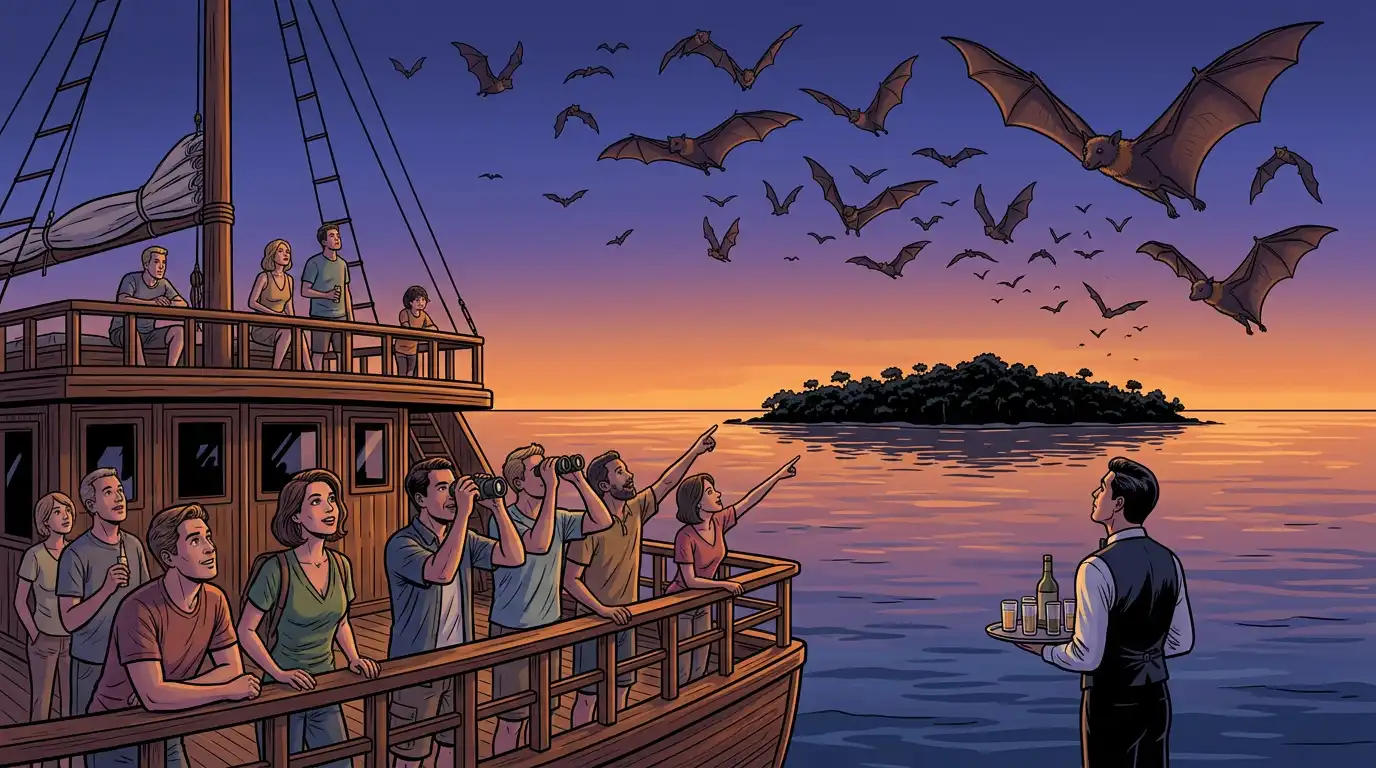
Watching the Kalong flying fox sunset from the deck of a liveaboard is arguably the best way to experience it. You have an elevated vantage point, comfortable seating, and, on most vessels, a cold drink in hand as the sky transforms and the bats take flight. There is no rush to get back to port, no engine noise from neighboring speedboats jockeying for position, and no crowd pressure. It is a calm, immersive experience that sets the tone for the adventure ahead or provides a reflective closing moment after days of diving, trekking, and exploring.
Boat Positioning
When you reach Kalong Island, your boat captain will anchor or drift at a distance from the mangroves, close enough to see the bats clearly but far enough to avoid disturbing the colony. Most boats position themselves to the east of the island, which serves two purposes: it places you in the bats' flight path as they head toward the larger islands, and it keeps the sunset directly behind the island, creating the ideal lighting conditions for the silhouette effect that makes the spectacle so visually dramatic.
Some boats carry binoculars for guests who want a closer look at the roosting colony before the exodus begins. A pair of binoculars allows you to pick out individual flying foxes hanging in the mangrove branches, observe their social interactions, and appreciate the remarkable details of their fox-like faces and massive folded wings.
What to Expect When You Visit Kalong Island
Knowing what to expect enhances the experience significantly. Here is a detailed walkthrough of a typical visit Kalong Island stop.
Arrival and Approach
Your boat will approach Kalong Island in the late afternoon, typically arriving between 4:30 and 5:30 PM. As you draw closer, the first thing you will notice is the mangrove forest itself, a dense, green wall of vegetation rising from the shallow waters, its roots submerged in the tidal zone. On closer inspection, you may begin to spot dark shapes hanging from the branches, the roosting flying foxes, still mostly dormant in the afternoon heat.
The captain will cut the engine and anchor at a comfortable viewing distance. This is your time to settle in, find a good spot on the deck, prepare your camera, and simply take in the scenery. The waters around Kalong Island are typically calm, and the setting, a small wild island surrounded by the vastness of the Komodo strait, has a meditative quality that contrasts sharply with the action that is about to unfold.
The Pre-Sunset Buildup
As the sun descends and the temperature drops slightly, the colony begins to wake. You will hear the bats before you see significant movement, the volume of chattering and squeaking increases noticeably as thousands of animals rouse from sleep and begin their pre-flight routines. Individual flying foxes stretch their wings, creating brief dark flashes against the green canopy. Some take short flights between trees, repositioning themselves before the main departure.
This buildup period is fascinating in its own right. Watching a colony of this size transition from dormancy to full alertness is a reminder that you are witnessing a social organism, not just individual animals. The timing of the exodus is influenced by light levels, temperature, wind conditions, and possibly social cues within the colony itself, a coordinated behavior that scientists are still working to fully understand.
The Main Event
Then it begins. The first wave of giant fruit bats launches from the tallest mangrove trees and heads east, their wingbeats slow and deliberate. Within minutes, the trickle becomes a flood. Bats flying in loose streams, sometimes in groups of dozens, sometimes in continuous ribbons that stretch from the island to the horizon. The sky above and around your boat fills with their silhouettes.
The visual effect is extraordinary. Each bat's wingspan of over a meter creates a distinctive slow-flapping profile against the sunset sky. They fly at varying altitudes, some skim just above the water, their reflections rippling on the surface; others climb to considerable heights, becoming small dark specks against clouds painted in sunset colors. The stream continues for 30 to 45 minutes, with occasional surges when particularly large groups depart simultaneously.
During this period, the only sounds are the distant chatter of the colony, the soft flapping of wings passing overhead, the gentle lapping of water against the boat hull, and, inevitably, the awed exclamations and camera shutters of fellow passengers. It is a multisensory experience that engages sight, sound, and that indescribable feeling of witnessing something ancient and wild.
After the Exodus
As the last stragglers depart and the sky deepens from orange to purple to dark blue, a calm settles over the water. The mangroves fall quiet. Stars begin to appear. For liveaboard guests, this is often the moment when the crew serves dinner on deck, allowing you to dine under a sky that, this far from light pollution, reveals the Milky Way in all its glory.
Day-trip boats will begin their return to Labuan Bajo after the exodus concludes, arriving back at the harbor by early evening. The boat ride back is often a quiet, contemplative journey as passengers process what they have just witnessed.
Photography Tips for Kalong Island
The Kalong flying fox sunset is a photographer's dream, but it presents specific challenges that benefit from preparation.
Equipment
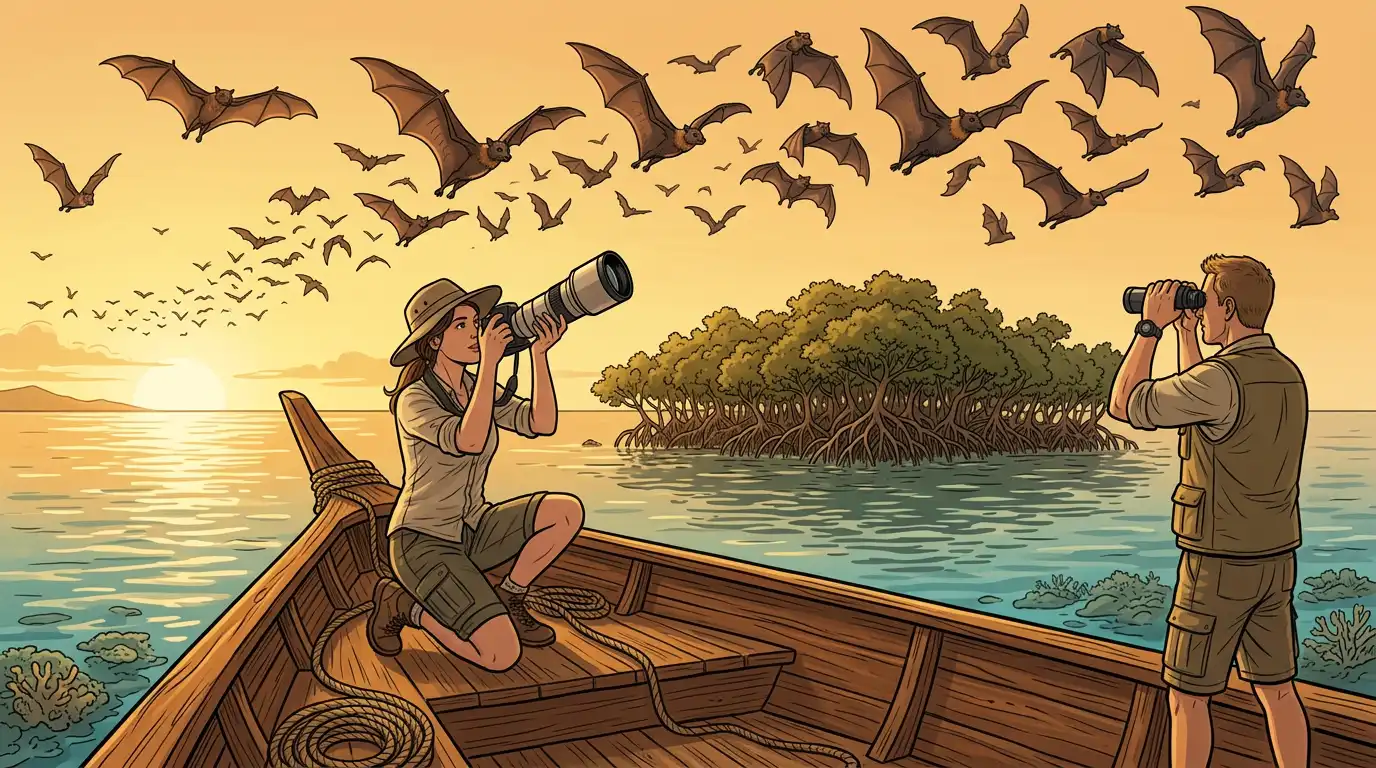
A camera with good low-light performance is essential, as the best moments occur during the golden hour and twilight when light levels are dropping rapidly. A zoom lens in the 70 to 200mm range allows you to capture individual flying foxes in flight while maintaining the sunset backdrop. A wider lens is useful for capturing the scale of the exodus, sweeping shots of hundreds of bats streaming across the entire sky.
Settings
Shoot in continuous or burst mode to increase your chances of capturing a bat in a dramatic wing position. A shutter speed of at least 1/500th of a second will freeze the wing motion, while slower speeds can create artistic motion blur that conveys the energy of the event. Slightly underexpose your shots to preserve the rich sunset colors and maintain the silhouette effect.
Composition
The most powerful images from Kalong Island tend to be those that combine the bat silhouettes with the sunset sky and the mangrove-island profile. Position yourself so the setting sun is behind the island, creating backlit conditions that naturally produce dramatic silhouettes. Including the water surface in your frame adds reflection and depth.
Smartphone cameras have improved significantly and can produce striking results, particularly for video. Recording a short clip of the bats flying overhead, capturing the sound of their wings and the chattering of the colony, creates a vivid memory that still photographs alone cannot replicate.
The Ecological Importance of Kalong Island
Beyond its value as a tourism attraction, Kalong Island plays a significant ecological role within Komodo National Park and the broader Komodo archipelago.
Seed Dispersal and Pollination
The flying foxes that roost on Kalong Island travel up to 50 kilometers each night to feed on fruit and nectar across the surrounding islands. As they feed, they swallow fruit whole and excrete seeds far from the parent tree, effectively planting new trees across the archipelago. They also transfer pollen between flowers as they feed on nectar, facilitating the reproduction of tree species that other pollinators cannot reach.
This ecological service is particularly important in the dry, fire-prone landscapes of Komodo Island and Rinca Island, where forest regeneration depends heavily on seed dispersal by animals. Without the flying foxes of Kalong Island and other roost sites, the botanical diversity of the national park would almost certainly decline over time, with cascading effects on the entire food web, including the Komodo dragons themselves, which depend on healthy forests to support their prey populations.
Mangrove Ecosystem Health
The mangrove forest on Kalong Island benefits from the bat colony as well. The nutrient-rich guano produced by tens of thousands of roosting fruit bats fertilizes the soil and water around the island, supporting the growth of the mangroves and the marine organisms that depend on mangrove ecosystems, fish, crabs, shrimp, and the larvae of countless reef species.
This symbiotic relationship, bats sustaining mangroves, mangroves sheltering bats, is a beautiful example of the ecological interconnections that make Komodo National Park so much more than the sum of its individual attractions. Kalong Island is not just a place to see bats; it is a functioning node in a complex web of life that spans the entire archipelago.
Conservation Considerations
Flying foxes face significant threats across Southeast Asia, including habitat loss, hunting for bushmeat, and persecution by fruit farmers who view them as crop pests. The colony on Kalong Island benefits from its location within a UNESCO World Heritage Site and protected national park, which provides a degree of legal protection and reduces the risk of direct human interference.
Tourism, when managed responsibly, reinforces this protection by generating revenue and public awareness. Every visitor who witnesses the Kalong flying fox sunset becomes an ambassador for the species, carrying the story of these remarkable animals back to their home country and social media networks. This visibility helps build the political and public will needed to sustain conservation funding and enforce protective regulations.
However, tourism must be managed carefully. Boats that approach too closely, use bright lights, or make excessive noise can disturb the colony and alter roosting behavior. Responsible operators maintain appropriate distances, prohibit the use of flash photography, and brief their guests on proper conduct before arriving at the island. When you visit Kalong Island, choosing a responsible operator is the most important contribution you can make to the colony's long-term wellbeing.
Kalong Island in the Context of a Komodo Itinerary
Kalong Island is rarely a standalone destination, it is almost always experienced as part of a broader exploration of Komodo National Park. Understanding where it fits in a typical itinerary helps you plan your time effectively.
Day Trips from Labuan Bajo
The most common day-trip format includes a morning visit to Rinca Island for a Komodo dragon trek, an afternoon snorkel stop at a nearby reef or beach, and a sunset stop at Kalong Island before returning to Labuan Bajo. This packed itinerary gives you the park's three headline experiences, dragons, underwater world, and the bat exodus, in a single day.
Multi-Day Liveaboard Voyages
On a liveaboard, Kalong Island is typically the first evening stop after departing Labuan Bajo, serving as a dramatic opening to the voyage. Over the following days, you explore deeper into the park, trekking on Rinca Island and Komodo Island, diving at world-class sites like Batu Bolong, Castle Rock, and Manta Point, hiking Padar Island at sunrise, and snorkeling at Pink Beach. Some itineraries revisit Kalong Island on the final evening as a farewell spectacle before returning to port.
The liveaboard format is ideal for Kalong Island because it eliminates the time pressure of a day trip. You arrive relaxed, watch the sunset at your own pace, and transition seamlessly into an onboard dinner under the stars. There is no race back to harbor in the dark, no jostling with other boats for position, just the bats, the sunset, and the water.
Combining with Other Attractions
Beyond the core park highlights, some itineraries include visits to traditional fishing villages, snorkeling with manta rays at designated cleaning stations, beach barbecues on uninhabited islands, and explorations of lesser-known dive sites that lie beyond the reach of day-trip boats. Kalong Island fits naturally into all of these itineraries because of its central location and the universal appeal of its sunset spectacle.
Best Time to Visit Kalong Island
The flying foxes roost on Kalong Island year-round, so the sunset exodus can be witnessed in any month. However, some periods offer better conditions than others.
The Komodo dry season from April to November provides the most reliable weather, with clear skies that produce the most vivid sunsets and the most dramatic silhouette conditions. Calm seas during this period also make for a more comfortable boat experience, particularly important for guests prone to seasickness.
The wet season from December to March can bring cloud cover that occasionally obscures the sunset colors, and rougher seas can make the boat ride less comfortable. However, the bats still fly regardless of weather conditions, even on overcast evenings, the sight of thousands of giant fruit bats streaming overhead is impressive. Some naturalists suggest that colony activity may actually increase during the wet season when fruiting trees produce more abundant food sources across the surrounding islands.
For the most spectacular combined experience of sunset color and bat exodus, aim for the dry season months of April, May, September, and October, when weather is settled but visitor numbers have not yet peaked.
Practical Tips for Visiting Kalong Island
To make the most of your Kalong Island experience, keep these practical tips in mind.
Arrive early. The buildup to the exodus is part of the experience. Boats that arrive just minutes before sunset miss the fascinating transition period when the colony wakes and prepares for departure.
Bring binoculars. They allow you to observe individual flying foxes in the roosting trees before the exodus begins, revealing details that are invisible to the naked eye from the boat's anchoring distance.
Wear insect repellent. While the flying foxes themselves are harmless, the calm waters near a mangrove island at dusk can attract mosquitoes. Apply repellent before arriving at the island.
Bring a light layer. Temperatures drop quickly after sunset on the water. A light jacket or long-sleeve shirt will keep you comfortable during and after the spectacle.
Do not use flash photography. Flash can disturb the colony and is prohibited by responsible operators. Modern cameras perform well in low light without flash, and the natural lighting conditions produce far more beautiful results anyway.
Keep noise to a minimum. Excessive engine noise, loud music, and shouting can stress the colony. The best operators cut their engines well before reaching the island and ask guests to keep voices low during the viewing period.
Respect the distance. Do not pressure your captain to move closer to the mangroves. The established viewing distance exists to protect the colony, and the spectacle is equally impressive from a respectful distance.
A Sunset You Will Never Forget
Kalong Island occupies a unique place in the constellation of experiences that make Komodo National Park one of the world's great natural destinations. It does not have the adrenaline of a Komodo dragon encounter on Rinca Island, the underwater drama of a manta ray dive, or the Instagram-famous viewpoint of Padar. What it has is something quieter, stranger, and in many ways more profound, a nightly reminder that the natural world operates on rhythms and scales that have nothing to do with human schedules or expectations.
Watching tens of thousands of flying foxes pour out of a small mangrove island and disperse across the darkening sky is a humbling experience. It connects you to a cycle that has repeated itself every single evening for longer than anyone can remember, and that will continue long after your boat has returned to harbor and you have moved on to the next adventure.
For many visitors, the Kalong flying fox sunset becomes the unexpected highlight of their Komodo trip, the moment they did not know to anticipate but cannot stop talking about afterward. It is wild, it is free, and it is waiting for you every evening, weather permitting, on a small mangrove island in the heart of one of the most extraordinary marine parks on Earth.