
Imagine waking up to the sound of calm waves, going out onto your private balcony, and realizing that you are already in one of the world's most beautiful marine reserves, the Komodo Island resort. No rushing to get to work in the morning. No two-hour boat rides before you go diving. Just a direct way to go to Komodo's colorful underwater environment.
This isn't a dream; it's what happens every day at Komodo Resort, the only resort on Komodo Island that is really inside the confines of Komodo National Park. This establishment on Sebayur Island opened in 2012 as the first resort in the Komodo area. It has something that no other hotel in Labuan Bajo can offer: you're already there, surrounded by the natural beauty and marine wonders that lure people from all over the world.
This guide will show you what makes Komodo Resort a one-of-a-kind place to visit. We'll talk about the great location, world-class diving, beautiful beaches, and the unforgettable things to do right outside your bungalow.
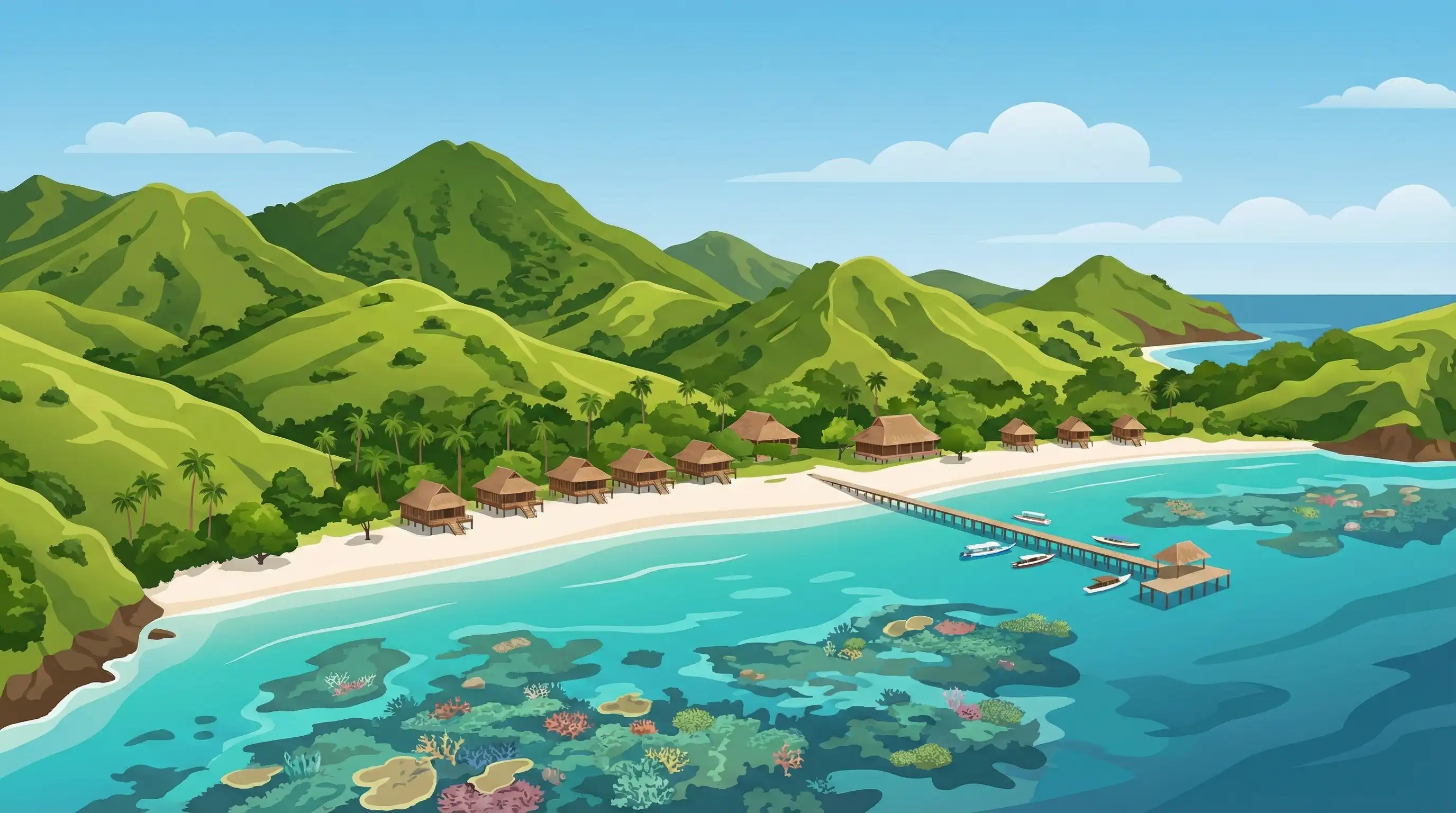
Why Komodo Resort Is the Only True Komodo Island Resort Inside the Park
First, let's talk about the most important thing: Komodo Resort is the only Komodo Island resort that is technically inside Komodo National Park. It was the first purpose-built resort in the Komodo archipelago when it debuted in 2012, and it is still the only place to stay within the park's protected boundaries.
This difference isn't merely a claim made for marketing. It alters how you experience Komodo in a big way.
The Only Resort in the Park
Over the past ten years, Labuan Bajo has seen the rise of dozens of hotels and guesthouses. The only problem with all of them is that they are outside the park. People who stay in town have to take boats every morning and travel 1.5 to 3 hours to get to Komodo's best dive spots and attractions. The Komodo Resort located on Sebayur Island in the park proper, so you don't have to drive there every day.
Time Savings That Transform Your Holiday
The idea is easy, but it's important. People who live in Labuan Bajo usually spend 2 to 3 hours a day traveling. They could spend that time underwater, on the beach, or touring the islands. That's up to 20 hours saved on a vacation that lasts a week. You may be in the water within minutes of finishing breakfast at Komodo Resort, making the most of every moment of your trip.
The Inside-the-Park Experience
Staying in Komodo National Park makes you feel like you're really there, which mainland hotels can't do. The rough volcanic islands seem golden and pink at sunrise. The turquoise waves turn into a canvas of fire at sunset. Without Labuan Bajo's light pollution at night, the stars shine through in stunning detail. To really escape, you have to be in the middle of one of the few wild locations on Earth.
Komodo Island & Komodo National Park Overview
In 1991, UNESCO named Komodo National Park a World Heritage Site, and in 2007, it was named one of the New Seven Wonders of Nature. It is one of Indonesia's most beautiful natural places. The park was first set up in 1980 to protect the famous Komodo dragon. Now, it is a marine conservation area that is important all over the world and covers more than 1,700 square kilometers of land and sea.
Geography and Main Islands
The park includes three big islands—Komodo, Rinca, and Padar—as well as many smaller islands that are spread out throughout the Flores Sea in East Nusa Tenggara province. Sebayur Island, home to Komodo Resort, situated in the middle of the archipelago. This makes it easy to get to the park's most famous dive sites and dragon-trekking spots.
What “Komodo Island Resort” Really Means
When people look for a "komodo island resort," they typically locate places in Labuan Bajo that are advertised as such. These hotels are really on Flores Island, which is outside the park. The only real resort in Komodo National Park is Komodo Resort on Sebayur Island.
Best Travel Seasons
April to June and September to November are the best months to come since the water is clear and the seas are quiet. July and August are the busiest months for tourists, but the weather is a little worse and you can see manta rays very well. January through March, when it rains more, has fewer people but might have bad weather and little visibility.
Getting Oriented
The Komodo Airport (LBJ) in Labuan Bajo is the main means to get to the area. It has daily flights from Bali, Jakarta, and other Indonesian cities. All park exploration starts by boat from there, whether you're staying in town or at Komodo Resort.
Stay Inside the Park: Komodo Resort’s Unique Location Advantage
You can tell the difference between staying within and outside Komodo National Park right away on your first morning. While people staying at Labuan Bajo hotels are still driving over open ocean, people staying at Komodo Resort are getting ready for their first dive of the day.
A Different Daily Rhythm
The southern part of Sebayur Island is home to Komodo Resort, which is in a sheltered cove that is safe from waves and has calm waters all year long. Because of this location, dive boats can leave early, get to the best sites before the crowds, and come back for leisurely lunches without having to deal with long commutes. When you're in town, you can't be as flexible as you can be at the resort, which is 90 minutes away.
Comparative Travel Logistics
Think about the logistics: guests who wish to dive Crystal Rock or Castle Rock, two of Komodo's most recognized sites, have to travel more than two hours each way on good days. These identical places are about 60 to 90 minutes distant from Komodo Resort. Manta Point is very easy to get to. There, gigantic mantas glide through cleaning stations. You can easily go to Batu Bolong, which is commonly termed the "pinnacle of Komodo diving," for morning or afternoon sessions.
Environmental Benefits
There is less noise pollution in vulnerable marine areas and less fuel use when people travel by speedboat less often. Guests who stay at Komodo Resort unknowingly help promote more environmentally friendly ways of traveling. The resort's Green Fins digital membership for eco-friendly diving practices is just one example of how conservation is at the heart of everything they do.
Practical Distances from Komodo Resort
- Sebayur dive sites: 5-15 minutes
- Batu Bolong: 20-30 minutes
- Castle Rock & Crystal Rock: 60-90 minutes
- Manta Point: 30-45 minutes
- Komodo Island (dragon trekking): 40-50 minutes
- Rinca Island (dragon trekking): 35-45 minutes
- Pink Beach: 25-35 minutes
Komodo Resort: History & Concept
The idea behind Komodo Resort was to build a place where people could dive and enjoy nature in one of the world's most biodiverse marine ecosystems. Construction on Sebayur Island started with a promise to have as little effect on the environment as possible. They used materials from the area and designs that fit in perfectly with the tropical setting.
The first guests to the resort in 2012 inaugurated a new era for tourism in Komodo. Before, you could only visit the park by diving from a liveaboard boat or on a long day boat voyage from Labuan Bajo. Komodo Resort offered another option: a permanent base inside the park itself, which combined the luxury of a land-based resort with the benefits of being on a boat.
The design philosophy favored rustic charm over ostentatious opulence. The low-rise teak wood homes rise gradually from the shore, and the saline air makes the natural materials seem better over time. The buildings are designed to encourage a barefoot lifestyle, with sandy walks connecting the bungalows to the restaurant, dive center, and beach bar. There is a deliberate simplicity here that makes it easy to feel comfortable and connected to nature.
Over the years, Komodo Resort has changed from a place just for divers to a full-service island getaway. Today, it attracts not just serious divers but also couples searching for a romantic getaway, families with older kids who want to explore nature, and small groups of friends who want to go on an activity that isn't too common. The spirit is still the same: utmost comfort in an amazing place.
Accommodation at Komodo Island Resort (Komodo Resort)
There are 31 separate rooms at Komodo Resort, some on the beach and some on a hill. The architecture uses natural materials and craftsmanship to make areas that feel like they belong on the island while still having all the modern conveniences that guests expect.
Each bungalow has air conditioning, a private balcony with sun loungers that looks out over the sea, and an ensuite bathroom with hot water. The inside is a mix of rustic charm and modern comfort. There are polished wood floors, fresh linens, and subtle nautical touches that remind you of the sea outside your door.
Room Categories
There are a number of places to stay at the resort that will fit different tastes. Grand Beach Bungalows are 72 square meters and have direct access to the beach from the ground level. This is perfect for guests who wish to walk from their bed to the sand in seconds. Grand View Suites are similarly 72 square meters, but they are higher up so you can see the ocean from all sides. They include furnished balconies that are great for morning coffee or nighttime leisure.
The Presidential Suite and Panorama suites are more than 70 square meters in size and have high-end furniture and large living areas for individuals who want more space. Family Bungalows are 64 square meters and have two bedrooms, each with its own bathroom. This makes them great for families with older kids.
The Island Difference
Staying on a private island in Komodo National Park is very different than staying in a hotel in the capital. There are no sounds from traffic, construction, or bass lines from nightclubs that come through the walls. Instead, you fall asleep to the sound of waves crashing on the shore and wake up to the sound of birds singing. The starry heavens above, which aren't ruined by city lights, remind you of how far you've come from your normal existence.
House Reef & On-Doorstep Marine Life
One of the best things about Komodo Resort is that you don't need a boat, a timetable, or any gear other than a mask and fins. The house reef starts just a few meters from the beach, so guests may see Komodo's colorful underwater world right away without leaving the property.
The reef slopes down from the shore, which makes it easy for snorkelers of all skill levels to get to. Coral gardens in shades of purple, orange, and electric blue are home to anthias, damselfish, and butterflyfish that live in schools. Larger guests also come to the area. Guest evaluations often emphasize the native sea turtles, and one visitor counted six turtles during a single early morning swim. Reef sharks sometimes patrol the deeper margins, and anyone with sharp eyes might see octopuses, nudibranchs, and cleaning shrimp among the coral heads.
The house reef makes Komodo a marine wonderland that is easy for families and anybody who don't dive to visit. Kids can snorkel in shallow, calm seas while their parents look for more interesting things to do in deeper waters. Afternoons that may usually feel vacant between dive trips become chances to relax and explore. Guests can utilize fins and masks at the resort, and personnel can tell them the best places to enter and the current circumstances.
The bay is sheltered, which makes it peaceful most of the year, however there are currents that travel through the area. Staff employ these currents in a smart way. For example, they might release snorkelers approximately 100 meters offshore so they can float back toward the jetty. This is a calm approach to see more of the reef without becoming tired from fighting the current.
Diving in Komodo from Komodo Resort
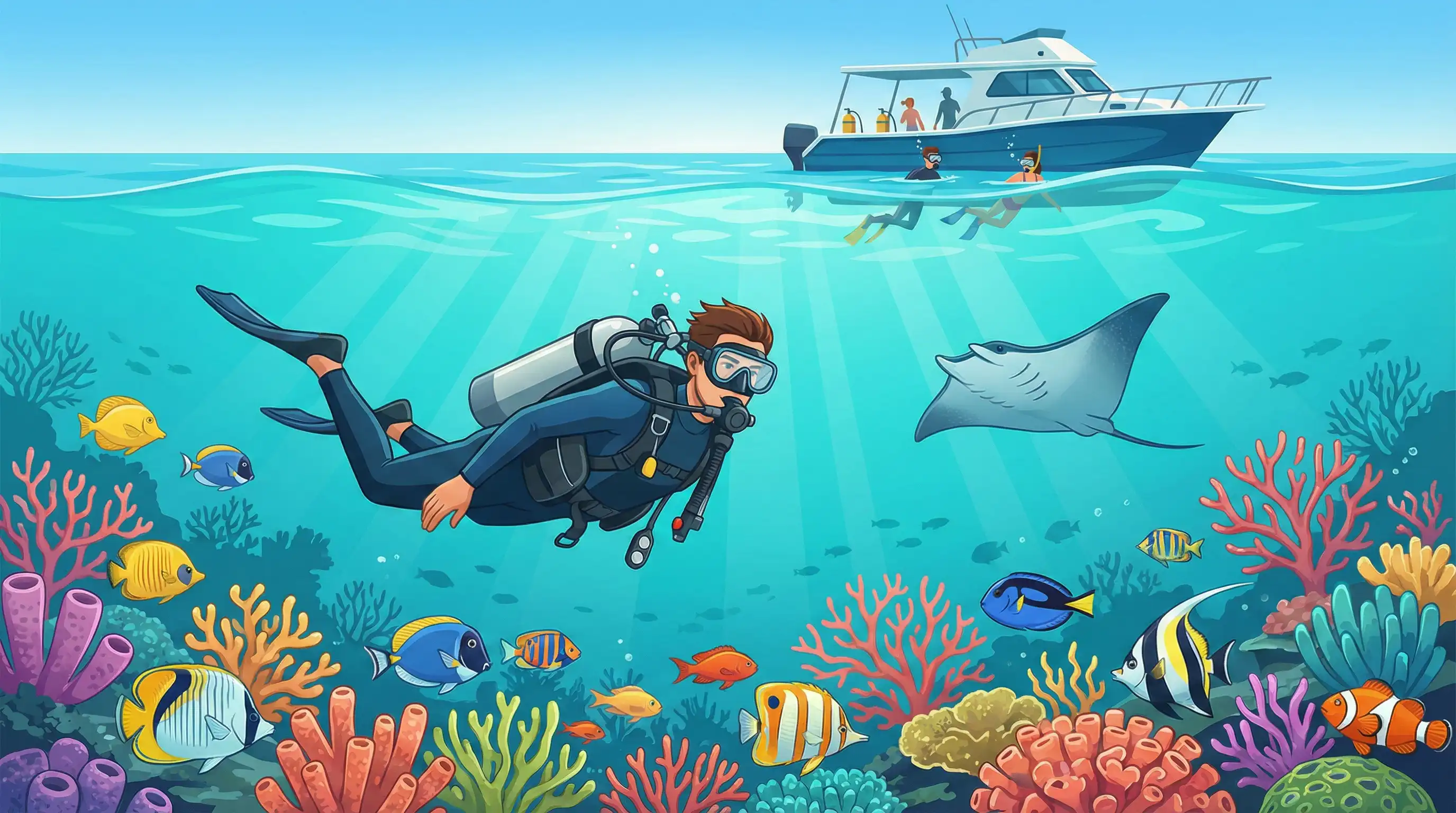
Komodo National Park is one of the best places in the world to dive. It has more than 50 recognized sites, from pinnacles that are scoured by currents to muck dives that are full of macro life. Komodo Resort is a full-service dive resort with a 5-star PADI dive center, professional instructors, and 13 boats that are only used to explore these underwater beauties.
Every morning and afternoon, dive boats leave immediately from the resort's jetty. This lets you get to signature areas early, before other operators have done their commute from Labuan Bajo. This flexibility lets dive itineraries change according on the weather, what guests want, and what species they see. Daily boat trips don't have this freedom.
Signature Dive Sites Near Komodo Resort
Sebayur Reef Sites: Located minutes from the resort, these sites offer excellent warm-up dives with diverse coral coverage and abundant reef fish. Ideal for check dives and night diving.
Castle Rock: A submerged pinnacle famous for schooling fish, white-tip reef sharks, and occasional giant trevally hunting in the blue. Strong currents bring nutrients that fuel the action.
Crystal Rock: Similar to Castle Rock but slightly shallower, with stunning hard coral gardens and frequent manta sightings during season.
Batu Bolong: Perhaps Komodo’s most iconic site—a small rocky islet with walls dropping into the deep, covered in soft corals and swarming with life from sharks to Napoleon wrasse.
Manta Point: A cleaning station where giant oceanic manta rays congregate, allowing divers to observe these gentle giants at remarkably close range.
Golden Passage: A channel dive known for strong currents, abundant sharks, and spectacular drift diving when conditions align.
Tatawa Besar and Tatawa Kecil: Coral-rich slopes with excellent macro life, sea turtles, and calmer conditions suitable for less experienced divers.
The resort is good for both experienced divers who are comfortable with advanced drift dives and less experienced divers who choose calmer spots. Dive guides give detailed briefings, up-to-date evaluations, and location choices based on the ability levels of the group.
PADI Dive Courses & Training
It would be amazing to learn how to dive right in Komodo National Park. Just think about getting your certification while surrounded by amazing marine life instead of in a hotel pool and boring training dives.
Komodo Resort offers PADI classes for beginners, advanced open water, specialized certificates, and more. There are lessons in many languages, such as English, Italian, French, Spanish, and Indonesian, to accommodate the many international guests that come from all over the world.
Course Structure
The standard training design starts with sessions in confined water in the calm, safe waters surrounding the resort. These are safe areas where students can practice basic skills before moving on to open water. As divers gain confidence, their training dives move to carefully chosen places with the right conditions. This lets new divers see Komodo's marine biodiversity while also meeting certification requirements.
Who Should Consider Training Here
If you've always wanted to dive but haven't done it before, getting your certification and going on a Komodo vacation is a great idea. The small class sizes make sure that each student gets individual attention, and the equipment meets international quality standards. When you get your Open Water certification here, your first "real" dives as a certified diver will be in one of the most beautiful underwater places on Earth.
Advanced Open Water and specialist courses like Nitrox, Deep Diver, or Drift Diver help certified divers improve their skills that are instantly relevant in Komodo's many environments.
Beyond Diving: Signature Experiences in Komodo National Park
Diving is what most people think of when they think about Komodo, but the park also has amazing land-based adventures that everyone should do. Because the resort is inside the park, day tours to main attractions take less time and are easier to combine, making for fuller days with less tiredness.
Komodo Dragon Trekking
Seeing Komodo dragons in the wild is one of the most unique wildlife encounters on Earth. The world's biggest lizards, these prehistoric carnivores, live freely on the islands of Komodo and Rinca. Park rangers lead guided hikes across dragon territory, where visitors can see these top predators as they bask, hunt, and socialize.
It takes about 35 to 45 minutes by boat from Komodo Resort to Rinca Island, where you may go dragon-trekking. It takes 30-45 minutes to get to Komodo Island. This shorter trip lets you leave earlier, trek in cooler weather, and get back to the resort for afternoon dives or rest. It's better than the 90-minute trip from Labuan Bajo.
Padar Island Sunrise Hike
Padar Island is one of the most photographed places in Indonesia. Its spectacular viewpoint shows three curved bays in different colors: one with pink sand, one with black sand, and one with white sand. The trek to the top takes 30 to 45 minutes, and those who get up early will be rewarded with stunning views of the Komodo archipelago at daybreak.
Boats can get to Padar from Komodo Resort before daybreak, so guests can start their hike in the cool hours before sunrise and finish it before it gets too hot.
Pink Beach Exploration
The name "Pink Beach" comes from the red coral pieces that are intermingled into the sand, which gives it a soft pink color. The snorkeling here is some of the best on Komodo. Colorful corals start in water that is only waist-deep, and sea turtles often swim in the shallows.
Combined Day Trip Possibilities
Komodo Resort’s location makes ambitious itineraries more feasible. A popular combination includes:
- Early morning Padar sunrise hike
- Mid-morning Pink Beach snorkeling
- Lunch on board or at the resort
- Afternoon dive at a nearby site
Such itineraries would be exhausting from Labuan Bajo but feel relaxed when you’ve eliminated hours of transit.
Cultural Encounters
For those who want to learn more about life in the area, tours to fishing villages around the park show how boats are made the old-fashioned way, how people have fished for centuries, and how people who live near Komodo dragons and the sea go about their everyday lives.

Spa, Wellness & Barefoot Beach Living
The Sebayur Spa & Wellness Center is a great place to relax after days of diving, hiking, and exploring. The spa is in a great spot to catch seaside breezes and vistas. It offers massages, body treatments, facials, and wellness rituals that go well with active Komodo activities.
The vibe at Komodo Resort fosters what some people call "barefoot luxury," which is a way of life that isn't full of pretense and where sand between your toes feels better than shoes. Days follow the rhythms set by nature instead of by schedules. For example, the sun rises over the beach, people snorkel in the middle of the morning, take naps in hammocks hung between palms in the afternoon, and watch the sky change from orange to violet in the evening.
People who want to go out at night, shop, or be entertained all the time should not come here. There is a strong sense of peace here, and that's on purpose. Guests are more present without the distractions of the city, which is something that busy lives don't often allow. People talk to each other in person instead of across screens. Dinners take longer. It is easier to sleep. The journey within becomes just as important as the voyage outside.
Dining, Beach Bar & Island Evenings
The resort's open-air bamboo restaurant is at a great spot with views of the bay and the ocean with every meal. The menu focuses on fresh local seafood, like grilled fish, prawns, and calamari, as well as Indonesian dishes like nasi goreng, sate, and sambal that provide heat and flavor to each meal. International options are available for those with different tastes, and dietary needs are carefully considered.
Meal Formats
Breakfast is a mix of buffet and à la carte, with tropical fruits, eggs made to order, Indonesian classics, and continental alternatives making sure that everyone has enough to eat to get through the day. Lunch and dinner can be ordered à la carte or from a set menu. The daily specialties are based on what the chef has made and what local fishermen have brought in.
The resort on Komodo Island also has three distinct meal plans: full board, bed and breakfast, and room only.
The Sunset Bar
The beachside bar is the best place to meet up as the afternoon dives end and the sun starts to go down. The bartending team makes signature cocktails that come with chilled beers, fresh juices, and inventive mocktails. The view from the bar is unforgettable: the sun setting amid volcanic outlines and the sky on fire. A refreshing drink doesn't hurt, either.
Evening Atmosphere
Dinner at Komodo Resort is warm and friendly, which is rare at bigger hotels. Diving buddies tell stories of seeing dragons and manta rays. Staff members suggest places to visit tomorrow. Barbecue nights every now and again turn the beach into a casual feast. The mood at night is friendly, but guests can also relax alone if they want to. This is what everyone needs after a day in paradise.
Getting to Komodo Island Resort (Komodo Resort)
To get to Komodo Resort, you have to take a local aircraft in Indonesia and then a boat ride. This travel sequence feels more like an experience than just getting there.
Step 1: Fly to Labuan Bajo
The region's main airport is Komodo Airport (LBJ) in Labuan Bajo. There are flights every day from Bali (Denpasar) that take around an hour and fifteen minutes. Other Indonesian cities, like Jakarta and Surabaya, also have links, usually through Bali.
Most people who go internationally first go to Bali, where they spend a night or two before going on to Labuan Bajo. There are no direct international flights to Labuan Bajo right now, so Bali is the best place to stop on the way there.
Step 2: Boat Transfer to Sebayur Island
When you get to Labuan Bajo, Komodo Resort will pick you up and take you to the harbor. After a short drive, visitors get on a resort boat for a beautiful trip to Sebayur Island. Depending on the route traveled and the state of the sea, transfer times can be anywhere from 30 to 45 minutes.
Timing Considerations
Boat transfers only work during the day, so if you arrive late in the afternoon or evening, you may need to spend the night in Labuan Bajo before going to the resort the next morning. When you schedule your flights, try to arrive in the morning or early afternoon so that you can be transferred the same day. When you book, the resort will tell you the best dates to fly.
Alternative Routes
There are overland and ferry routes from other sections of Flores and the larger Nusa Tenggara region for people who are willing to try new things and have flexible schedules. These choices, which include buses, ferries, and maybe Pelni passenger ships, are good for backpacking trips, but they make travel longer and more complicated. Most people choose to fly directly and then take a boat.
Who Komodo Resort Is Perfect For
Not every traveler will thrive at an island resort inside a national park. Here’s an honest look at who finds Komodo Resort to be their ideal choice—and who might prefer alternatives.
Serious Divers
If you want to spend as much time underwater as possible, Komodo Resort will save you time on the way there and give you direct access to world-class locations. diving, come up, rest, and do it all over again, without the long excursions that are common on diving trips from Labuan Bajo.
Underwater Photographers
Photographers dream of conditions like these: being close to the best places, having flexible schedules, and being able to dive numerous times a day. If the conditions are just right, you can go back to the same place on successive days. Instead than lounging on boats, spend golden hours shooting.
Couples Seeking Remote Romance
Komodo Resort is perfect for couples who think of romance as sunset dinners by the sea, starlit walks on private beaches, and mornings with no plans. The small size and lack of crowds make it possible to engage with others.
Families with Children
Families whose children are old enough to snorkel independently, complete junior dive certifications, and appreciate nature experiences find Komodo Resort accommodating. Younger children requiring constant entertainment and supervised activities may find the setting too unstructured.
Small Groups of Friends
Groups of 4-8 friends traveling together for diving, hiking, and extended dinners enjoy the resort’s social yet relaxed atmosphere. Unlike large resort complexes, you won’t lose each other in crowds.
Who Should Consider Alternatives
Instead, travelers who want entertainment, shopping, a variety of restaurants, and the vitality of a city can stay in Labuan Bajo. People who are on a tight budget and want to travel like a backpacker will find cheaper options in town. People who don't like boat transfers, being on an island by themselves, or having few medical facilities nearby should think about these things very carefully.
Ideal Trip Length
Plan on spending 4 to 7 nights so you may see both the underwater world and the main terrestrial excursions without feeling rushed. Three nights is just a taste; a full week lets you really get into things and do your favorite things again.
Planning Your Stay & Booking Tips
Smart planning transforms a Komodo trip from good to exceptional. Here’s what to consider as you start building your itinerary.
Seasonal Planning
High Season (June–September): Peak tourist months bring larger crowds at dive sites and on dragon treks, but also the driest weather and best manta encounters. Book 3-6 months ahead for these months.
Shoulder Seasons (April–May, October–November): Often the sweet spot—good weather, excellent visibility, fewer travelers. These months offer the best combination of conditions and availability.
Wet Season (December–March): Reduced prices and empty beaches appeal to some, but rain, reduced visibility, and rougher seas limit activities. January through March sees the most challenging conditions.
Booking Recommendations
For the most up-to-date information on park fees, precise availability, and all-inclusive dive packages, book directly with Komodo Resort or one of its approved booking partners. Sometimes, third-party booking sites provide old inventory or don't have all the information about how to get to your destination.
It's a good idea to book 4 to 6 months in advance for peak season stays, as in July and August or around Christmas and New Year. Before you can take a dive course, you need to make sure that the instructor is available in the language you want.
Park Fees and Regulations
The cost of getting into Komodo National Park depends on your activity and the day of the week. Fees have gone up in the last few years as attempts to protect the environment have grown. When you book, make sure to check the current prices and include them in your budget. There are different fees for dragon trekking, some activities, and some parts of the park.
There are rules about using drones, fishing, and anchoring to safeguard the environment. Your guides will tell you about the rules, but knowing what is important for conservation before you go will help you make a positive impact on the park's future.
Lasting Memories Begin with Planning
Those who plan beforehand will be rewarded on the way to Komodo Resort. Look into dive packages, make sure your flights are timed correctly, and make sure your transfers are set up. Then get ready to see amazing things above and below the waves. The dragons, mantas, and beautiful coral gardens here will give you memories that will last long after you sail home.