
Padar Island is the three-colored beach emblem of Komodo National Park. You may get there by boat from Labuan Bajo, which is on the western tip of Flores in East Nusa Tenggara. This small island has become one of the most photographed places in Indonesia. People from all over the world come to see its magnificent volcanic environment.
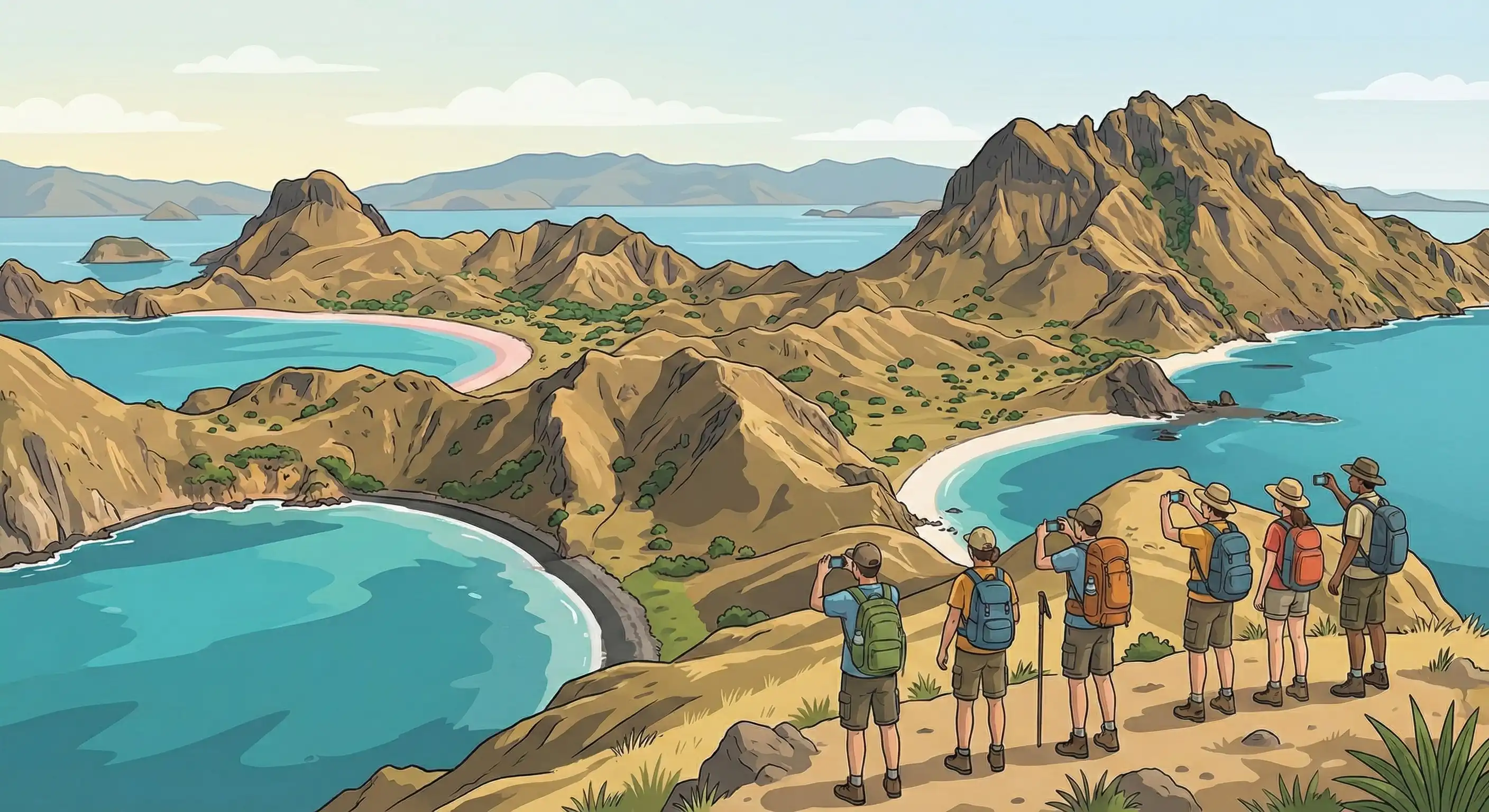
- From the top of the island's central peak, you can see all three of Padar's curved bays, which have white sand, black sand, and pink sand beaches.
- Depending on how athletic you are, the journey to the top of Padar Island takes 20 to 45 minutes. It's a short but steep ascent that gives you great views of the Komodo archipelago at sunrise and dusk.
- People can visit Padar Island on day trips or on liveaboard cruises that last 2 to 4 days.
Where Is Padar Island and What Makes It Unique?
Padar Island Indonesia sits in the south-central portion of Komodo National Park, which is a UNESCO World Heritage Site that was created in 1980 to safeguard the area's amazing variety of land and sea life. The island is in the Flores Sea and is part of the volcanic sequence that runs across it. It is between Komodo Island and the Rinca Islands.
- Padar Island Indonesia is around 30 to 40 kilometers by sea from Labuan Bajo on Flores. It usually takes 60 to 90 minutes by speedboat or 2 to 3 hours by slower traditional boats, depending on the weather in the area.
- Padar Island is the third largest island in the Komodo National Park. It has rough volcanic ridgelines and deep bays that give it its unique shape that can be seen from boats coming in.
- Savannah-covered hills make up the landscape, and they change with the seasons. In the wet season (December to March), they turn bright green, and in the dry season (April to November), they turn golden brown.
- Most drone images and travel publications show the famous "three-bay" configuration. From the famed viewpoint, you can see three crescent-shaped beaches next to each other. Each beach has a different color of sand because they are made from volcanoes.
- Padar Island is still legally part of the protected area of Komodo National Park. There are no permanent tourist facilities on the island, such as shops, restaurants, or places to stay.
- This means that everyone who comes to Padar Island must be completely self-sufficient and bring everything they need for the climb and beach stops by boat.
History, Wildlife, and Komodo Dragons on Padar
Padar's tale is connected to the larger story of how Komodo National Park became a global tourist destination and a place to protect nature.
- In the past, Padar Island was used by fishing communities from nearby islands. Later, in the 20th century, scientific teams often visited the area to examine its peculiar animals.
- Komodo dragons used to live on Padar as part of their natural habitat across the archipelago. But the numbers went down a lot, and by the end of the 20th century, they thought the species was extinct on the island.
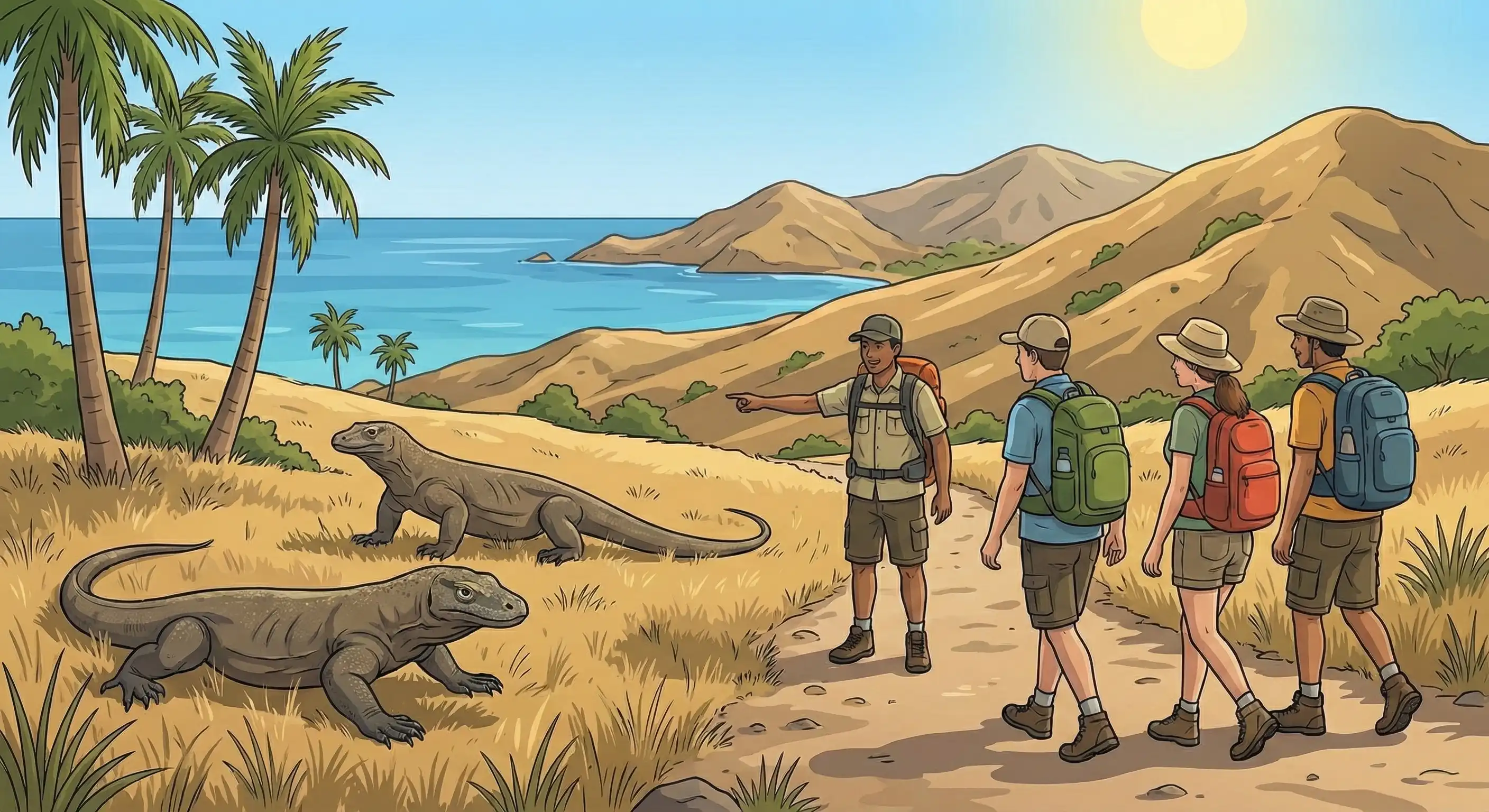
- Most people think of Padar as a "no-dragon" trekking island these days. People who want to see komodo dragons for sure should plan to stop at Komodo Island (Loh Liang) or Rinca Island (Loh Buaya), where ranger-led hikes are offered.
- Other animals visitors might see sea eagles flying over the ridges, lesser birds, and sometimes deer or goats on the hillsides.
- The waters around the area are home to colorful reefs full of coral fish, green turtles, reef sharks, and manta rays. There are also whales that pass through during migratory seasons.
Iconic Viewpoint and Hiking Padar Island
Visitors' main activity is the climb to see Padar Island's famous viewpoint, which is one of the most rewarding short hikes in all of Indonesia.
- The Padar Island trekking starts at the main beach, where boats moor in one of the turquoise coves. It then goes up a series of stone steps and dirt trails to the center ridge, which has a view of all three beaches.
- Trail upgrades made around 2016–2017 include stone stairs and improved path markers. However, the route is still exposed to the sun and has loose gravel in the upper areas, so you need to wear the right shoes to explore Padar island.
- Realistic times range from 20 to 30 minutes for athletic hikers who keep a steady pace to 45 to 60 minutes with photo stops, water breaks, or a more relaxed approach.
- The greatest time to go hiking is at sunrise, when the temperatures are lower and the ascent is easier. Boats usually leave Labuan Bajo between 5:00 and 5:30 a.m. to get there just after dawn.
- Hiking in the late afternoon gives you golden hour light and softer shadows, which are great for taking pictures. However, you need to plan your hike so that you can get back to the boat before nightfall.
- You should carry 1 to 2 liters of water per person, a hat, reef-safe sunscreen, sturdy shoes or trekking sandals, and a light jacket if it's windy (June to August).
- There are several levels of viewpoints along the walk, so those who can't go to the very top may still appreciate padar from lower heights, where they can see at least one or two bays in all their glory.
The Tri-Coloured Beaches of Padar
Visitors may see the uncommon mix that makes Padar Island unique from the top: three separate bays with beaches of varied colors, each formed by the island's geological past.
- The black sand beach gets its dark color from dark minerals that have been worn away from volcanic rock. This is a frequent feature of Indonesian islands that were formed by volcanoes.
- Pink sand is made up of white coral sand and tiny pieces of red foraminifera, which are tiny creatures with calcium carbonate shells that wash up on the beach and mix with other sediments.
- Over hundreds of years, waves break down light-colored coral fragments and shells, which then become white sand beaches.
- The pink color on Padar is usually softer and less bright than the famous Pink Beach on Komodo Island, which is close by. Visitors should keep this in mind.
- This wide-angle shot of three bays has become one of the most popular vacation photos in the world, which keeps people interested in visiting the area.
How to Get to Padar Island from Labuan Bajo
Labuan Bajo, which is on the western edge of Flores, is the major method to get to Komodo National Park and the best place to start a trip to Padar Island.
In the last few years, the town has grown quickly. The infrastructure has gotten better, there are more hotels and resorts to choose from, and there are regular flights to important Indonesian towns. To get to Padar, follow these steps:
- Step 1: Fly to Komodo International Airport (LBJ) in Labuan Bajo via carriers such as Garuda Indonesia, Batik Air, or Citilink. Flight times run approximately 1 hour from Bali (Denpasar) and 2.5 hours from Jakarta.
- Step 2: Overnight in a hotel in Labuan Bajo or direct transfer to Komodo Island Resort.
- Step 3: Board a speedboat or wooden phinisi boat into the Komodo National Park, paying park entrance and conservation fees either at Labuan Bajo harbor or through your tour operator.
Typical boat durations vary significantly by vessel type:
| Boat Type | Travel Time to Padar | Best For |
|---|---|---|
| Speedboat | 60–90 minutes | Day trip, time-sensitive visitors |
| Wooden phinisi | 2–3 hours | Liveaboard experience, scenic journey |
| Standard tour boat | 90–120 minutes | Budget day tours, group trips |
Most day trips to Padar include at least one island where you can see dragons (Komodo or Rinca) and pauses for snorkeling at places like Pink Beach or Manta Point. The trips last 10 to 12 hours.
You can book trips through local tour desks along Jl. Soekarno Hatta in Labuan Bajo, hotel reception desks (which can handle arrangements through digital concierge systems), and well-known online companies.

Day Tours vs Liveaboard Cruises
Travelers can choose the best experience and hotels can give them the best advice if they know the difference between day trip alternatives and liveaboard adventure packages.
- Day trips usually leave Labuan Bajo between 5:30 and 7:00 in the morning and arrive in Padar for early-morning hikes before the tourists get there. The tours then go on to Komodo or Rinca, where you may go hiking with Komodo dragons and snorkel, and then they come back around sunset.
- Liveaboard cruises in Komodo on traditional phinisi yachts like the Komodo Sea Dragon last 2 to 4 days. This lets guests plan their Padar excursions for quieter periods, like very early in the morning or late in the afternoon, when there aren't as many people around. This gives them more chances to explore Padar at different times of the day.
- Most of the time, the liveaboard experience includes anchoring overnight near different islands, eating meals on board, and seeing more of the park's dive spots and beaches.
Best Time to Visit Padar Island
Padar Island in Indonesia is open all year, however the weather and number of people there change a lot during Indonesia's tropical seasons.
- The best time to visit is during the dry season, which runs from about April to December. The waves are calmer in the Flores Sea, the skies are brighter, snorkeling at colorful reefs is easier, and the trekking paths are safer and drier.
- The colors of the landscape change a lot throughout the course of the year. After the rainy season ends, the hills seem rich green from March to May. From June on, they become golden-brown, giving the photos a very different feel.
- June to August is the busiest time of year, and Eid, Christmas, and New Year are the biggest holidays in Indonesia. You should book your boat excursions, hotel rooms, and liveaboard berths well in advance.
From January to March, there can be severe rain and rough waves, which can sometimes lead to trip cancellations or adjustments to the program. People who visit during these months should make sure their plans are flexible. - Hiking around daybreak or in the early morning is always a good idea to prevent heatstroke dangers in colder weather and to get the best light before the strong midday sun.
- Shoulder months (April–May and September–October) are usually less crowded. The weather is nice, and the island is less busy during these times.
Top Things to Do on and Around Padar Island
Most people who visit Padar Island, Indonesia, do so to walk to its famous viewpoint, but many also explore other parts of Komodo National Park.
- For the typical three-bay view that featured in many travel articles about Indonesia, hike to the panoramic viewpoint.
- After the climb, you can relax on the accessible beaches. The white sand coves have quiet waters that are great for swimming and cooling down before the boat ride starts.
- Snorkel in neighboring coral gardens where operators choose spots based on the weather and how well you can see. You'll see colorful reef fish and perhaps turtles.
- Take part in multi-site tours that include Padar, Komodo, or Rinca dragon treks, Manta Point for ray encounters, and Taka Makassar sandbank for one-of-a-kind photo ops.
- While boats go back to Labuan Bajo, sunset gazing on the way back delivers stunning colors over the Komodo islands.
Most guests stay at Labuan Bajo for 2 to 4 nights to thoroughly experience the region because Padar is usually a half-day stop on a longer Komodo circuit.
Snorkeling and Diving Near Padar
Padar's local bays are great for relaxing snorkeling, but the most famous underwater spots are a short boat trip away in the larger national park.
- Some of the most popular places to visit include Manta Point (where you can see manta rays), Batu Bolong (one of the park's best dive sites), Siaba, and the reefs near Pink Beach on Komodo Island.
- The park is home to a variety of marine life, including hard and soft corals, six types of sea turtles (including green turtles and hawksbills), reef sharks, rays, and sometimes dolphins or whales that swim through the park's nutrient-rich currents.
- Safety is the most important thing to think about because the currents in Komodo can be powerful and change swiftly with the tides. Visitors should always go diving and snorkeling with qualified guides who know the area well.
Practical Tips for Visiting Padar Island
Padar Island is far away and hardly developed, therefore visitors need to be able to take care of themselves while they are there. The difference between a hard experience and an unforgettable one is how well you prepare.
Packing essentials for your hike:
| Item | Why It Matters |
|---|---|
| 1–2 liters of water | No facilities on trail; dehydration risk is real |
| Reef safe sunscreen | Protects skin and marine ecosystems |
| Hat and sunglasses | Essential sun protection on exposed trail |
| Comfortable shoes | Sturdy footwear for loose gravel and steep hills |
| Small backpack | Hands-free for climbing and photography |
| Camera/phone + spare battery | Don’t miss the iconic shots |
Environmental responsibility:
- No trash facilities exist on the trail—carry all waste back to the boat
- Avoid single-use plastics where possible; many operators now encourage reusable water bottles
- Stay on marked paths to prevent erosion of the fragile hillside vegetation
Safety considerations:
- Follow guide instructions at all times, especially near steep edges
- Mid-day temperatures can exceed 30°C with intense sun exposure—just a viewpoint trip can become dangerous without adequate hydration
- Be cautious with loose gravel and uneven terrain, particularly on descent when tired legs are more prone to slips
Administrative notes:
- Komodo National Park charges entrance and conservation fees that may change periodically
- Confirm current fees with your hotel or tour operator before departure to avoid surprises
- Keep fee receipts accessible as they may be checked at multiple points during multi-island itineraries
Key Takeaways
- Visit Padar Island for one of Indonesia’s most iconic viewpoints—a 20–45 minute hike revealing three beaches with white, black, and pink sand against turquoise bays.
- Access Padar via boat tour from Labuan Bajo, choosing between fast day trips or multi-day liveaboard cruises through Komodo National Park.
- Plan your visit during the dry season (April–November) for optimal conditions, with sunrise hikes offering the best combination of comfortable temperatures and stunning photography.
- Combine Padar with Komodo or Rinca island dragon treks and snorkeling at sites like Manta Point for a complete Komodo experience.
If you're going to this amazing part of Indonesia for the first time or running a hotel that gets people going to Padar every day, planning and timing are very important.