
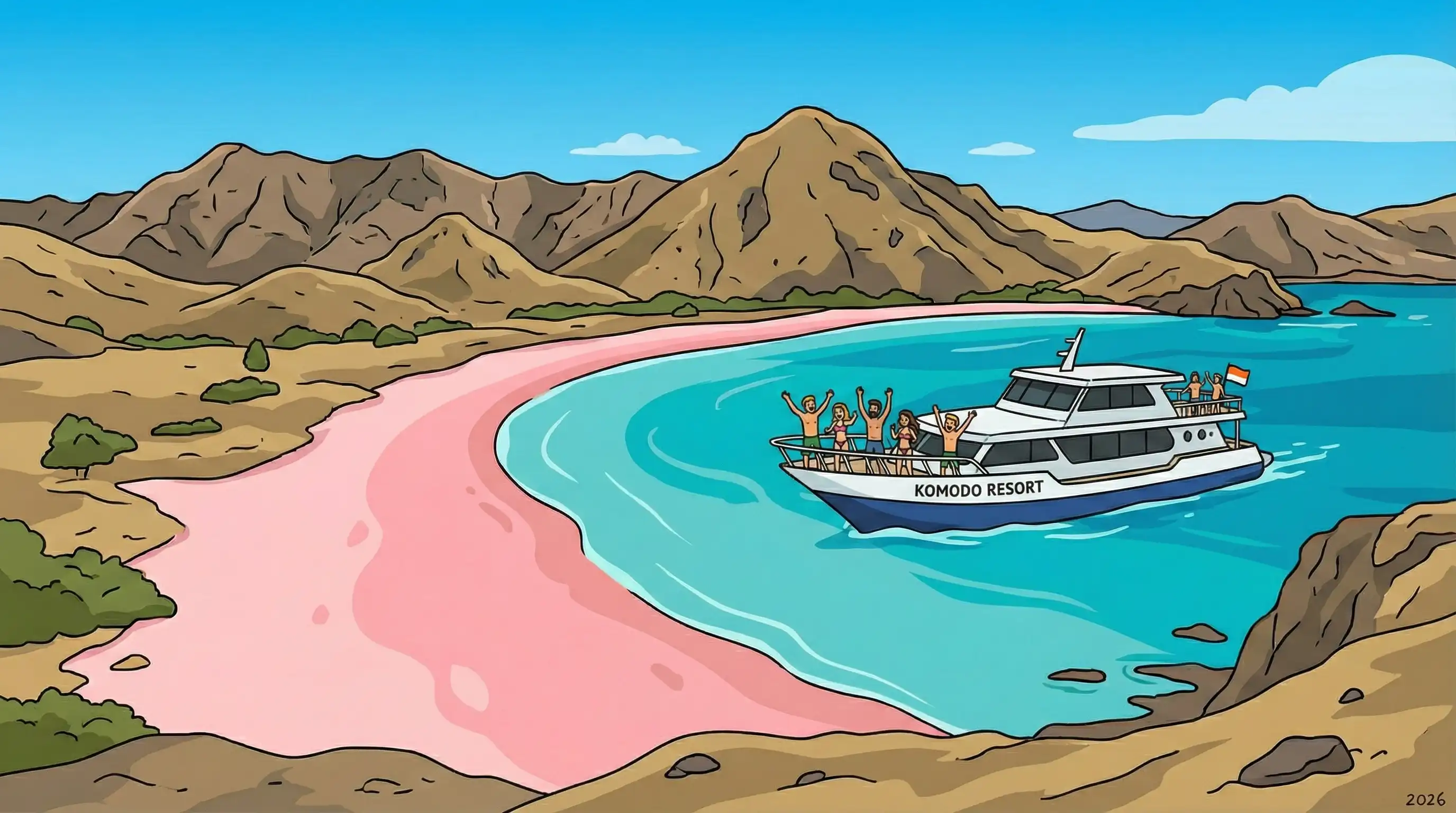
Picture getting off a wooden boat and walking into beach that shines a warm pink in the tropical light. Pink Beach Komodo, or Pantai Merah in Indonesian, is one of only a few pink sand beaches in the world. It is located in the protected seas of Komodo National Park in East Nusa Tenggara, Indonesia.
This Indonesian pink beach located on the northeastern shore of Komodo Island, about 40 kilometers by sea from Labuan Bajo on Flores. It attracts tourists from all over the world. Komodo Airport (LBJ) serves the main gateway town, which connects visitors to Bali, Jakarta, and other places.
What makes this beach so beautiful? The pink color originates from mingling crushed red coral with white sand. The turquoise ocean and green rolling hills that make up Komodo's rough savanna terrain are what make it so beautiful. It looks like something from another world.
We'll talk about why the sand is pink, how to get there, the best time to go, what to do when you are there, and safety and conservation suggestions.
What Makes Pink Beach Komodo Unique?
Pink Beach Komodo is one of the most photographed beaches in Indonesia and is a must-see on every trip to Komodo National Park. But it's not just a lovely beach; it's also part of a marine ecosystem that is protected and doesn't exist anywhere else on Earth.
The beach is officially part of Komodo National Park, which was established in 1980 as a UNESCO World Heritage Site and a Man and Biosphere Reserve. The park is famous for its Komodo dragons, colorful coral reefs, manta rays, and rough volcanic islands that are spread out across the Flores Sea.
Most of the time, when people say "Pink Beach Komodo," they mean Pantai Merah on Komodo Island. Even though both are in the same national park, this pink sand is different from the lighter pink sand at Long Beach on Padar Island.
What visitors typically encounter:
- A relatively small, sheltered bay
- A narrow but vivid pink shoreline
- Calm, lagoon-like shallow waters
- Tour boats anchored just offshore
- A low hill offering panoramic views of the surrounding islands
Pink Beach Komodo gets day-trippers from Labuan Bajo, passengers on dive liveaboard trips, and domestic tourists from Jakarta, Surabaya, and Denpasar who want to do something fun that includes dragons, diving, and one of the world's rarest beach hues.
Why Is the Sand Pink at Komodo’s Pantai Merah?
The sand at Pink Beach has a unique color that isn't caused by dye or people. It happens naturally in the earth and in living things, and it takes years to happen.
The Role of Red Coral
The main reason is that tiny pieces of red organ pipe coral (Tubipora musica) break off from the adjacent reef and combine with bright white carbonate sand. The red coral skeletons on this beach are what give it its characteristic reddish-pink color. When waves hit them, they break down.
Foraminifera: The Microscopic Contributors
Foraminifera, which are tiny single-celled marine animals, also play a big role in addition to coral. These animals make red or pink calcium carbonate shells, or tests, that provide more color to the soft sand when they die and wash up on shore.
How the Color Develops
Over time, waves, currents, and persistent grinding against the reef and shore break down coral skeletons, changing the color of the beach. The pink color is most clear:
- Near the waterline
- Around low tide
- Under soft morning or late-afternoon light
The color gets stronger and weaker as the day goes on. The pink can be washed out by the strong daytime sun, but the golden hour makes it much better.
Common Misconceptions
| Myth | Reality |
|---|---|
| The sand is painted or dyed | The color is 100% natural |
| You can take sand home as a souvenir | Removing sand or coral is illegal under Indonesian law |
| The beach is bright neon pink | The color is a soft pastel pink-red, not vivid neon |
Following these laws isn't just about following the rules; it's also about protecting the undersea ecosystem that makes this magic happen in the first place.
Where Is Pink Beach Komodo and How to Get There?
Labuan Bajo, a harbor town on western Flores with an airport (IATA: LBJ), is where most visits to Pink Beach start. This modest but busy airport is now the main means for people to get to Komodo National Park.
Getting to Labuan Bajo
For international visitors, the typical travel chain looks like this:
- Fly into Bali (Denpasar, DPS) or Jakarta (CGK)
- Take a domestic flight to Labuan Bajo (~1 hour 10 minutes from Bali)
- Airlines like Batik Air, Citilink, and Wings Air operate daily routes
From Singapore or other regional hubs, you’ll likely connect through Bali before the final short boat ride to Komodo territory.
Reaching Pink Beach by Boat
You can only get to Pink Beach Komodo via boat; there are no roads leading there. This helps keep the beach's natural, untouched look.
Typical boat travel times from Labuan Bajo:
| Boat Type | Duration |
|---|---|
| Standard wooden boat | 2–3.5 hours |
| Fast speedboat | 1.5–2 hours |
Most organized tours combine Pink Beach with other Komodo National Park sites:
- Komodo Island or Rinca Island – for Komodo dragons trekking
- Padar Island – famous sunrise hike with panoramic views
- Manta Point – snorkeling with manta rays
Most of the time, hotels and resorts in Labuan Bajo work with local tour companies to plan these trips.
There are three main ways for travelers to get to Pink Beach: join-in day trips, private charters, and multi-day liveaboard cruises. Depending on your budget, timetable, and travel style, each one has its own pros and cons.
Option 1: Visit Pink Beach from Komodo Resort
For guests staying at Komodo Resort, visiting Pink Beach Komodo is a convenient and enjoyable option. The resort typically offers organized boat trips to Pink Beach, allowing visitors to experience the stunning pink shoreline and vibrant coral reefs with ease.
What to expect:
- Short boat ride directly from the resort’s private dock
- Flexible departure times tailored to guest preferences
- Guided snorkeling tours with equipment provided
- Opportunity to relax on the soft sand or explore nearby viewpoints
- Small group sizes ensuring a more intimate experience
This option is ideal for travelers seeking a hassle-free day trip to Pink Beach while enjoying the amenities and comfort of Komodo Resort.
Option 2: Join-In Day Tour from Labuan Bajo
This is the most popular and budget-friendly way to visit Pink Beach Komodo.
What to expect:
- Departure from Labuan Bajo around 7–8 a.m.
- Return by late afternoon or early evening
- Pink Beach as one of several stops (typically 3–4 destinations)
- Shared boat with other travellers
- Basic snorkel gear and simple lunch included
- National park entrance fees usually not included
Option 3: Private Boat Charter
Small groups, families, or honeymooners often prefer private speedboat or wooden phinisi charters for greater flexibility.
Benefits of private charters:
- Custom departure times
- More time at Pink Beach
- Ability to avoid peak crowds (typically 10:30–14:30)
- Personalized itinerary
Option 4: Liveaboard Trip
For the ultimate Komodo experience, 2–4 day Komodo liveaboard itineraries allow guests to sleep on board traditional phinisi boats or modern dive vessels.
Liveaboard advantages:
- Multiple dives per day at pristine sites
- Pink Beach visits timed for sunrise or sunset
- Minimal crowds during off-peak hours
- Deeper exploration of surrounding islands
Most liveaboards leave from Labuan Bajo and must follow the laws for zoning and daily visitation limitations in Komodo National Park. This means that you need to book ahead of time, especially during the busiest months of the dry season.
No matter whatever option you choose, you need valid national park tickets and boat permits for all visits. Your tour or liveaboard operator normally takes care of this.

What to Do at Pink Beach Komodo
There is more to Pink Beach than just taking pictures. This shore has everything you need, whether you want to swim, snorkel, hike, or just relax.
Swimming and Snorkeling
The shallow waters just meters from shore host a vibrant coral garden teeming with life.
What you’ll see:
- Hard corals and soft corals in various formations
- Colorful fish including clownfish, parrotfish, and butterflyfish
- Occasional sea turtles gliding through
- Tropical fish in abundance
Most of the time, the weather is calm, however the tide can cause mild currents. Snorkelers, especially those who are new to the sport, should stay near to shore and listen to their guides.
Conservation tips:
- Use reef-safe sunscreen to protect the corals
- Never stand on or touch the reef
- Maintain buoyancy to avoid accidental contact
The coral reefs here start just a few meters from the pink shore, and living coral covers around 20 meters before the water drops off. The underwater world has far more to offer divers than just the snorkeling area.
Short Hill Hike and Viewpoints
Behind the beach, a low hill offers one of the best vantage points in Komodo National Park.
The hike:
- Takes roughly 10–15 minutes via a visible dirt path
- Wear sandals or shoes (the trail gets dusty and hot)
- Bring water and sun protection
The view:
From the summit, you can see the pink beach curving into shallow turquoise waters, the rough peaks of Komodo Island, and boats anchored in the Indian Ocean. The brief climb is definitely worth it.
Photography
Pink Beach offers incredible opportunities for photos at every angle.
Recommended shots:
| Angle | Best For |
|---|---|
| Low along shoreline | Pink sand against blue water |
| From the hill | Panoramic landscape views |
| Close-up of sand | Texture and color detail (don’t remove sand!) |
Bright, rich colors are best from mid-morning to late afternoon. But if you want softer pastel colors, the shore is a lovely place to take pictures at sunrise and dusk.
Relaxing on the Beach
Sometimes the best thing to do is nothing at all.
- Lie on a sarong and soak up the sun
- Float in the shallow waters
- Listen to the waves lap against the shore
- Observe the textures of sand and coral rubble
Park rules say that there are usually no permanent sunbeds or big buildings on the beach. There are small warungs (food stalls) under trees that sell snacks, drinks, and souvenirs without blocking the view. If your tour operator lets you, bring your own towel and shade gear.
Guests usually come back to Labuan Bajo in the evening after spending the day swimming, sunbathing, and touring.
Best Time to Visit Pink Beach Komodo
Komodo has a tropical climate with distinct wet and dry seasons that significantly impact sea conditions, visibility, and your overall experience.
Dry Season (April to November)
This is the prime season for visiting Pink Beach.
Why dry season works best:
- More stable seas for comfortable boat travel
- Better underwater visibility for snorkeling and diving
- Less rainfall means more beach time
- Pink color appears more vivid under clear skies
June through October marks peak season with strong sunshine, but also higher visitor numbers and hotter midday temperatures. Plan accordingly.
Wet Season (December to March)
Rainfall increases during these months, and seas can become rougher.
What to expect:
- Some tours may be cancelled due to safety concerns
- Visibility underwater may be reduced
- The landscape turns lush green—a different but beautiful aesthetic
- Slightly quieter tourism outside holiday periods
Best Time of Day
| Time | Advantages |
|---|---|
| Early morning (7–9 a.m.) | Fewer crowds, cooler temperatures, soft light |
| Late afternoon (3–5 p.m.) | Golden hour photography, cooler conditions |
| Midday (10 a.m.–2 p.m.) | Peak crowds, harsh light, hottest temperatures |
The pink tint of the sand is often more apparent in low-angled light, making dawn and golden hour ideal for photography.
Operational Considerations
Everything in Komodo is affected by the weather. Hotels and tour companies typically change their cancellation and departure policies based on the weather. Modern hotel management software like Prostay helps keep everyone up to know when plans change by automatically sending messages to guests and making changes to their schedules.
Practical Information: Fees, Regulations, and What to Bring
To protect its species, coral reefs, and natural splendor, Komodo National Park has strict rules. Visitors must follow the rules and pay the fees that are in place.
Park Fees
Entrance fees are set by Indonesian authorities and may change. They generally include:
- Park entrance fee
- Conservation contribution
- Activity-specific charges (snorkeling, trekking, etc.)
Most of the time, tickets let you visit more than one park location in a day. Usually, you pay in Indonesian Rupiah, either at Labuan Bajo before you leave or on Komodo Island, depending on your operator.
Rules and Conservation Guidelines
What’s prohibited:
- Removing sand, shells, or coral fragments
- Feeding or approaching wildlife (including Komodo dragons elsewhere in the park)
- Single-use plastics on some boats and in parts of the park
These rules are enforced by park rangers and local guides. If you follow them, the ecology will stay healthy and future travelers will be able to have the same great experience.
What to Bring
Essential packing list:
- Light, breathable clothing
- Hat and sunglasses
- Reef-safe sunscreen
- Swimsuit and towel or sarong
- Refillable water bottle
- Small dry bag
- Waterproof phone case
- Cash in IDR for park fees and small purchases
- Water shoes or sturdy sandals
Health and Safety
| Tip | Why It Matters |
|---|---|
| Follow crew instructions | Boats can be busy; safety first |
| Wear life jackets when required | Especially on open water crossings |
| Avoid stepping on corals | Protects both you and the reef |
| Stay hydrated | Strong sun causes dehydration quickly |
There aren't many medical facilities on the islands. Labuan Bajo has better medical care, therefore anyone going to Komodo should definitely have travel insurance.

Pink Beach Komodo vs Other Indonesian Pink Beaches
Pink Beach Komodo is well-known, but Indonesia has a number of other pink sand beaches that have diverse atmospheres and are easier to get to. This is how they stack up.
Pink Beach Komodo (Pantai Merah, Komodo Island)
- Color: Vivid reddish-pink
- Location: Komodo National Park
- Access: Boat only from Labuan Bajo
- Highlight: Often combined with dragon tours and diving
This is the most photographed and visited of Indonesia’s pink beaches.
Long Beach / Pink Beach on Padar Island
- Color: Softer, pastel pink
- Location: Padar Island, Komodo National Park
- Access: Short boat ride from other park sites
- Highlight: Near the famous Padar viewpoint hike
Some maps call this "Pink Beach," which is confusing. People who live there and numerous businesses name it "Long Beach" (Pantai Panjang). Some people say that the sand here is even brighter pink-red.
Tangsi Beach, Lombok
- Color: Variable—whiter at midday, pinker at sunrise/sunset
- Location: Southeast Lombok
- Access: Road plus short boat or coastal drive from Kuta or Mataram
- Highlight: More remote, fewer tourists
Other Pink Beaches
There are several lesser-known pink beaches in Indonesia, mostly on Flores and North Sulawesi, like the ones near Serai Beach. These usually have softer colors and a lot fewer people than Komodo.
In short, Pink Beach Komodo and Long Beach Padar are the most practical and famous pink-sand experiences for most people who stay in Labuan Bajo. They are commonly integrated in one multi-stop itinerary through the country's gorgeous beaches.
Where to Stay for a Trip to Pink Beach Komodo
Visitors typically base themselves in Labuan Bajo for at least 1–3 nights before and after visiting Pink Beach and other sites in Komodo National Park.
Accommodation Types in Labuan Bajo
The town offers options across every budget:
| Type | Best For |
|---|---|
| Simple homestays and hostels | Budget backpackers |
| Mid-range boutique hotels | Couples and solo travellers |
| Villas with sea views | Families and groups |
| Full-service resorts with private jetties | Luxury seekers and honeymooners |
Many properties have emerged rapidly since around 2015 as Komodo tourism has grown, transforming this once-sleepy fishing town into a busy hub.
What to Consider When Choosing a Hotel
- Proximity to the harbor: Many boats depart from Labuan Bajo’s main jetty early morning
- Early breakfast availability: Essential for 7 a.m. tour departures
- Packed lunch options: Some tours include food; others don’t
- Late check-in flexibility: Important for guests returning from liveaboards
- Reliable Wi-Fi and air conditioning: Crucial after hot, sun-filled days on the water
Responsible Travel Tips for Pink Beach Komodo
The coral reefs and animals of Komodo National Park are delicate ecosystems. Being responsible will help keep Pink Beach lovely for others who visit in the future and for the animals who live there.
Environmental Practices
Do:
- Maintain neutral buoyancy while snorkeling
- Use reef-safe sunscreen and UV-protective clothing
- Observe marine life from a respectful distance
- Stay on marked trails during hikes
Don’t:
- Step on or touch coral (it’s alive and fragile)
- Feed fish or other wildlife
- Collect sand, shells, or coral fragments as souvenirs
- Chase or harass marine animals
Waste Management
Waste facilities on the islands are limited. Every piece of trash you bring in should come back out with you.
Tips:
- Bring a reusable water bottle
- Avoid single-use plastic bags and straws
- Carry a small bag for your own rubbish
- Use proper bins back in Labuan Bajo
Respect for Park Regulations and Local Communities
- Follow guide and ranger instructions at all times
- Respect zoning rules and visitor limits
- Keep safe distance from Komodo dragons on other islands
- Use local guides and operators who follow conservation guidelines and fair labor practices
Supporting locals through ethical operators helps the community benefit from tourism while protecting what makes this place special.
Planning Your Pink Beach Komodo Experience
Anyone traveling to Indonesia should make sure to visit Pink Beach Komodo. The red coral and Foraminifera make the sand pink, and the only way to get there is by boat from Labuan Bajo. There are things to do there, like snorkeling in the coral reefs or just relaxing on the beach.
Spend at least a few nights at Labuan Bajo so that you may be flexible with the weather, ferry timetables, and other Komodo National Park sites like Padar Island or dragon trekking on Rinca. This part of Indonesia is great for getting the perfect sunset picture or going on an underwater adventure with exotic fish.