
Komodo National Park is consistently one of the top five sites in the world to dive for a good reason. The Indian and Pacific Oceans meet in this Indonesian archipelago. Strong tides rush nutrients through little streams, creating an underwater display that scuba divers from all over the world come to see. There are more than 1,000 varieties of fish and 260 kinds of reef-building corals in the park. It is also one of the best diving spots in the world to watch manta rays.
You can do anything you want in Komodo National Park. You can go on heart-pounding drift dives through shark-filled waterways or have peaceful encounters with beautiful manta rays at cleaning stations. The diving here ranges from shallow coral gardens that are easy for beginners to navigate to difficult pinnacles that are swept by currents and will test even the most experienced divers.
Komodo island diving is special since it has both land and water attractions. The park is a UNESCO World Heritage Site and is home to the famous Komodo dragons, who are the largest reptiles in the world. You're diving in the Coral Triangle, which is the area of the ocean with the most different kinds of marine life. You can't do this in many places on Earth: in the morning, you can follow ancient reptiles, and in the afternoon, you can swim with reef sharks and manta rays.
This guide is for certified divers who are heading to Komodo National Park for the first time. You may find all you need to decide between liveaboard boats and day cruises, learn about the weather at different times of the year, choose the best dive sites for your skill level, and make a realistic budget for a 3–7 day trip. A lot of the visitors who come here go on a 3-day, 2-night liveaboard safari or a series of day trips from Labuan Bajo. You'll know which one is best for you by the end of this post.

Komodo National Park & Island Overview
The East Nusa Tenggara province's Komodo National Park covers over 1,800 square kilometers of land and sea between the islands of Sumbawa and Flores. The park includes three big islands—Komodo, Rinca, and Padar—as well as about 26 smaller islands. Each of these islands is surrounded by coral reefs, seagrass meadows, and mangrove forests, which together make up one of the most biodiverse marine habitats on Earth.
The main reason for creating Komodo National Park in 1980 was to conserve the number of Komodo dragons, which is now thought to be between 4,000 and 5,000 individuals. UNESCO named it a World Heritage Site in 1991 because of its unique land ecology and the amazing marine species that lives in its seas. Because the park is in the middle of the Coral Triangle, where the Indian Ocean, Pacific Ocean, and South China Sea meet, there are more species here than virtually anywhere else you may dive. There are more marine species in Komodo than in whole ocean basins in other parts of the world.
Labuan Bajo, on the western extremity of Flores Island, is the only genuine place for divers to get in and out. This small town is growing quickly and has everything from backpacker hostels to five-star resorts, dozens of Komodo diving centers, and a busy harbor where liveaboard vessels and day boats leave every morning. This is where almost all Komodo dive trips start and end. It's your base for both underwater adventures and land trips to see dragons on Rinca Island or catch the sunrise from Padar Island's famous viewpoint.
How to Get to Komodo for Diving
To go to Komodo National Park, you first have to get to Labuan Bajo and then take a boat to the park. There is no airport on Komodo Island. The only way to get there is by boat from Labuan Bajo's harbor which is the main harbor.
Komodo Airport (LBJ) in Labuan Bajo has flights every day from major Indonesian cities. You can expect a direct trip from Jakarta (CGK) to take about 2.5 hours on airlines like Garuda Indonesia or Batik Air. AirAsia, Citilink, and Wings Air all fly from Denpasar, Bali (DPS) to other cities every day. The flights take just 1 hour and 15 minutes. These Bali connections make it possible to go diving in Komodo and then spend time visiting Bali's reefs or rice terraces. Batik Air Malaysia and AirAsia also offer seasonal direct flights from Singapore and Kuala Lumpur starting in 2025. However, timetables change and it's important to book well in advance.
By Boat/Ferry: Sometimes budget visitors take a public ferry from Bali or Lombok to Flores, however this method takes 36–40 hours from Benoa or Padang Bai and isn't practical for divers with a lot of gear who are on a tight schedule. For daring backpackers, the ferry ride can be a lot of fun, but most divers want to get to the water as quickly as possible.
Most liveaboards and day boats leave the Labuan Bajo harbor between 7:00 and 8:00 a.m. This means you should aim to get there at least one day before your first dive so you have time to check in, fill out paperwork, fit your gear, and deal with any airline delays. Getting there the night before also gives you time to get used to the heat of the tropics and makes sure you get enough sleep for an early start.
Best Time to Dive Komodo Island
You can dive at Komodo National Park all year long, however the conditions and marine life change a lot from season to season. By knowing these patterns, you may focus on certain experiences, like the highest visibility, the most active mantas, or the best opportunity at northern pelagic spots.
April to June is the time of year when the islands go from wet to dry. The islands are lush and green, and the seas are usually tranquil. Visibility keeps becoming better, and this time of year is great for first-time visitors who want to try everything without having to deal with strong currents. In the north and center, the water temperature stays between 26 and 28 degrees Celsius.
The dry season is at its greatest from July to September, when the currents are fiercest and the water is coolest. This is especially true in south Komodo, where upwellings can lower the temperature to 22–25°C. This time of year is best for experienced divers who are used to difficult drift dives. Castle Rock and Crystal Rock in the north are at their best. The water is nutrient-rich, and visibility is often more than 25 meters.
The best time to do Komodo island Diving is between October and November, when the water is warm, visibility is usually good (20–30 meters), and there are fewer people than during the high season from July to September. Many operators think now is the best time for amazing diving without the strong currents that happen in the middle of the year.
The rainy season lasts from December to February, with midday showers and sometimes rougher seas. This is the best time to watch manta rays. During these months, manta aggregations are at their highest at Manta Point and Makassar Reef, where cleaning stations and feeding sites attract dozens of mantas. There are fewer boats, which means that the spots are more private.
Water temperatures range from 27 to 29 degrees Celsius in the north to 22 to 25 degrees Celsius in the south. There are also thermoclines, which are layers of water that are substantially colder than the water above them. Tidal currents are stronger during full and new moons, which has an effect on places like Castle Rock and The Cauldron. If you want to see manta rays, the best time to go is between December and February. October and November are the best months for site access and conditions that are easy to handle.
Komodo Island Dive Conditions & Required Experience
Komodo island diving means diving with the current. Because the park is between two oceans, strong tidal flows push and drag huge amounts of water through small passages and over peaks. The currents bring a lot of marine species to Komodo. For example, plankton-filled water draws in filter feeders like manta rays, which in turn draw in reef sharks and giant trevally. They also want respect and to be ready.
Strong lateral currents, infrequent downcurrents at pinnacles, and unpredictable "washing machine" effects in channels where opposing flows meet are all common. The water temperature varies from 22°C in the nutrient-rich south to 29°C in the warmer north. Most dives are between 18 and 30 meters deep, and visibility is usually between 15 and 30 meters. However, during plankton blooms, visibility can drop below 10 meters. These blooms are frequently when marine life is most active.
Your first open water dive should not be in Komodo National Park. That being said, there are safe places for new divers and those who want to do easy training dives. Siaba Besar and Sebayur Kecil are great places for new divers or those who want to brush up on their abilities after a hiatus. The water is quiet, there are lots of turtles, and the coral reefs are in perfect shape.
For the park’s signature sites, here’s what to bring in terms of experience:
| Certification Level | Recommended Experience | Suitable Sites |
|---|---|---|
| Open Water (18m) | 20–30 logged dives | Siaba Besar, Sebayur, Manta Point (calm days) |
| Advanced Open Water | 50+ dives, strong buoyancy | Batu Bolong, Crystal Rock, Castle Rock, Shotgun |
| Advanced + Strong Drifts | 100+ dives, current experience | Crystal Rock, Castle Rock, Shotgun, South Komodo sites |
You should know about the safety practices that local operators apply. Negative entrances, which involve rolling off the boat and going down right away instead of gathering at the surface, are common at exposed sites to prevent surface current sweeps. Reef hooks let divers hold on to cleaning stations without hurting coral. Every dive must have surface marker buoys (SMBs) since boats regularly pick up divers away from the descending location. Tender boats follow bubble trails to pick up divers who are far away from the main boat.
Don't allow what the current says scare you. Local dive crews go over each site in great detail, group divers by skill level, and place guides to help with the descent and ascent. Many scuba divers with intermediate ability can safely enjoy Komodo's top dive locations if they are prepared and know their limits.
Signature Komodo Dive Areas & Top Sites
The Komodo National Park has three main dive zones: North, Central, and South Komodo. Each has its own unique water temperatures, visibility patterns, and marine life. Northern sites tend to have warmer, clearer blue water with schools of pelagic fish. Central destinations have the most different types of things to do and see. Southern spots have colder water that is full of nutrients and has amazing macro life and bright soft corals.
Most first-time itineraries center on Central Komodo, where day boats from Labuan Bajo can go to popular spots like Batu Bolong, Manta Point, and Siaba in 60 to 90 minutes. Komodo liveaboard diving lets you see both north and south Komodo in one trip, and it takes you to places that daily diving cruises from town can't get to.
Here are the best places to dive in each zone. These are the places that make Komodo a world-class diving destination and give this national park its famous reputation.
Central Komodo: Batu Bolong, Manta Point & Siaba
Central Komodo is the "classic" diving spot that most day boats can get to. It has a wide range of marine species in a little region. This is where a lot of scuba divers get their first taste of what makes diving in Komodo so remarkable.
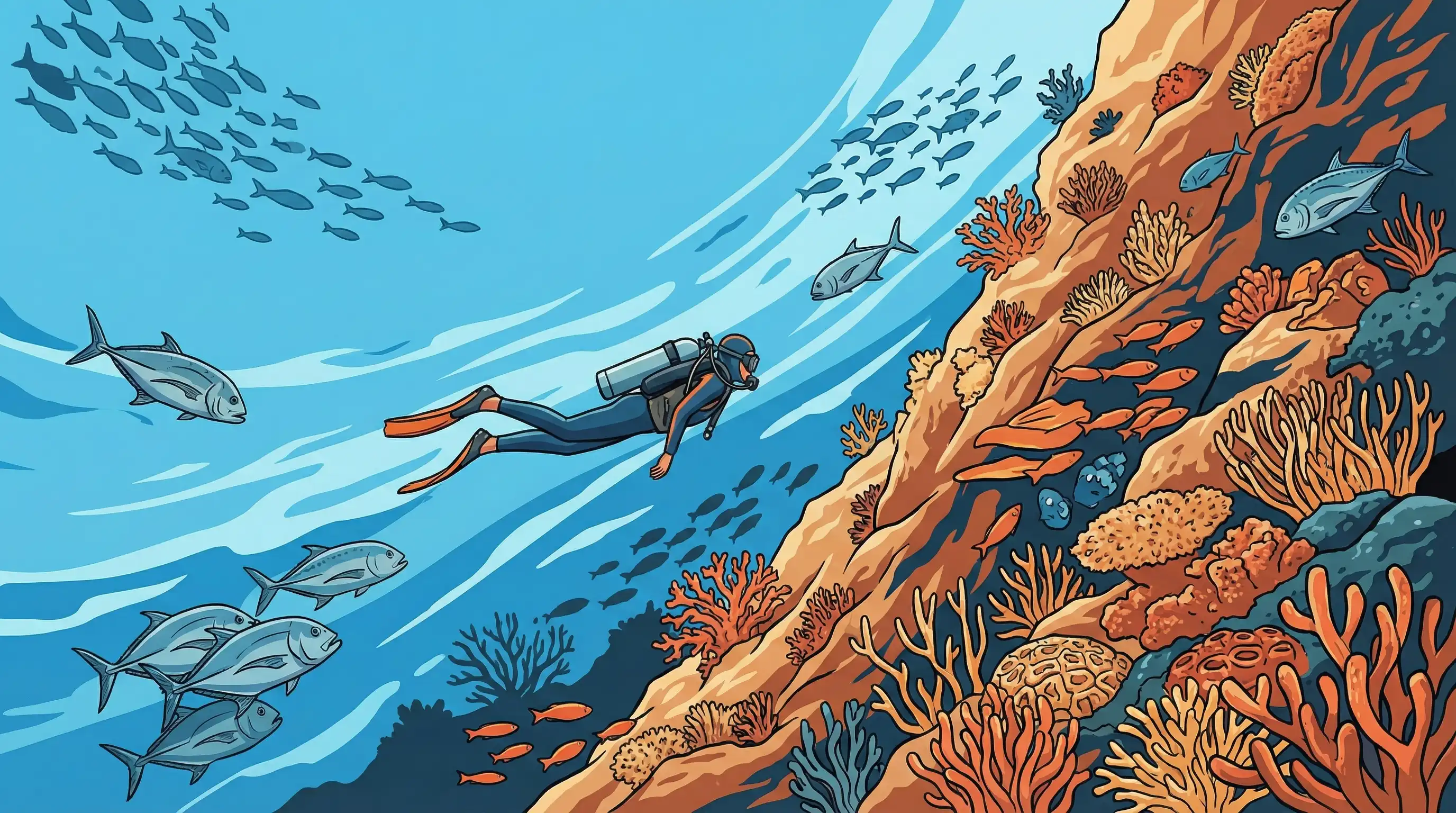
Batu Bolong is probably the park's most well-known diving site. It is a steep peak that rises from depths of more than 60 meters to just below the surface. There are hard and soft corals on the rock, and there are so many anthias, fusiliers, and colorful fish that it almost feels like too many. Hawksbill turtles swim by without a care in the world, while white tip reef sharks swim along the deeper slopes. Napoleon wrasse that are around the size of young children swim along the borders of the reef, and lucky divers see grey reef sharks or eagle rays in the blue water. The conventional way to accomplish it is to go down the sheltered side in a zig-zag pattern, staying away from the exposed edges where currents can move at several knots.
Manta Point, which is also known as Makassar Reef, lives up to its name. This long, shallow drift across debris and coral bommies at 5–18 meters has cleaning stations where manta rays line up to have little cleaner fish scrape off parasites. During the busiest months (December to February), it's normal to see more than one manta ray on a single dive. However, sightings of manta rays happen all year long. The trick is to be patient. You should stay still on the sandy bottom as these beautiful manta rays glide by, sometimes coming within arm's length.\
Siaba Besar and Siaba Kecil are very different from each other. Siaba Besar is a turtle sanctuary with calm waters and shallow coral gardens where green and hawksbill turtles repose on bommies. This makes it a great place for beginner divers or people who just want to relax and check out the turtles. Siaba Kecil, which is right over the channel, has stronger currents, beautiful soft corals in pinks and purples, schools of sweetlips, and bumphead parrotfish that come and go. Many other divers say that the tunnel between them that is scoured by currents is one of Central Komodo's best-kept secrets.
Most 3-dive day Komodo National Park tours go to Batu Bolong in the morning, Manta Point in the middle of the day, and Siaba for a calm last dive. This one boat excursion can take you to see mantas, sharks, turtles, and macro all in one amazing day of diving.
North Komodo: Castle Rock, Crystal Rock & The Cauldron
The small islands of Gili Lawa Laut and Gili Lawa Darat are the main attractions in North Komodo. The water is warmer and visibility is better there, making it a great place to see big pelagics in blue water. The ideal times to visit this area are usually from March to May and September to November, when the winds are calm and visibility can reach more than 30 meters.
Castle Rock is a seamount that is submerged. It starts 4–5 meters below the surface and goes down to 30 meters or more. This is an advanced site that requires good buoyancy and current management. Negative entrances are common, and the current can be strong. The prize is amazing: hundreds of big trevally schools, grey reef sharks patrolling the margins, white tip reef sharks resting on ledges, and schools of dolphins passing through during surface intervals. Castle Rock is always one of the top places to go scuba diving in Indonesia.
Crystal Rock is close by and has a similar dramatic landscape, with a beautiful coral-covered peak rising from the blue and soft corals in bright colors. The marine life is similar to Castle Rock (sharks, trevallies, Napoleon wrasse), however the lee side is sometimes better for taking pictures because it is more calm. A lot of divers do both of these spots in the same morning.
The Cauldron, which is also known as Shotgun, is in the channel that separates Gili Lawa Laut and Gili Lawa Darat. This high-adrenaline drift dive leads divers into a sandy bowl where currents come together before shooting through a tight channel, which is where the site gets its name from. Giant trevally hunt in the acceleration zone, and manta rays sometimes soar by above. This is Komodo's roller coaster ride: exciting, quick, and not for new divers at all.
These northern sites require experienced divers who are comfortable with quick drift dives. But for those who are good at it, North Komodo has the big-animal activity that many people think is the best diving in Komodo.
South Komodo & Padar: Cool Water, Macro & Dramatic Reefs
South Komodo, which runs from Pink Beach south to the southern reefs of Rinca Island, takes you to a whole other universe. Cooler upwellings from the Indian Ocean bring water full of nutrients that help soft coral develop quickly and support some of the park's most amazing macro life. When plankton blooms, visibility can decline to 10–15 meters, yet the amount of biomass goes up a lot.
Manta Alley is a more secluded spot for cleaning and feeding mantas, and there are often close encounters there. Because the water is cooler (22–25°C), the wetsuits are thicker. This is also where these filter-feeding manta rays gather because it has the most nutrition. Here, meetings feel more personal than at the bustling Manta Point.
For macro photographers, Cannibal Rock in Horseshoe Bay is a legendary place along Komodo island. There are sea apples, crinoids, and sponges all over the place, and frogfish, rhinopias (on lucky days), dozens of nudibranch species, crocodile fish, and pygmy seahorses cling to gorgonian fans. Some expert divers say it's the ideal place in Komodo to go muck diving.
Padar Kecil is a great place to dive in the late afternoon and at night. When the sun goes down, fire urchins come out, ornate ghost pipefish come out of the shadows, and several types of frogfish become active. The place also has a beautiful view. The famous hills of Padar Island rise in the background during surface intervals.
To go to South Komodo, you usually need a Komodo liveaboard or a long-range day boat that is prepared to do the lengthy trip. Itineraries vary a lot on the season and the weather. For example, southeast trade winds from May to September might make southern places hard to get to. But for divers looking for colorful coral reefs, unusual creatures, and quiet places to dive, South Komodo is worth the trip.
Komodo Marine Life: What You Can Expect to See
Because diving Komodo is in the Coral Triangle, it has more biodiversity than anywhere else on Earth. When warm and cold currents meet, they create marine ecosystems with a lot of different species, from big pelagics to tiny creatures that macro photographers love.
Big Animals: Manta rays are the stars. Reef mantas and oceanic mantas come to cleaning stations and feeding places. Most places see white tip reef sharks and blacktip reef sharks every day. Grey reef sharks, on the other hand, only show up at places like Castle Rock that are swept by currents. There are a lot of sea turtles, especially hawksbill and green turtles, at places like Siaba Besar. Giant trevally swim together in the hundreds at northern spots, and bumphead parrotfish gather on some reefs around daybreak.
Macro and Reef Life: The soft and hard corals are home to a huge number of reef fish and invertebrates. Pygmy seahorses hang on to gorgonian fans (ask your guide to show you where they are; they are almost invisible). The colorful Nembrotha family of nudibranchs lives on the reef, and blue-ringed octopuses hide in cracks. People who are patient and have good eyesight can see leaf scorpionfish, stone fish, moray eels, and mantis shrimps.
Dugongs feed on seagrass beds around several islands, but sightings are rare and unforgettable. In the cooler months when the ocean is upwelling, mola mola (ocean sunfish) show up, usually in south Komodo. Dolphins often swim with boats during crossings and while they are at the surface, and whales are seen during migration seasons.
What you see depends on where you are, the time of year, and your luck. Most dive trips that last 3 to 5 days, on the other hand, include repeated encounters with mantas, daily sightings of sharks and turtles, and enough macro to keep photographers busy throughout every surface interval. It's not a question of if you'll see amazing marine life here; it's a question of how much you can take in.
Liveaboard vs Day Trips in Komodo
Every diver who goes to Komodo has to decide whether to go on a liveaboard or a day excursion. Both choices offer top-notch diving, but they are better for different budgets, schedules, and priorities. Knowing the pros and cons of each option will help you pick the best one for your diving trip.
You can take day tours from Labuan Bajo to Central Komodo and other neighboring northern destinations, and you will return to town each night. You can sleep on land, eat at Labuan Bajo's restaurants, and go out at night. You just pay for the days you dive, not for a whole package.
Liveaboards come in a wide range of styles, from ancient wooden phinisi sailing boats to sophisticated steel ships. They cover all of Komodo in one trip. You dine, sleep, and dive on board, which lets you get to places that are too far away for a day excursion.
Komodo Liveaboards: Pros & Cons
Advantages of Liveaboard Diving Komodo:
- Access to all three zones (north, central, south) in one trip
- Sunrise dives and night dives at remote sites
- First-to-the-site advantage at popular locations before day boats arrive
- Immersive dive-eat-sleep-repeat experience with multiple dives per day
- No daily harbor commutes—more time underwater
- Easy combination with land excursions to Komodo or Rinca Island for dragon trekking
Unique Liveaboard Opportunities: Remote sites like Manta Alley, Cannibal Rock, and Padar Kecil night dives are essentially liveaboard-only. These vessels also anchor in uninhabited bays where you can kayak, snorkel, or simply watch bats stream from mangroves at sunset.
Disadvantages:
- Higher upfront cost than day-by-day diving
- Limited personal space, especially on budget boats
- Fixed departure dates require schedule flexibility
- Less freedom for non-diving partners or those wanting varied accommodation
Boat Options & Pricing: Traditional wooden phinisi boats have a classic Indonesian appeal with shared cabins and common areas. Modern steel liveaboards have air conditioning, separate cabins with their own toilets, and sometimes even their own balconies. In 2025, a budget liveaboard boat trip for three days and two nights would cost between 9 and 10 million IDR. Midrange and premium choices will cost a lot more. When you compare pricing, make sure you know what's included. Park fees, gear rental, nitrox, and booze can all add a lot to the base rate.
Day Trips from Labuan Bajo: Pros & Cons
Advantages of Day Trips:
- Ideal for shorter holidays (2–3 diving days)
- Lower per-day cost than liveaboards
- Sleep in onshore hotels with full amenities
- No multi-night commitment—dive one day, trek the next
- Easier for non-diving travel partners or families
- Flexibility to switch operators or take rest days
Typical Structure: Most companies provide three-dive packages that leave between 7:00 and 8:00 a.m. and come back by 5:00 p.m. There are stops at places like Batu Bolong, Manta Point, and Siaba Besar, and breakfast and lunch are included. Most operators will rent you gear if you're going light.
Disadvantages:
- 2 or more hours of commute time each way
- Limited to Central Komodo plus accessible northern sites
- Fewer opportunities for night dives or early morning dives
- Peak-season crowds at popular sites mid-day
Practical Considerations: When you book, make sure to check the size of the group (smaller is better), the type of boat (a fast speedboat or a slower wooden boat), and whether the marine park fees and equipment rental are included. Some companies say their costs are reasonable, yet they charge a lot of extra expenses. In the last few seasons, 3-tank day trips have cost between 2,500,000 and 2,800,000 IDR, which includes meals and basic gear rental.
Komodo Resort: Prime Location for Convenient Diving
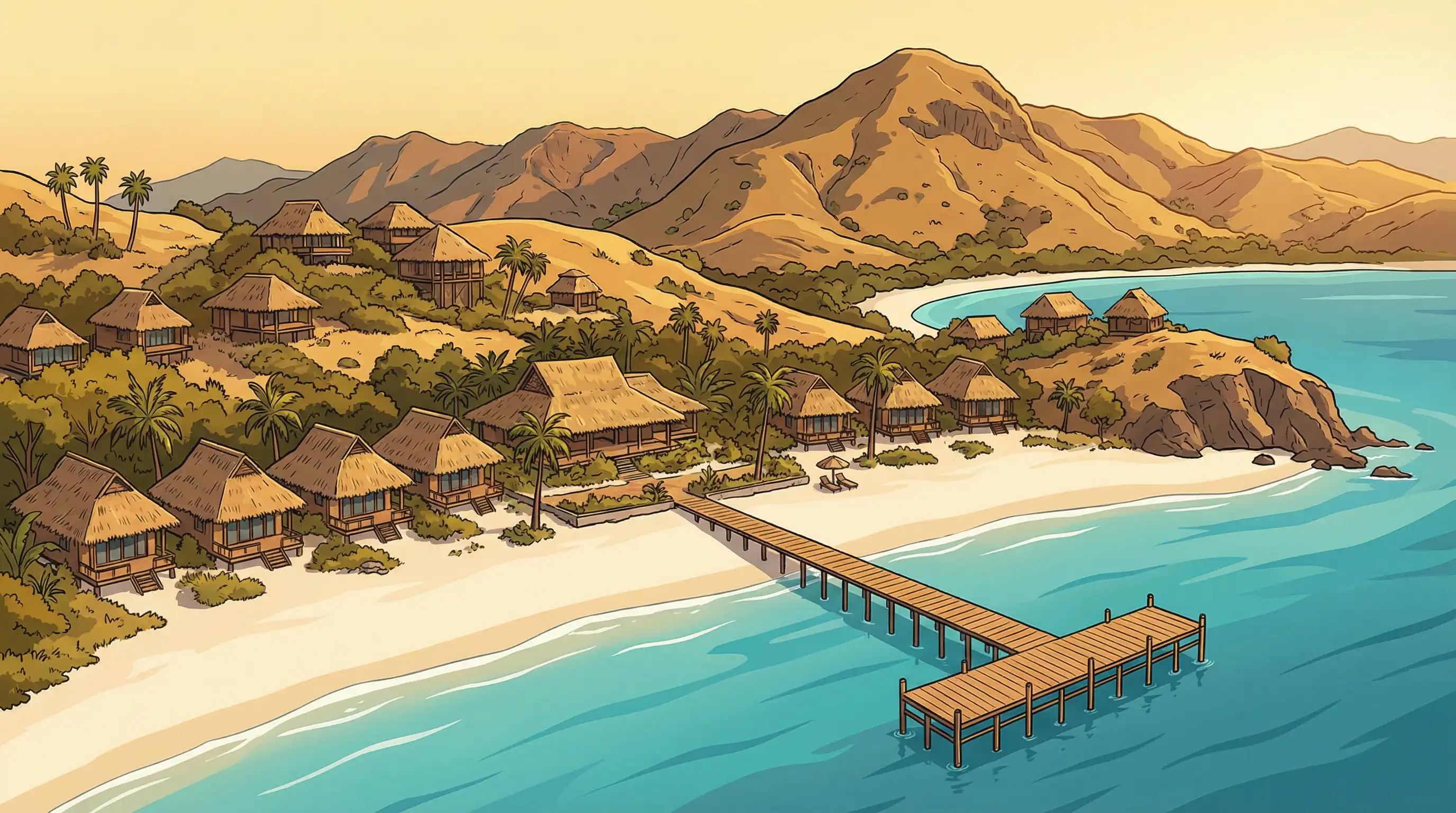
Divers should stay and dive with Komodo Resort because it is situated at the entrance of Komodo National Park. This great location cuts down on boat time by a lot, making dive days easier and less tiresome. Divers may get the most out of their underwater exploration by staying here, and they can also spend more time relaxing at the resort, which makes for a more enjoyable and relaxing diving experience.
Dive Operators, Training & Safety in Komodo
There are many dive operators in Labuan Bajo, from small local businesses to well-known dive shops from throughout the world. Blue Marlin and other well-known shops have built up good safety records and have experienced dive crews that know all the little things that make each site unique.
What to Look for in an Operator:
- Small group sizes: 4–6 divers per guide is ideal for Komodo’s conditions
- Thorough briefings covering current patterns, entry procedures, and emergency protocols
- Oxygen and first aid equipment on every boat
- Clear boat safety procedures and tender pickup systems
- Guides with extensive local experience who know site-specific conditions
Training Opportunities: Many centers provide PADI and SSI training for beginners, advanced students, and people who want to specialize. Drift diving training is especially helpful here. Some companies provide "try dives" in calm bays for beginners who wish to get a taste of Komodo before being certified. If you're a new diver going to Komodo Island for the first time, you might choose to spend your first day in shallow coral gardens before moving on to harder spots.
Insurance and Safety: Komodo is far away. It takes hours by boat or plane to go to the nearest recompression chamber, which is on Bali or Lombok. Diving insurance that covers remote evacuation and hyperbaric treatment is a must. Options like DAN or travel insurance with dive coverage (World Nomads is a popular choice) can help you feel safe. A lot of scuba divers forgo this cost and then wish they hadn't if something goes wrong.
Booking Timing: During the high season (July to September and Christmas/New Year), there is a lot of demand for both liveaboard spaces and day boat tours. If you want to go during these times, make your reservations 2 to 3 months in advance. Shoulder seasons give you additional options, but popular liveaboards fill up months in advance no matter when you go.
Komodo Dragon Tours & Non-Diving Activities
Most liveaboard trips and many day trips include at least one hike on Komodo or Rinca Island to observe the legendary Komodo dragons. These lizards are the biggest in the world, growing up to 3 meters long. If you go to Komodo and don't see them, it feels like something is missing.
Dragon Treks: Park rangers are in charge of all hikes because it is not safe to go alone. You can choose from small 1-hour circuits to larger 2–3 hour excursions through the forest and savanna. The ideal times to see and photograph dragons are early in the morning or late in the afternoon. Rangers carry forked sticks for safety, but they don't happen very often. Dragons usually hang out around water holes or under trees, where they can find deer, wild boar, and water buffalo to eat.
Other Land Excursions:
- Padar Island: The iconic sunrise hike takes 30–45 minutes to reach a viewpoint overlooking three bays with differently colored beaches. This is the most-photographed vista in the park.
- Pink Beach (Pantai Merah): Named for its pink-tinged sand (created by red coral fragments), this beach offers excellent snorkeling and a surreal color palette.
- Kalong Island: At sunset, thousands of flying foxes stream from mangroves in a wildlife spectacle visible from anchored boats.
Beyond the Park: Divers that stay longer than Komodo can explore the inside of Flores Island. A popular multi-day side trip is to see the three different-colored crater lakes at the Kelimutu volcano. Wae Rebo is a traditional village in the highlands with famous cone-shaped dwellings. It lets you experience the culture. There are waterfalls and rice terraces along the Trans-Flores Highway for those who have time to look around.
From Labuan Bajo, you can easily combine world-class diving with dragon encounters, Padar sunrises, and a taste of Flores culture in a 4–7 day trip.
Costs, Park Fees & Practical Budgeting for Komodo Diving
Komodo diving isn’t cheap, but understanding cost categories helps you budget realistically and avoid surprises.
Main Cost Categories:
| Category | Budget Tier | Midrange Tier | High-End Tier |
|---|---|---|---|
| Flights to LBJ | From Bali: ~800K–1.5M IDR | From Jakarta: ~1.5–2.5M IDR | International connections: varies |
| Accommodation | Hostel: 150–300K/night | Hotel: 500K–1.2M/night | Resort: 2–5M+/night |
| Diving | Day trip: 2.5–2.8M/3 dives | 3D/2N liveaboard: 9–15M | Luxury liveaboard: 25–50M+ |
| Park Fees | Approx. 200–350K/day total | Included in some packages | Included in most packages |
Komodo National Park Fees: The pricing structure includes daily park entrance, an extra charge for diving, harbor fees, and separate ranger fees for dragon treks. The exact amounts may change every year, so check the current rates before you book. When looking at estimates, make sure to compare apples to apples because some operators include all costs in their prices and others list them separately.
Budget Tiers Explained:
Budget Diver: Stay in a Labuan Bajo hostel or guesthouse, do 1–2 day trips with 3 dives each, eat at local warungs. Expect to spend roughly 4–6M IDR total for 3–4 days including park fees.
Midrange Diver: Book a 3D/2N liveaboard plus 1–2 nights in a midrange hotel before and after. Add a dragon trek and Padar sunrise. Budget approximately 15–25M IDR for a comprehensive 5-day experience.
High-End Diver: Choose a luxury liveaboard with private cabins, gourmet meals, and nitrox included, paired with upscale resort nights. Costs can exceed 50M IDR for a week but include virtually everything.
Additional Expenses:
- Gear rental: 150,000–300,000 IDR/day if not included
- Tips for dive crew: voluntary but customary, typically 10–15% of trip cost divided among crew
- Nitrox fills: often 50–100K IDR per tank above air pricing
- Travel insurance with dive coverage: budget 500K–1M IDR for trip duration
Where to Stay in Komodo for Diving
Komodo Resort is a great place to stay while you explore the diving Komodo. It is close at the entrance of Komodo National Park, which cuts down on boat travel time to the dive destinations by a lot. This lets you spend more time underwater. Scuba divers love the resort because it has nice rooms, modern amenities, and easy access to dive operators.
When you stay at Komodo Resort, you may unwind after your dives in a peaceful place with stunning views, pools, and great food. It's especially good for divers who choose to stay on land instead of on liveaboard boats because it combines comfort with easy access to the top dive locations.
Komodo Resort is a safe and comfortable place to stay while you dive in Komodo, whether you're going on day trips or getting ready for a liveaboard adventure.
Where to Stay in Labuan Bajo for diving Komodo
You can only stay overnight on Komodo Island at ranger stations, which have very few beds. Most divers stay in Labuan Bajo or sleep on liveaboards.
Cheap places to stay: Backpacker hostels and guesthouses are close to the main street and the water. A night in a dorm bed or a basic private room costs between 150,000 and 300,000 IDR. These options are good for divers who care more about saving money than being comfortable, but they won't get breakfast because they leave early in the morning.
Midrange Hotels: Hilltop hotels with views of the sea and restaurants on site are good places to stay for between 500,000 and 1,200,000 IDR. Most places have air conditioning, pools, and good Wi-Fi. Locations that are 10 to 15 minutes from the harbor nevertheless make it easy to leave early.
Luxury resorts with pools, spas, and direct access to the ocean are great for divers who want everything they need in one place. These usually offer partnerships with dive shops, places to store gear, and private boat rentals. You could expect to pay between 2,000,000 and 5,000,000 IDR per night.
Practical Tips:
- Staying within a short taxi ride of the harbor (10–15 minutes) makes 7:00 a.m. departures much easier
- Ask about early breakfast options—many hotels accommodate dive schedules
- Gear rinse areas and storage are valuable for extended stays
- High season (July–September, December–January) books up fast—reserve in advance
Essential Tips for a Safe & Enjoyable Komodo Dive Trip
After dozens of conversations with operators and returned divers, certain advice comes up repeatedly. These tips separate smooth dive trips from frustrating ones.
Safety Fundamentals:
- Dive within your limits, Komodo has sites for every level, so there’s no need to push beyond your skills
- Listen to local guides who know daily conditions and site-specific hazards
- Carry your own SMB and know how to deploy it, boat pickups depend on surface visibility
- Never fight currents; use planned drift dives and let tenders find you
- Watch for downcurrents near pinnacles, especially at Castle Rock and Crystal Rock
Gear and Exposure:
- Bring a 3–5mm full wetsuit; add a hooded vest for south Komodo sites where water drops to 22°C
- Reef-safe sunscreen protects both you and the pristine coral reefs
- Pack seasickness medication if you’re prone, even short crossings can get choppy
Health and Logistics:
- Respect 18–24 hour no-fly time after your last dive
- Stay hydrated in tropical heat, dehydration combined with multiple dives increases DCS risk
- Confirm your dive insurance covers remote evacuation and hyperbaric treatment
Environmental Responsibility: Divers and operators take care of Komodo's colorful coral reefs, which helps keep them healthy. There are strict rules against touching, taking, or anchoring. The right amount of buoyancy keeps coral from touching. Support operators that are actively working to protect reefs and clean up marine garbage.
Diving on Komodo Island is one of the best ways to see the ocean floor. In only one week, you can swim with reef sharks through channels that are swept by currents, hover under manta rays at cleaning stations, explore soft coral gardens full of macro life, and trek through ancient forests where Komodo dragons still live. Not many places have this level of marine variety along with equally interesting terrestrial adventures.
Getting there isn't hard: you can travel to Labuan Bajo and choose between liveaboard boats for the most diversity of sites or day trips for more flexibility. You can also organize your vacation around the season that works best for you. Komodo is a great place for divers who are ready for everything. Whether you want to see manta rays, conduct challenging drift dives, or just see a lot of colorful fish, you'll find what you're looking for.
Now is the time to start making plans for your next dive vacation to Komodo. Make reservations for liveaboards and day trips during the busy season at least two to three months in advance. Get better at your diving talents. Bring that 5mm wetsuit with you to the south. When you finally plunge into Komodo's electric-blue seas for the first time, you'll see why so many scuba divers say this is the place they want to go back to again and over again.