
Komodo vs Raja Ampat are Indonesia's two best diving spots. They are both in the Coral Triangle, which is the most biodiverse marine area in the world. Your diving expertise, budget, available time, and what you want to see underwater will help you decide between these world-class places.
This guide examines the diving conditions, pricing, accessibility, marine life, and travel logistics between Raja Ampat in West Papua and Komodo National Park in the Lesser Sunda Islands. This comparison will help you choose the ideal dive spot, whether you're an intermediate diver looking for beautiful reefs or an expert diver looking for drift dives through unexpected currents.
Raja Ampat has more types of plants and animals than any other place, and the diving there is easier. Komodo has exciting confrontations with currents and better manta ray sightings at lower prices.
Understanding Komodo vs Raja Ampat as Diving Destinations
Indonesia is in the middle of the Coral Triangle, which is home to more reef fish species than anyplace else on Earth and over 75% of the world's known coral species. Komodo and Raja Ampat are the best places in this amazing marine world to go diving. Each one has amazing underwater experiences that attract divers from all over the world.
Komodo National Park Fundamentals
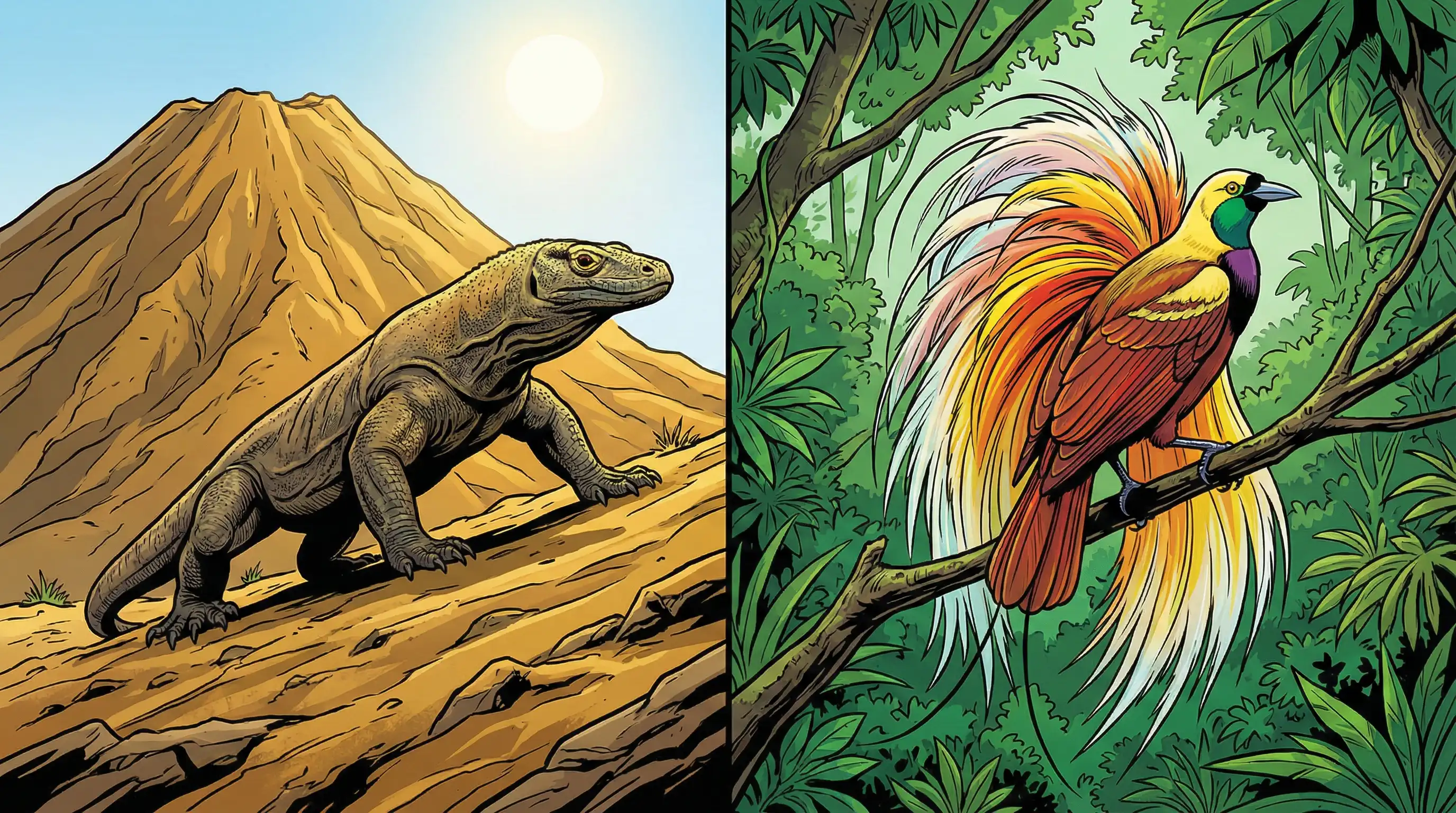
The Lesser Sunda Islands in eastern Indonesia are home to Komodo National Park, which covers 1,733 square kilometers of land and sea. The park became a UNESCO World Heritage Site in 1991. It was originally protected to keep the famed Komodo dragons safe. These are the world's largest living lizards and they live on the islands of Komodo, Rinca, and Padar.
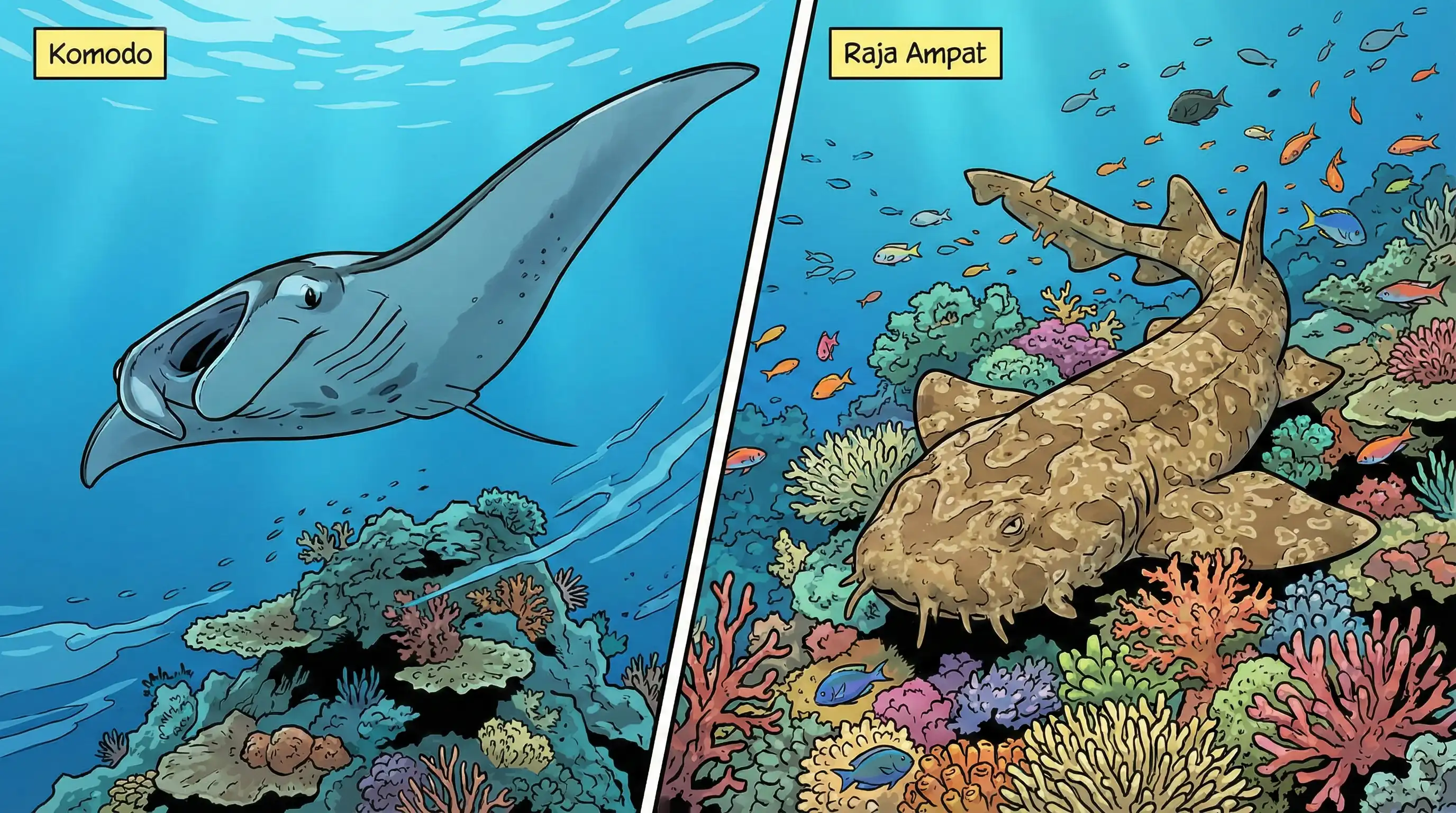
The volcanic terrain makes for stunning scenery both above and below the river. Strong currents move through small channels between islands, creating the right circumstances for enormous schools of fish and large pelagic species to gather. Manta rays gather in places like Manta Alley and Karang Makassar, while reef sharks swim around the deeper cliffs. The dive sites here offer exceptionally high-quality diving that includes activity, movement, and close encounters with huge animals.
Komodo diving is far more enticing than Raja Ampat since it is easier to get to. A 60-minute flight from Bali takes you to Labuan Bajo, the port town that is the entrance to the national park. Komodo is easy to get to from Indonesia's most popular tourist spot, so it's a good choice for short visits or as part of a longer travel around Indonesia.
Raja Ampat Marine Sanctuary
Raja Ampat, which means "Four Kings" in Indonesian, sits in the far northwest part of West Papua. With more than 1,500 fish species and 600 coral species, this group of more than 1,500 islands has the most marine biodiversity in the world. Researchers who study the ocean call it a "living laboratory," and divers call it the "Last Paradise."
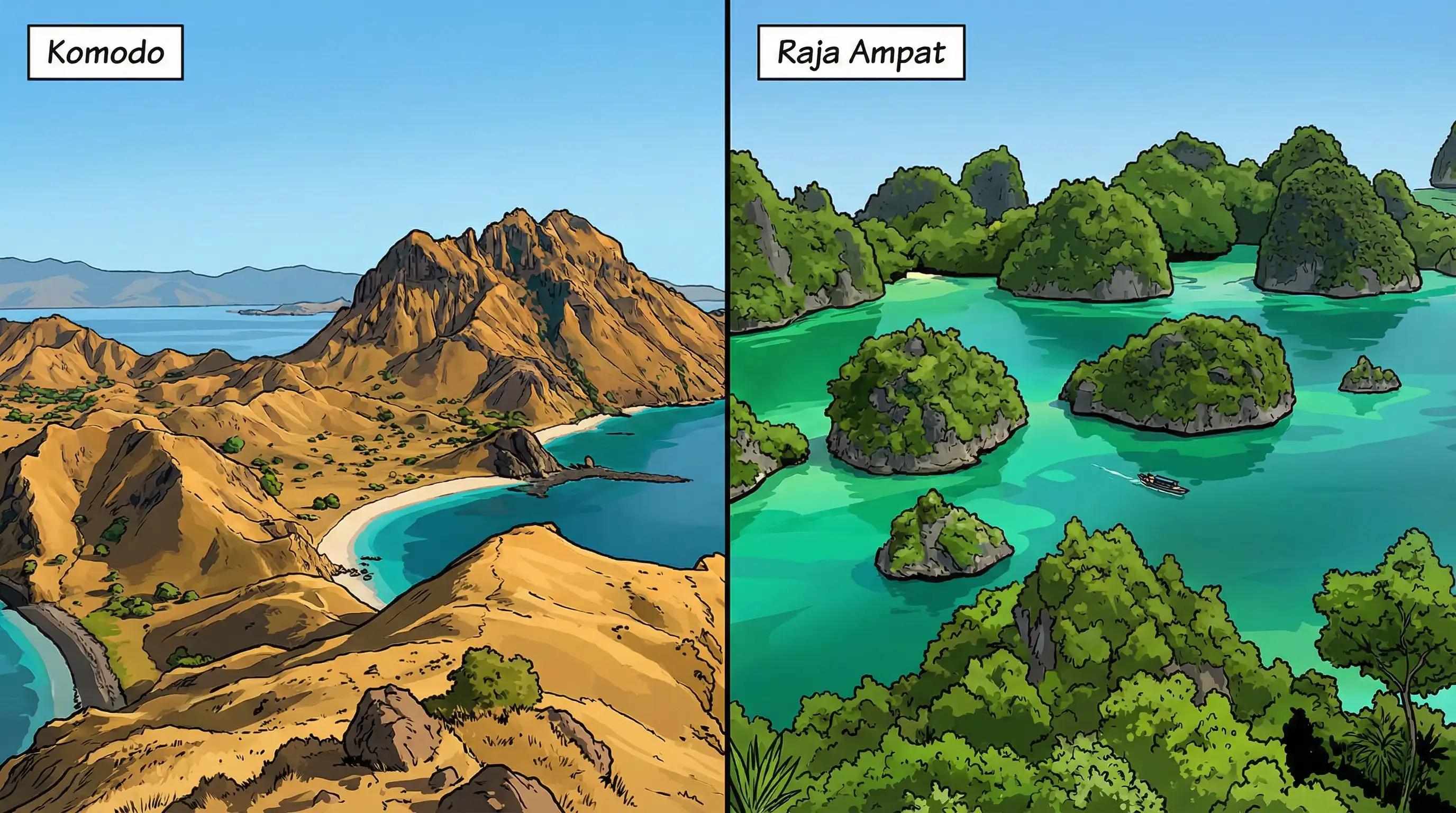
The undersea world is very different from Komodo. Islands made of limestone make protected bays with beautiful coral gardens, and deep ocean upwellings bring in nutrients that make fish populations very high. The Cape Kri dive location is famed for having seen 374 different kinds of fish on one dive, a record that has never been broken anywhere else in the world.
Because Raja Ampat is so far away, its ecosystems have not been affected by the development pressures that have affected other Indonesian reefs. Papuan villages still have historic ties to the sea, and conservation groups have created marine protected areas that encompass large amounts of water. The beautiful panorama on the topside of karst islands rising from blue waters makes visiting this far-off part of Indonesia even more exciting.
You need to be more committed to get to Raja Ampat. Flights link through Sorong. The trip usually has several stages, with stops in Jakarta, Bali, or Makassar. After that, you take a boat to your resort or liveaboard, depending on what you choose.
Seasonal Timing and Accessibility Comparison
Timing has a big impact on both the conditions for diving and the logistics of getting to Komodo vs Raja Ampat. Knowing how the seasons change can help you get the most out of your trip and prevent being let down.
Best Diving Seasons
The dry season in Komodo lasts from April to November. The seas are calmest and visibility is optimum from May to September. The water is between 24 and 28 degrees Celsius, and manta rays are most likely to be seen at places like Manta Point during these months. When it rains, visibility goes down and conditions get rougher, but diving is still possible all year long. This is especially true during the rainy season, which is also the Manta migration season in Komodo, when you have the best opportunity of being in the water with hundreds of mantas.
Raja Ampat, on the other hand, does the reverse. The best time is between October and April, when the waves are calmest and you can see for 30 meters or more. The temperature of the water stays the same all year, between 28 and 29 degrees Celsius. From June to September, the monsoon season brings heavier winds and can make it hard to get to some dive locations on the northern coastline, which is more exposed. However, both the north and south areas have great visibility throughout the peak months.
Because of this opposite seasonality, devoted divers can visit both places in one year: Komodo in the summer and Raja Ampat in the winter.
Getting There and Logistics
It doesn't take much planning or work to go to Komodo. There are flights every day from Bali to Labuan Bajo that take 75 minutes. Many airlines fly this route. It takes less than 30 minutes to go from the airport to dive operators or hotels. Because the national park is small, most dive spots are about 1–2 hours away by boat from the harbor town.
It takes a lot more work to go to Raja Ampat. To get to the nearest airport in Sorong, you have to fly through Jakarta, Makassar, or sometimes Manado. Most of the time, it takes more than 12 hours to get to Bali, and you may need to stay the night. Ferries or speedboats take 2 to 4 hours from Sorong to get to the main diving spots. This trip has many stages and rewards those who remain longer.
Accommodation and Stay Options
Labuan Bajo has grown a lot to support tourism in Komodo. There are guesthouses that cost $15 and resorts that cost $300 or more. Day boat diving is easy to do from shore-based hotels, but liveaboards are still popular for getting to more remote areas. The infrastructure works for both people who travel on a whim and people who want to have high-end experiences.
There aren't as many options in Raja Ampat. There are a lot of eco-resorts and homestays near the main diving spots. Prices start at $50 for basic homestays and go up to $500 or more for high-end dive resorts. Many divers choose liveaboards as the best method to see a lot of different places. Because there aren't many places to stay, you need to book 3 to 6 months in advance at the busiest times of the year.
Comprehensive Cost and Experience Analysis
People often choose where to go based on their budget. Both Komodo vs Raja Ampat have great diving, however they have different prices and offer various things of value.
Daily Diving Costs Breakdown
| Cost Factor | Komodo | Raja Ampat |
|---|---|---|
| Day boat diving (3 dives) | $100-200 USD | $150-300 USD |
| Liveaboard per day | $200-400 USD | $300-600 USD |
| Park fees daily | $20-25 EUR | $40-60 USD |
| Accommodation range | $15-300 USD | $50-500 USD |
| Domestic flights from Bali | $60-150 USD | $200-400 USD |
| Transfer costs | $10-30 USD | $50-150 USD |
The numbers and cost estimates above are, of course, averages. Costs may go up depending on what everyone wants, likes, and enjoys. Costs change a lot based on the most essential choice: would you rather stay in a resort or travel on a Komodo liveaboard? Everything else will fall into place once you make this choice.
There are many types of resorts in both Komodo National Park and Raja Ampat, ranging from basic to mid-range to opulent. This is even more true when you compare Komodo to Raja Ampat.
Check out our liveaboards in Indonesia to get a quick idea of prices:
Komodo Sea Dragon is exclusively available in Komodo all year round.
King Neptune sails all across the Indonesian archipelago and is always there for the Raja Ampat Season and Komodo.
Diving Experience Value Assessment
For vacationers on a budget, the cost-per-dive calculations show that Komodo is the better choice. A week of diving on land with mid-range housing costs about $800 to $1,200, which includes airfare, diving, and lodging. For the same amount of time, the same experience in Raja Ampat costs $1,500 to $2,500.
Please note that these prices are just for domestic travel and do not include business class flight tickets or travel beyond the US.
But value goes beyond the price per dive. Raja Ampat has the most diverse marine life in the world, thus each dive could show you creatures that you can't find anywhere else. The fish craziness in great places like Melissa's Garden or the Cape Kri dive site makes it worth it for underwater photographers and others who care about species diversity to pay more.
Komodo is a great place to see large animals at a great price. Manta hotspots are places where you can see them reliably and for less money than similar places across the world. The tough conditions help speed up the development of diving skills; learning to deal with powerful currents and thermoclines quickly makes you more skilled.
For long-term diving investments, many serious divers go to both places over time since they know that each one offers unique experiences that can't be replaced.
Marine Life and Diving Conditions Deep Dive
Knowing what you'll see underwater helps you set realistic expectations. Komodo vs Raja Ampat have great diving, although they are very different from each other.
Underwater Biodiversity Comparison
Raja Ampat has the highest number of species that can't be beat. There are more kinds of fish in the waters around these islands than there are in the whole Caribbean Sea. The fact that the Cape Kri dive site has a single dive record of 374 species shows how many fish are there. Pygmy seahorses cling to gorgonian fans, walking sharks patrol sandy slopes at dusk, and wobbegong sharks sleep under coral overhangs.
Soft corals can grow to be very large and come in many different shapes and colors, making underwater gardens that are full of color. Hard coral coverage is still in great shape at several sites, with table corals that are meters long and branching corals that form thick thickets. This habitat complexity is great for little animals like nudibranchs, ghost pipefish, and mantis shrimp, which are fun to watch.
Komodo's richness is great, yet it is different. The volcanic substrate makes walls, peaks, and rivers that are very spectacular. There are a lot of big and little animals living on the reef here. Big schools of fusiliers, trevally, and surgeonfish swim through dive spots, while reef sharks swim through the blue. Manta rays are the main attraction, however more sharks can be seen at deeper areas.
Even if the currents are greater, the coral reefs are still powerful. Hard corals grow in places that are open to the sun, while soft corals in bright oranges, purples, and yellows grow in protected bays. Nudibranchs, frogfish, and blue-ringed octopus are all great subjects for macro photography.
Diving Difficulty and Conditions
It's true that Komodo is known for having tough circumstances. Unpredictable currents might change direction in the middle of a dive, so you need to be able to think quickly and maintain your buoyancy well. Castle Rock and Shotgun are places where you have to drift dive through strong currents, which requires experience to stay in touch with your friend. When thermoclines stack frigid upwellings underneath warmer surface water, the temperature of the water drops a lot at deep. Most operators require at least an Advanced Open Water certification, and several sites are only good for experienced dives who are used to tough conditions.
Raja Ampat is a better place for intermediate divers because the conditions are easier. Even if there are currents, they are usually more predictable and less strong than Komodo's flows. Many places have great visibility in sheltered areas, so you may explore beautiful reefs without having to fight the current flow. This easy access makes Raja Ampat a good place for beginner divers to improve their skills while still being difficult enough for specialists who want to go diving in distant locations.
Signature Dive Sites Analysis
The best diving sites in Komodo give you an adrenaline rush. Castle Rock draws in schools of huge trevally, whitetip reef sharks, and sometimes hammerheads. You can see manta rays at cleaning stations at Manta Alley and Karang Makassar. The current-swept peak of Batu Bolong makes marine life more dense in a small space, making it feel like fish are always moving. When the conditions are right, Crystal Rock is a great place to take pictures since you can see so well.
Raja Ampat's most famous places focus on variety rather than action. Melissa's Garden has beautiful hard coral structures in several reef systems. Every dive at Cape Kri shows off its famous number of species. You can get to Arborek Jetty from basic homestay accommodations and see macro magic. Manta Sandy offers manta experiences in a quieter place than the manta hotspots in Komodo.
In addition to being above water, Komodo Island and Rinca are the only places where you may see Komodo dragons in their native habitat. The view from Padar Island over Pink Beach and the turquoise waters makes for famous photos. Raja Ampat has karst island landscapes, ancient Papuan settlements, and a real sense of being far away.
Common Planning Challenges and Practical Solutions
When it comes to choosing between these places, practical reasons typically come into play. Here are some ways to tackle the most common problems that come up when comparing Komodo with Raja Ampat.
Limited Trip Duration Decision
If you're going for 5 to 7 days, pick Komodo. If you travel less, you can dive more days instead of just going through. The small size of the dive sites means that you can explore them all even on short visits. Day tours from Labuan Bajo are a great way to see the best parts of the park.
To make the trip worth it, you need to stay in Raja Ampat for at least 10 days. It takes two full days to get to and from each location, so even on a two-week trip, there is only a week of actual diving. Liveaboards make the most of dive time, but you have to book in advance and be available for longer.
Diving Experience Level Mismatch
New Advanced Open Water divers gain confidence more quickly in Raja Ampat's calmer waters. The forgiving environment lets you improve your skills without having to deal with strong currents. Once you've gotten used to drift dives and changing conditions, the challenges at Komodo are right for you.
Advanced divers who want an adrenaline rush prefer Komodo since it has a reputation for being hard. Sites that would be too much for intermediate divers give expert divers the thrill they want. The feeling of satisfaction that comes from getting through the currents at Shotgun or Crystal Rock adds a mental benefit to the physical experience.
Budget Constraints vs Dream Destination
Komodo has world-class diving at prices that are good for those on a budget. Land-based tours with shared rooms and group day boats offer great diving without breaking the bank. The destination shows that you don't need an unlimited budget to have great diving.
Raja Ampat is worth the extra money because it is so unique. No other place on Earth has as many different kinds of plants and animals. The cost is worth it for underwater photographers, marine life lovers, or anyone who wants perfect conditions. Think of it as a once-in-a-lifetime investment instead of a normal dive trip.
Help to Make a Decision
The diving in both Komodo and Raja Ampat is among of the best in the world. Your choice depends on how well the destination fits with your personal needs.
Choose Komodo for:
- Easier access from Bali with shorter total travel time
- Lower overall costs without sacrificing dive quality
- Reliable manta ray encounters at established hotspots
- Challenging drift dives that build advanced skills
- Shorter trips of one week or less
- Combining diving with Komodo dragon encounters and dramatic landscapes
Choose Raja Ampat for:
- Maximum marine biodiversity and fish species counts
- Pristine reef conditions and coral gardens
- Gentler diving suitable for intermediate to advanced divers
- Underwater photography opportunities with excellent visibility
- True adventure in one of Earth’s most remote diving regions
- Longer expeditions of 10+ days
Many dedicated divers go to both places eventually because they know that each one has unique experiences that can't be found anywhere else. The contrary seasonal cycles even make it possible to plan both Raja Ampat and Komodo in the same year for those who have the time and money.
Planning Your Indonesian Diving Adventure
Planning ahead makes your trip to either place much better. Book liveaboards 6 to 12 months in advance, especially on dates during high season. You may schedule land-based diving in Komodo with only 2–3 months' notice, but you need to book a liveaboard in advance because there aren't many places to stay in Raja Ampat.
Different places have different standards for certification. Most of the time, Komodo operators ask for at least an Advanced Open Water certification. Many places effectively require rescue diver skills or a lot of logged dives. Many places in Raja Ampat are open to Open Water divers, although places that are currently exposed are only open to highly experienced dives.
If you want to dive in Indonesia for a long time, you may add Banda Sea trips during the short seasonal window, Alor for a more leisurely experience, or Wakatobi for serious reef photography. The Coral Triangle is a wealthy area, but each place in Indonesia's huge archipelago has its own unique personality.
Indonesia is the best place in the world for divers to see marine life, whether you choose Komodo or Raja Ampat, or both.