Few wildlife encounters leave you genuinely breathless. Swimming alongside a manta ray in Komodo National Park is one of them. The first time you see a three-metre wingspan glide beneath you, silent, impossibly graceful, close enough that you could almost reach out and touch the white belly markings, something shifts. You stop kicking. You stop breathing. For a few seconds, you forget you are a human floating in a foreign world and simply exist alongside a creature that has been perfecting its flight through water for millions of years.
Komodo is not the only place on Earth where you can swim with manta rays. But it is one of the very few destinations where encounters are consistent, the population is healthy, and the marine infrastructure supports both diving and snorkeling access to multiple manta aggregation sites within a single trip. The park's nutrient-rich waters, driven by powerful currents funnelling between the islands of Flores, Rinca, and Komodo, create ideal conditions for plankton blooms that draw mantas in remarkable numbers year-round.
Whether you are a certified diver descending to a cleaning station at 15 metres or a snorkeler floating on the surface watching feeding chains spiral below, Komodo National Park delivers manta ray encounters that rival, and frequently surpass, the Maldives, the Galápagos, and Mozambique. This guide covers everything you need to know to plan your own experience, from species identification and seasonal patterns to site-specific advice and responsible interaction guidelines.
Manta Ray Species in Komodo National Park
Komodo's waters host two distinct species of manta ray, and understanding the difference adds depth to every encounter.
Reef Manta Ray (Mobula alfredi)
The reef manta is the species you are most likely to encounter during a Komodo diving or snorkeling trip. Reef mantas have a wingspan typically ranging from three to four metres, though some individuals in Komodo have been recorded exceeding five metres. They are resident animals, meaning they tend to stay within a relatively defined home range rather than crossing entire ocean basins. This residency is excellent news for visitors: researchers have identified and catalogued hundreds of individual reef mantas in Komodo using their unique ventral spot patterns, and many of these individuals return to the same cleaning stations and feeding grounds year after year.
Reef mantas in Komodo display two colour morphs. The classic morph features a dark dorsal surface, charcoal to deep black, and a bright white ventral surface with distinct dark markings around the gill slits that function like fingerprints. The melanistic morph, sometimes called the "black manta," is almost entirely dark on both surfaces, with only faint white patches on the underside. Encountering a melanistic manta is always a thrill; they account for a meaningful percentage of Komodo's population, considerably higher than the global average.
Oceanic Manta Ray (Mobula birostris)
The oceanic manta is the larger of the two species, with wingspans that can reach seven metres and body weights exceeding two tonnes. Oceanic mantas are pelagic travellers, capable of crossing hundreds of kilometres of open ocean between feeding grounds. In Komodo, they are seen less frequently than reef mantas but do appear, particularly at sites exposed to deep oceanic water in the south of the park during the cooler months.
You can distinguish oceanic mantas from reef mantas by the dark T-shaped marking on their dorsal surface (reef mantas typically show a lighter Y-shaped or chevron pattern on the shoulders) and by the dark colouration around the mouth. When you encounter a manta with a wingspan that dwarfs everything else on the reef, there is a reasonable chance you are looking at a birostris.
Best Dive and Snorkel Sites for Manta Rays
Komodo National Park contains several world-class manta aggregation sites. Each has its own character, conditions, and best season. Here are the ones you should know about.
Manta Point (Makassar Reef)
Manta Point is the most famous manta site in Komodo and one of the most reliable manta encounters anywhere in Indonesia. Located on the eastern side of Komodo Island, this site sits atop Makassar Reef, a large coral platform that rises from deeper water and channels nutrient-loaded currents across its surface.
The site functions as both a cleaning station and a feeding ground. On calm days, mantas cruise slowly over the reef at depths of 5 to 15 metres, visiting cleaning stations where small wrasses and cleaner fish remove parasites from their skin, gills, and mouths. The mantas hover nearly motionless, mouths agape, while the tiny cleaners do their work, a scene of extraordinary trust between species that never gets old no matter how many times you witness it.
Because the reef top is relatively shallow, Manta Point is equally accessible to divers and snorkelers. On peak days during the right season, it is not unusual to see eight to twelve mantas circling the cleaning stations simultaneously. The water is generally clear, with visibility ranging from 10 to 25 metres depending on plankton density, ironically, the slightly greener water that reduces visibility is often a sign of higher plankton concentrations, which means more mantas.
Cauldron and Shotgun
The Cauldron, also known as "The Cauldron" or "Loh Dasami," is a channel dive between two small islands in the central part of the park. It is famous for its current-swept topography and the swirling vortex effect that gives it its name. Mantas regularly patrol the entrance and exit points of this channel, feeding in the current lines where plankton concentrates.
Shotgun is the narrow exit channel where the current accelerates. Divers who time it right can ride the current through the channel and emerge onto an open slope where mantas often soar along the current edge. This is an advanced dive, the currents can be strong and unpredictable, but the combination of dramatic topography, schooling fish, and cruising mantas makes it one of the most exhilarating experiences available in Komodo.
Manta Alley
Located in the southern part of the park near Komodo Island, Manta Alley is the cold-water counterpart to Manta Point. The site is a series of rocky ridges and channels that funnel upwelling currents from the deep Indian Ocean. Water temperatures here can drop to 20–22°C, significantly cooler than the northern sites, but the trade-off is access to larger aggregations and the occasional oceanic manta.
Manta Alley peaks during the cooler months (roughly December to February) when the southern monsoon drives cold, plankton-rich water upward along the steep underwater cliffs south of Komodo Island. Encounters here tend to be dynamic, mantas barrel-rolling through feeding chains, somersaulting with mouths wide open, stacking in vertical columns to maximise plankton intake. The sheer energy and number of mantas at Manta Alley during peak season is something you will remember for the rest of your life.
Other Notable Sites
Several additional Komodo dive sites produce regular manta sightings. Karang Makassar, a large submerged reef in the channel between Komodo and Flores, is a productive feeding ground. The German Flag area and Batu Bolong occasionally feature passing mantas, though these sites are better known for their reef fish and pelagic action. During liveaboard trips that cover the full extent of the park, encounters at lesser-known southern sites add to the tally.
Best Time of Year to Swim with Mantas in Komodo
Manta rays are present in Komodo National Park year-round, but their distribution shifts with the seasons, driven by water temperature, plankton availability, and current patterns. Understanding these patterns allows you to target specific sites at the right time.
March to September (Dry Season, Northern Sites)
During the dry season, warmer water (26–29°C) dominates the northern and central sections of the park. This is peak season for Manta Point and Makassar Reef, where reef mantas congregate at cleaning stations in large numbers. Visibility tends to be higher (15–30 metres), and surface conditions are calmer, making this period ideal for both diving and snorkeling in Komodo. The dry season is also the busiest tourist period, so booking accommodation and dive trips well in advance is advisable.
December to February (Wet Season, Southern Sites)
The wet season brings cooler, nutrient-dense water to the southern reaches of the park. Manta Alley and other southern sites come alive with feeding mantas, including occasional oceanic mantas drawn in by the deep upwelling. Water temperatures in the south can drop to 19–22°C, so a thicker wetsuit (5mm or even a hooded vest) is recommended. Visibility is more variable (8–20 metres), but when the mantas are feeding in chains of ten or more, visibility becomes secondary to the spectacle.
Shoulder Months (October–November, March–April)
The transition months can be surprisingly productive. Mantas are shifting between northern and southern aggregation points, and you may encounter them at sites across the park. These months offer quieter conditions with fewer boats at popular sites, which can actually improve the quality of encounters. For a deeper understanding of seasonal conditions, check our Komodo season guide.
Diving vs Snorkeling with Manta Rays
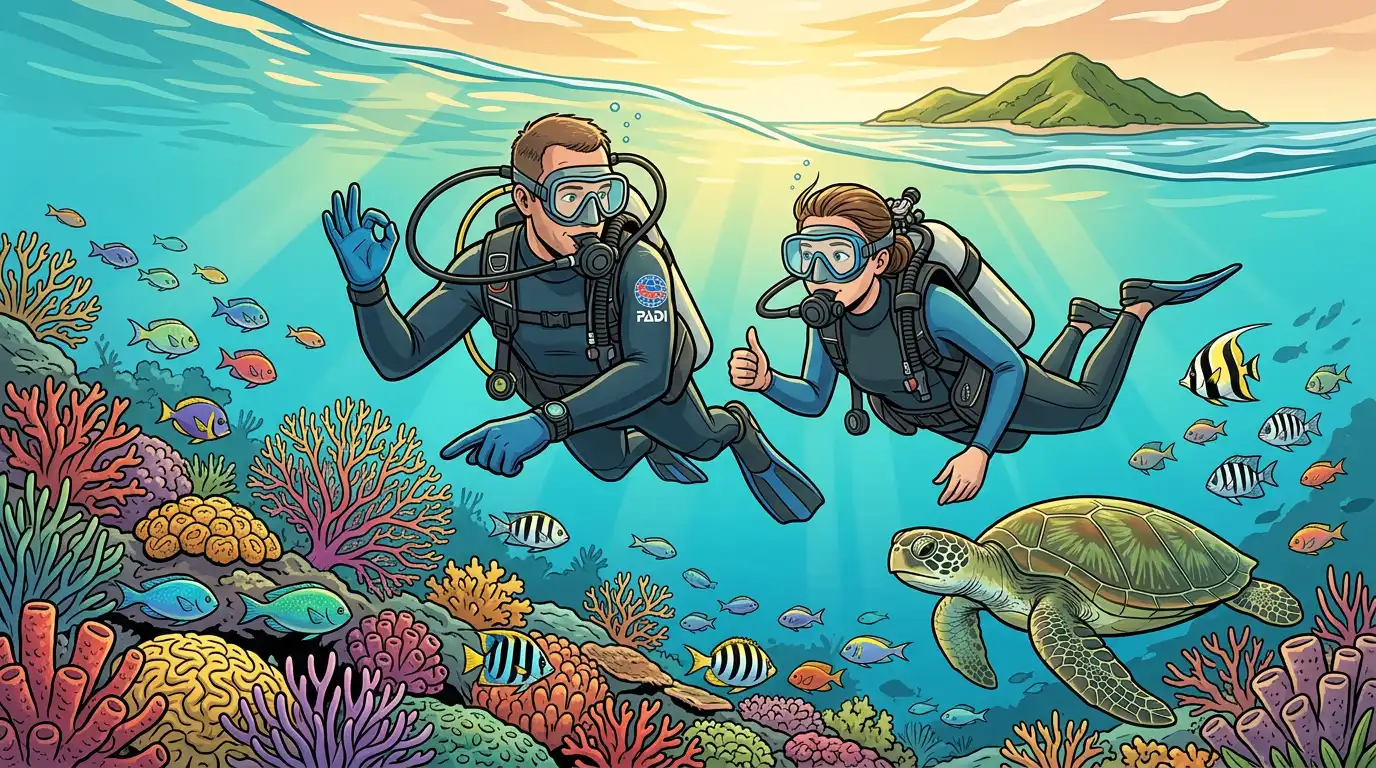
One of Komodo's great advantages is that you do not need to be a certified diver to swim with manta rays. Both diving and snorkeling offer genuine, close encounters, the experience differs in character rather than quality.
Diving with Mantas
Scuba diving allows you to descend to the cleaning stations where mantas spend extended periods hovering at 8–15 metres. You can kneel on a sandy patch near a cleaning station, control your buoyancy, and watch mantas approach within arm's length as they circle for cleaning. The advantage of diving is time and proximity: a well-executed dive at a cleaning station can yield 30 to 45 minutes of continuous manta interaction.
Most manta dive sites in Komodo are accessible to Open Water certified divers, though sites like the Cauldron and Shotgun require Advanced Open Water certification and comfort with current diving. The dive team at Komodo Resort briefs every group thoroughly on conditions, entry points, and manta etiquette before each dive.
Snorkeling with Mantas
Snorkeling with mantas is a fundamentally different but equally magical experience. At Manta Point, mantas regularly cruise within two to three metres of the surface, and during feeding events, they sometimes break the surface with their wingtips. Floating face-down, watching a four-metre manta glide directly beneath you, close enough to see the texture of its skin and the movement of its gill plates, is a humbling experience that requires no certification, no tank, and no prior experience beyond basic swimming ability.
Many guests at Komodo Resort combine diving and snorkeling within the same trip. A morning dive at a cleaning station followed by an afternoon snorkel at a feeding site gives you two completely different perspectives on the same animal. Our guided snorkeling trips are led by experienced guides who know the sites intimately and position you for the best possible encounters.
What to Expect During a Manta Ray Encounter
Manta encounters in Komodo fall into three broad categories, and you may experience all three during a single trip.
Cleaning Station Visits
Cleaning stations are specific coral heads or rocky outcrops where small cleaner fish, primarily bluestreak cleaner wrasses, set up shop. Mantas visit these stations regularly to have parasites, dead skin, and mucus removed. During cleaning, the manta slows to near-hovering speed, flares its cephalic fins (the horn-like structures on either side of its mouth), and opens its gill slits wide to allow cleaners access. This is the most predictable type of encounter: if you position yourself quietly near a known cleaning station, the mantas come to you.
Feeding Events
When plankton concentrations are high, mantas switch to active feeding. They unfurl their cephalic fins to create a funnel that channels water and plankton into their mouths as they swim. When multiple mantas feed in the same area, they often form "feeding chains", lines of mantas following one another in loops, sometimes barrel-rolling to stay within the densest plankton patches. Feeding events are dynamic and unpredictable. The mantas move faster, change direction frequently, and can appear and disappear from visibility range within seconds.
Cruising and Socialising
Sometimes mantas simply cruise through a site without stopping to clean or feed. These transient encounters are brief but often visually stunning, a manta emerging from blue water, passing within metres, and disappearing again. At certain times of year, you may observe courtship behaviour: a train of male mantas following a female in a high-speed chase that can last hours and cover kilometres of reef.
Responsible Manta Ray Interaction
Manta rays are listed as Vulnerable on the IUCN Red List. Komodo National Park's manta population is one of the healthiest in the world, and keeping it that way requires every visitor to follow responsible interaction guidelines. These are not suggestions, they are rules enforced by park rangers, dive operators, and the mantas' own behavioural responses.
Code of Conduct
The following guidelines apply to every manta encounter in Komodo, whether diving or snorkeling:
Maintain distance. Stay at least three metres from any manta ray. Do not chase, block, or attempt to ride a manta. If a manta approaches you, remain still and let the animal control the interaction.
No touching. Manta rays are covered in a thin layer of protective mucus. Touching removes this layer and can lead to infection. It also habituates the animal to human contact, which can make it vulnerable to poachers in less protected waters.
No flash photography. Camera flashes and video lights can startle mantas and disrupt cleaning behaviour. Use natural light or low-powered video lights with a red filter. The best manta photographs are almost always taken with ambient light anyway.
Control your buoyancy. For divers, maintaining neutral buoyancy is essential. Kneeling or lying on the reef damages coral and can disturb the cleaning station ecosystem that mantas depend on. Snorkelers should avoid dangling legs or kicking near mantas on the surface.
Limit group size. Overcrowding at cleaning stations stresses mantas and reduces encounter quality for everyone. Responsible operators like Komodo Resort limit group sizes and stagger visits to popular sites.
Why It Matters
Research conducted in Komodo has shown that mantas will abandon cleaning stations that experience excessive human disturbance. A cleaning station that took years to establish can be ruined in weeks by poor diver behaviour. Every responsible interaction protects not just the individual animal in front of you but the entire network of cleaning and feeding sites that sustains Komodo's manta population.
How to Get There: Komodo Resort and Labuan Bajo
Komodo Resort is located on the island of Sebayur Kecil, a small island within Komodo National Park itself, roughly 45 minutes by boat from the town of Labuan Bajo on the western tip of Flores. This location places you inside the park, closer to prime manta sites than any land-based accommodation in Labuan Bajo.
Getting to Labuan Bajo
Labuan Bajo's Komodo Airport (LBJ) receives daily flights from Bali (Denpasar), Jakarta, and several other Indonesian cities. The flight from Bali takes approximately one hour. From the airport, Komodo Resort arranges boat transfers to the island, you will be on the water and spotting your first reef fish before most travellers have finished checking into their Labuan Bajo hotel. For detailed logistics, see our Labuan Bajo travel guide.
Staying at Komodo Resort
The resort offers a range of accommodation options, from comfortable standard rooms to the Grand View rooms with panoramic views over the Flores Sea. The on-site dive centre runs daily dive and snorkel trips to manta sites throughout the year, with equipment rental, certification courses, and guided excursions included in many packages. Staying on-site means you are first to the dive sites each morning, before the day-trip boats arrive from Labuan Bajo, which translates directly into calmer, more intimate manta encounters.
Liveaboard Options
For visitors who want to cover the full breadth of Komodo's dive sites, including remote southern manta aggregation points, a Komodo liveaboard trip is the ultimate option. Multi-day liveaboard itineraries access sites that day boats cannot reach and allow you to dive both northern and southern manta sites within a single trip.
Tips for an Unforgettable Manta Experience
After thousands of guest encounters, here is what we have learned separates a good manta experience from an extraordinary one:
Book multiple days. Manta encounters are weather- and current-dependent. A three- to five-day stay dramatically increases your chances of hitting peak conditions. One day might bring murky water and no mantas; the next morning, the current shifts and fifteen mantas appear at the cleaning station.
Be an early riser. The first dive of the day, before boat traffic builds and the sun climbs high, often produces the calmest conditions and the most relaxed manta behaviour. Staying at Komodo Resort gives you a head start over Labuan Bajo–based operators.
Invest in a good mask. This applies to snorkelers especially. A well-fitting, low-volume mask with tempered glass makes a dramatic difference to comfort and visibility during surface encounters. If you wear prescription lenses, consider a mask with corrective inserts.
Bring a rash guard or thin wetsuit. Even in the warmer months, you will spend extended time in the water. A rash guard protects against sun and minor jellyfish stings. For southern sites in the cooler season, a 3–5mm wetsuit is essential.
Leave the selfie stick at home. Extended poles violate the three-metre distance rule and almost always result in worse photos than a compact camera held close to the body. Mantas are large, slow-moving subjects, a wide-angle lens and patience will serve you far better than a selfie stick waving in the current.
Go with experienced guides. Guides who know the sites read the currents, the plankton, and the mantas' body language. They will position you in the right spot at the right time. The dive and snorkel guides at Komodo Resort have years of site-specific experience that translates directly into better encounters. Browse our full list of things to do in Komodo to plan a complete trip.
Combine a boat tour. A Komodo boat tour or island tour lets you pair manta encounters with Komodo dragon trekking, pink beach visits, and island hopping, making each day a different adventure.
Start Planning Your Manta Ray Adventure
Swimming with manta rays in Komodo is one of those rare travel experiences that genuinely lives up to the hype. The combination of a healthy, well-studied manta population, world-class dive and snorkel sites, warm tropical waters, and a national park that takes conservation seriously makes Komodo the ideal destination for your first, or your fiftieth, manta encounter.
At Komodo Resort, we have been guiding guests to manta encounters for years. We know the sites. We know the seasons. We know where the mantas will be and how to get you there safely, responsibly, and with the best possible chance of an encounter that stays with you forever.
Ready to swim with manta rays? Contact us to start planning your trip, or explore our accommodation options to find the perfect base for your Komodo adventure. The mantas are waiting.