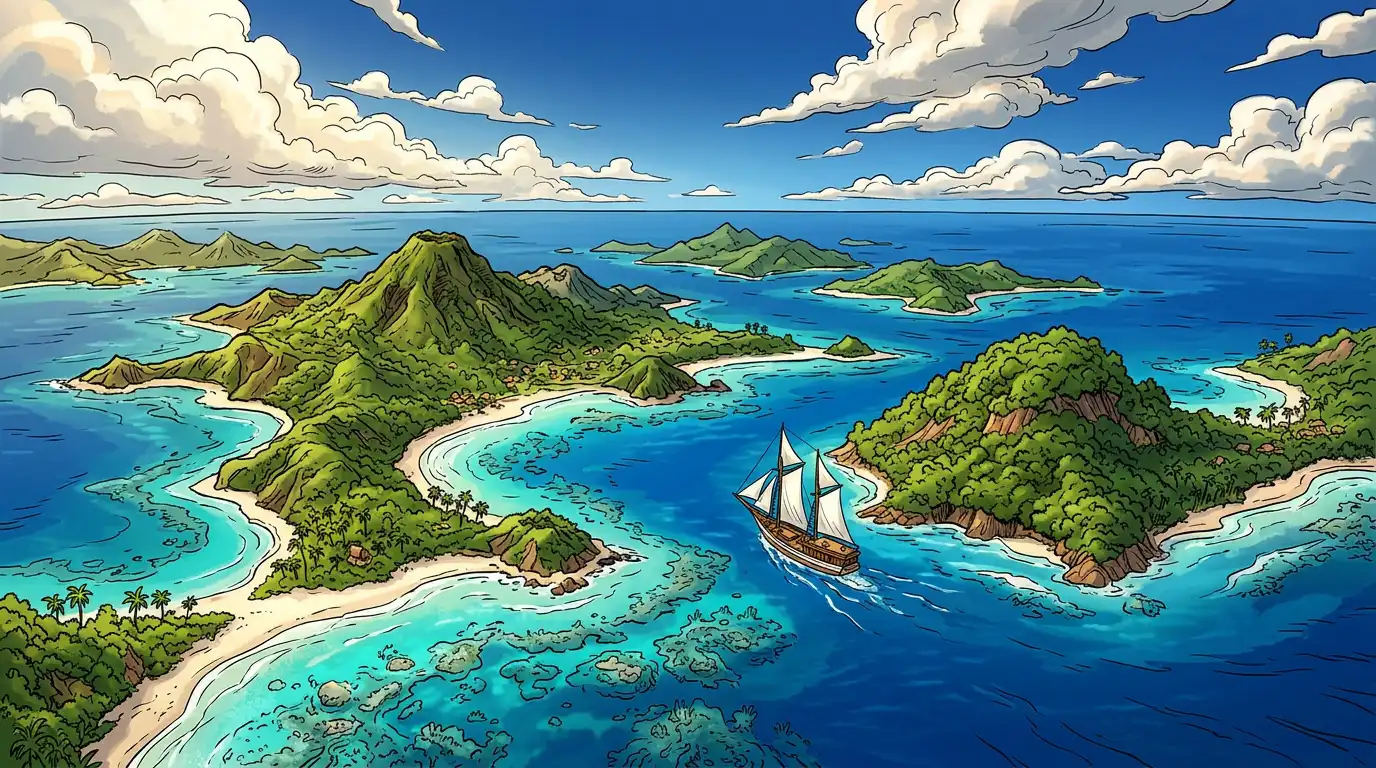
Komodo and the Maldives land on almost every tropical bucket list, and for good reason. Both offer turquoise water, world-class diving, and the kind of scenery that makes your phone wallpaper feel like a personal achievement. But beyond the Instagram appeal, these two destinations deliver fundamentally different experiences, and choosing the wrong one for your travel style can mean spending serious money on a trip that does not match what you actually wanted.
Having hosted thousands of guests from around the world at Komodo Resort, we hear the "should I go to Komodo or the Maldives?" question all the time. So here is an honest, side-by-side breakdown to help you decide, with no punches pulled in either direction.
The Quick Verdict
If you want a pure luxury beach holiday with calm lagoons, overwater villas, and minimal planning, the Maldives is hard to beat. If you want adventure, wildlife diversity, world-class diving, volcanic landscapes, and more value for your money, Komodo wins convincingly. Many travelers end up visiting both eventually, just at different stages of life.
Diving: Coral Triangle vs Pelagic Paradise
This is the category where both destinations genuinely excel, but in very different ways.
Komodo Diving
Komodo National Park sits in the heart of the Coral Triangle, the most biodiverse marine region on Earth. The park's dive sites feature over 600 species of hard coral, dramatic current-swept pinnacles, volcanic vents, and an extraordinary density of marine life from the microscopic to the massive. Sites like Batu Bolong, Crystal Rock, and Castle Rock are regularly ranked among the world's top dive sites.
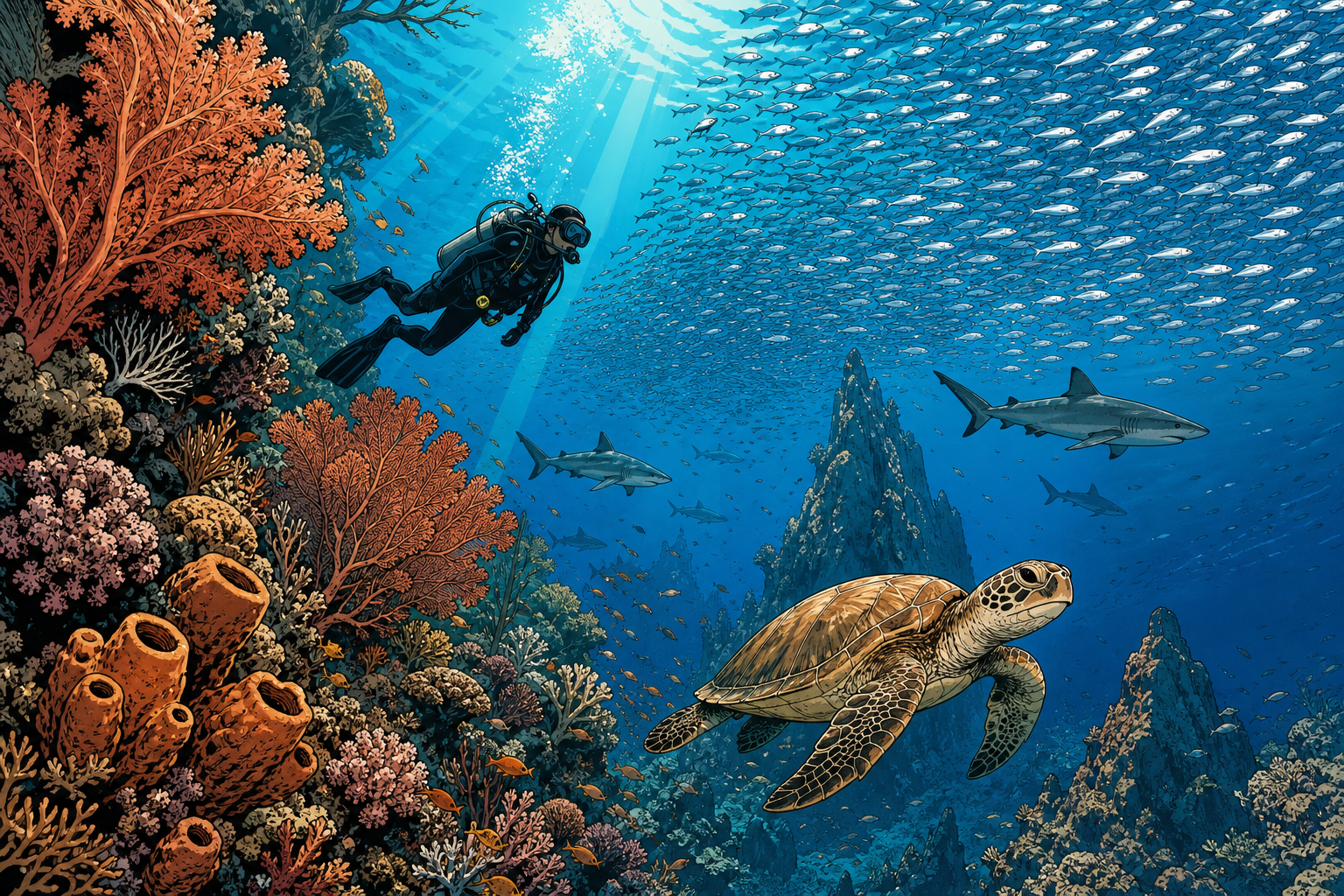
The diversity is staggering. On a single dive you might see reef sharks, giant trevally, Napoleon wrasse, sea turtles, nudibranchs, pygmy seahorses, and schooling fusiliers numbering in the thousands. Manta rays are a signature encounter, with Manta Point offering cleaning-station encounters that are among the most reliable anywhere. Macro photographers in particular love Komodo, with sites like Cannibal Rock delivering world-class critter diving.
The trade-off? Komodo's currents can be challenging. Water temperatures range from 22°C in the south during wet season to 29°C in the north during dry season. Visibility varies from 10 to 30 meters depending on conditions. This is not lazy, warm-water diving, it is dynamic, exciting, and occasionally demanding. Learn more in our complete Komodo diving guide.
Maldives Diving
The Maldives is built for pelagic encounters. The country's 26 atolls create a network of channels (kandus) where nutrient-rich ocean currents funnel through, attracting big animals in impressive concentrations. Grey reef sharks, hammerhead sharks, thresher sharks, eagle rays, and massive schools of trevally are regular sightings. The Maldives also boasts the world's largest identified population of reef manta rays (roughly 4,000 individuals) and offers some of the most reliable whale shark encounters on the planet, particularly in South Ari Atoll.
Coral diversity, however, is significantly lower than Komodo. The 2016 bleaching event hit the Maldives hard, and while reefs are recovering, they do not approach the richness of the Coral Triangle. Macro life is less varied, and the dive topography, while dramatic in channels, can feel repetitive across atolls. Water temperatures are consistently warm (27–30°C year-round), visibility is excellent (20–40 meters), and currents are generally more predictable than Komodo's.
Diving Winner
It depends on what you want. Komodo wins on overall biodiversity, coral health, topographic variety, and macro life. The Maldives wins on big pelagic encounters, consistent warm water, and ease of diving. If you had to choose one diving trip in your life, Komodo offers the richer experience. If you specifically want sharks and whale sharks, the Maldives delivers.
Snorkeling
Both destinations offer excellent snorkeling, but the experience is quite different.
The Maldives excels at accessible snorkeling. Many resorts have house reefs you can wade into directly from the beach or your overwater villa. The calm, sheltered lagoons mean flat water and easy conditions for all skill levels. Expect to see reef fish, small sharks, rays, and turtles in clear, warm water with minimal effort.
Komodo's snorkeling is more adventurous. The marine life density is higher, with snorkeling sites like Karang Makassar offering surface-level manta ray encounters during feeding events. The house reef at Komodo Resort is rich with coral, turtles, and reef sharks. However, Komodo's currents mean some snorkeling sites require boat access and reasonable swimming confidence. The reward for that extra effort is seeing things that calm-lagoon snorkeling simply cannot deliver.
Snorkeling winner: Maldives for ease and accessibility. Komodo for marine life encounters and variety.
Beaches and Landscape
This is where the two destinations diverge most dramatically.
The Maldives is flat. Beautifully, pristinely, luxuriously flat. White sand beaches, coconut palms, turquoise lagoons, and coral reefs stretching to the horizon. The highest natural point in the entire country is less than 2.5 meters above sea level. If your dream holiday is stepping off your villa deck onto powder-white sand with a cocktail in hand, the Maldives is perfection.
Komodo is volcanic, rugged, and visually dramatic. The landscape features jagged ridgelines, savanna-covered hills, hidden bays, and some of the most photogenic viewpoints in Southeast Asia. Padar Island's famous hilltop view, with three crescent bays in different colors below volcanic peaks, is one of the most photographed panoramas in Indonesia. And then there is Pink Beach, one of only seven pink-sand beaches in the world, where microscopic red organisms tint the sand a soft rose color.
Landscape winner: Maldives for classic tropical beach perfection. Komodo for dramatic, diverse, adventurous scenery that goes far beyond the beach.
Activities Beyond the Water
This is where Komodo pulls decisively ahead.
The Maldives is primarily a water-and-beach destination. Once you have dived, snorkeled, kayaked, and visited the spa, land-based activities are limited. Some resorts offer cooking classes, dolphin cruises, or fishing trips, but the flat atoll geography means there is no hiking, no wildlife trekking, and minimal cultural immersion. This is by design, the Maldives sells relaxation, and it does it exceptionally well.
Komodo offers a completely different range of experiences. You can trek through savanna on Rinca Island to see Komodo dragons, the world's largest living lizards, in their natural habitat. You can hike Padar Island at sunrise for panoramic views. You can explore the streets, markets, and restaurants of Labuan Bajo. You can sail on a traditional phinisi boat, visit flying fox colonies on Kalong Island, or simply kayak and paddleboard around the resort's island. The list of things to do in Komodo is long, varied, and goes well beyond the water.
Activities winner: Komodo, by a wide margin.
Accommodation and Luxury
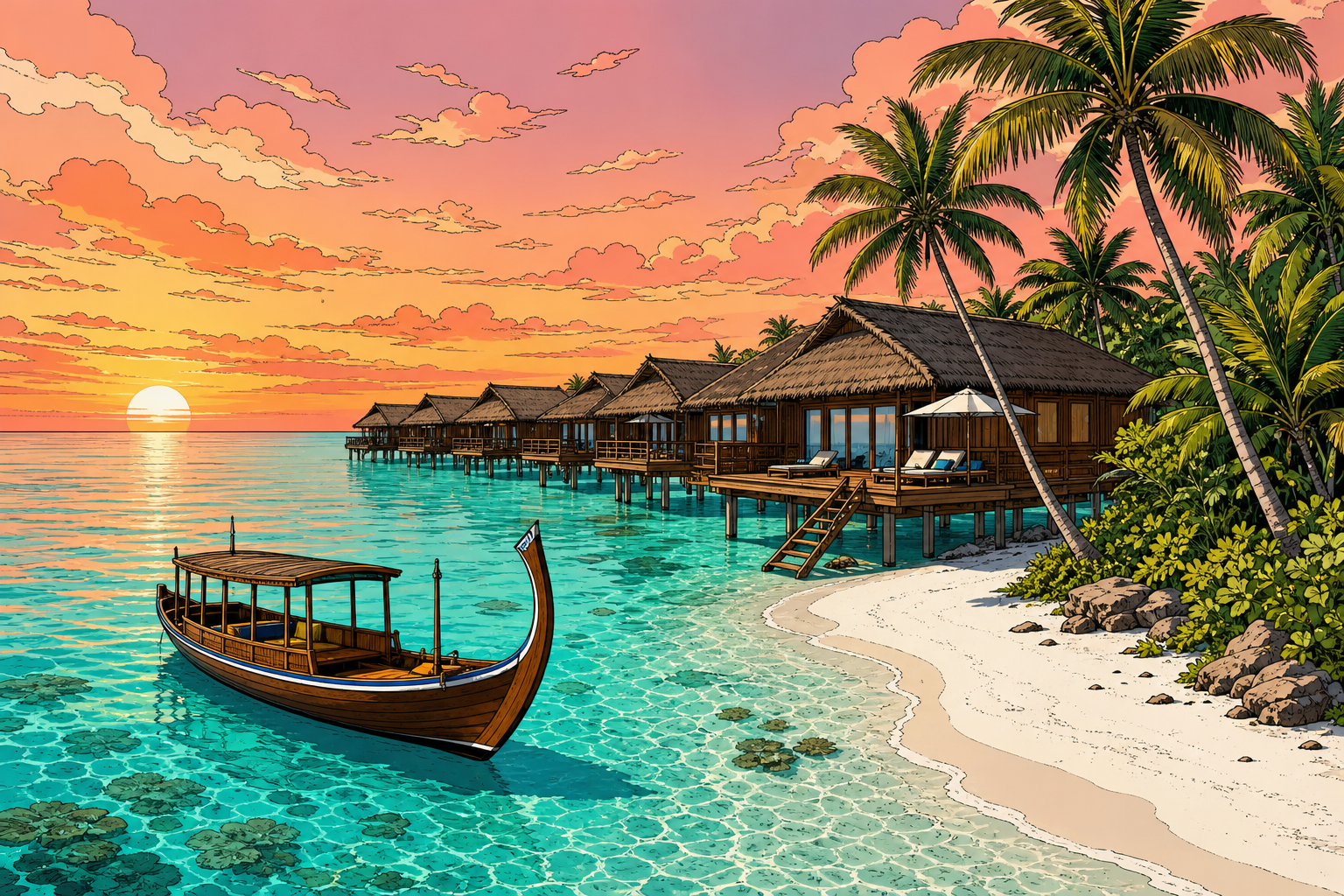
The Maldives is the undisputed champion of luxury resort accommodation. Overwater villas with glass floors, private infinity pools, butler service, underwater restaurants, these are standard offerings at high-end Maldives resorts. The country has spent decades perfecting the luxury island resort concept, and the result is a level of polish and pampering that is genuinely hard to match.
Komodo's accommodation scene is smaller and more intimate. Komodo Resort offers comfortable, well-appointed rooms ranging from Ocean View Bungalows on the beachfront to the elevated Panorama View rooms with sweeping 180° ocean views. The resort includes a restaurant serving three daily meals, a spa, a dive center, and a spectacular house reef. What it lacks in overwater villa extravagance, it more than compensates for with location, being inside Komodo National Park means you wake up surrounded by one of the most biodiverse marine environments on Earth.
Accommodation winner: Maldives for ultra-luxury. Komodo for authentic island immersion inside a national park.
Cost Comparison
This is a significant differentiator. The Maldives is one of the most expensive tropical destinations in the world. Budget resorts start around $200-300 per night, mid-range properties run $400-800, and premium resorts easily exceed $1,000-2,000 per night. Food and beverages at resort prices add up quickly since most islands have only one restaurant (the resort's). A one-week Maldives holiday for two can easily cost $5,000-15,000 depending on the resort tier, before diving extras.
Komodo is substantially more affordable. Resort accommodation, including three daily meals, runs at a fraction of comparable Maldives pricing. Diving, excursions, and spa treatments are priced competitively. Flights from Bali to Labuan Bajo are $100-250 round trip. A one-week Komodo trip, including resort stay, diving, and excursions, can be done for a fraction of what a comparable Maldives trip would cost, while delivering a richer variety of experiences.
Cost winner: Komodo, significantly. You get more variety for less money.
Best Time to Visit
Understanding seasonal patterns helps you plan either trip.
Komodo: April to November is the dry season with calm seas, warm water (26-29°C in the north), and the best visibility. December to March brings rain, cooler southern water (22-25°C), and peak manta activity at southern sites. Komodo is a genuine year-round destination with different strengths each season.
Maldives: November to April is the dry northeast monsoon season with calm seas, clear skies, and peak pricing. May to October brings the southwest monsoon with more rain, occasional rough seas, but also the best manta ray and whale shark encounters. Like Komodo, the Maldives works year-round if you align your timing with your priorities.
Best time winner: Tie. Both are year-round destinations with seasonal trade-offs.
Getting There
The Maldives is straightforward. Velana International Airport (MLE) in Malé receives direct flights from major hubs across Asia, Europe, and the Middle East. From the airport, resort transfers are handled by speedboat (30-90 minutes) or seaplane (20-50 minutes) depending on the atoll. The entire process is well-oiled and easy.
Komodo requires one more step. Most international travelers fly into Bali, then take a 1.5-hour domestic flight to Labuan Bajo (Komodo Airport, LBJ). From Labuan Bajo, a 45-minute boat transfer brings you to Komodo Resort inside the national park. The extra connection adds a couple of hours, but the upside is that you can easily combine Komodo with time in Bali, adding beaches, rice terraces, and cultural experiences to your trip.
Access winner: Maldives for simplicity. Komodo for combinability with Bali and Flores.
Honeymoon and Couples
The Maldives has decades of brand recognition as a honeymoon destination, and deservedly so. The overwater villas, private beach dinners, couples' spa treatments, and sheer romantic aesthetic are hard to argue with.
Komodo is emerging as a compelling alternative for couples who want more than lounging. The Private Bamboo Bungalow at Komodo Resort offers secluded, romantic accommodation with unobstructed sunset views. A liveaboard sailing trip on a traditional phinisi boat is one of the most romantic travel experiences in Southeast Asia. And there is something about watching a sunset from a volcanic ridgetop in one of the world's last wild places that no overwater villa can quite replicate.
Honeymoon winner: Maldives for classic luxury romance. Komodo for adventurous couples who want stories, not just scenery.
Side-by-Side Comparison Table
| Category | Komodo | Maldives |
|---|---|---|
| Diving biodiversity | Exceptional (Coral Triangle) | Good (recovering reefs) |
| Big animal encounters | Manta rays, reef sharks | Whale sharks, hammerheads, mantas |
| Snorkeling ease | Moderate (currents) | Easy (calm lagoons) |
| Beaches | Dramatic, including Pink Beach | Pristine white sand |
| Landscape | Volcanic, rugged, varied | Flat atolls, lagoons |
| Land activities | Dragon treks, hikes, culture | Limited |
| Accommodation | Comfortable resort, intimate | Ultra-luxury resorts |
| Cost (per week for two) | $$ | $$$$ |
| Best for | Adventure, divers, nature | Relaxation, luxury, romance |
| Water temperature | 22-29°C (varies by season/site) | 27-30°C year-round |
| Unique wildlife | Komodo dragons (nowhere else) | Whale sharks (seasonal) |
| Combine with | Bali, Flores | Sri Lanka, Dubai stopovers |
So, Which Should You Choose?
Choose Komodo if:
- You want world-class diving with unmatched coral biodiversity
- You love adventure and variety in your holiday
- Seeing Komodo dragons in the wild is on your bucket list
- You want more value for your travel budget
- You prefer dramatic, rugged landscapes over flat beaches
- You want to combine your trip with Bali
Choose the Maldives if:
- Pure relaxation and luxury are your top priorities
- You dream of overwater villas and private beaches
- Calm, warm, easy snorkeling conditions matter to you
- You specifically want whale shark or hammerhead encounters
- Budget is not a major concern
- You want the simplest possible travel logistics
Both are extraordinary destinations that deserve their reputations. The right choice depends entirely on what kind of traveler you are and what you want from this particular trip.
Ready to Experience Komodo?
If Komodo is calling, we would love to help you plan it. Browse our room options to find your base inside Komodo National Park, or contact our team to build a trip that matches your interests, timeline, and budget.