Se hai iniziato a informarti su come visitare effettivamente le isole del Parco Nazionale di Komodo, ti sarai quasi sicuramente imbattuto nell’espressione “open trip”. È il modo più economico e socievole per visitare il parco: prenoti un posto su una barca condivisa, ti unisci a un piccolo gruppo di altri viaggiatori e dividi il costo di un itinerario prestabilito. Per la maggior parte dei viaggiatori indipendenti, un “open trip” rappresenta il giusto compromesso tra un costoso charter privato e il mal di testa di un viaggio fai-da-te, ed è la colonna portante dell’offerta di tour in barca a Komodo con partenza da Labuan Bajo.
Ma il termine “open trip” copre una vasta gamma di opzioni, dalle barche diurne anguste ai comodi phinisi in legno con cabine private, e la differenza tra un operatore eccellente e uno scadente è enorme. Questa guida spiega esattamente cos’è un “open trip”, come si confronta con i viaggi privati e le crociere subacquee, quanto costerà nel 2026, quali sono gli itinerari tipici e come prenotarne uno senza rimanere delusi. Se preferisci che l’intero tour del parco sia organizzato per te, le nostre opzioni di tour alle Isole di Komodo coprono anche la fascia più curata dell’offerta.
Alla fine saprai se un viaggio di gruppo fa al caso tuo, quale durata scegliere e quali sono gli aspetti che distinguono un viaggio di cui parlerai con entusiasmo da uno che sconsiglieresti ai tuoi amici.
Che cos’è un viaggio in gruppo a Komodo?
Un viaggio aperto (a volte chiamato “viaggio in condivisione”) è un tour di gruppo in cui i viaggiatori individuali acquistano posti singoli sulla stessa imbarcazione. L’operatore stabilisce una data di partenza fissa e un itinerario prestabilito, poi vende i posti fino a riempire l’imbarcazione, solitamente con un numero di ospiti compreso tra 10 e 25 a seconda dell’imbarcazione. Ti presenti il giorno della partenza, incontri i tuoi compagni di viaggio e condividi i costi relativi all’equipaggio, al carburante, al vitto e all’itinerario.
È proprio questo il bello. Poiché i costi fissi vengono ripartiti tra tutti i passeggeri a bordo, il prezzo a persona si riduce notevolmente rispetto al noleggio privato della stessa imbarcazione. Inoltre, si ha subito a disposizione un equipaggio di viaggio, motivo per cui i viaggi aperti sono così popolari tra i viaggiatori solitari e le coppie che desiderano un po’ di compagnia.
Il compromesso è il controllo. Non si scelgono le date, le tappe, gli altri passeggeri né il ritmo. Il capitano segue un itinerario standard che tocca le attrazioni principali del parco e si va dove va il gruppo. Per la maggior parte delle persone va benissimo, perché l’itinerario standard è davvero spettacolare.
Viaggio aperto vs Viaggio privato vs Crociera
Questi tre termini vengono costantemente confusi, quindi ecco in cosa differiscono effettivamente:
- Viaggio aperto: si acquistano posti singoli su un’imbarcazione condivisa con data e itinerario fissi. È l’opzione più economica a persona, sociale, ma meno flessibile. Le imbarcazioni vanno dalle semplici barche da escursione giornaliera ai phinisi di fascia media con pernottamento.
- Viaggio privato: noleggi l’intera imbarcazione per il tuo gruppo e definisci l’itinerario. Molto più flessibile e riservato, ma paghi l’intera imbarcazione indipendentemente dal numero di partecipanti.
- Crociere subacquee: un viaggio di più giorni incentrato principalmente sulle immersioni subacquee, con diverse immersioni al giorno e rotte più lunghe che raggiungono i siti di immersione più remoti a sud e a nord. Di solito sono riservate a ospiti di fascia alta e in possesso di brevetto subacqueo.
Il modo più semplice per capirlo: i viaggi aperti sono pensati per visite turistiche e snorkeling a prezzi accessibili, i viaggi privati puntano su flessibilità e privacy, mentre le crociere subacquee sono dedicate alle immersioni serie. Se le immersioni sono la tua priorità, leggi invece la nostra guida all’esperienza delle crociere subacquee a Komodo, poiché un viaggio aperto di tipo turistico non ti garantirà il tempo di immersione che desideri.

Tipi di imbarcazioni per le escursioni aperte
Non tutte le crociere aperte sono uguali, e l’imbarcazione può determinare il successo o il fallimento dell’esperienza. Ecco tra quali opzioni potrai scegliere.
Gite giornaliere in motoscafo
Veloci motoscafi in vetroresina che in un solo giorno consentono di visitare le attrazioni più vicine del parco, solitamente Padar, Pink Beach, Komodo o Rinca, con una o due soste per lo snorkeling. Veloci e comodi, ma ti permettono solo di sfiorare la superficie e di tornare a Labuan Bajo già in serata. La nostra guida alla gita di un giorno a Komodo illustra tutto ciò che è possibile fare in una giornata.
Barche standard in legno (la classica gita in gruppo)
Questi sono i cavalli di battaglia delle escursioni aperte: barche tradizionali in legno con cabine condivise o essenziali, bagni semplici e un ponte per rilassarsi. Effettuano itinerari notturni (2 o 3 giorni) a un ritmo rilassato. Questo è ciò a cui si riferiscono la maggior parte dei backpacker quando parlano di “open trip”, ed è qui che si trova il miglior rapporto qualità-prezzo.
Phinisi e imbarcazioni di lusso
Golette tradizionali phinisi più grandi con vere e proprie cabine private, aria condizionata, bagni in camera e cibo di qualità superiore. Alcune vendono posti per viaggi aperti anziché noleggi completi. Si paga di più, ma per le coppie o per chiunque desideri il comfort in un viaggio notturno, ne vale la pena.
Barche a vela e pernottamenti economici
All’estremità più economica si trovano semplici barche a vela con materassi sul ponte anziché cabine. Dormire sotto le stelle fa parte del fascino, ma è bene non aspettarsi troppo in termini di comfort e servizi igienici. Queste opzioni sono ideali per viaggiatori resistenti e socievoli con un budget limitato.
Durata delle crociere in gruppo: quale durata scegliere?
Una delle prime decisioni che dovrete prendere riguarda il numero di giorni da trascorrere in mare, e questo influisce sulla vostra esperienza più della barca stessa. Ecco un confronto tra le opzioni più comuni.
- 1 giorno: un assaggio veloce che comprende Padar, una spiaggia, una sosta al “Drago” e un po’ di snorkeling. Ottimo se avete poco tempo a disposizione o siete soggetti al mal di mare, ma è una giornata lunga e frenetica e vi perderete la magia dell’alba e del tramonto nel parco.
- 2 giorni / 1 notte: un ottimo compromesso. Si trascorre una notte in mare, si sale a Padar di prima mattina senza la folla delle gite di un giorno e si fanno più soste per lo snorkeling. Il ritmo è ancora sostenuto, ma molto più gratificante rispetto a un solo giorno.
- 3 giorni / 2 notti: la soluzione ideale, e l’itinerario che la maggior parte delle persone dovrebbe scegliere. Due notti in mare significano poter rallentare il ritmo, raggiungere più luoghi, ammirare sia il tramonto a Kalong che l’alba a Padar e rilassarsi davvero tra un’attività e l’altra.
- 4 giorni / 3 notti: per i viaggiatori che vogliono approfondire l’esperienza, raggiungere alcuni luoghi più tranquilli e considerare la barca come parte integrante della vacanza piuttosto che un semplice mezzo di trasporto. Meno comune come viaggio in gruppo, ma ne vale la pena se avete tempo a disposizione.
Se il vostro programma lo consente, l’opzione 3 giorni e 2 notti offre quasi sempre il miglior rapporto qualità-prezzo giornaliero. Il passaggio da un giorno a due notti trasforma il viaggio da una corsa frenetica per spuntare le voci di una lista a una vera e propria avventura.
Un tipico itinerario di un viaggio aperto 3 giorni e 2 notti
Il percorso di tre giorni e due notti è di gran lunga il viaggio aperto più popolare, perché permette di visitare quasi tutte le località famose senza fretta. Gli itinerari variano leggermente a seconda dell’operatore, delle maree e della quota giornaliera di visitatori, ma un percorso tipico si presenta così. Per ulteriori idee di itinerari con diverse durate di viaggio, consulta la nostra guida completa agli itinerari delle Isole Komodo.
Giorno 1: Da Labuan Bajo alle isole centrali
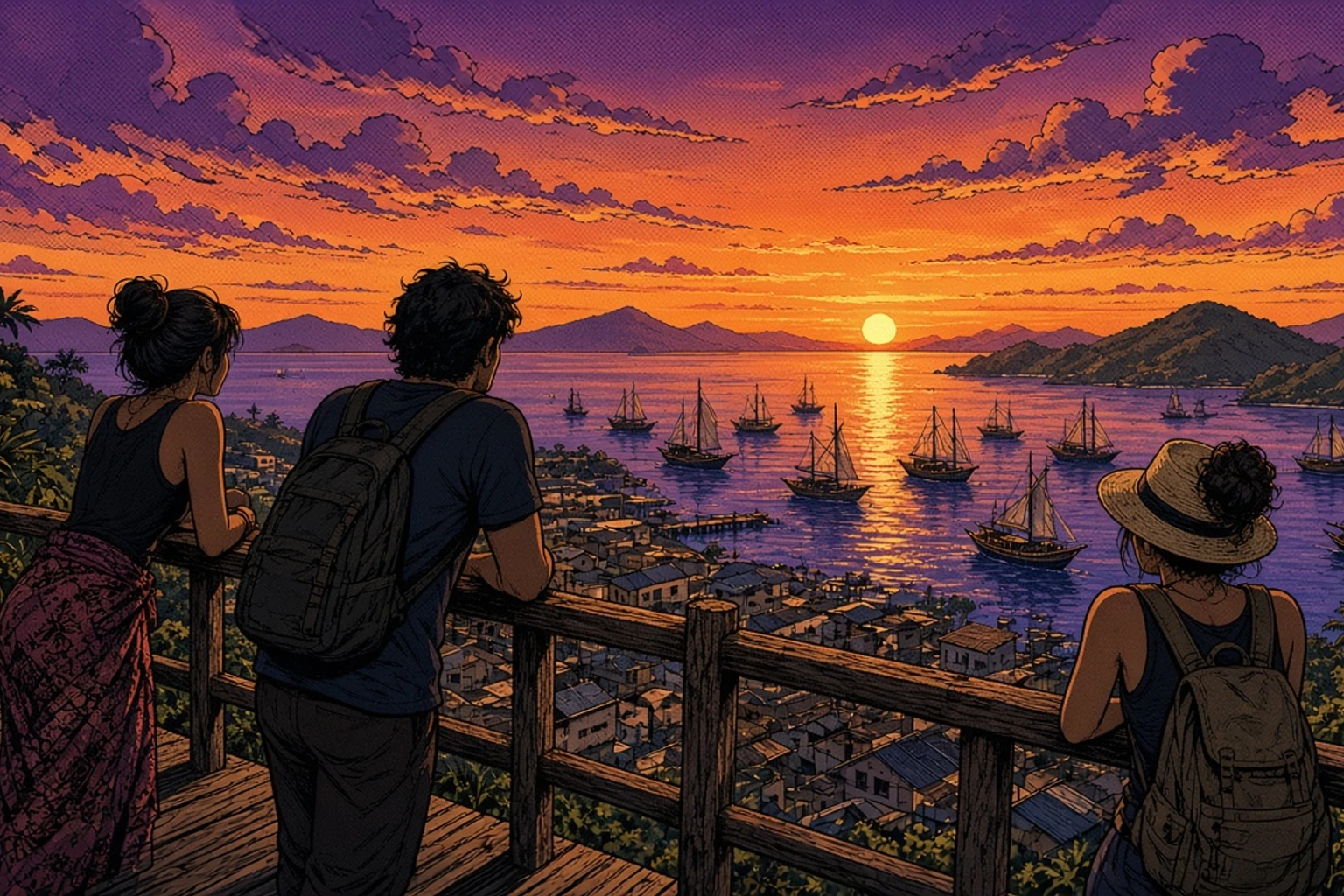
Partenza al mattino dal porto di Labuan Bajo. La barca di solito naviga verso Kelor o Kanawa per una prima immersione in snorkeling, per poi proseguire verso l’isola di Kalong nel tardo pomeriggio per osservare migliaia di volpi volanti che si librano dalle mangrovie al tramonto, uno degli spettacoli più sottovalutati del parco. La nostra guida all’isola di Kalong spiega perché vale la pena rimanere svegli per quel tramonto. Pernottamento all’ancora in mare.
Giorno 2: Padar, Pink Beach e i draghi
Partenza di buon’ora per la scalata all’isola di Padar, il punto panoramico iconico che domina tre baie ricurve, da percorrere preferibilmente all’alba prima del caldo e dell’afflusso turistico. Dopo colazione, la maggior parte dei tour fa tappa a Pink Beach per fare snorkeling tra i coralli e una passeggiata sulla famosa sabbia color rosa, seguita da un’escursione guidata alla ricerca dei draghi a Komodo o Rinca con un ranger del parco. Nel pomeriggio, snorkeling a Taka Makassar o Manta Point. Pernottamento nuovamente in barca.
Giorno 3: Manta Point e ritorno
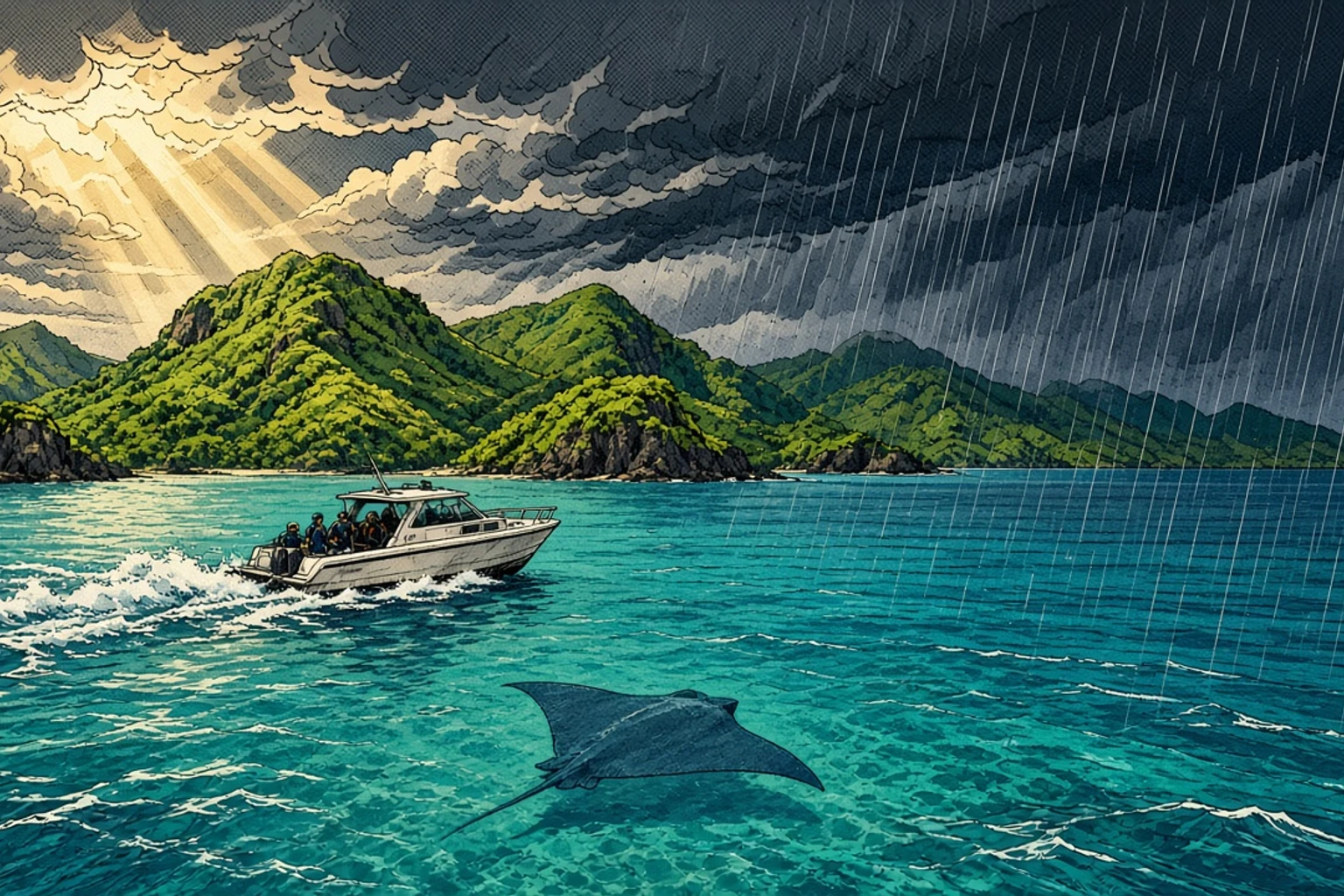
Un’ultima occasione per vivere l’attrazione principale: lo snorkeling con le mante a Manta Point o a Mawan, dove le mante di barriera scivolano tra le stazioni di pulizia nelle acque basse. Se volete capire la stagione e il galateo per questi incontri, la nostra guida al nuoto con le mante a Komodo ne parla in dettaglio. Un’ultima sosta sulla barriera corallina, poi ritorno a Labuan Bajo nel primo pomeriggio.

La vita a bordo: com’è davvero la giornata
Gli opuscoli pubblicizzano le destinazioni, ma una parte importante di un viaggio in gruppo è il tempo trascorso sulla barca stessa, e vale la pena sapere com’è realmente quel ritmo. Le giornate iniziano presto. L’equipaggio spesso salpa alle prime luci dell’alba per arrivare a Padar prima delle altre imbarcazioni, quindi verrai svegliato per la scalata all’alba mentre fa ancora fresco ed è tranquillo. Quella partenza mattutina è un punto di forza, non un inconveniente; il parco è al massimo del suo splendore prima che arrivino i motoscafi.
Tra una tappa e l’altra, la barca diventa il fulcro sociale del viaggio. Le persone si distendono sui cuscini del ponte, si scambiano racconti di viaggio, fanno un pisolino all’ombra e guardano le isole scorrere davanti ai loro occhi. I pasti sono uno dei momenti clou sulla maggior parte delle imbarcazioni: semplici ma abbondanti buffet indonesiani a base di riso, pesce fresco, verdure, noodles e frutta, solitamente preparati in una minuscola cambusa da un equipaggio che, in qualche modo, riesce a mettere in tavola banchetti impressionanti. Comunicate in anticipo al vostro operatore eventuali esigenze alimentari, poiché le diete vegetariane sono facili da gestire, mentre è più difficile garantire la soddisfazione di allergie specifiche.
La sistemazione per la notte dipende interamente dall’imbarcazione. Su un phinisi di lusso avrete una cabina privata con aria condizionata; su una barca di legno standard, una cabina condivisa essenziale o una cuccetta; su una barca a vela economica, un materasso sul ponte sotto una zanzariera. I bagni sono in comune ed essenziali su tutte le imbarcazioni tranne quelle di fascia alta, e l’acqua dolce per le docce può essere limitata. Niente di tutto ciò è un problema se ci si arriva preparati, e in cambio ci si addormenta al suono dell’acqua che batte contro lo scafo sotto un cielo costellato di stelle.
Viaggi in gruppo per viaggiatori solitari
I viaggi in gruppo a Komodo sono senza dubbio la cosa migliore che un viaggiatore solitario possa fare nell’Indonesia orientale. Si sale a bordo da soli e, nel giro di poche ore, si fa parte di una piccola comunità temporanea con cui condividere i pasti, le soste per lo snorkeling e quel sussulto collettivo in cima al Padar. Già dal secondo giorno, gli sconosciuti sono diventati le persone con cui si continuerà a viaggiare o con cui si resterà in contatto per anni.
In pratica, partecipare da soli a un viaggio in gruppo risolve anche il problema più grande che i viaggiatori solitari devono affrontare a Komodo: il costo. Noleggiare una barca privata da soli è estremamente costoso, ma un posto in condivisione rende il parco accessibile a quasi tutte le tasche. L’unica cosa da verificare è se l’operatore applica un supplemento per una cabina privata, oppure se ti va bene dormire in una cabina condivisa o sul ponte, cosa che va bene alla maggior parte dei viaggiatori in solitaria.
Prezzi dei viaggi aperti a Komodo nel 2026
I viaggi in gruppo sono popolari proprio perché sono convenienti, ma i prezzi variano notevolmente a seconda della qualità dell’imbarcazione, della stagione e delle modalità di prenotazione. Come indicazione di massima per il 2026, prevedete:
- Gita giornaliera in motoscafo (open): circa 60–120 USD a persona.
- Imbarcazione standard in legno, 2 giorni e 1 notte: circa 120–200 USD a persona.
- Barca in legno standard, 3 giorni e 2 notti: circa 180–320 USD a persona.
- Phinisi / crociera deluxe, 3 giorni e 2 notti: circa 350–700+ USD a persona.
Queste cifre si riferiscono esclusivamente al pacchetto barca. La principale “insidia” è che i biglietti d’ingresso al parco e le tasse di conservazione sono quasi sempre esclusi e pagati separatamente, e non sono di importo irrisorio. Prevedete una somma aggiuntiva significativa per queste spese, specialmente nei fine settimana quando alcune tariffe sono più elevate. La nostra analisi dettagliata delle tariffe d’ingresso al Parco Nazionale di Komodo illustra le tariffe attuali e il sistema di prenotazione SiORA, mentre la nostra guida più completa sui costi dei viaggi a Komodo mette l’intero budget nel giusto contesto.
Cosa è incluso e cosa no
Le inclusioni variano, quindi leggete sempre le clausole scritte in piccolo. Un tipico viaggio di andata e ritorno con pernottamento include:
- L’imbarcazione, l’equipaggio, il capitano e il carburante
- Una semplice guida a bordo o un accompagnatore
- Tutti i pasti a bordo (di solito abbondanti buffet indonesiani) e l’acqua potabile
- Attrezzatura per lo snorkeling (la qualità varia, quindi verificate)
- Cabinetta essenziale o spazio per dormire sul ponte
Di solito non sono inclusi:
- Biglietti d’ingresso ai parchi, spese per i ranger e per la conservazione
- Biglietti d'ingresso alle isole locali (Padar, Pink Beach, ecc.)
- Bevande analcoliche, birra e snack oltre all'acqua
- Mance per l'equipaggio
- Qualsiasi immersione subacquea (le escursioni aperte sono incentrate sullo snorkeling)
Se un prezzo sembra troppo bello per essere vero, di solito è perché le spese sopra indicate sono state omesse per rendere più allettante la cifra pubblicizzata.
Il periodo migliore per un viaggio aperto
Komodo è una destinazione frequentata tutto l’anno, ma le escursioni aperte danno il meglio di sé nella stagione secca, all’incirca da aprile a ottobre, quando il mare è calmo, il cielo è sereno e la navigazione notturna è confortevole. Si tratta dell’alta stagione, quindi le imbarcazioni si riempiono e i prezzi aumentano; prenotate in anticipo se viaggiate a luglio e agosto.
La stagione delle piogge, da dicembre a febbraio, porta acque più agitate e, occasionalmente, partenze cancellate, anche se troverete imbarcazioni meno affollate e prezzi più bassi. Gli avvistamenti di mante sono possibili tutto l’anno. Per un’analisi dettagliata mese per mese del tempo, delle condizioni del mare e dell’affluenza turistica, consultate la nostra guida sul periodo migliore per visitare l’isola di Komodo.
Come prenotare un viaggio in gruppo
Avete a disposizione tre opzioni principali, ciascuna con i propri pro e contro.
- Online in anticipo: prenotate tramite il sito web di un operatore affidabile o una piattaforma di prenotazione prima del vostro arrivo. È l’opzione migliore per l’alta stagione e per assicurarvi una barca specifica. Pagherete un po’ di più per questa certezza.
- A Labuan Bajo: la città pullula di agenzie turistiche e spesso è possibile negoziare un posto all’ultimo minuto per il giorno successivo, a volte con uno sconto se l’imbarcazione ha bisogno di riempire i posti vacanti. È più rischioso in alta stagione, quando le imbarcazioni migliori vanno a ruba. La nostra guida di viaggio su Labuan Bajo descrive questa città di accesso all’isola e spiega come orientarsi.
- Tramite la tua struttura ricettiva: molti ostelli e hotel collaborano con gli operatori e possono prenotarti un posto affidabile. È comodo, anche se devi affidarti alla loro scelta dell’imbarcazione.
La maggior parte dei viaggiatori raggiunge Labuan Bajo in aereo da Bali, ed è importante coordinare il proprio viaggio “open trip” con i voli; la nostra guida su come arrivare da Bali a Komodo ti aiuta a organizzare il tutto.
Come evitare un “open trip” deludente
Questa è la parte più importante, perché il posto più economico può costarti caro in altri modi. Alcune regole acquisite a caro prezzo:
- Leggi le recensioni recenti, non solo le valutazioni a stelle. Cerca in particolare i commenti sulla sicurezza dell’imbarcazione, sul cibo e se l’itinerario pubblicizzato è stato effettivamente rispettato.
- Chiedi informazioni sulle dimensioni del gruppo e sul tipo di imbarcazione prima di pagare. Un “viaggio aperto” su una barca da escursione giornaliera da 25 persone è un’esperienza molto diversa da quella su un phinisi da 12 persone con pernottamento.
- Conferma per iscritto cosa è incluso, specialmente le tariffe del parco, in modo che non ci siano costi a sorpresa al molo.
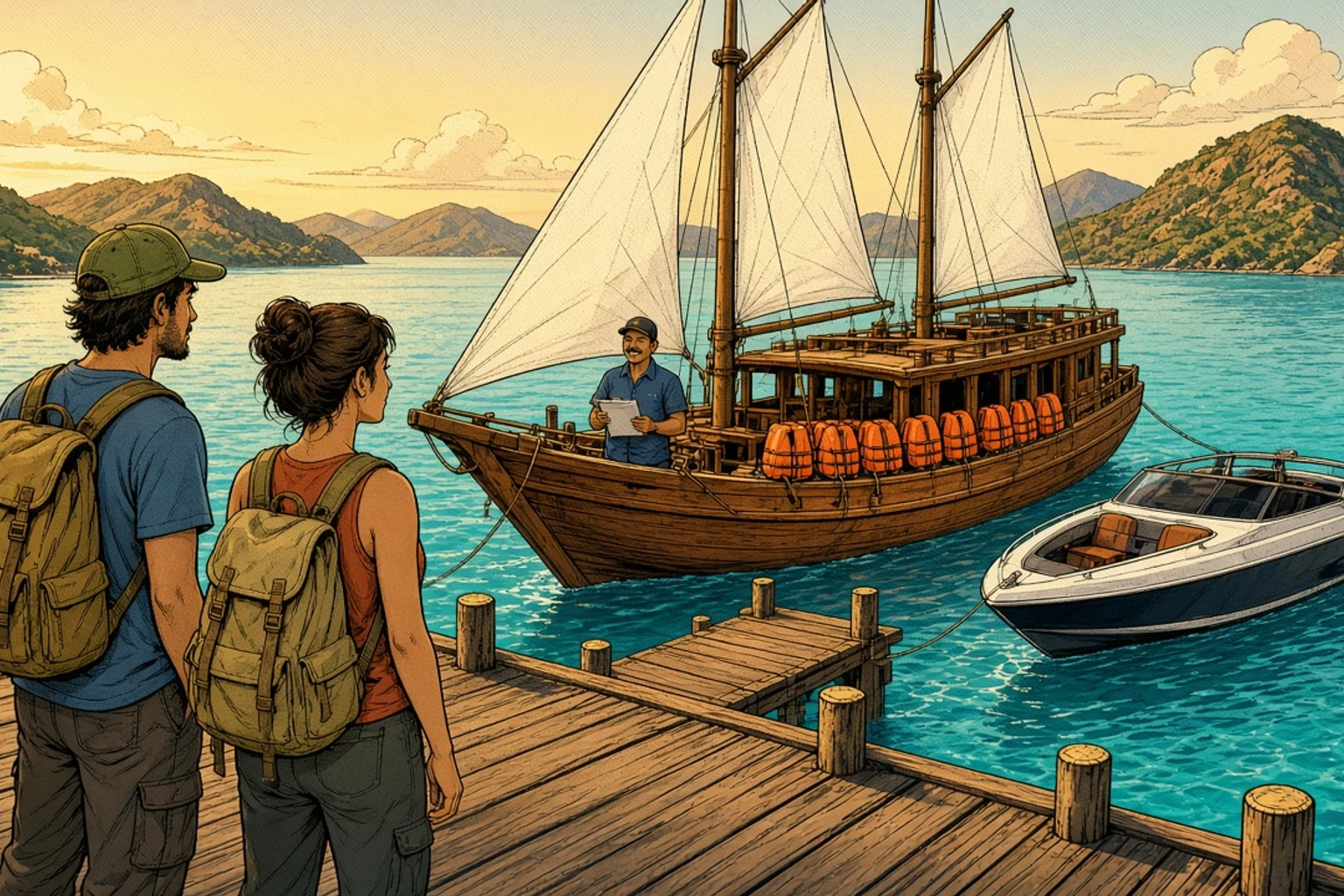
- Verificate gli aspetti fondamentali della sicurezza: giubbotti di salvataggio per tutti, radio funzionante o copertura telefonica, ed un equipaggio sobrio ed esperto. Nel parco si verificano incidenti in barca, quindi non è il caso di lesinare su questo aspetto. La nostra opinione sincera sulla sicurezza a Komodo tratta in dettaglio la sicurezza in barca.
- Diffidate dei prezzi stracciati. Se un operatore è molto più economico di tutti gli altri, chiedete il motivo prima di dare per scontato di aver trovato un affare.
Pro e contro di un viaggio in gruppo
Per dirla senza giri di parole:
- Pro: di gran lunga il modo più economico per visitare il parco con pernottamento; gruppo sociale immediato; non è richiesta alcuna pianificazione; tocca tutti i luoghi famosi; flessibilità nella prenotazione una volta arrivati.
- Contro: nessun controllo su date, itinerario o compagni di viaggio; il comfort varia molto; solo snorkeling (nessuna vera immersione); il ritmo fisso comporta poco tempo a ogni tappa; la qualità è incostante tra i vari operatori.
Chi dovrebbe scegliere un viaggio aperto?
Un viaggio aperto è l’ideale se viaggi da solo, sei un backpacker o una coppia che vuole vedere le attrazioni principali di Komodo in modo economico e non ti dispiace condividere la barca con sconosciuti (che spesso diventano amici già dal secondo giorno). È perfetto per chi è alla prima esperienza e desidera il classico giro senza dover organizzare nulla.
Non è la scelta giusta se cercate privacy, un itinerario personalizzato, immersioni impegnative o un alto livello di comfort e prevedibilità. In questi casi, un charter privato o una crociera subacquea sono un ottimo investimento. Le famiglie con bambini piccoli a volte preferiscono una barca privata per la maggiore flessibilità, anche se molte partecipano volentieri ai viaggi aperti; valutate i pro e i contro in base alle vostre esigenze pratiche nella nostra guida completa alle migliori cose da fare a Komodo.
Cosa mettere in valigia per un viaggio in gruppo
Lo spazio e l’energia elettrica sono limitati sulla maggior parte delle imbarcazioni per viaggi aperti, quindi preparate i bagagli con intelligenza:
- Una borsa impermeabile per proteggere i dispositivi elettronici dagli spruzzi e dalla pioggia
- Crema solare rispettosa della barriera corallina, un cappello e una maglia protettiva (il sole sull’acqua è cocente)
- Un power bank, poiché le prese di ricarica sono scarse e spesso condivise
- Compresse contro il mal di mare, se siete soggetti a mal di mare
- Contanti in rupie per i biglietti d’ingresso al parco, le bevande e le mance, poiché in mare non ci sono bancomat
- Un capo leggero per le notti fresche e le traversate ventose
- Sandali robusti o scarpe da ginnastica per le escursioni a Padar e al Drago
Per l’elenco completo, compreso ciò che non vale la pena portare, consulta la nostra lista delle cose da mettere in valigia per Komodo.
Galateo e consigli per i viaggi in gruppo
Alcune piccole attenzioni rendono la navigazione in barca condivisa molto più piacevole per tutti:
- Siate puntuali per le partenze e le attività di gruppo, poiché la barca non aspetterà a lungo.
- Tenete in ordine la vostra attrezzatura; lo spazio sul ponte è condiviso e limitato.
- Alzatevi per l’alba a Padar anche se siete stanchi, perché è lo scatto fotografico per cui tutti vengono qui.
- Abbiate un po' di pazienza per il ritmo del gruppo e siate molto disponibili con i vostri compagni di viaggio.
- Lasciate una mancia all’equipaggio alla fine del viaggio se si è preso cura di voi; non è obbligatorio, ma è molto apprezzato.
Abbinare un viaggio in barca aperta ad altre esperienze a Komodo
Un viaggio aperto non deve necessariamente costituire l’intera vacanza a Komodo. Molti viaggiatori integrano il viaggio in barca con qualche notte a terra all’interno o nei pressi del parco, il che vi garantisce un letto comodo, una doccia calda e la possibilità di fare immersioni o snorkeling al vostro ritmo prima o dopo la navigazione di gruppo. Poiché i viaggi aperti sono incentrati sullo snorkeling, abbinarne uno a una giornata dedicata allo snorkeling o alle immersioni subacquee guidate è il modo più semplice per approfondire la conoscenza della vita marina; la nostra guida allo snorkeling a Komodo illustra i luoghi migliori e come sfruttare al meglio le barriere coralline.
Questa combinazione, un viaggio aperto in gruppo per visitare le isole e i punti panoramici, più un soggiorno più tranquillo dedicato al mondo sottomarino, vi offre il meglio di entrambi i mondi: il risparmio e l’entusiasmo del viaggio di gruppo, e il comfort e la flessibilità di una base quando ne avete bisogno.
Un viaggio in gruppo fa al caso tuo?
Per la maggior parte dei viaggiatori indipendenti, un viaggio in gruppo è il modo più intelligente per vivere Komodo: conveniente, socievole e ricco di isole, varani, spiagge e incontri con le mante che rendono il parco famoso in tutto il mondo. Scegli un operatore affidabile, opta per l’itinerario di 3 giorni e 2 notti se hai tempo a disposizione, metti da parte un budget separato per i biglietti d’ingresso al parco e tornerai a casa con il viaggio che la maggior parte delle persone sogna quando immagina l’Indonesia.
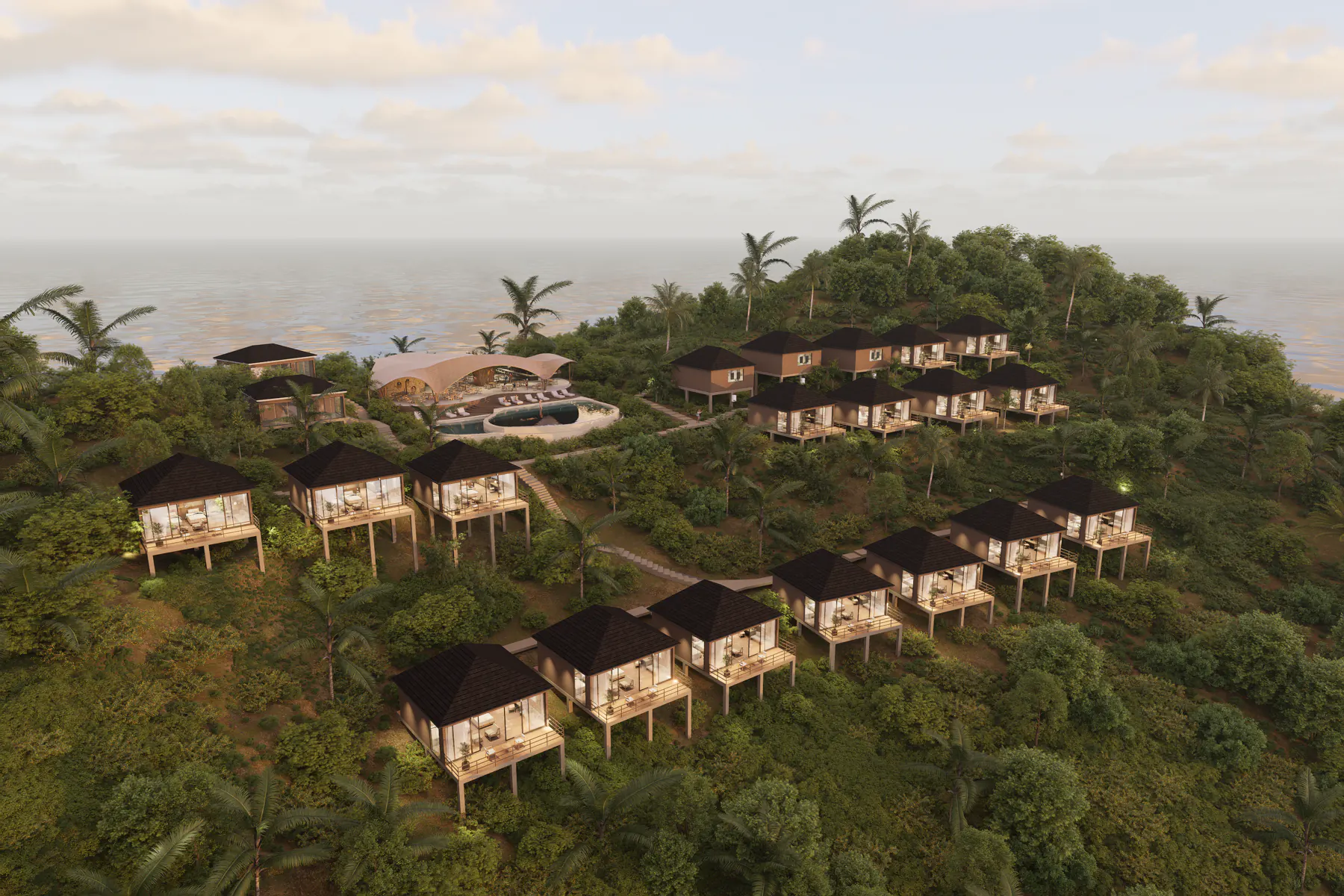
Se invece preferisci rinunciare all’esperienza in barca condivisa in cambio di comfort, privacy o una sistemazione all’interno del parco stesso, saremo lieti di aiutarti a organizzare un tour in barca privata, una crociera subacquea o un soggiorno in un resort. In ogni caso, le isole ti aspettano e non c’è un modo sbagliato per innamorarsi di Komodo.