Destinations
Banda Sea Liveaboard
Hammerheads, volcanoes and the Spice Islands on King Neptune and Neptune One
See departuresAbout
About Banda Sea Liveaboard
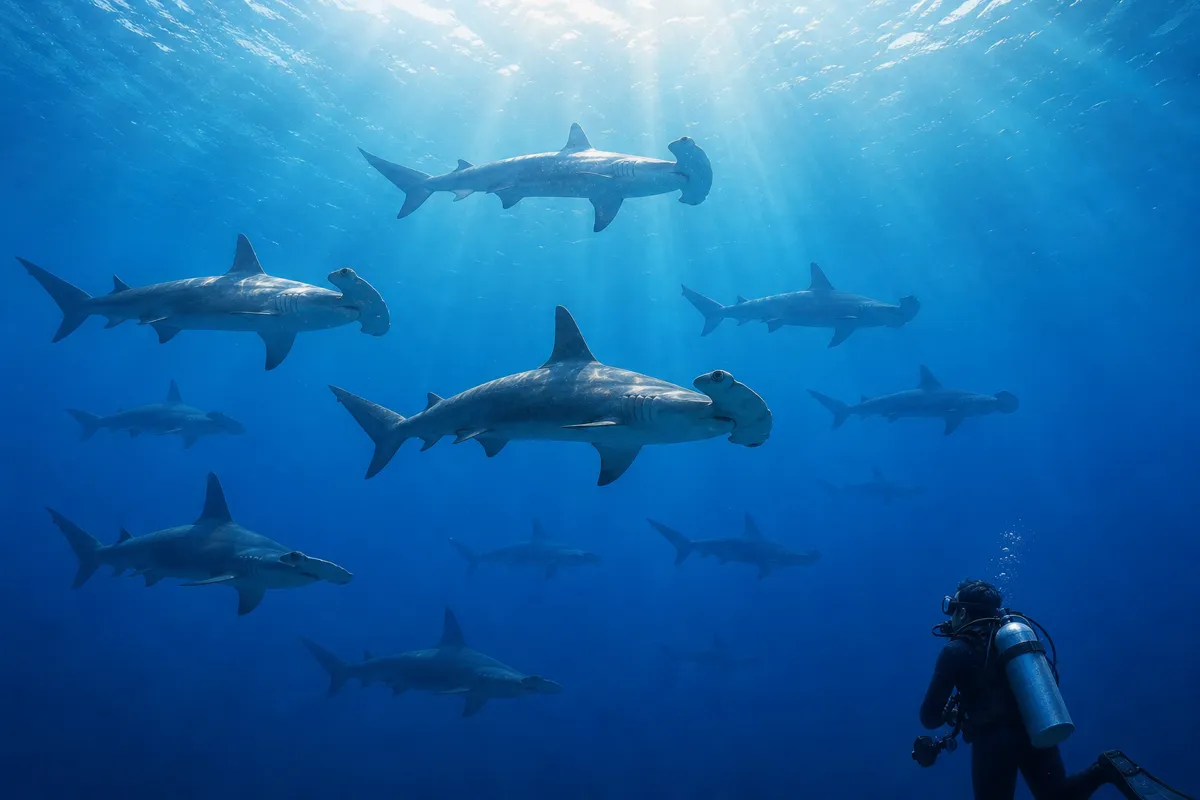
The Banda Sea is famous for pristine coral and for big animals, and above all for its schooling hammerhead sharks. It is a deep ocean basin ringed by volcanic islands, and almost untouched by tourism.
Our sister ships King Neptune and Neptune One sail here every season, with satellite internet and Nitrox blended on board by a Bauer membrane compressor. For background reading, see our Banda Sea liveaboard guide.
Our Trip Snapshot
- Flexible booking
- Hammerhead season
- Small dive groups
- Travel assistance
- Multilingual crew
Experience
The Banda Sea Experience
The Banda Sea is made for experienced divers. Deep dives in cooler water and strong, changeable currents are exactly what draw the hammerheads here, and the reward is a spectacle few divers ever see.
Hammerhead season
The season is short, from September to early November, and October is the best month for hammerheads. Dives focus on sites such as Suanggi, Serua and Hatta, with whales sometimes seen on the crossings.
What to expect
This is a remote region. Reaching Ambon takes several flights, internet at sea can be limited, and the day usually holds three or four dives, depending on the weather.
Our routes
Our trips cross the Ring of Fire to the remote outer islands. Round trips start in Ambon, and longer crossings link the Banda Sea with Raja Ampat, Triton Bay, Alor and beyond.
Dive sites
Top Dive Sites in the Banda Sea
Remote volcanic islands, deep walls and blue water encounters make the Banda Sea some of the most exciting diving in Indonesia.
Hatta Island wall
Advanced↕ 10–40m
A vertical wall into the abyss with a hammerhead cleaning station, schooling barracuda and pristine hard coral.
Suanggi Island
Advanced↕ 15–40m
A remote, open-ocean site known for big groups of hammerheads, oceanic whitetip sharks and other large pelagics.
Gunung Api lava flow
All levels↕ 5–30m
Lava from the 1988 eruption, now covered in some of the fastest-growing coral ever recorded, with banded sea kraits all over the reef.
Nusa Laut corner
Advanced↕ 12–35m
A current-swept point where hammerheads patrol the blue, eagle rays pass by and big schools of trevally hunt together.
Banda Neira harbour
All levels↕ 5–25m
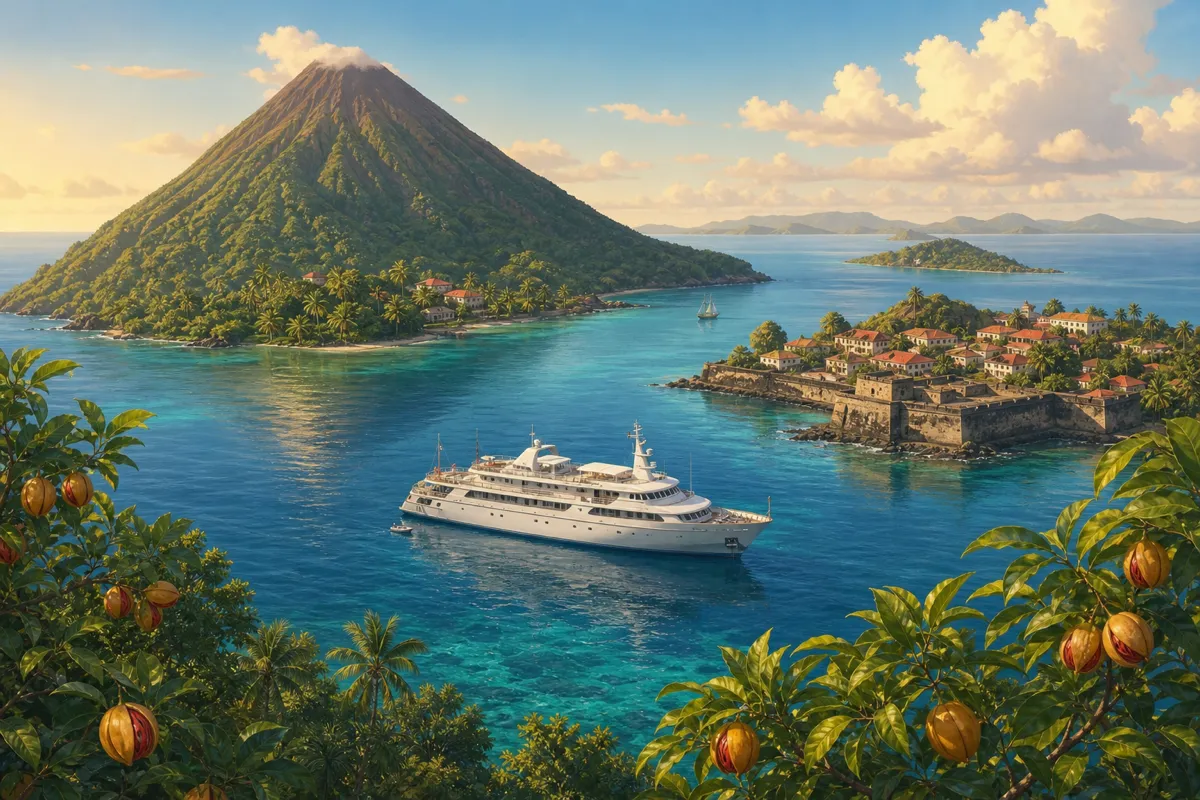
Coral gardens and wartime relics below the old colonial town, with nutmeg forts to explore between dives.
Run Island drop-off
Intermediate↕ 10–40m
A dramatic wall with terraces of hard coral and Napoleon wrasse, and the occasional whale in the deep channel.
Best time to visit
Banda Sea Diving Season Calendar
The Banda Sea season runs from September to early November, and October is the peak month for hammerheads. A few crossings also pass through in March and April as the boats move between regions.
| Month | Water temperature | Visibility | Currents | Season highlight |
|---|---|---|---|---|
| Jan | 28°C | 15–20m | Moderate | Off-season |
| Feb | 28°C | 15–20m | Moderate | Off-season |
| Mar | 29°C | 15–25m | Mild | Crossings between regions |
| Apr | 29°C | 15–25m | Mild | Crossings between regions |
| May | 28°C | 15–20m | Mild | Off-season |
| Jun | 27°C | 15–20m | Mild | Off-season |
| Jul | 27°C | 15–25m | Moderate | Off-season |
| Aug | 27°C | 15–25m | Moderate | Off-season |
| Sep | 27°C | 25–35m | Moderate | Season opens |
| Oct | 27°C | 30–40m | Moderate | Peak season, best for hammerheads |
| Nov | 28°C | 30–40m | Moderate | Season ends in early November |
| Dec | 28°C | 20–30m | Strong | Off-season |
Recommended months
Conditions
Water Conditions and Gear
- Temperature
- 26–29°C (79–84°F)
- Visibility
- 25–40m (80–130ft)
- Currents
- Moderate to strong; a reef hook is essential
- Best visibility
- October to early November
- Thermoclines
- Rare; the water stays warm
- Wetsuit
- 3mm full wetsuit
- Certification
- Advanced Open Water and 50 logged dives
- Nitrox
- Highly recommended for the deep wall dives
Marine life
What You Will See in the Banda Sea
The Banda Sea is one of Indonesia’s last frontiers: deep ocean water where hammerheads, pods of whales and colonies of sea snakes make every trip memorable.
Sharks and rays
- Scalloped hammerhead sharks
- Oceanic whitetip sharks
- Grey reef sharks
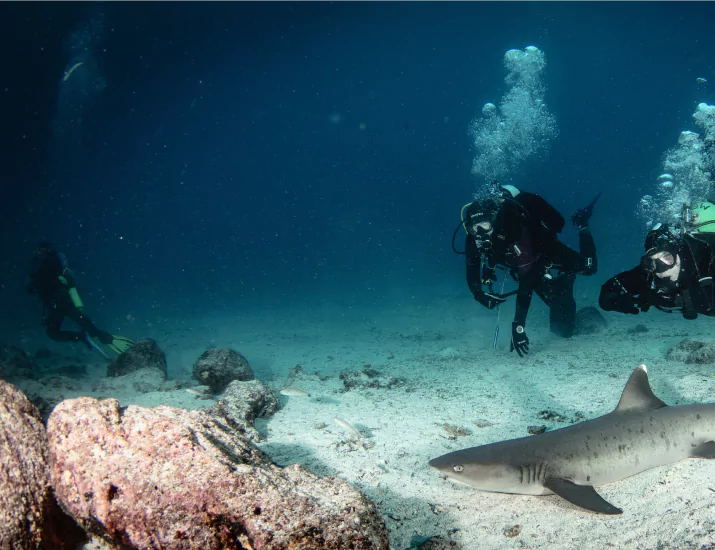
- Whitetip reef sharks
- Eagle rays
Marine mammals
- Large pods of pilot whales
- Spinner dolphins
- Sperm whales in season
- Melon-headed whales
Pelagics
- Giant trevally
- Dogtooth tuna
- Wahoo
- Schooling barracuda
- Mola in season
Unusual species
- Huge colonies of banded sea kraits
- Mandarinfish
- Napoleon wrasse
- Bumphead parrotfish
Reef life
- Pristine hard coral walls
- Gorgonian sea fans
- Barrel sponges
- Clownfish
- Clouds of anthias
Travel
How to Get to the Banda Sea
Most Banda Sea trips start in Ambon, the capital of Maluku. Ambon’s Pattimura airport (AMQ) has daily flights from Jakarta and Makassar. Arrive at least a day early, as connections in eastern Indonesia are often delayed.
Crossings also start or finish in Sorong, Kaimana, Alor, Ternate or Bau-Bau, so check the route in the trip name. Our team helps you plan the flights, and transfers in Ambon are included.
Departure port: Ambon, Maluku
Pattimura Airport (AMQ) has daily flights from Jakarta and Makassar.
Departure ports can change. Our reservations team confirms the exact meeting point when you book.
Travel tips
Tips for Travellers
- 1
Plan around the season
Come between September and early November, when the hammerheads are at their peak and the sea is at its calmest.
- 2
Take out travel insurance
Reaching Ambon takes several flights. Choose a policy that covers delays and cancellations as well as diving emergencies and evacuation.
- 3
Prepare for the diving
We recommend Advanced Open Water and at least 50 logged dives. Many sites have deep walls, strong currents and blue water dives.
- 4
Dive gently
The Banda Sea is a fragile ecosystem. Avoid single-use plastic, never touch the marine life and leave the reef as you found it.
Travel essentials
Practical Travel Information
- Visa
- Most nationalities can buy a 30-day visa on arrival, extendable once. Your passport must be valid for at least six months.
- Currency
- Indonesian rupiah (IDR). There are very few ATMs in the Banda Islands, so withdraw all the cash you need in Ambon or Bali.
- Language
- Bahasa Indonesia is the national language. Our dive guides and crew speak English.
- Tipping
- Tipping the crew is customary. As a guide, guests leave Rp 270,000 to 360,000 per person per day.
- What to pack
- A reef hook, reef-safe sunscreen, seasickness tablets, a warm layer for night crossings and your underwater camera.
- Health
- No vaccinations are required; hepatitis A and B and typhoid are recommended. Dive insurance is strongly advised, as the nearest recompression chamber is in Ambon.
- Electricity
- 220V, 50Hz, with European two-pin plugs (types C and F). Bring a universal adapter.
- Time zone
- Eastern Indonesia Time (WIT), UTC+9, two hours ahead of Bali.
Our itinerary
Explore the Banda Sea
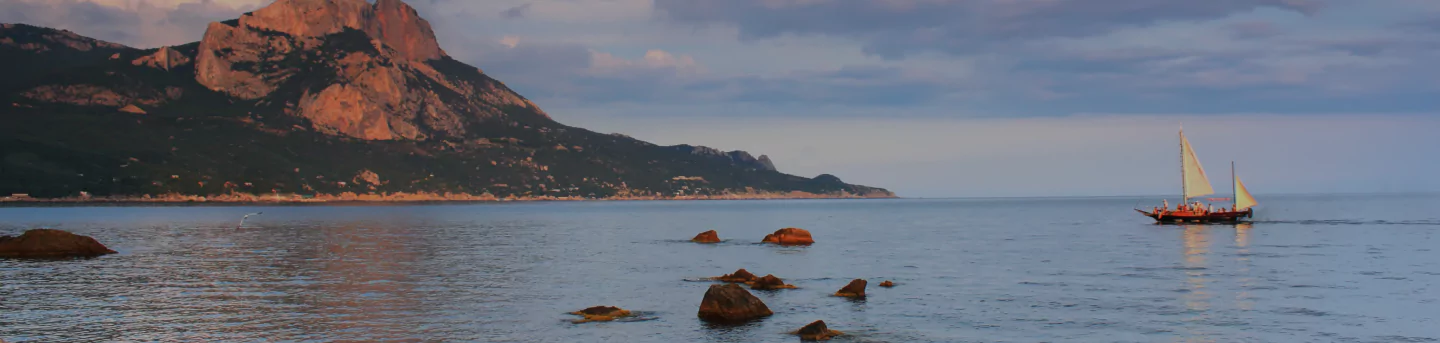
Our Banda Sea trips cross the Ring of Fire to the remote outer islands, with hammerhead dives, volcanic walls and the historic Spice Islands. Round trips start in Ambon, and crossings link the Banda Sea with Raja Ampat, Triton Bay, Alor, Wakatobi and Halmahera. There is something for wide-angle and macro photographers alike.
Schedule
Upcoming Banda Sea Trips
Live availability and prices. Crossings that pass through the Banda Sea are included.
The fleet
Choose Your Boat
King Neptune
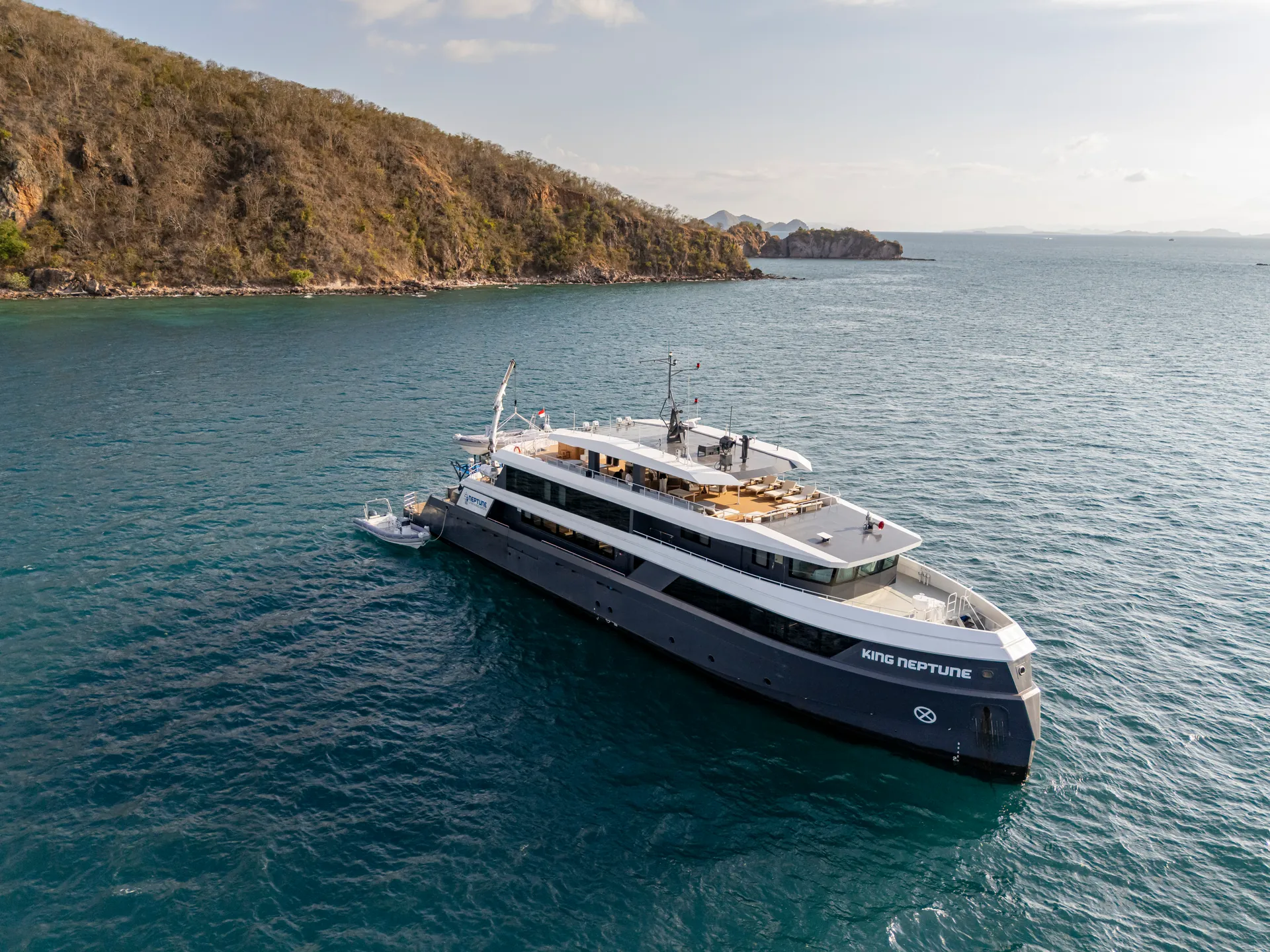
A 46-metre motor yacht with 10 en-suite cabins for up to 22 guests, a jacuzzi on the sun deck, a camera station and two dive tenders. Nitrox is blended on board.
Neptune One
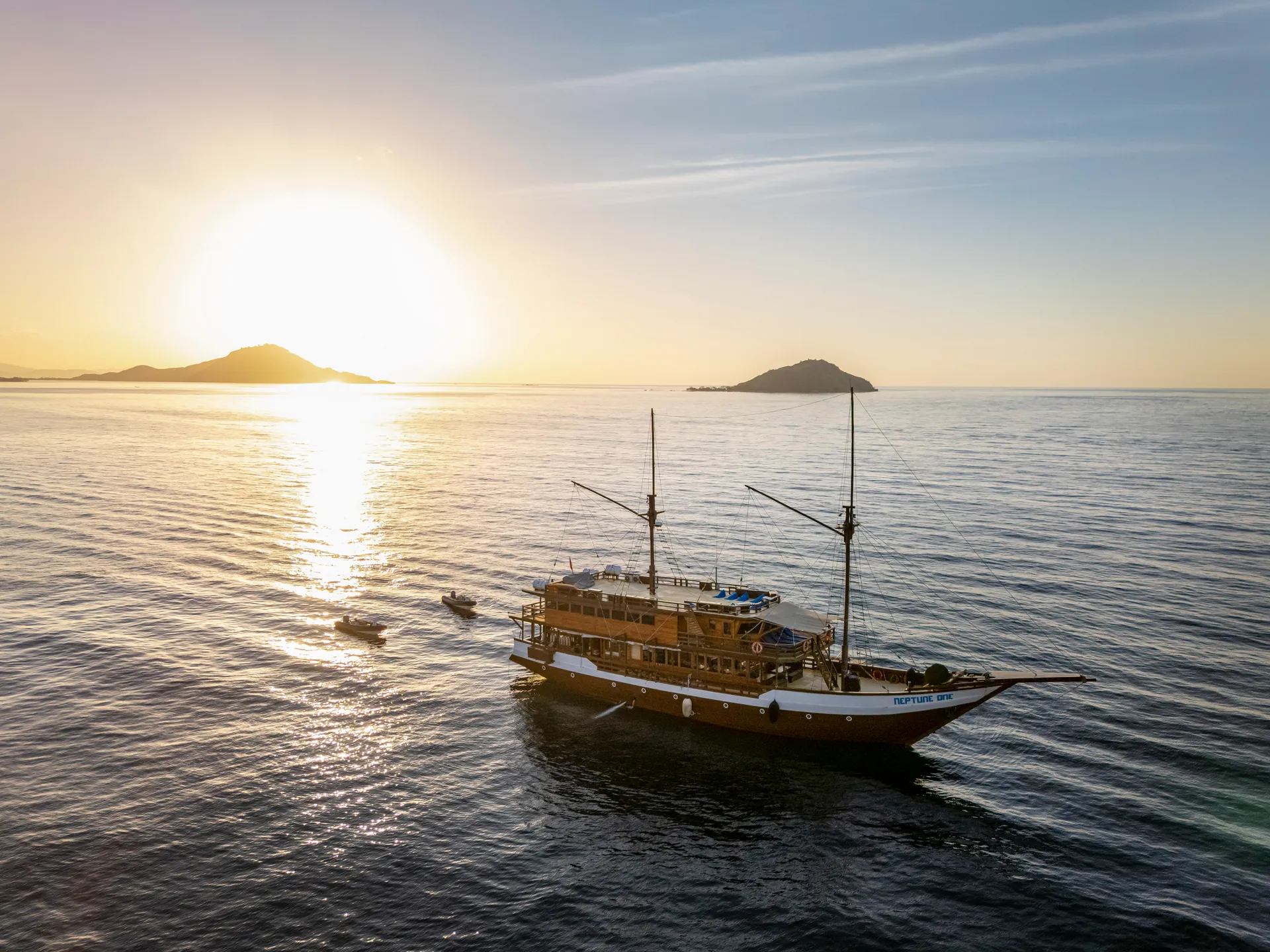
A 39-metre phinisi with 8 cabins for 16 guests, including balcony cabins and a deluxe suite. A smaller group, Nitrox on board and free satellite internet.
Your trip
What Your Trip Includes
Included in the price
- Cabin accommodation with en-suite bathroom
- Airport and hotel transfers in Ambon on departure and return days
- All scheduled dives, with tanks, weights and weight belts
- Three meals and three snacks a day
- Coffee, tea and snacks all day
- Unlimited satellite internet
- Snorkelling gear
- A maximum of four divers per guide
- Stand-up paddle boards and kayaks
Not included
- Nitrox
- Rental equipment such as BCD, regulator and wetsuit
- Single cabin supplement
- Park and port fees
- Private dive guide
- Alcohol and soft drinks
- 15-litre tanks
FAQ
Frequently Asked Questions
When is the best time to dive the Banda Sea?
The season runs from September to early November, and October is the peak month, with the most reliable hammerheads and 30 to 40 metres of visibility. The water is 26 to 29°C. A few crossings also pass through in March and April as the boats move between regions.
Where do Banda Sea liveaboard trips start?
Most trips are round trips from Ambon (Pattimura airport, AMQ), which has flights from Jakarta and Makassar. Crossings also start or finish in Sorong, Kaimana, Alor, Ternate or Bau-Bau, so check the route in the trip name.
What marine life can I expect in the Banda Sea?
Schooling hammerheads, oceanic whitetip sharks, big pods of pilot whales and dolphins, eagle rays, giant trevally and pristine coral walls full of reef fish.
What diving experience do I need for the Banda Sea?
We recommend Advanced Open Water certification and at least 50 logged dives. Many sites have deep walls, strong currents and blue water dives, and you will need to be comfortable using a reef hook.
Is there a recompression chamber nearby?
The nearest chamber is in Ambon. Our boats carry emergency oxygen and the crew is trained in dive emergency procedures, but dive insurance with evacuation cover is essential.
Explore more
See Other Destinations
Komodo
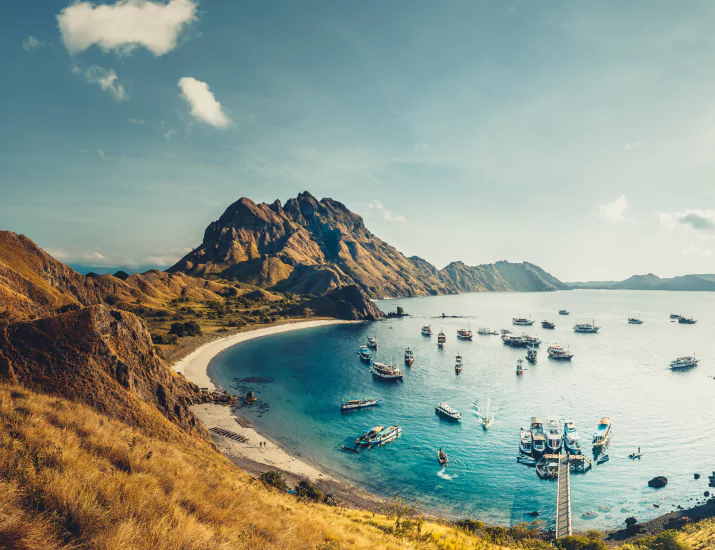
Manta rays, strong-current reefs and the Komodo dragons, in a UNESCO World Heritage national park.
Explore →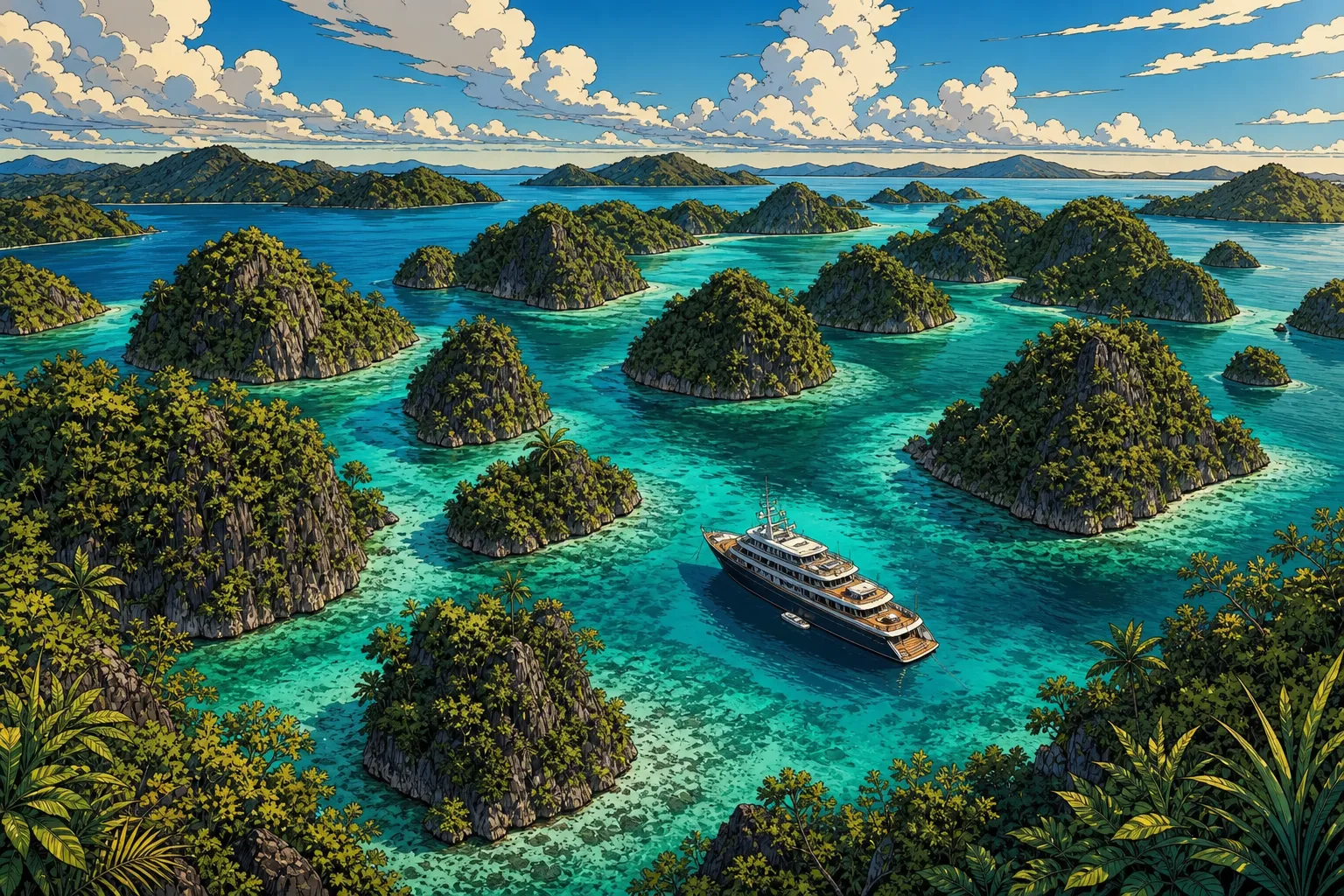
Raja Ampat
The richest reefs on the planet, with more than 1,500 fish species and manta cleaning stations.
Explore →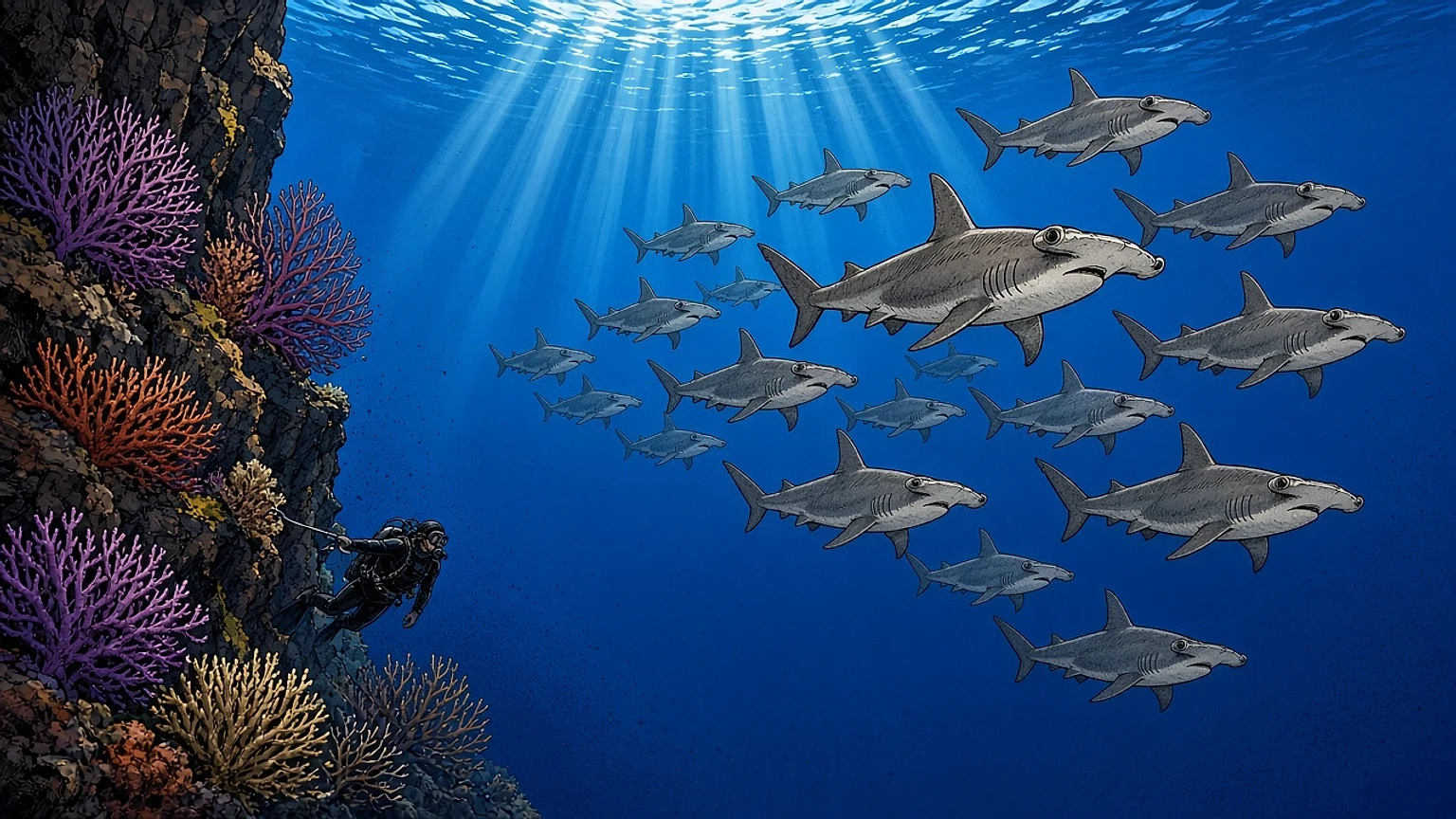
Alor
Black sand critter dives, cold clear walls and quiet reefs at the eastern end of the Lesser Sundas.
Explore →Get in Touch
Have a question? We'd love to hear from you. Send us a message and we'll respond as soon as possible.
Contact Us