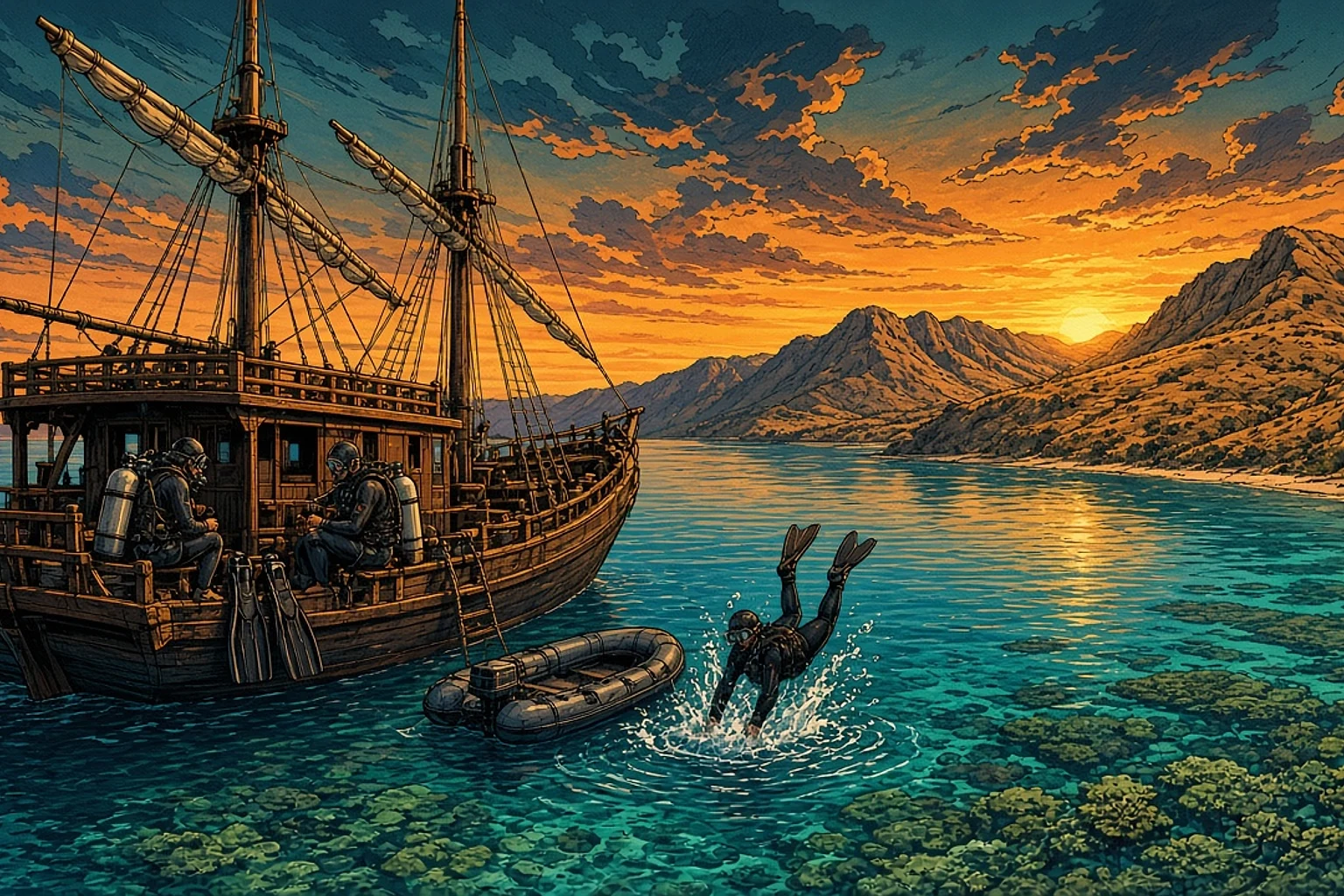
Far to the east of Komodo, in the deep waters between Sulawesi and Papua, lies a region that most divers have heard of but few have actually visited. The Banda Sea is one of the last true frontiers of Indonesian diving: a vast stretch of open ocean dotted with remote volcanic islands, seamounts that rise from thousands of meters of depth, and reefs that see only a handful of boats each year.
This is the home of the legendary schooling hammerheads, the sea snake gatherings of Manuk, and the historic Spice Islands that once made this region the most valuable real estate on Earth. Because there are no airports, resorts, or day boats out here, the Banda Sea can only be explored one way: by liveaboard. Luxury vessels like King Neptune cross the Banda Sea on seasonal routes, combining world-class diving with one of the most fascinating historical regions in Asia.
Why the Banda Sea Is Special
The Banda Sea is deep. Really deep. Parts of it plunge past 6,500 meters, making it one of the deepest seas in the world. That depth matters for divers, because it means oceanic species that rarely approach coastlines elsewhere come close to the surface here. Seamounts and island walls act as gathering points for pelagics, and the isolation has kept the reefs in near-pristine condition.
Three things define diving in the Banda Sea:
- Schooling hammerhead sharks. The Banda Sea is one of the very few places on the planet where you can reliably encounter scalloped hammerheads in schools, sometimes dozens strong, during the right season.
- Untouched reefs and walls. Sites around the Banda Islands, Nila, Serua, and Manuk feature coral coverage that rivals anywhere in Indonesia, with visibility often exceeding 30 meters.
- True remoteness. You will often be the only boat at a dive site. In a week of crossing, you may not see another dive group at all.
The Spice Islands: Diving Through History
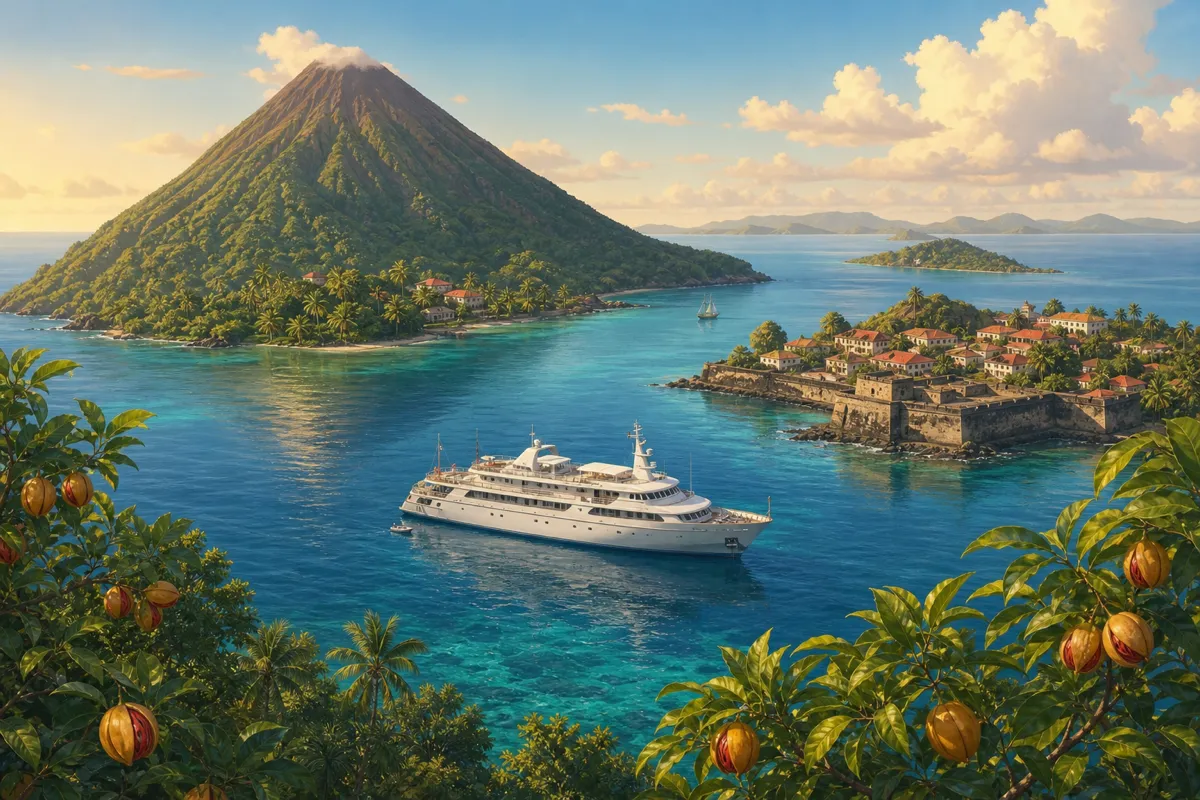
The Banda Islands are the original Spice Islands. For centuries, these ten tiny volcanic islands were the world's only source of nutmeg and mace, spices once worth more than gold by weight. The Dutch and English fought wars over them, and in one of history's most famous trades, the Dutch swapped Manhattan for the tiny Banda island of Run in 1667.
Today, liveaboard guests can walk through the old nutmeg plantations, visit the colonial fort of Belgica above Banda Neira, and dive lava flows from the 1988 eruption of Gunung Api, where hard corals have regrown over the black rock at an astonishing speed. The mix of history, culture, and diving makes the Banda Islands stop one of the most memorable of any Indonesian itinerary.
Signature Dive Experiences
Hammerhead Season
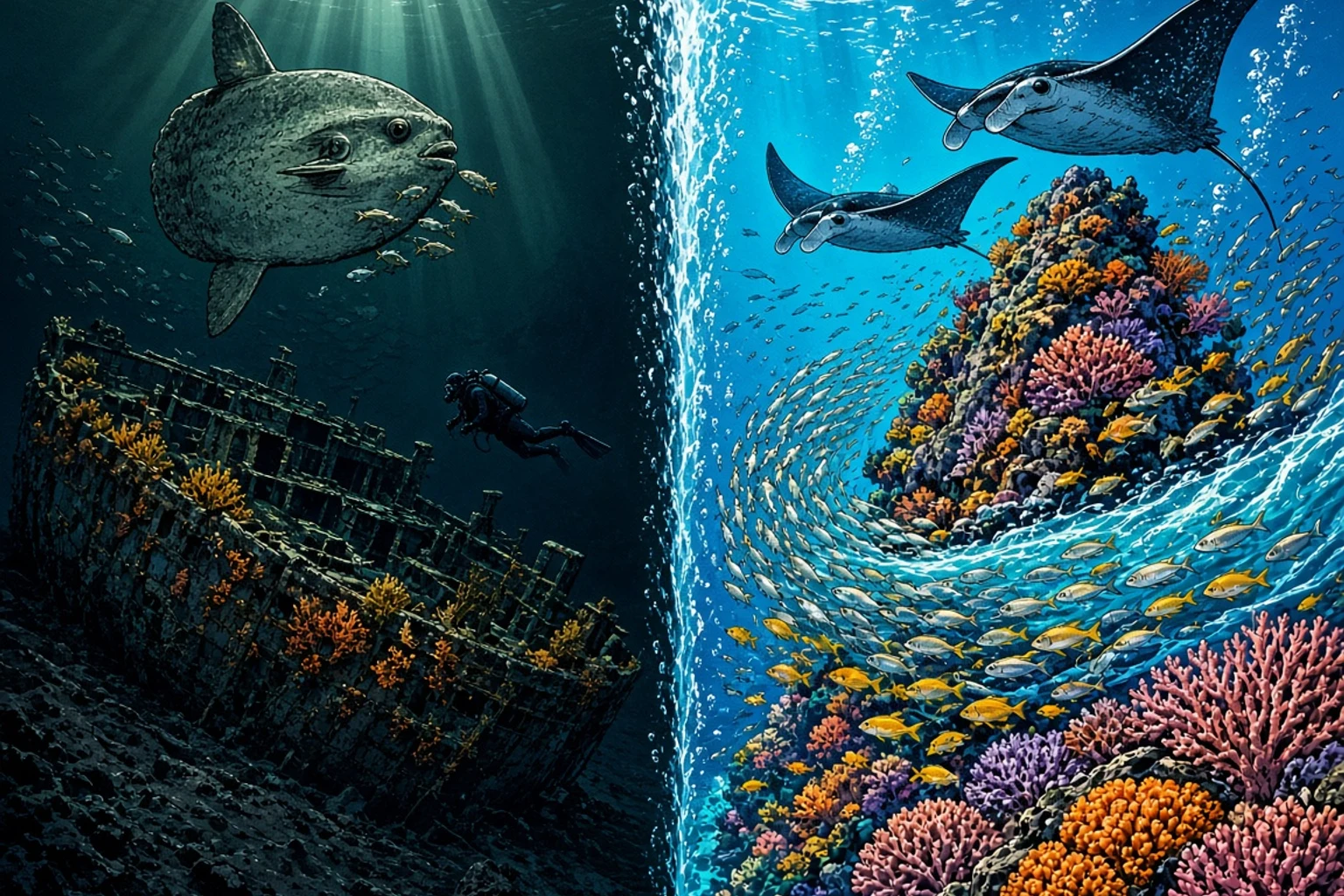
The main event. Scalloped hammerheads school in the Banda Sea during the crossing seasons, with the most reliable encounters around seamounts and islands like Nila and Serua. Dives often involve hanging in the blue along a wall or seamount edge, watching the depths until the unmistakable silhouettes appear. Encounters are never guaranteed, but during peak season the odds are as good as anywhere in the world.
The Sea Snakes of Manuk
Manuk is an uninhabited volcanic island in the middle of the Banda Sea, and it is famous for one thing: sea snakes. Olive and banded sea kraits gather here in remarkable numbers, hunting across the reef and often approaching divers with complete indifference. They are venomous but famously docile, and diving among dozens of them is a surreal experience found almost nowhere else.
Walls, Seamounts, and Big Blue
Beyond the headline acts, the Banda Sea delivers consistently excellent wall and seamount diving: huge gorgonian fans, schooling fusiliers and jacks, dogtooth tuna, mobula rays, and regular encounters with reef sharks. The volcanic islands of the ring of fire, including Gunung Api and Serua, offer dramatic underwater topography that mirrors the cones rising above the surface.
When to Go: Banda Sea Crossing Seasons
The Banda Sea is a seasonal destination. Liveaboards cross it twice a year, timed to the calm windows between monsoons:
- March to April: The first crossing window, as boats reposition between Raja Ampat and Komodo at the end of the Raja Ampat season.
- September to November: The main season, when boats cross back east toward Raja Ampat. October is widely considered the sweet spot for hammerhead encounters, with calm seas and excellent visibility.
Outside these windows, the open ocean is too rough for comfortable crossings, and boats operate their home regions instead: Komodo from May to September and Raja Ampat from November to March. If your schedule does not line up with a crossing, our guides to Komodo liveaboard diving and Raja Ampat liveaboards cover the alternatives in each season.
Typical Banda Sea Itineraries
Most Banda Sea trips are crossings between Maumere or Ambon and last 10 to 12 nights, longer than a typical Komodo itinerary. A classic route looks like this:
- Days 1-2: Departure from Maumere (Flores) or Ambon, with warm-up dives on local reefs.
- Days 3-5: Remote volcanic islands: Serua, Nila, and Manuk. Hammerhead watches in the blue and sea snake dives.
- Days 6-8: The Banda Islands: wall dives, the Gunung Api lava flows, and a land tour of Banda Neira's forts and nutmeg plantations.
- Days 9-11: Eastern reefs and atolls toward Ambon or onward to Raja Ampat, ending with the famous muck diving of Ambon Bay on some routes.
Because crossings connect two regions, many divers combine a Banda Sea trip with time in Komodo or Raja Ampat on either end. Flights to the departure ports connect through Bali or Jakarta; see our Bali to Komodo and Jakarta to Komodo guides for the western connections.
Who Should Dive the Banda Sea?
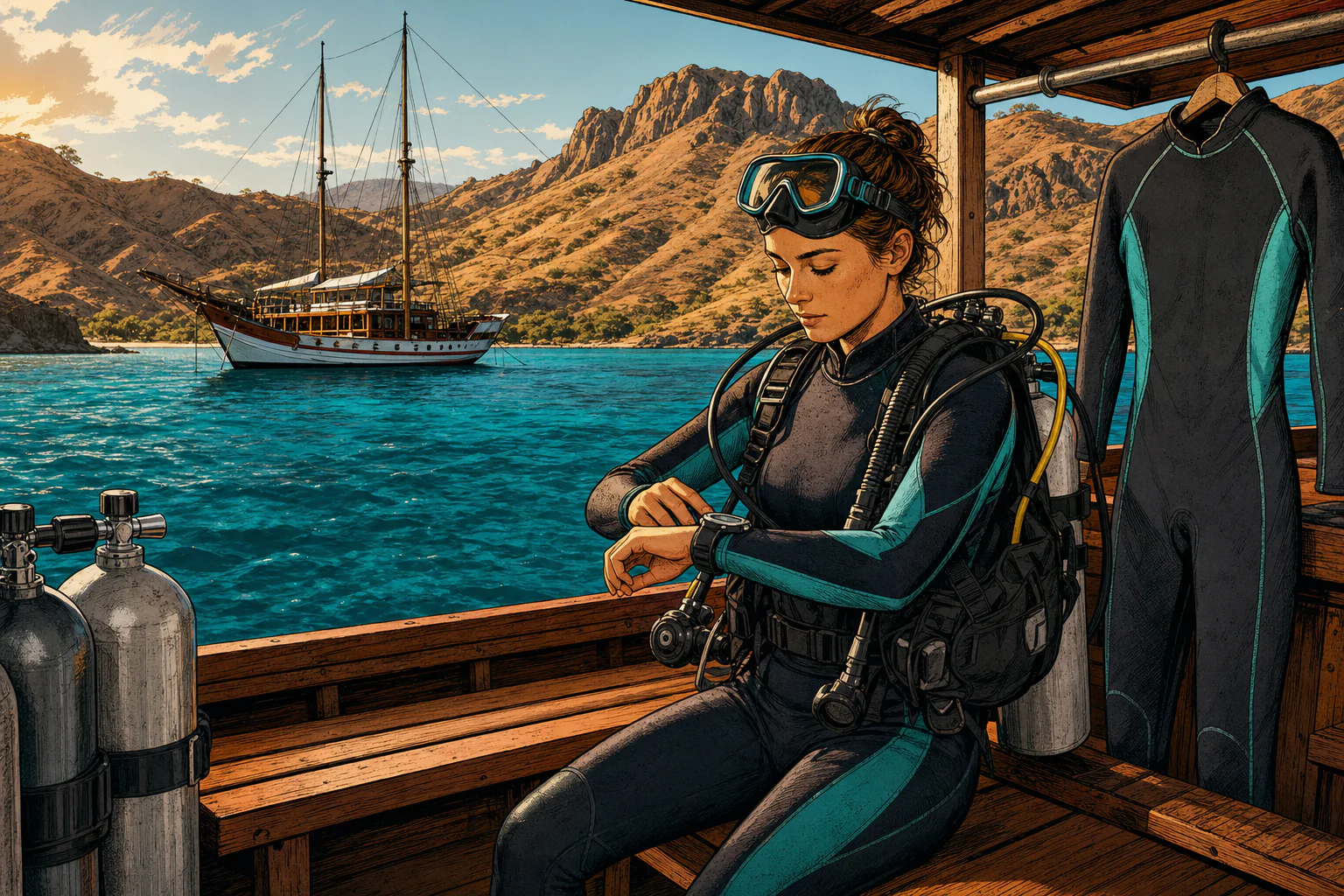
The Banda Sea rewards experience. Most operators recommend at least 30 to 50 logged dives, and an Advanced Open Water certification is typically required. Many dives involve blue-water hangs, depth, and occasional current, and the remoteness means you should be a confident, self-sufficient diver. It is not a destination for a first liveaboard; if that is you, Komodo is a friendlier starting point with equally spectacular diving.
For experienced divers, though, the Banda Sea delivers something increasingly rare: genuine exploration. No crowds, no mooring queues, and dive sites that still feel wild.
Crossing the Banda Sea on King Neptune
King Neptune, the newest luxury liveaboard in the Neptune fleet, runs seasonal crossings through the Banda Sea between Komodo and Raja Ampat. Launched in 2025, the 46-meter vessel carries just 22 guests in 10 en-suite cabins, with a spacious dive deck, sun decks, and a crew experienced in remote-ocean expeditions.
A Banda Sea crossing on a vessel of this class combines frontier diving with genuine comfort: nitrox for the repetitive deep profiles, tenders for flexible site access, and long-range capability that smaller boats lack. Cabins for crossing seasons sell out well in advance, often a year or more ahead, so early booking is essential. You can view upcoming trips, cabin options, and pricing on the King Neptune page, or reach out through our contact page for route advice.
For divers who have already fallen in love with Komodo and Raja Ampat, the Banda Sea is the natural next step: the wildest, deepest, most storied stretch of ocean in Indonesia, and one of the last places where diving still feels like discovery.