Scuba diving has a funny relationship with paperwork. The ocean itself asks for no qualifications, yet the little plastic card in a diver's wallet decides which boats will take them, which sites they can visit, and how deep the day's plan is allowed to go. If you have ever wondered what all those certification names actually mean, Open Water, Advanced, Rescue, Divemaster, and which ones are worth your money, this guide untangles the whole ladder. At our PADI 5-star dive center we take guests through every rung of it, from a first breath underwater to professional level, and the system makes a great deal of sense once someone lays it out honestly.
Two things before we start climbing. First, certifications never expire, which is both a blessing and a small trap we will come back to. Second, the levels are not a treadmill: the overwhelming majority of divers stop at Open Water or Advanced and enjoy spectacular diving for the rest of their lives, including nearly every site in Komodo National Park and every Komodo liveaboard itinerary. The higher rungs exist for people who discover, somewhere around their twentieth dive, that they do not want to stop. You will know if that is you.
How the Certification System Works
Recreational diver training is run by agencies, private organisations that set standards, train instructors, and issue certifications. PADI is the largest and the one most people know; SSI is its biggest rival; CMAS, RAID, NAUI, and BSAC serve their own regions and niches. The agencies compete commercially but their entry and mid-level courses are deliberately equivalent, calibrated against shared international standards. In practice this means a dive center anywhere on earth will accept a card from any mainstream agency, and you can start with one agency and continue with another without repeating anything. Divers overthink the choice of agency; instructors matter far more than logos.
Every course combines three ingredients in some proportion: theory (nowadays mostly done online at your own pace before you travel), confined water practice (a pool or pool-like shallows where skills are learned without consequence), and open water dives (where you demonstrate those skills in the real sea). Pass the performance requirements and the certification is yours, for life, recognised worldwide.
That "for life" clause deserves its footnote: skills rust. If two or more years pass between dives, expect any reputable operator to suggest a refresher, a short guided session in calm water to shake the rust off. It is not a sales tactic; it is the difference between an anxious first dive back and a wonderful one. We run refreshers weekly on the house reef, and they take an hour.
Before Certification: the Try Dive
Programs like PADI's Discover Scuba Diving are not certifications; they are a supervised taste of the sport, and an excellent one. After a briefing and shallow-water practice, an instructor takes you on a real reef dive to a maximum of 12 metres, doing the technical work while you concentrate on breathing, looking, and grinning around your regulator. There is no exam, no homework, and no commitment, and in a destination like Komodo the try dive happens somewhere most certified divers would happily log: turtles, reef sharks, and coral gardens included. Our full guide to trying scuba diving in Komodo walks through the day hour by hour. Many try divers convert their experience toward the Open Water course within the same trip, which most centers, ours included, credit toward the full course.
Open Water Diver: the Card That Opens the Ocean
This is the certification, the one people mean when they say "getting certified". The Open Water Diver course teaches you to plan and make dives to 18 metres with a buddy, without professional supervision. It typically takes three to four days: online theory finished before or during the trip, two days of confined-water skills, and four open water dives where you prove you can clear a flooded mask, recover a lost regulator, manage your buoyancy, share air with a buddy, and bring yourself calmly to the surface.
Eighteen metres sounds modest until you understand, as our guide to how deep you can scuba dive explains in detail, that the majority of the tropical ocean's life and color lives above that line. An Open Water card unlocks manta cleaning stations, turtle-grazed coral gardens, and most of the signature sites of Komodo. Prerequisites are light: reasonable health, basic swimming ability, and a minimum age of 10 for the junior version (with depth restrictions until 15). The skills that give students the most grief, ear equalization above all, are covered in our guides to equalizing your ears and underwater hand signals, both worth reading before day one. The complete picture of doing the course here, timing, conditions, what the days feel like, is in our guide to learning to dive in Komodo.
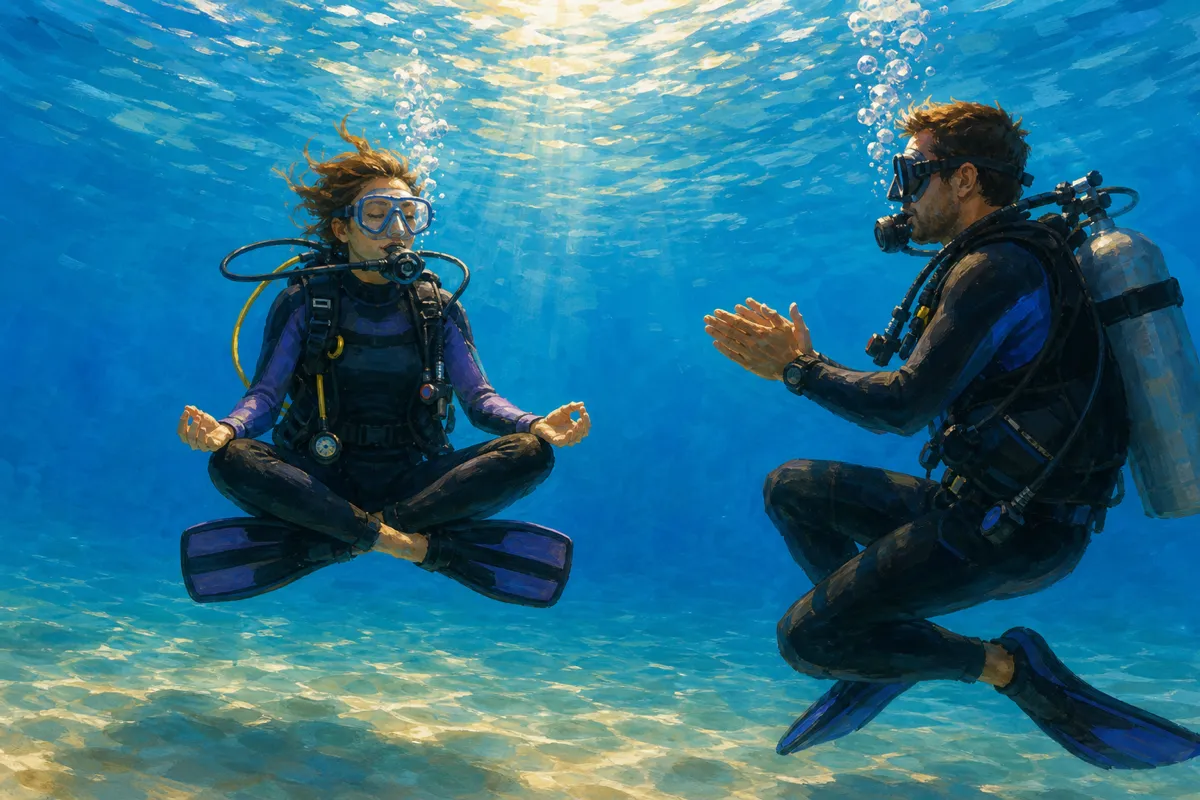
Advanced Open Water: Depth, Navigation, and Range
The name misleads: Advanced Open Water is not for advanced divers. It is the second course, designed to be taken any time after the first, even immediately, and it is best understood as five supervised experience dives that stretch your range. Two are compulsory: a deep dive beyond 18 metres, extending your certified limit to 30, and an underwater navigation dive, teaching you to actually find your way with a compass and natural references instead of following a guide's fins. The remaining three are electives sampled from the specialty catalogue: night diving, drift diving, wreck basics, buoyancy mastery, underwater photography, fish identification, and more.
The 30-metre limit matters less for bragging rights than for access: some celebrated sites simply have their best features below 18 metres, and many operators, especially liveaboards visiting current-swept sites, prefer or require Advanced certification. In Komodo, Advanced opens the deeper pinnacle bases and makes you eligible for every site in the park's rotation. If you are planning a diving trip here and hold only Open Water, doing the Advanced course during your stay is the single most useful upgrade you can buy, and the elective dives happen on world-class reefs rather than a training quarry. Drift diving, unsurprisingly, is the elective we recommend most; our guide to Komodo's dive sites explains why current is the park's engine.
Rescue Diver: the Course Every Diver Raves About
Ask experienced divers which course changed them most and the answer is nearly unanimous: Rescue. This is the level where the focus turns outward, from managing yourself to noticing and helping others. Over two to three days you learn to spot stress in another diver before it becomes panic, to manage a panicked diver at the surface and underwater, to search for and surface an unresponsive diver, and to run the first minutes of an emergency until professionals arrive. A current first aid and CPR qualification (such as Emergency First Response) is a co-requirement, usually taught alongside.
The course has a reputation for being demanding and hilarious in roughly equal measure, instructors take genuine pleasure in staging surprise "emergencies", and it quietly rewires how you dive. Rescue-trained divers position themselves better, watch their buddies differently, and carry a calm that newer divers can feel. It is also the gateway requirement for everything professional. If you intend to spend your life diving, this is the level where the sport starts giving back more than it asks.
Specialties and Master Scuba Diver
Alongside the main ladder runs a catalogue of specialty courses, one or two days each, that deepen a specific skill: deep diving (to the recreational 40-metre limit), enriched air nitrox (longer bottom times on multi-dive days, particularly beloved on liveaboards), night diving, drift diving, peak performance buoyancy, wreck diving, underwater photography and videography, fish identification, search and recovery. Nitrox is the most purchased specialty in the world and pairs naturally with a liveaboard diving trip, where four dives a day make its benefits obvious. Photographers will find our underwater photography guide a useful preview of that specialty's content.
Collect five specialties, plus Rescue, plus fifty logged dives, and PADI awards the Master Scuba Diver rating, the highest recreational recognition. It is a milestone rather than a course, no new training, just proof of breadth, and opinions differ on its value. Our honest take: chase the specialties your diving actually needs and let the rating arrive if it arrives. A diver with nitrox, deep, and drift specialties chosen for real trips beats a card collector every time.
Divemaster: Turning Professional
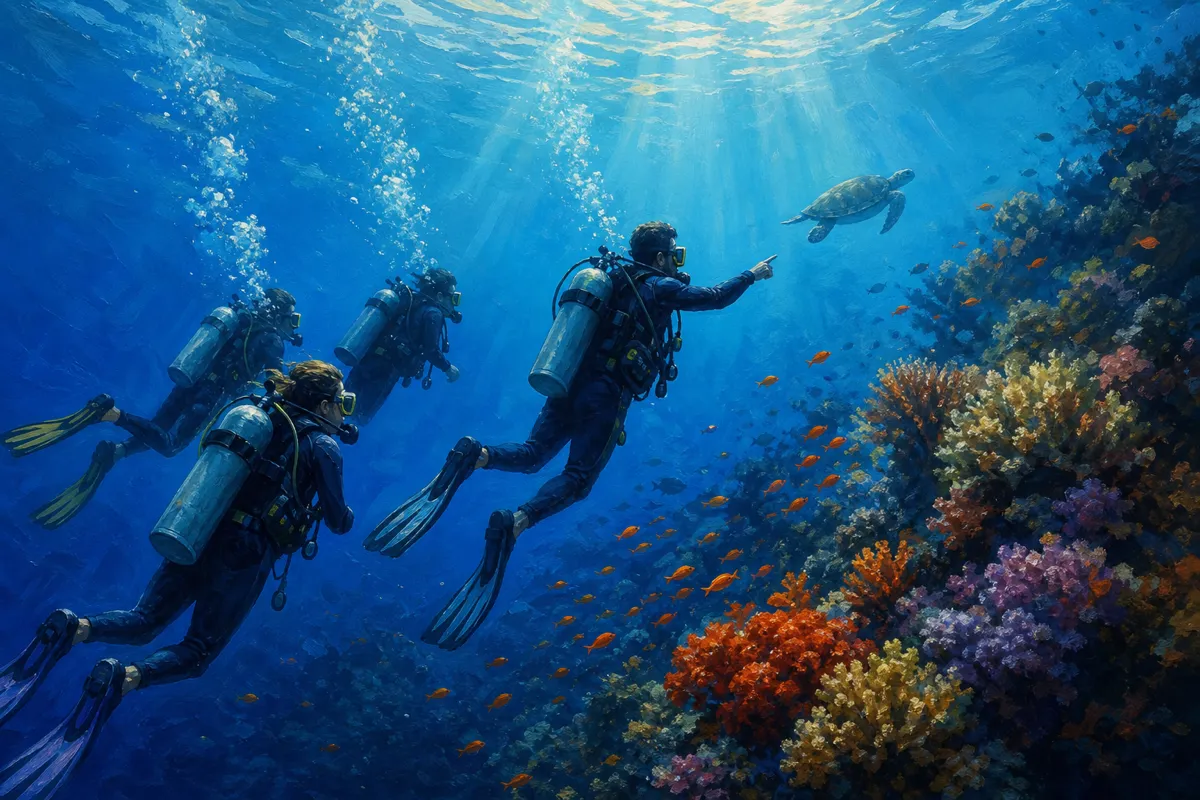
Divemaster is the first professional rating, and the moment diving can become a job. The course is unlike everything before it: instead of days, it takes weeks, commonly four to eight as an internship, and instead of learning to dive, you learn to be responsible for divers. Candidates map dive sites, brief and guide certified guests, assist instructors with students, refine their own skills to demonstration quality, pass fitness and rescue assessments, and absorb the unglamorous logistics that make a dive operation run: tanks, compressors, schedules, weather calls.
Prerequisites: Rescue Diver, 40 logged dives to start (60 to finish), current first aid, a medical sign-off, and a minimum age of 18. What it buys you is the ability to work, guiding dives and assisting courses anywhere in the world, and a depth of watermanship that no recreational course reaches. Plenty of candidates never intend to work a day in diving; they do the course for the competence alone, often as the centrepiece of a sabbatical or a long stay in a place worth staying. A Komodo Divemaster internship, with daily boats to some of the richest reefs on earth and every kind of current to learn, is about as strong as the apprenticeship gets. Beyond Divemaster lies the instructor track, Assistant Instructor, then the Instructor Development Course and examination, but that is a career decision rather than a course choice, and a story for another article.
Junior Divers: the Family Ladder
Children can start remarkably young. From age 8, pool-based programs like Bubblemaker introduce breathing underwater in less than two metres of water. From 10, kids can earn the Junior Open Water certification, identical course, restricted limits: to 12 metres with a parent, guardian, or professional until 12, then 18 metres until 15, at which point the certification automatically converts to the standard adult card. Junior Advanced and even Junior Rescue exist for keen teenagers. Diving is one of the rare adventure sports a family can genuinely do together, side by side in the same water, and our guide to visiting Komodo with kids covers how a family trip here balances diving days with dragons, beaches, and the snorkeling that younger siblings can share.
PADI, SSI, and the Agency Question, Answered Honestly
The question every new diver asks, and the answer that surprises them: for the recreational levels, it barely matters. PADI and SSI cards are mutually recognised everywhere; course content is near-identical because both are calibrated to the same ISO standards; and you can hop between agencies mid-ladder without penalty. PADI's card is marginally more universally recognised in the sense that no dive shop on earth has ever squinted at one; SSI's digital-first approach and pricing sometimes run friendlier. The real variables are the instructor in front of you and the water behind them. Choose the operator whose safety culture, group sizes, and reviews convince you, and let them worry about the logo. What you should compare is student-to-instructor ratio, whether theory can be done online before you travel, and whether course dives happen on real reefs or a bored stretch of sand.
Choosing Where to Certify: Holiday Water Beats Home Water
There are two schools: certify at home before the trip, or certify at the destination. Home certification spreads the cost and gets theory done in your own language and time zone, but often means cold, murky training water that teaches grim determination more than joy. Destination certification means your first-ever open water dives happen somewhere like Komodo, warm water, twenty-metre visibility, turtles photobombing your skill demonstrations, with the trade-off that course days spend some of your holiday.
The hybrid is the quiet winner: do the theory online at home, then complete confined and open water training at the destination in two to three days. Every mainstream agency supports this referral structure. Whichever route you choose, book courses in advance rather than walking in, dive centers cap student numbers per instructor, and in high season the good ones fill. Ours takes course bookings well ahead precisely because of that cap, and if your trip involves flying home soon after the course, remember the golden rule covered in our flying after diving guide: leave a buffer day between your last course dive and your flight.
What the Ladder Costs, Honestly
Prices swing with geography, but the shape of the spending is consistent worldwide, and knowing it helps you budget a diving life rather than a single card. As global 2026 ballparks: a try dive runs 80 to 150 USD; the Open Water course lands between 350 and 550 USD in most tropical destinations (noticeably more in Northern Europe, the US, and Australia); Advanced Open Water is slightly less, typically 300 to 450 USD; Rescue plus first aid comes in around 400 to 550 USD; individual specialties cost 150 to 300 USD each; and Divemaster, as a multi-week professional internship, runs 800 to 1,200 USD plus agency fees, with many candidates offsetting costs through internship arrangements. Course prices normally include gear rental, boat trips, instructor time, and certification fees; the online theory portion is sometimes billed separately, so compare like with like.
Three honest observations about the money. First, the course is the cheap part: the diving you do between courses is where the real budget lives, which is an argument for certifying somewhere you would be diving anyway rather than paying twice for travel. Second, cheap courses are usually cheap for a reason, larger groups, rushed schedules, tired rental gear, and the difference between a four-student class and an eight-student class is enormous when you are the one whose mask will not clear. Third, prerequisites compound quietly: budget for a dive medical if you have any flagged conditions, decent personal basics (a well-fitting mask alone transforms a course), and travel insurance that explicitly covers diving, something every diver needs from their very first certified splash.
Five Mistakes Divers Make on the Ladder
After certifying hundreds of divers, our instructors keep a private list of the ways people get the ladder wrong. Consider this the shortcut past all of them.
- Racing the rungs. Open Water on Monday, Advanced on Thursday, Rescue next month, forty total dives by the end of the year. The courses stack legally, but skills need repetition the syllabus cannot provide. The strongest divers we see did twenty or thirty ordinary, curious dives between each course.
- Treating Advanced as a status upgrade. It is five experience dives, not a knighthood. Take it when a trip gives its dives real purpose, a deep site worth visiting, currents worth learning, and it becomes excellent value instead of a laminated formality.
- Skipping Rescue because "I dive carefully". Rescue is not about your mistakes; it is about everyone else's. It is also, by near-universal testimony, the most enjoyable course in the sport. Careful divers are exactly who should take it.
- Buying specialties like souvenirs. A specialty card you never use teaches nothing. Choose them the way you would choose tools: nitrox if you do multi-dive days, drift if you dive current destinations, photography if you carry a camera. Let your logbook, not the catalogue, write the shopping list.
- Letting the card outlive the skills. Certifications last forever; competence does not. If years have passed, book the refresher without being asked. Every professional in the industry respects the diver who requests one, and quietly worries about the diver who insists they do not need it.
The Ladder at a Glance
- Try dive (no certification): half a day, 12 metres max, instructor-led. The taste test.
- Open Water Diver: 3 to 4 days, 18 metres, dive independently with a buddy. The real beginning.
- Advanced Open Water: 2 to 3 days, 30 metres, navigation plus three electives. The range extender.
- Rescue Diver + first aid: 2 to 3 days. The perspective shift, and the prerequisite for everything professional.
- Specialties: 1 to 2 days each. Nitrox, deep, drift, night, photography, chosen to match your actual diving.
- Master Scuba Diver: a milestone rating: Rescue + five specialties + 50 dives.
- Divemaster: 4 to 8 weeks, the first professional level. Guide dives, assist courses, work anywhere.
Timewise, a committed diver could travel from first breath to Divemaster inside a year, but almost nobody should. The logbook between courses is where diving actually happens: the hundred unhurried dives where skills fuse into instinct, on reefs and walls and, ideally, at least one liveaboard week where diving becomes the day's whole rhythm rather than its highlight.
Which Level Do You Actually Need?
Strip away the catalogue and the honest advice is short. If you want to find out whether you like breathing underwater, book a try dive; it answers the question in ninety minutes. If you know you want in, do Open Water, ideally with theory finished at home, and you are a diver, full stop, with most of the tropical ocean open to you. Add Advanced when a trip justifies it, and in Komodo it does, because the deep electives and drift training here are the real thing rather than a syllabus exercise. Do Rescue when diving has become part of who you are; you will call it the best course you ever took, because everyone does. And if one morning you catch yourself envying the divemaster who briefed your boat, sun-creased, unhurried, paid to be there, the ladder has a rung for that too.
Wherever you currently stand on it, the next rung is bookable at our dive center, from a first bubble on the house reef to a Divemaster internship with the national park as your classroom. Bring the curiosity; the water and the instructors are already here.