Ask a room full of non-divers how deep scuba divers go, and the guesses land everywhere from "ten metres, surely" to "the bottom of the ocean". The real answer is more interesting than either. Recreational scuba diving has clear, well-researched depth limits: 18 metres for entry-level divers, 30 metres with an advanced certification, and 40 metres as the absolute recreational maximum. Beyond that lies technical diving, a different sport with different equipment and training. At our dive center, "how deep will we go?" is one of the first questions new divers ask, usually with a mix of excitement and nerves, and the honest answer surprises almost everyone: the best diving in the world mostly happens shallower than you think.
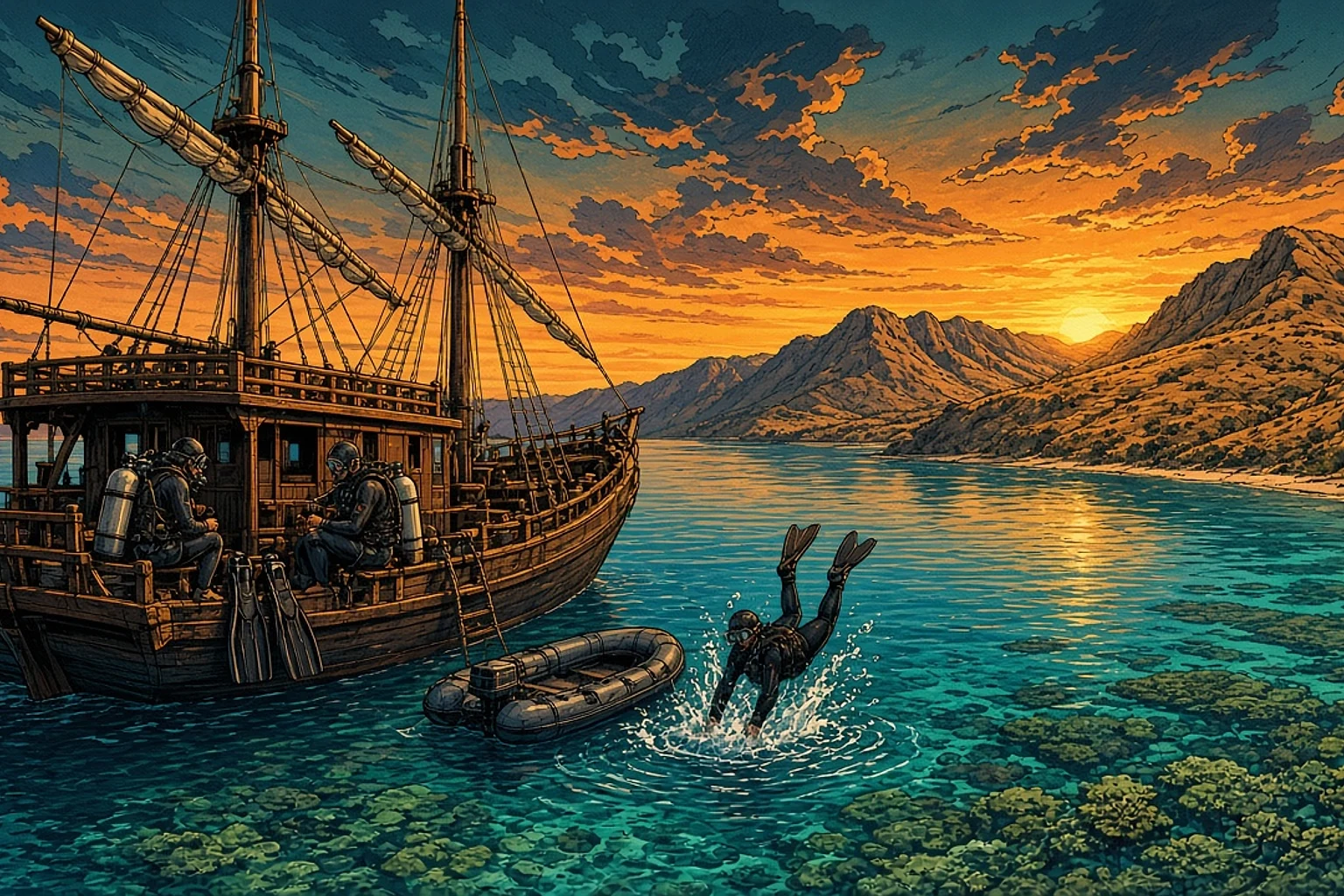
Depth is also one of the most misunderstood parts of the sport. It is not a video game score, and more metres do not mean a better dive. Some of the most spectacular sites in Komodo National Park, the kind that fill the itineraries of every Komodo liveaboard, deliver their magic between five and twenty-five metres, where the light is bright, the colors are real, and your air lasts. In this guide we break down exactly how deep you can dive at each certification level, what physically happens to your body as you descend, why the limits sit where they do, and how deep you actually need to go to see the best of a place like Komodo.
The Short Answer: Depth Limits at a Glance
Every major training agency, PADI, SSI, CMAS, RAID, teaches essentially the same ladder of depth limits. The numbers below are the PADI versions, and the others differ only in detail.
- Try dive / Discover Scuba, no certification: maximum 12 metres, always with an instructor holding the group close.
- Open Water Diver (entry-level certification): maximum 18 metres.
- Advanced Open Water Diver: maximum 30 metres.
- Deep Diver specialty: maximum 40 metres, the recreational limit worldwide.
- Junior divers (10 to 14 years): tighter limits, 12 metres for Junior Open Water at ages 10 to 11, 18 metres at 12 to 14.
- Technical divers: beyond 40 metres with decompression training, extra cylinders, and often helium-based gas mixes; common tech certifications cover 45 to 100 metres.
Two clarifications matter before we go deeper, so to speak. First, these are training limits, not physical walls; the water does not check your card at 18 metres. They exist because the risks of depth, which we cover next, escalate in well-understood stages, and the training at each level prepares you for exactly the band it certifies. Diving beyond your training is how confident divers become statistics. Second, the limits are per-dive choices, not obligations. An advanced diver is allowed 30 metres; on most dives, they will spend the majority of their time far shallower because that is where the life is.
What Actually Happens as You Go Deeper
Depth limits make sense once you understand what pressure does. At the surface you live under one atmosphere of pressure. Every ten metres of seawater adds another. At 10 metres you are under twice surface pressure, at 30 metres four times, at 40 metres five. That simple arithmetic drives everything that changes on a deep dive.
Your air disappears faster
Your regulator delivers air at the pressure of the water around you, which means every breath at 30 metres contains four times as many gas molecules as the same breath at the surface. Breathe normally and your tank empties four times faster. A cylinder that lasts an hour at ten metres might give you twenty minutes at thirty. Deep dives are short dives, always, and gas planning stops being optional arithmetic and becomes the dive plan itself.
Nitrogen starts to press on you
Two separate nitrogen problems grow with depth. The first is nitrogen narcosis: under pressure, nitrogen has a mildly anaesthetic effect on the nervous system, and somewhere past 25 to 30 metres most divers begin to feel it. Divers compare it to the fuzzy edge of a couple of drinks: slowed thinking, tunnel focus, a strange indifference to things that should matter. It is harmless in itself and vanishes as you ascend, but a narced diver makes worse decisions at exactly the depth where decisions matter most. That, more than anything, is why the 40-metre recreational limit exists, and why we wrote a whole article about why alcohol and diving compound each other so badly.
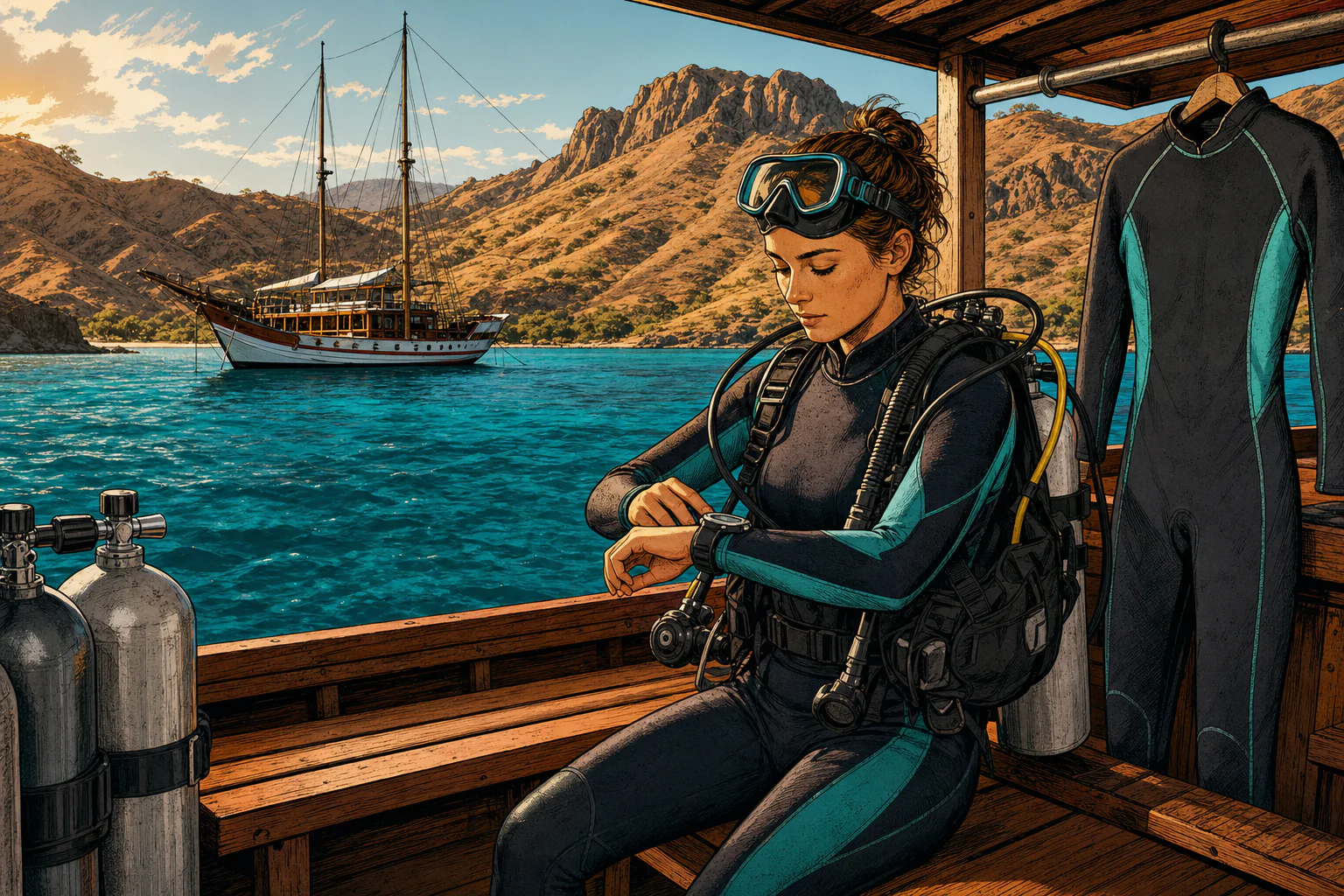
The second problem is nitrogen loading. The deeper you go, the faster dissolved nitrogen accumulates in your tissues, and the shorter your no-decompression limit becomes. At 18 metres a modern computer might allow close to an hour; at 30 metres roughly twenty minutes; at 40 metres single digits. Stay past those limits and you can no longer ascend directly to the surface without mandatory decompression stops, which is the defining line between recreational and technical diving. That nitrogen also stays with you after the dive, which is why your last dive day and your flight home need planning; our guide to flying after diving covers exactly how long to wait.
The light and color drain away
Water swallows sunlight color by color. Red is gone within the first five or six metres, orange and yellow follow, and by 30 metres the world runs in blues and greys. That soft-coral wall that looks like a fireworks display at 12 metres is a muted shadow of itself at 35, unless you bring a torch and give it back its colors. This is the quiet irony of chasing depth: the deeper you go, the less there usually is to see. Photographers know this better than anyone, which is why our underwater photography guide spends so much time on the top fifteen metres.
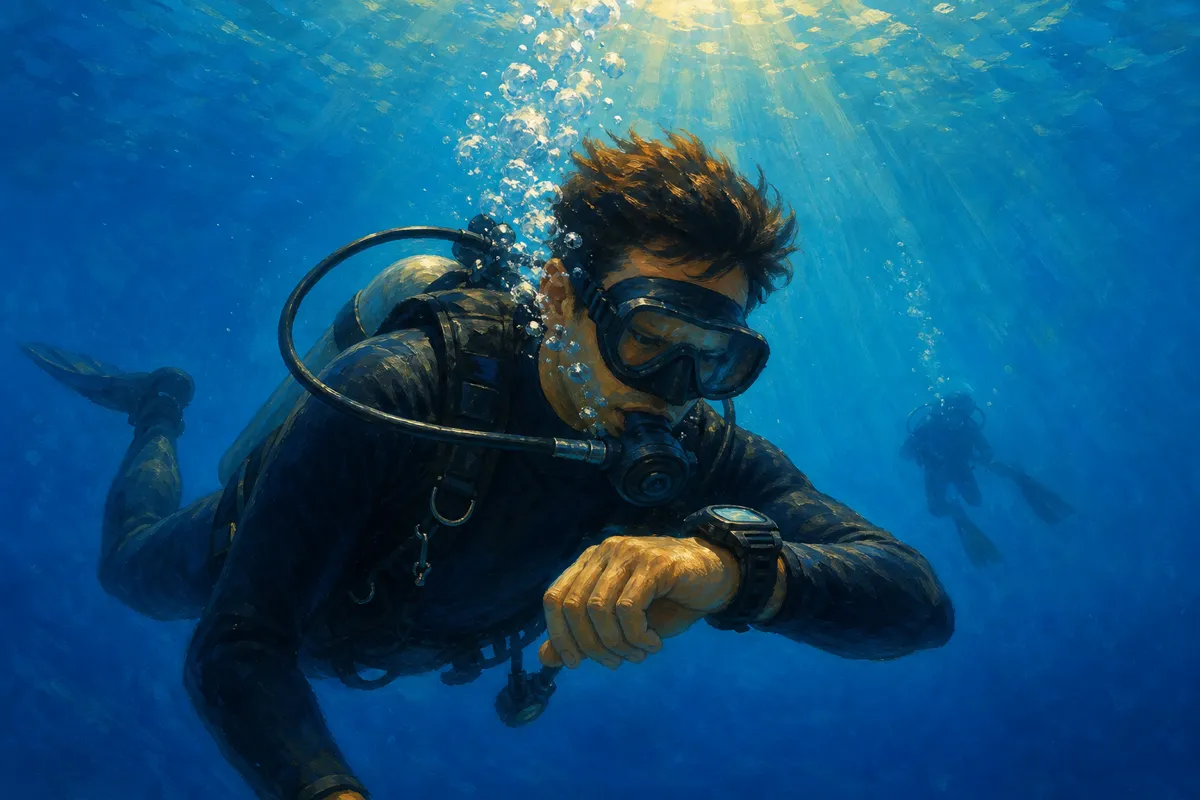
Depth Limits by Certification, Properly Explained
No certification: try dives to 12 metres
You do not need any certification to breathe underwater for the first time. Introductory programs put you in the water with an instructor after a briefing and some shallow-water practice, capped at 12 metres and in practice usually run between five and ten. That band is generous: it covers the most colorful, fish-rich layer of a tropical reef. If you are curious what that first breath feels like, here is what a try dive in Komodo looks like, hour by hour.
Open Water: 18 metres, and why that number
The entry-level certification trains you to plan and execute dives with a buddy, unsupervised, to 18 metres. The number is not arbitrary. Above 18 metres, no-decompression times are long enough that new divers rarely bump into them, narcosis is a non-factor, and a direct swimming ascent to the surface remains a manageable emergency option. It is the depth band where new divers can make new-diver mistakes and get away with them. The full path from first pool session to certified diver is laid out in our guide to learning to dive in Komodo.
Advanced Open Water: 30 metres
The advanced course is really a structured set of experience dives under instructor supervision, one of which is a deep dive past 18 metres. It certifies you to 30 metres, which unlocks most of the world's celebrated dive sites: wrecks sitting on 28-metre sand, deep pinnacle tops, the lower terraces of walls. It is also where you first meet narcosis under controlled conditions and learn what your own version of it feels like, which is genuinely valuable self-knowledge.
Deep specialty: 40 metres, the recreational ceiling
The deep specialty course adds planning tools for the 30-to-40-metre band: staged ascents, redundant air thinking, narcosis management, and the discipline of watching a no-deco clock that runs out in minutes. Forty metres is the agreed worldwide recreational maximum because beyond it, the margins collapse: no-deco times shrink toward zero, gas consumption quintuples, narcosis is significant in most divers, and a direct ascent to the surface stops being survivable as an error-recovery plan.
Beyond 40 metres: technical diving
Technical divers cross the 40-metre line deliberately, carrying the training and equipment that makes it rational: multiple cylinders with different gas mixes, decompression schedules planned to the minute, helium blended into the breathing gas to blunt narcosis, and redundancy for every critical system. Tech training programs certify in stages, commonly to 45, 60, and eventually 100 metres. It is a superb discipline, and completely unnecessary for seeing the best of the tropical ocean. For perspective, the deepest scuba dive ever recorded, by Ahmed Gabr in 2014, reached 332 metres and required nearly 14 hours of decompression for roughly twelve minutes of descent. Impressive, and about as far from a holiday dive as a moon landing is from a beach walk.
How Deep Do You Actually Need to Go? The Komodo Answer
Here is the question behind the question, and the answer that surprises people: in Komodo, almost everything worth seeing happens between 5 and 30 metres, and a remarkable share of it above 18.
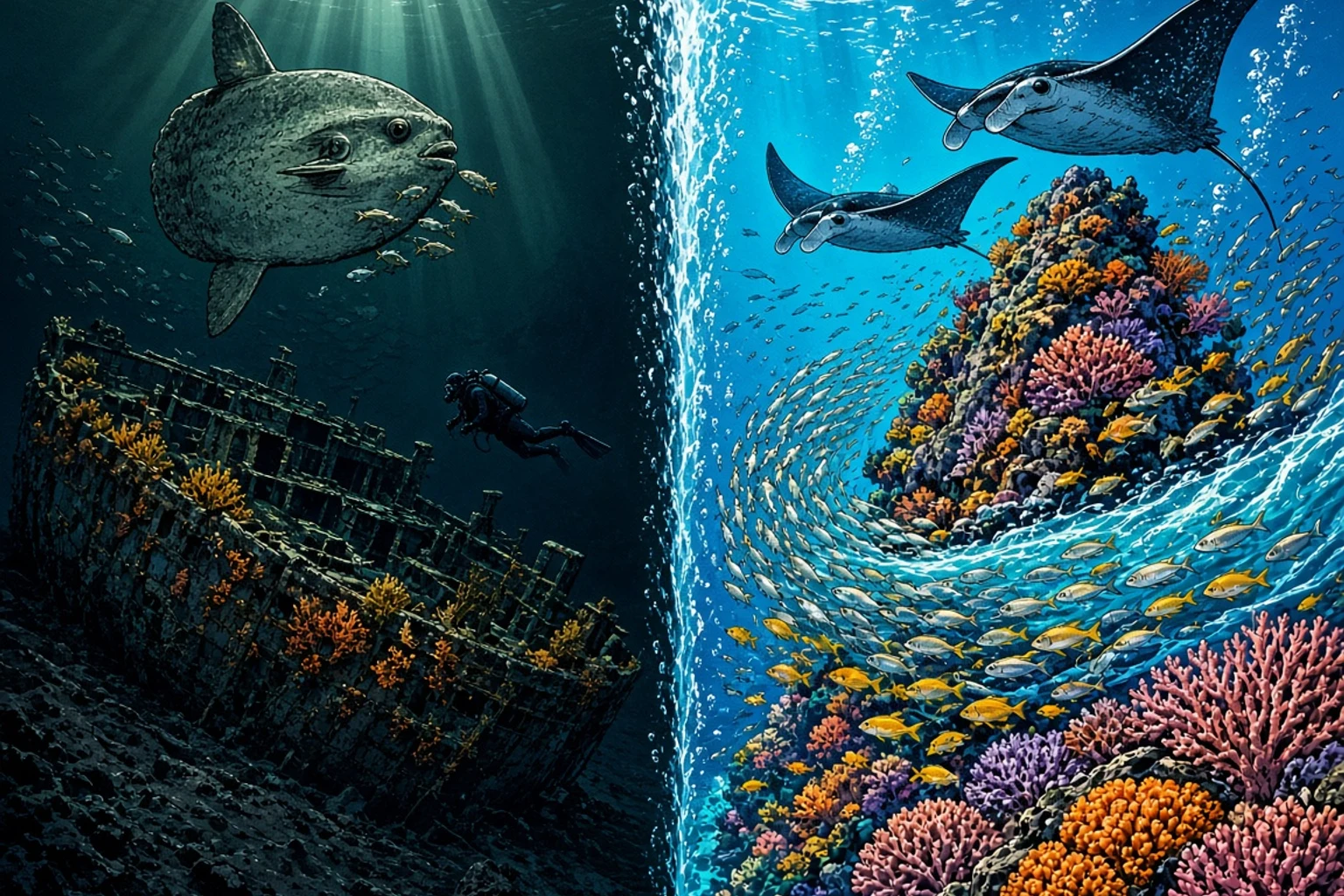
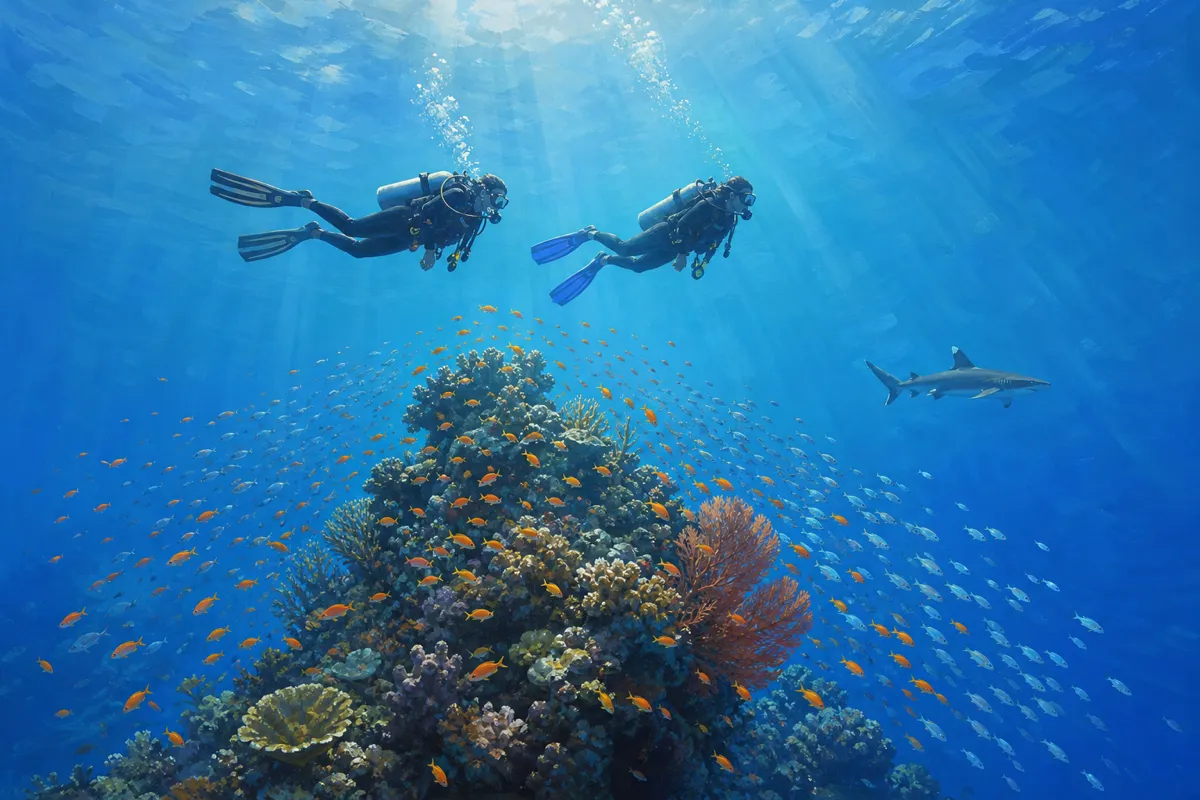
Run through the park's signature moments. The manta cleaning stations where reef mantas queue like aircraft on approach sit at 10 to 15 metres; our guide to swimming with manta rays covers them site by site. Batu Bolong, routinely named one of the best dive sites on earth, is a single pinnacle whose most explosive fish life swirls around its top ten metres. The shark action at Castle Rock and Crystal Rock plays out between 15 and 25 metres, where you hook in and watch whitetips and grey reef sharks hunt in the current. Turtles graze the coral gardens of Siaba Besar at snorkeling depths, shallow enough that the house reef and snorkeling trips see plenty of what divers see. Our full rundown of Komodo's dive sites lists the depth band of every major site, and the pattern is unmistakable: this is a shallow-to-medium depth destination at world-record quality.
An Open Water certification, in other words, unlocks most of Komodo. An Advanced certification unlocks essentially all of it, including the deeper pinnacle bases and the cooler southern sites. There is no site in the park's standard rotation that requires anything beyond 30 metres, and our guides plan the vast majority of dives with maximum depths between 18 and 26 metres, because that is where Komodo performs. The complete picture of conditions, seasons, and site selection lives in our guide to scuba diving in Komodo National Park.
Depth and Your Body: the Sensations Nobody Warns You About
Numbers aside, new divers want to know what depth feels like, and the honest answer is: mostly like nothing, which is its own surprise.
There is no crushing sensation, no drama. Your body is mostly water and water does not compress. The air spaces are the exception, and you feel exactly three of them. Your ears need equalising every metre or two of descent, a gentle pop you learn to produce on demand in your first pool session. Your mask needs a puff of nose-air on the way down to stop it squeezing. And your buoyancy changes as your wetsuit compresses, which is why the BCD exists and why buoyancy control is the skill that separates comfortable divers from flailing ones.
What you do notice at depth is subtler. The light turns cooler and softer. Sounds flatten. Your exhaled bubbles rumble louder in the relative quiet. Twenty-five metres down on a Komodo wall, with the surface a bright and distant ceiling, there is a stillness that shallow water never quite reproduces. Divers chase that feeling as much as any fish sighting, and it is entirely reachable within recreational limits.
The one sensation to respect is the narcosis fuzz past 25 or 30 metres. It arrives quietly: you check your gauge and realise you have been staring at one coral head for a while, or your buddy signals a question, as covered in our guide to scuba diving hand signals, and your answer takes an extra beat to assemble. The fix is beautifully simple: ascend a few metres and it lifts like fog.
How Divers Build Depth Experience Safely
Depth is earned in layers, and the system is designed so each layer is boring by the time you reach it. A sensible progression looks like this.
- Get genuinely comfortable at Open Water depths first. Ten to fifteen dives above 18 metres teach you more about buoyancy, air consumption, and your own head than any course. Komodo is a perfect classroom for this stage.
- Do the Advanced course where the deep dive means something. A supervised first visit to 30 metres on a proper site, with an instructor watching your narcosis response, beats ticking the box in a quarry.
- Let your computer teach you. Watch how your no-deco time shrinks as depth increases, dive after dive. The pattern becomes intuitive within a trip, and intuition about nitrogen is what keeps deep divers old.
- Add the deep specialty only if your diving calls for it. Wreck enthusiasts and cold-water divers use the 30-to-40 band constantly. Tropical reef divers, honestly, rarely need it.
- Build depth on multi-dive trips carefully. On a liveaboard doing four dives a day, the smart pattern runs the deepest dive first each morning and shallower dives after, letting nitrogen unload as the day goes on. Our first liveaboard guide explains how boats structure this automatically.
Notice what is missing from that list: hurry. Divers with two hundred logged dives still spend most of them shallower than 20 metres, by choice. Depth experience is like chili in cooking; you can always add more, and you cannot take it out.
Freediving, Snorkeling, and the Other Ways Down
Scuba is not the only way humans visit depth, and the contrasts are illuminating. Competitive freedivers descend past 100 metres on a single breath, a feat of physiology and mind that makes scuba's limits look conservative, and recreational freedivers work the 10-to-30-metre band that scuba shares. The two sports read depth completely differently: a freediver's limit is oxygen and time measured in minutes, a scuba diver's is nitrogen and gas supply measured against tables. If breath-hold depth intrigues you, Komodo has a growing scene for it, and our guide to freediving in Komodo is the place to start, including why serious freediving and scuba should not share your final day before a flight, a caveat covered in the flying guide above.
Snorkelers, meanwhile, own the best-lit metre of the entire ocean. In a park like Komodo, where reef tops brush the surface and mantas feed in channels a fin-kick deep, the snorkeling is not a consolation prize; it is a parallel first-class ticket. The honest comparison between the two, including when each one wins, is laid out in our snorkeling versus diving guide.
Five Depth Myths That Refuse to Die
Depth attracts folklore the way wrecks attract fish, and a few persistent myths deserve a direct debunking, because each one quietly shapes how new divers behave.
Myth one: deeper divers are better divers. Depth is not a skill; it is an exposure. The genuinely difficult skills in diving, precise buoyancy, gas awareness, calm problem-solving, current judgement, are all learned and demonstrated shallow. Ask any instructor which guest they trust more: the one who brags about 40 metres, or the one who hovers motionless at five metres over a fragile coral garden without touching a thing. It is not close. If you want to impress a dive professional, show them your safety stop.
Myth two: the big animals live deep. In Komodo, the opposite is closer to the truth. Mantas feed and clean between the surface and 15 metres. Reef sharks patrol the 10-to-25-metre band where the fish are. Turtles graze practically at snorkel depth, and the bait balls that draw trevallies and tuna form wherever the current pushes plankton, which is usually shallow. The deep is home to wonderful things, but the tropical ocean concentrates its biomass where its energy enters: in the light.
Myth three: you sink helplessly if you go too deep. Depth does not grab you. Buoyancy is under your control at every stage of a dive, and a properly weighted diver with air in the tank can arrest a descent at any depth with a press of the inflator. The real risk at depth is not mechanical but cognitive, the slow narrowing of attention that narcosis brings, which is precisely why the training limits exist and why buddies watch each other.
Myth four: dive computers make depth limits obsolete. A computer tracks your nitrogen with impressive fidelity, but it models an average body, not your body, and it cannot measure your narcosis, your air anxiety, or your readiness for a gas-sharing emergency at 38 metres. The certification limits encode the human factors that no wrist instrument can see. Use the computer for the nitrogen and the training for everything else.
Myth five: the pressure will crush you. The most cinematic myth of all. Your body is overwhelmingly water, and water does not compress. Divers feel pressure only in air spaces, ears, sinuses, mask, and all of them equalise with techniques you learn on day one. Submarines need pressure hulls because they keep surface-pressure air inside; a diver breathing pressure-matched gas from a regulator needs none. At 30 metres you feel exactly like you feel at 10, just bluer.
Putting Depth in Its Place
So, how deep can you scuba dive? Twelve metres on your first try dive, eighteen with your first certification, thirty with an advanced card, forty at the recreational ceiling, and past one hundred in the technical world, each step backed by training that makes the step routine. But the better question, the one experienced divers eventually all arrive at, is how deep is worth going, and the answer in a place like Komodo is: usually not very. The ocean does not save its best work for the dark. It spends most of its color, most of its fish, and nearly all of its light on the first thirty metres, and it charges you less air, less nitrogen, and less risk to watch.
Whatever your current level, the path to your next depth milestone runs through good instruction, patient practice, and water worth practising in. Our dive center runs everything from first try dives to advanced and deep courses right on the house reef and the park's best sites, and if you would rather measure your progress in dive days than classroom hours, a liveaboard week will hand you more depth experience, more variety, and more logged dives than most divers collect in a year. The deep end is not going anywhere. Come work your way toward it properly.