Komodo dragons breed once a year: they mate in the dry season, females bury around 20 eggs in August or September, and the young hatch between February and April. Japan's iZoo now hopes to repeat that cycle with a pair lent by Indonesia, aiming for the country's first Komodo eggs in September 2027.
Japan now has a breeding pair of Komodo dragons. Aril, a 12-year-old male, and Ai, a 12-year-old female, landed in Tokyo on 28 October 2026 on a five-year loan from Surabaya Zoo and went on show at iZoo in Kawazu, Shizuoka, three days later. The zoo plans to put them together in spring 2027 and hopes for eggs that September. Their wild relatives live a short boat ride from our island, and our Komodo dragon tours visit them on Komodo and Rinca.
Nikkei Asia ran the story on 21 November as "How to save your dragon", built around an awkward question: if a warming climate and rising seas shrink the dragons' islands, how much of the species' future should sit in zoos? That piece is behind a paywall, so we went to the sources it draws on: the Indonesian and Shizuoka governments, the zoos involved, the IUCN Red List and twenty years of field work on wild nests. The same breeding calendar also decides what you see on our Komodo National Park tours: males on the move in June and July, females on their nests in October, hatchlings up in the trees in March.
What is Komodo dragon breeding?
Komodo dragon breeding is the yearly cycle in which dragons mate in the dry season, bury around 20 eggs, and the young hatch the following wet season.
- Mating from June to August
- Nests dug in August
- Eggs guarded until December
- Hatching from February to April
It depends on a mature female, and on whether a male is around: without one, a female can still lay eggs, but every hatchling is male.
You can follow the cycle:
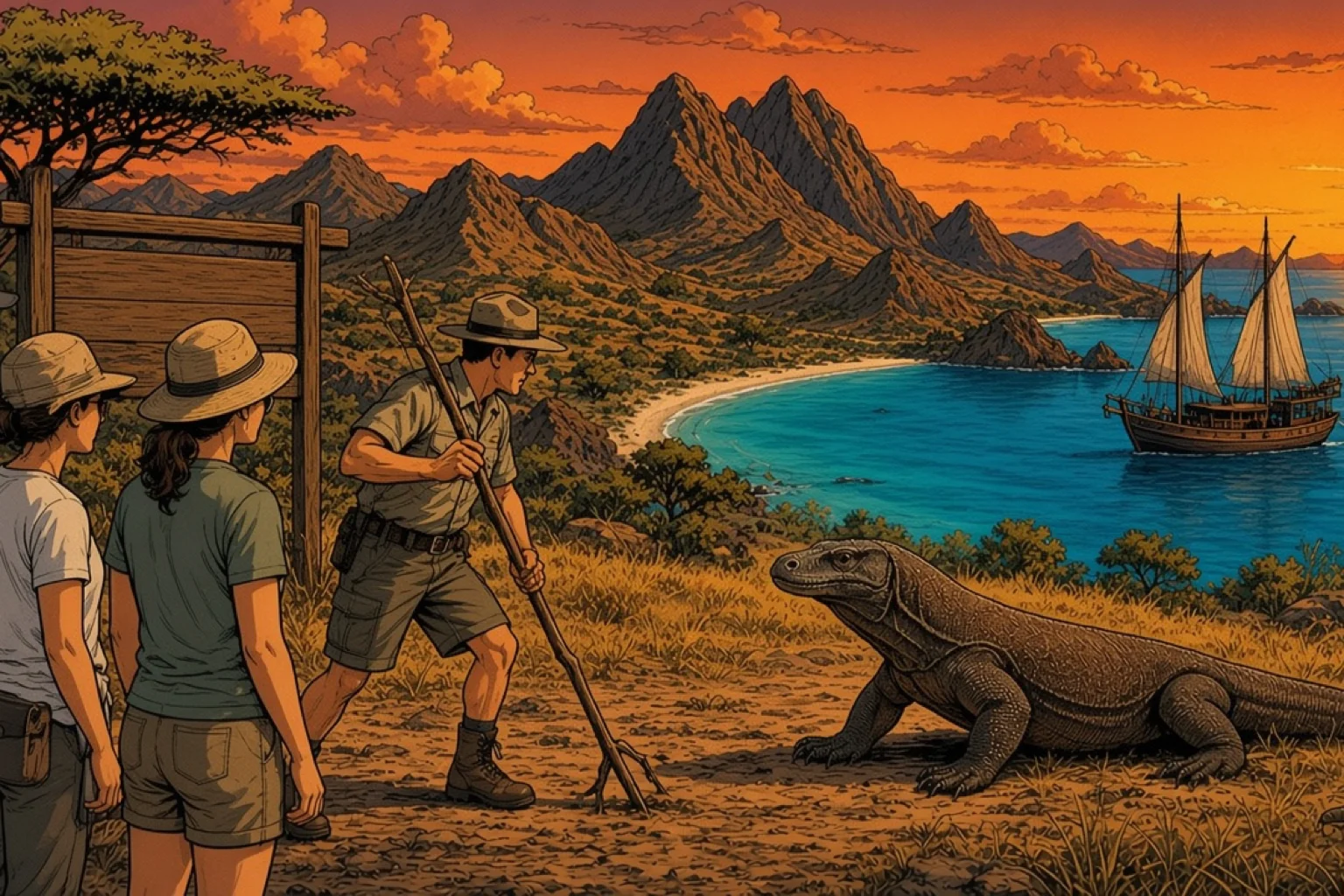
- In the wild, on a Komodo Island tour with a park ranger
- On Rinca, from a Komodo boat tour out of Labuan Bajo
- In a handful of zoos, now including iZoo in Japan
Wild dragons live only on Komodo, Rinca, three smaller park islands and parts of western Flores, so every zoo programme starts with Indonesian animals.
Japan's first Komodo dragon breeding pair at iZoo
iZoo is a reptile and amphibian zoo in Kawazu, on the Izu peninsula in Shizuoka. Its director, Tsuyoshi Shirawa, started asking Indonesia for dragons in 2015 and built the dragon house in 2017, eight years before he had anything to put in it. The building covers about 300 m², is kept above 30°C and is planted with tropical trees, and a valve turns on sprinklers that drop a squall on the dragons, because Komodo has a wet season and the keepers want them to feel it.
The two dragons live in neighbouring rooms split by a mesh wall with a door in it. For now they can see and smell each other but not touch. In the breeding season the keepers open the door, once they are confident the pair will court rather than fight. Shirawa has told Japanese media that the chance comes once a year: together in spring, eggs around September if it goes well, and hatchlings the following March or April.
| Dragon | Sex | Age | Length | Weight |
|---|---|---|---|---|
| Aril | Male | 12 | 2.84 m | 86.4 kg |
| Ai (Aichan in Japanese reports) | Female | 12 | 2.37 m | 48.6 kg |
Both were bred at Surabaya Zoo in East Java, not taken from the wild. At 12 they are both of breeding age, and Shirawa says their compatibility as a couple looks good. The size gap is normal, since adult males are much heavier than females.
How the loan works
Two agreements made it possible. On 28 March 2026, Indonesia's Forestry Minister Raja Juli Antoni and Shizuoka Governor Yasutomo Suzuki signed a government memorandum on wildlife conservation, with the Komodo breeding loan as its centrepiece (the Indonesian Ministry of Forestry announcement sets out the terms). On 29 April, Surabaya Zoo and iZoo signed the zoo-to-zoo agreement in Surabaya.
The dragons are lent, not given or sold. The loan runs five years and can be renewed, iZoo reports to Indonesia every year, a sick animal can be recalled, and any hatchling born in Japan belongs to Indonesia. In return Surabaya Zoo receives a pair of red pandas, a pair of giraffes, four Aldabra giant tortoises and two Japanese macaques. CITES, the treaty that governs trade in endangered species, allows transfers like this for non-commercial breeding.
Why Japan, and why it matters
Japan's only other Komodo dragon is a single male at Higashiyama Zoo in Nagoya. Ueno Zoo in Tokyo and Maruyama Zoo in Sapporo kept dragons in the past, but nobody in Japan has had a pair to breed from. iZoo has a record with difficult reptiles: it has bred Aldabra tortoises, and in 2014 it hatched an earless monitor lizard in captivity, which Japanese press described as a world first.
The crowds were there on day one. People queued before the gates opened on 31 October, some on the first train from Saitama, and iZoo's project page says it received 16,000 messages from people waiting for the dragons.
The criticism
Not everyone is cheering. PETA Asia said any dragons born in Japan would be "condemned to a lifetime of confinement" and that real conservation protects dragons in their own habitat. The Indonesian ministry answered that protecting wild dragons remains its main priority, and an official at the signing said he hoped the loan would bring more Japanese visitors to Komodo National Park to see dragons in the wild (both reported by The Japan Times). We come back to that argument below, because it is the real question behind the headline.
When is Komodo dragon breeding season in the wild?
In Komodo National Park the cycle follows the dry and wet seasons closely. The best picture comes from the Komodo Survival Program, which with the park authority watched 42 nest sites every month from 2002 to 2006 and has monitored the population since. Here is the year as they recorded it.
| Months | What the dragons are doing | What a visitor might notice |
|---|---|---|
| June to August | Mating; males travel furthest in June | More adult males on the move; the odd wrestling match between males |
| Late July to August | Females arrive at nest sites and dig for about two weeks | Fresh digging at old bird mounds, usually away from the trails |
| Late August to September | Eggs laid deep in one chamber, decoy holes around it | Very little: laying is almost never seen |
| September to December | Females guard the nest and eat less | Thinner females staying close to one spot |
| January | Eggs develop through the wet season | Green hills, fewer visitors |
| February to April | Hatchlings dig out and climb trees | A small, banded lizard high on a branch, if you are lucky |
The timing is not random. Hatchlings come out at the end of the rains, when insects and geckos are everywhere, which is exactly what a 40 cm dragon needs to eat. The females lay in the hottest, driest part of the year and let the soil do the rest.
Most of the nests are not holes in the ground. Female dragons usually take over the huge mounds built by orange-footed scrubfowl, a chicken-like bird that piles up earth and leaves into heaps that can be a metre high. A female digs several holes in the mound but lays in only one, and the others seem to be there to fool egg thieves, including other dragons.
Not every female breeds every year. In the long-term study, only one female nested four years running, and most were recorded nesting once. Guarding is expensive: females lost an average of 3.4 kg over the guarding months, because they hardly feed while they sit near the nest.
How many eggs does a Komodo dragon lay?
A female Komodo dragon lays about 20 eggs at a time, with clutches recorded anywhere from 1 to about 30. The eggs are roughly 10 cm long and 6 cm wide, with a soft, leathery shell rather than a hard one like a bird's. She lays them over a short period, sometimes across several days, into a chamber deep enough to keep the temperature steady.
In the park study, nests that produced young averaged close to 20 hatchlings. A newborn dragon is about 42 cm long and weighs around 90 g, roughly the weight of a bar of soap, and it is patterned in bright yellow and black bands that fade as it grows. In zoos, where the eggs are usually moved to incubators, they take around 220 to 240 days to hatch: the first zoo clutch outside Indonesia took 237 days.
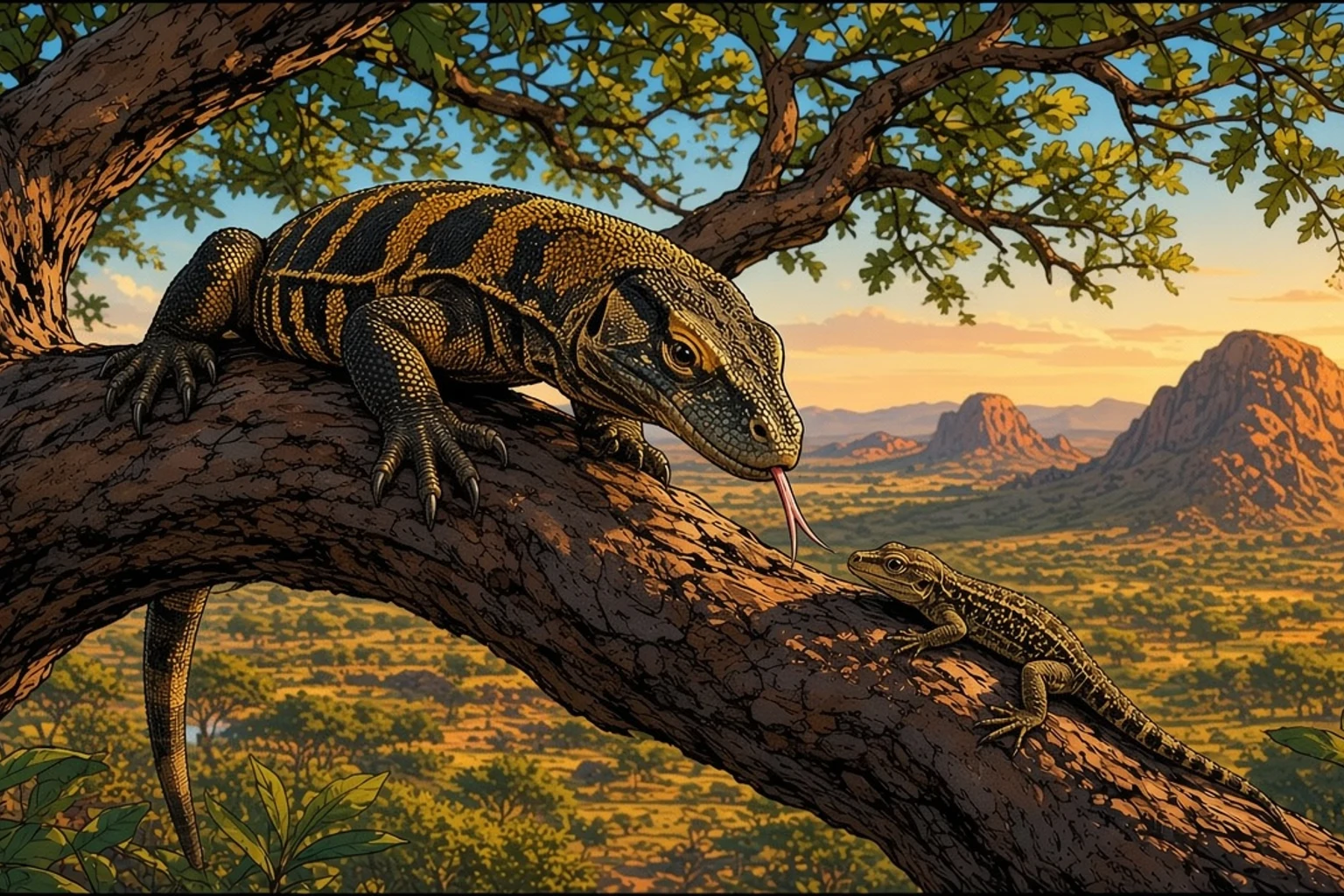
Few of those hatchlings reach adulthood. Adult dragons eat young dragons, so a hatchling's first move is straight up the nearest tree, where it spends its first years eating insects, geckos and eggs. Dragons reach sexual maturity at around 5 to 7 years, and in zoos females usually breed for the first time between 7 and 10. Wild females in the park start nesting once they reach about 20 kg.
That is why Aril and Ai's age matters. At 12, both are in their prime, with years of breeding ahead if the pairing works. For more on how big they get, what they eat and how long they live, see our Komodo dragon facts.
Can a Komodo dragon have babies without a male?
Yes. A female Komodo dragon kept on her own can lay eggs that develop without being fertilised, a process called parthenogenesis, or virgin birth. Every baby produced this way is male.
The discovery came from two English zoos in 2006. Flora, a female at Chester Zoo who had never been kept with a male, laid a clutch in May that year. Sungai, at London Zoo, had also produced young after more than two years without a mate. Genetic fingerprinting, published in Nature in December 2006, showed that the hatchlings had no father. Flora's first five sons hatched in January 2007, and Sungai later bred normally with a male as well.
The reason every hatchling is male comes down to chromosomes. In birds and many reptiles, females carry two different sex chromosomes, called Z and W, and males carry two Zs. A virgin-born egg doubles one set of the mother's chromosomes, so it ends up ZZ, which is a male, or WW, which does not develop.
For zoos this is a real problem. A female who reproduces alone produces sons who are close genetic copies of her, which narrows the gene pool of a captive population built from very few founders. The Nature authors suggested that zoos keep males and females together rather than moving males around for mating. Japanese coverage of the iZoo pair made the same point: the hope is for mating, and with it, daughters.
Do Komodo dragons breed in captivity?
They do, but it took zoos decades to manage it, and it is still not routine. For most of the 20th century, dragons left Indonesia only as gifts from the president. When Singapore received its pair in 1986, the minister accepting them noted that Singapore Zoo was only the ninth zoo outside Indonesia to be given dragons.
| Year | Where | What happened |
|---|---|---|
| 1986 | Singapore Zoo | Receives a pair as a gift from President Suharto |
| 1992 | Smithsonian National Zoo, Washington | 13 hatchlings from a clutch of 26 eggs: the first dragons bred outside Indonesia |
| 2006 | Chester Zoo and London Zoo | Virgin births confirmed in two females |
| 2009 | Singapore Zoo | Mario hatches, the first Komodo dragon bred in Asia outside Indonesia |
| 2021 | Surabaya Zoo, Indonesia | 29 eggs hatch from two pairs that laid in July and August |
| 2026 | iZoo, Japan | First breeding pair in Japan, on loan from Surabaya |
The Washington breakthrough is worth a closer look, because it shows what it takes. Keepers expanded the enclosure and built the female her own nesting area. They saw courtship through December 1991, the female dug a fresh burrow in mid-January, and six days later staff found 26 eggs. They split the clutch between the zoo and a laboratory at George Mason University in case one set failed, and the Smithsonian archive records the first hatchling emerging at the university on 13 September 1992. The zoo went on to hatch 55 dragons from four clutches, and their descendants live in about 30 zoos.
Inside Indonesia, Surabaya Zoo has become the main breeding centre, which is why it is the lender in the Japan deal. It holds more than 50 dragons and has bred dozens. In February 2026 it said it was preparing four or five captive-bred dragons for possible release on Komodo or Flores, subject to government approval; no date has been set. If that happens, it would be a rare case of zoo-bred dragons going back to the wild.
Are Komodo dragons endangered?
Yes. The IUCN Red List moved the Komodo dragon from Vulnerable to Endangered in 2021. The assessment counts fewer than 1,400 adults, split into eight separate populations, none with more than 500 adults, occupying only about 809 km² of habitat.
The reasons are different inside and outside the park. On Komodo and Rinca, long-term monitoring has found no decline. On Flores, dragons are losing ground: forest is disappearing at about 1% a year in parts of their range, no more than a tenth of any Flores population lives inside a protected area, and people hunt the deer and wild pigs the dragons eat. The assessors also recorded attempts to smuggle live dragons out of Indonesia for the pet trade.
Then there is the climate. A 2020 study in Ecology and Evolution modelled the species' future under different warming scenarios and found habitat losses ranging from 8% to 87% by 2050. Heat was the main driver; rising seas matter mostly after 2050, when they start to eat into the low-lying coastal ground. The same study picked out Komodo and Rinca as the safest refuges, which is the point the Nikkei headline builds on.
How many Komodo dragons are left?
The park authority counts dragons every year with camera traps at 11 sites on five islands. These are estimates of all dragons, young and old, which is why they are much higher than the IUCN's adult figure.
| Year | Komodo National Park estimate |
|---|---|
| 2018 | 2,897 |
| 2019 | 3,022 |
| 2020 | 3,163 |
| 2021 | 3,303 |
| 2022 | 3,156 |
| 2023 | 3,396 |
| 2024 | 3,270 |
| 2025 | 3,314 |
In 2024 the split was 1,619 on Komodo, 1,472 on Rinca, 77 on Nusa Kode, 74 on Gili Motang and just 28 on Padar. Outside the park, the Wae Wuul reserve on the Flores mainland counted 31, up from 29 in 2017. The park's head calls the trend stable, rising and falling with the amount of prey. Our guide to Komodo National Park wildlife covers the deer, buffalo and birds the dragons share the islands with.
Does zoo breeding help wild Komodo dragons?
This is the debate Nikkei's subheading points to, and both sides have a case. Supporters say a well-managed zoo population is insurance: if disease, a fire season or a bad run of years hit a small island population, there are healthy, genetically recorded animals elsewhere. Breeding programmes also build veterinary and husbandry knowledge that is hard to gather in the field, and iZoo and Surabaya have committed to sharing theirs.
The sceptics point out that no hatchling in Shizuoka adds a dragon to Flores. The threats in the IUCN assessment are habitat loss, prey hunting and a warming climate, and none of them is solved in a zoo. Surabaya's proposed release of zoo-bred dragons is still only a plan.
From where we sit, on an island next to the park, the answer is both, in proportion. What keeps wild dragons alive is the park itself: rangers, patrols, prey animals left alone, and the money visitors bring. Every visitor pays the Komodo National Park entrance fees that help fund that work. If a pair of dragons in Japan sends more people to see the real thing, with a ranger and a camera rather than a cage, the Indonesian official who hoped for that will have been right.
How Komodo dragon breeding works, step by step
1. Courtship and mating
Mating peaks in June and July, the middle of the dry season, though pairs have been seen together as late as September. There are no breeding territories: dragons gather around food, and courtship happens there. A male flicks his tongue over the female and rubs his chin along her back, and she can bite and tail-slap a male who pushes too hard. Males wrestle each other upright, using their tails for balance, to win access to females.
2. Choosing and digging a nest
In late July and August, breeding females head for nest sites, most often an old scrubfowl mound in a valley. Larger valleys hold more nests. The female spends about two weeks digging, leaving several holes, and only one will hold eggs.
3. Laying and guarding
Eggs go into a deep chamber in late August or early September. The female then stays near the nest until about December, lying on the mound or close by and feeding little. Then she leaves, and the eggs are on their own through the wettest months.
4. Incubation
The eggs develop in the warm, damp soil through the wet season. Temperature and moisture set the pace, which is why zoos use incubators and figures for wild incubation vary between studies.
5. Hatching and the tree years
Hatchlings dig themselves out between mid-February and April and head straight for the trees. They stay up there for their first years, eating insects and geckos and keeping away from the adults, and come down to live on the ground once they are big enough not to be someone else's dinner.
Worked example: the iZoo clutch, and the same year in the wild
Here is how 2027 would run if everything at iZoo goes to plan, set against what will happen on Komodo the same year. The iZoo dates come from the zoo's own statements; how the eggs are incubated is up to the zoo, and it has not said.
| Stage | iZoo, Shizuoka | Komodo National Park |
|---|---|---|
| Pair together | Spring 2027, door between the rooms opened | June to July 2027, around feeding sites |
| Nesting | Summer 2027; nest set-up not yet announced | August 2027, in scrubfowl mounds |
| Eggs | Target: about September 2027, around 20 eggs | Late August to September 2027 |
| Guarding | Up to the keepers | September to December 2027 |
| Hatching | Expected around March to April 2028 | February to April 2028 |
| Who owns the young | Indonesia | Wild animals, protected inside the park |
If you want to see a stage of that cycle in the wild, the timing is easy to plan around. A visit in July puts you in the mating season, when adult males cover the most ground. A visit between September and November means females tied to their nests. Come in March or April 2028 and you have a small chance of spotting a hatchling in the trees, though they are hard to see and no ranger can promise one.
A practical version from our island: stay four nights, keep one full day for the open trip to Rinca and Kalong, listed at IDR 1,800,000 per person on our tours page, and add the park fees, which guests pay at the resort at the rate in force that day. You see dragons with a ranger in the morning and thousands of flying foxes leaving Kalong at sunset, and you are back on Sebayur for dinner.
What to look for in a Komodo dragon tour
1. A park ranger on every walk
Dragon walks on Komodo and Rinca are led by park rangers, and that is how it should be. The ranger knows where the animals have been that week and decides how close a group goes. Ask: will a ranger walk with us the whole time, and how many guests per ranger?
2. Komodo or Rinca
Both islands hold more than 1,400 dragons. Komodo Island is bigger and usually combined with Padar and Pink Beach; Rinca is closer to Labuan Bajo and pairs well with Kalong at sunset. Our Rinca Island Komodo dragon guide compares the walks. Ask: which island, and which trail?
3. The season you are visiting in
Use the calendar above. Dragons are present all year, but what they are doing changes, and so do the crowds: the dry months are the busiest on the trails. Ask: what are the dragons doing this month?
4. Time of day
Mornings are cooler for walking, and the light is better for photos. In the midday heat dragons lie in the shade and you will be looking for some yourself. Ask: what time do we land?
5. Group size and the boat
A small group on a fast boat gets more time on the island and less queuing at the ranger station. A shared open trip is cheaper; a private charter lets you choose the order of stops. Ask: how many guests on the boat, and how long is the crossing?
6. Fees, and who pays them
Park fees change from time to time and Komodo Island also charges a separate landing fee in cash, in rupiah. Check whether a quoted price includes them, and carry some cash. Ask: are park and landing fees in the price?
7. A safety briefing you actually get
Dragons are wild predators. A good guide briefs you before landing: stay with the group, keep the distance the ranger sets, and never approach a dragon for a photo. Our article on whether Komodo dragons are dangerous covers the real risks. Ask: what are the rules on the trail?
8. What else fits in the day
The best days combine a dragon walk with snorkelling or a viewpoint. Padar, Pink Beach and Manta Point fit into one long day from the central park. Ask: what else is on the itinerary, and how long at each stop?
How to choose a Komodo dragon trip
Wildlife lovers should go for Rinca and Kalong: dragons in the morning, flying foxes at sunset, and a calmer island than Komodo on busy days. Time it with the breeding calendar if one stage matters to you.
First-time visitors with a few days usually want the classic full day: Padar viewpoint, Pink Beach, dragons on Komodo Island and a snorkel stop. It is long, but it covers the park's best-known sights in one go.
Families do well with the shorter Rinca walk and a boat day that includes swimming. Our guide to Komodo Island with kids covers ages, rules and what children enjoy most.
Divers can slot a dragon walk into a non-diving day, which also helps space out dives before a flight. Keep at least one full day for it rather than squeezing it between dives.
Photographers should land early and aim for the end of the wet season in March or April, when the hills are green and the light is soft. Our Komodo in March guide explains what that month is like on land and in the water.
Who Komodo Resort is for, and who it is not for
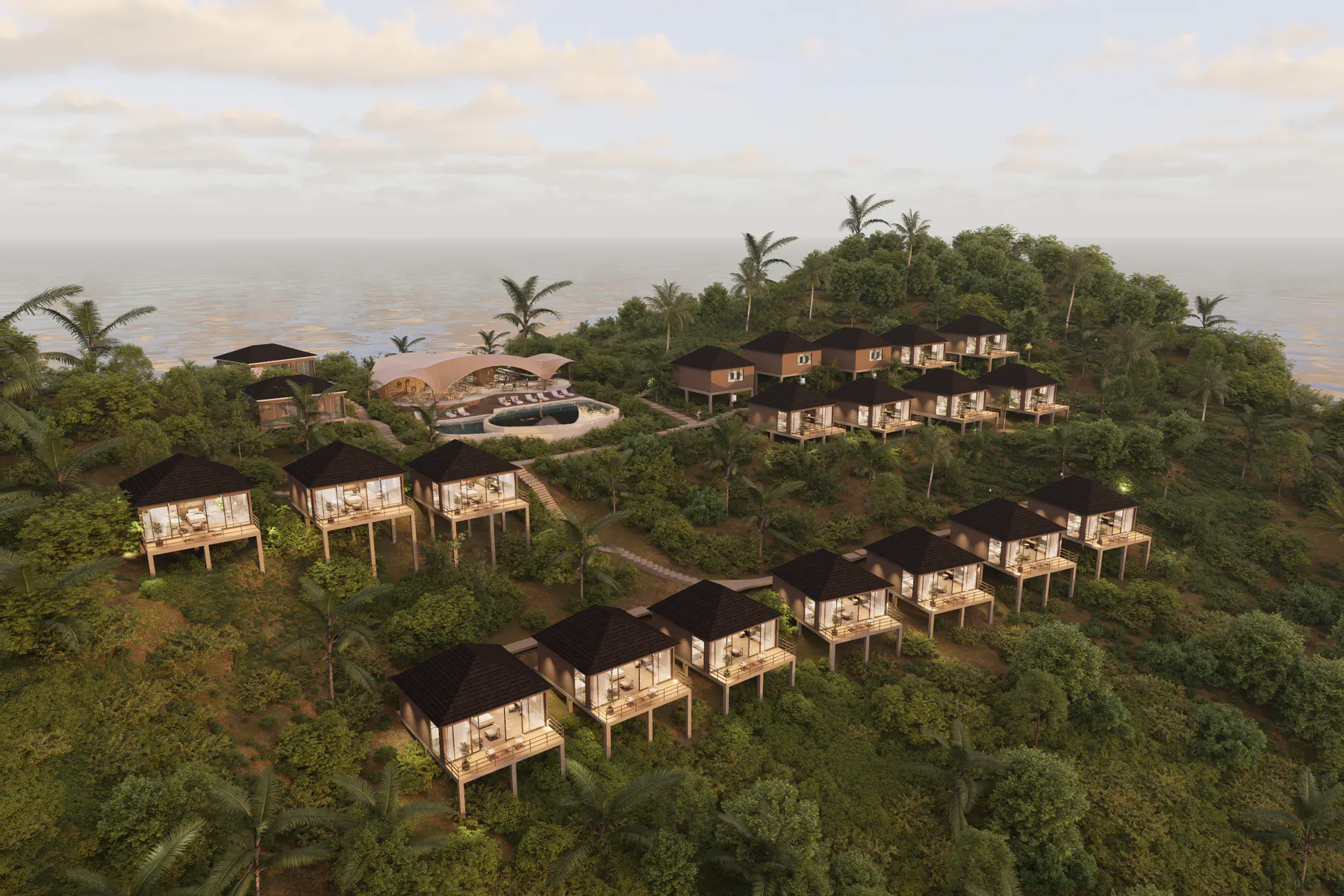
Komodo Resort sits on Sebayur, a small island 30 minutes by speedboat from Labuan Bajo, with 31 bungalows at Komodo Resort along the beach and the hill. Sebayur is not one of the dragon islands, so you sleep without dragons outside the door and reach them by boat. Our Komodo dragon trekking trips and Komodo National Park day trips leave from our own jetty, and the Komodo dive centre on the island runs dives on the other days.
It suits travellers who want dragons and the sea from one base: a ranger-led walk one day, Manta Point or the house reef the next, and a quiet island in the evening. Snorkelling on the house reef is supervised, and diving on it is not allowed, which keeps it in good shape.
It is not for everyone. If you want a guaranteed close look at a dragon on your own schedule, a zoo does that better than any trip: wild dragons are seen on guided walks, on their terms. If you want Labuan Bajo's restaurants and bars every night, a hotel in town makes more sense. And if your only free weeks are in January or February 2027, we are closed from 4 January to 28 February 2027 for upgrades and a new jetty, and reopen on 1 March, just as the hatching season gets going.
Key takeaways
- Komodo dragons mate once a year in the dry season, lay about 20 eggs in August or September, and hatch from February to April.
- Japan's iZoo received a breeding pair, Aril and Ai, from Surabaya Zoo in October 2026 and is aiming for eggs in September 2027.
- The five-year loan keeps any young as Indonesian property; Surabaya Zoo receives red pandas, giraffes, tortoises and macaques in return.
- A female kept alone can lay viable eggs by parthenogenesis, but every hatchling is male, which is why zoos want pairs.
- Komodo dragons are listed as Endangered; Komodo National Park counted about 3,300 in 2025, while Flores populations are declining.
- To see wild dragons, visit with a park ranger: July for mating, September to November for nests, March and April for hatchlings.