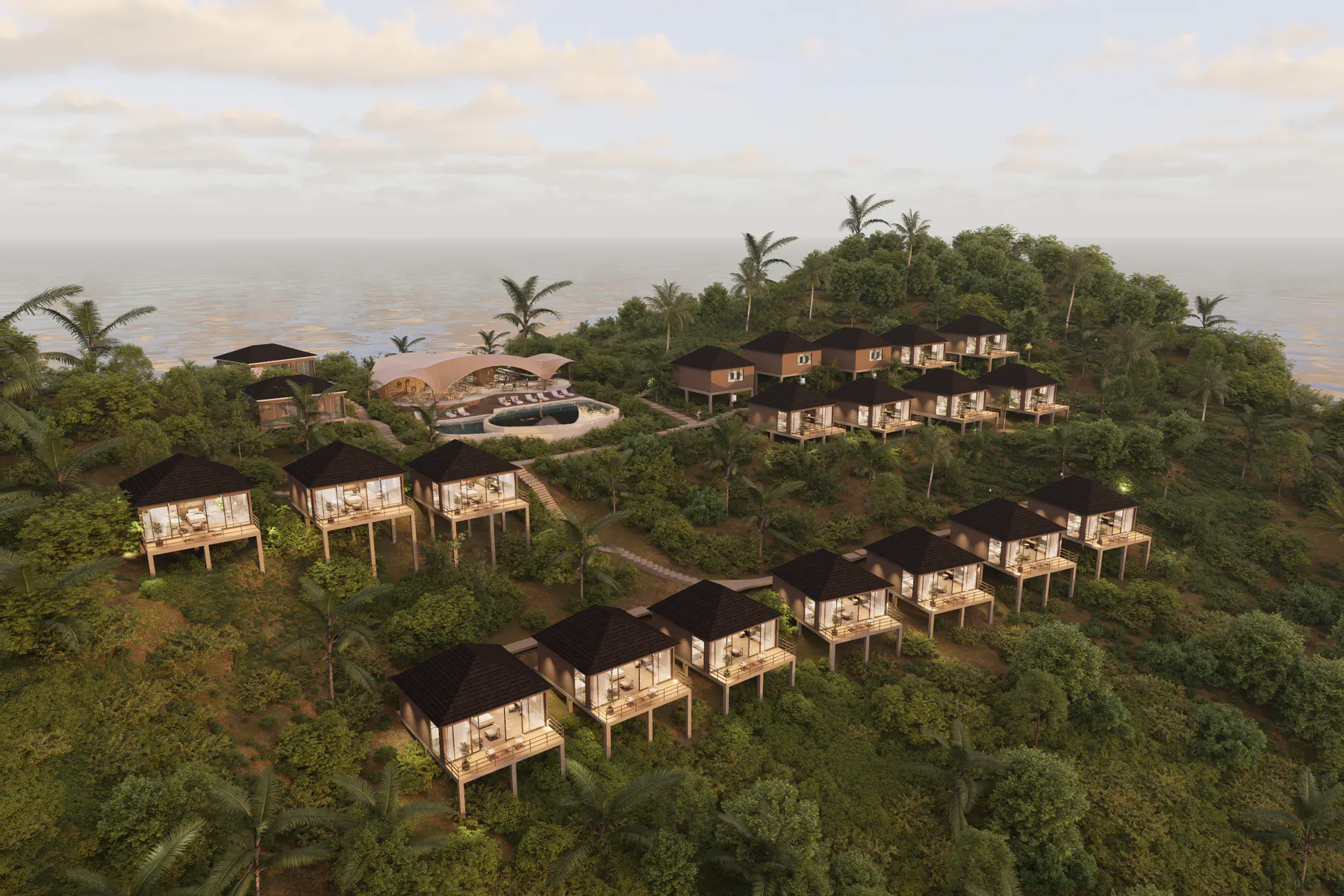
Komodo National Park rules come from the park authority's visitor protocol: book a dated ticket through SiORA, walk only with a ranger, keep your distance from dragons and mantas, feed and touch nothing, take nothing home, and fly a drone only with a permit. Minor breaches get a written warning, serious ones a six-month ban.
Komodo National Park has more rules than most places you'll visit on holiday, and they're enforced. The park authority, Balai Taman Nasional Komodo, publishes a list of 22 things nobody may do inside the park, and it applies to tourists, boat crews and guides alike. If you're joining Komodo National Park tours, most of these rules will shape your day without you noticing, because a good crew builds them into the plan.
A few of them, though, are yours to keep. Nobody else can hold your distance from a dragon, keep your fins off the coral or leave the pink sand on the beach. That's especially true on Komodo dragon tours, where the ranger sets the line and you're the one who has to stay behind it.
The rules also changed in 2026. A daily visitor quota, timed entry on Padar and dated e-tickets now sit on top of the older conduct rules, and a few long-standing habits, like a barbecue on the beach or a quick drone flight over Padar, are now clearly off the table. Here's what applies, why, and what happens if someone in your group gets it wrong.
What are the Komodo National Park rules?
Komodo National Park rules are the visitor protocol set by the park authority, governing how people enter, trek, swim, dive and fly drones inside the park.
- Dated tickets and quotas
- Ranger-led treks only
- No touching or feeding
- Nothing taken home
- Drone flights by permit
They sit alongside Indonesia's conservation law, which carries prison terms for harming protected animals such as dragons and manta rays.
You'll meet the rules:
- On a Komodo snorkeling stop at Manta Point
- Diving with a Komodo dive centre
- On a ranger walk during a Komodo Island tour
Follow your ranger and your guide, keep your hands to yourself, and leave the park exactly as you found it.
Park rules vs park fees: what is the difference?
People often search for the two together, and the official documents overlap, but they answer different questions.
Park rules
The rules say what you may and may not do once you're inside: where you can walk, how close you can get to wildlife, what you can bring and what you must leave behind. Breaking them leads to a warning, a ban or, for the worst cases, a criminal case.
Park fees
The fees are what you pay to be there at all: the entry ticket, activity charges and permits such as the one for drones. They're set by national regulation and change from time to time, so we keep them in a separate guide to Komodo National Park entrance fees.
Key distinction:
- Fees get you in the door; rules decide what you do once you're through it.
- Entering without a valid ticket is itself one of the 22 banned activities, so the two meet at the gate.
Entry rules: tickets, quota and timed entry
Since 2026 the park has run on a quota. The annual cap is 365,000 visitors, which works out at 1,000 people a day across all the sites in the park. Every visitor and every tour business has to reserve through SiORA, the park's booking app, at least one day before the visit. Walking up on the day and paying at a ranger station is no longer how it works.
Your ticket carries a date, and you have to enter on that date. If the weather turns and your boat stays in harbour, the ticket doesn't simply roll over to tomorrow. Ask your operator before you book what happens to the ticket if the trip is cancelled, because the park treats purchased tickets as final.
Padar has its own system on top of the daily cap. The southern viewpoint trail, the one in every photo of the three bays, now runs in timed sessions:
- Session 1: 05:00 to 08:00, up to 330 people
- Session 2: 08:00 to 11:00, up to 330 people
- Session 3: 15:00 to 18:00, up to 330 people
You choose the session when the ticket is booked, and trekking outside your session is one of the banned activities. That's why the sunrise session sells out first in the dry season, and why crews are strict about getting everyone back down on time. Our Padar Island guide covers the walk itself.
Foreign visitors can struggle with SiORA's payment step, and the park's own notice tells them to book through a local travel agent or tour operator. In practice almost everyone does. A resort, liveaboard or day-trip company buys the tickets in your name, and you carry your passport so the details can be checked.
Rules on land: rangers, trails and dragons
On Komodo Island and Rinca, where the dragons live, you can't walk anywhere without a park ranger. You register at the ranger station, at Loh Liang on Komodo or Loh Buaya on Rinca, and a ranger with a long forked stick leads your group along a set trail. Larger groups are split so each ranger has a manageable number of people.

The official protocol bans ignoring the instructions of park staff and guides, walking off the marked trails, and touching wildlife or getting too close to it. It doesn't give a number in metres. The working distance that rangers and operators use is three to five metres from a dragon, and the ranger decides on the day whether that's enough. A dragon lying in the shade by the station can lunge faster than you'd believe for an animal that heavy.
A few rules rangers enforce on every walk:
- Stay behind the ranger and with the group. Stepping around him for a better photo is the most common reason people get told off.
- Never run. Fast movement reads as prey. If a dragon starts moving towards the group, the ranger handles it.
- Keep quiet and move slowly. Loud noise and waving objects in front of a dragon are both banned.
- Bring no food ashore. Feeding any animal in the park is banned, and dragons follow smell over long distances.
- No smoking, no fires. The savanna is dry for most of the year, and the protocol bans anything that could start a fire, cigarette ends included.
Tell the ranger quietly before you set off if you have an open wound or your period. It isn't written into the protocol, but rangers ask, because a dragon's sense of smell is what it hunts with. Nobody is turned away; the ranger simply positions the group with more care. Our article on whether Komodo dragons are dangerous explains the risk without the drama.
The ban on cooking reaches beyond the dragon islands. The protocol forbids dinner set-ups, barbecues and any other cooking on the beaches and land inside the park, which ends the old charter-boat habit of grilling fish on an empty beach. The same list bans fireworks, firearms and air rifles, and bringing in animals or plants from outside the park.
Noise rules have a second target too. The protocol singles out the habitats of the large flying foxes and of the yellow-crested cockatoo, where loud music and karaoke are banned. If your trip ends at sunset off Kalong Island to watch the bats leave the mangroves, that's the reason the crew turns the speaker off.
Rules in the water: snorkelling, diving and mantas
The conduct rules don't stop at the shoreline. Touching or getting too close to animals applies just as much to turtles, sharks and mantas, and feeding fish is banned like feeding anything else. So is taking anything out of the water: coral, shells, sand and anything alive or dead.
Diving has its own line: the protocol bans diving without a certification at the park's dive sites. If you're not certified, you dive only as a student on a course or a supervised introductory dive with a dive centre, under an instructor. Bring your certification card or have your digital card ready, because operators ask for it before the first dive.
Manta Point, known locally as Karang Makassar, gets the most attention, and the code there is the one most snorkellers break without meaning to. Manta rays have had full legal protection in Indonesia since 2014. The distances below come from the Manta Trust guidelines that responsible Komodo operators follow, not from the text of a regulation, but they're what your guide will brief:
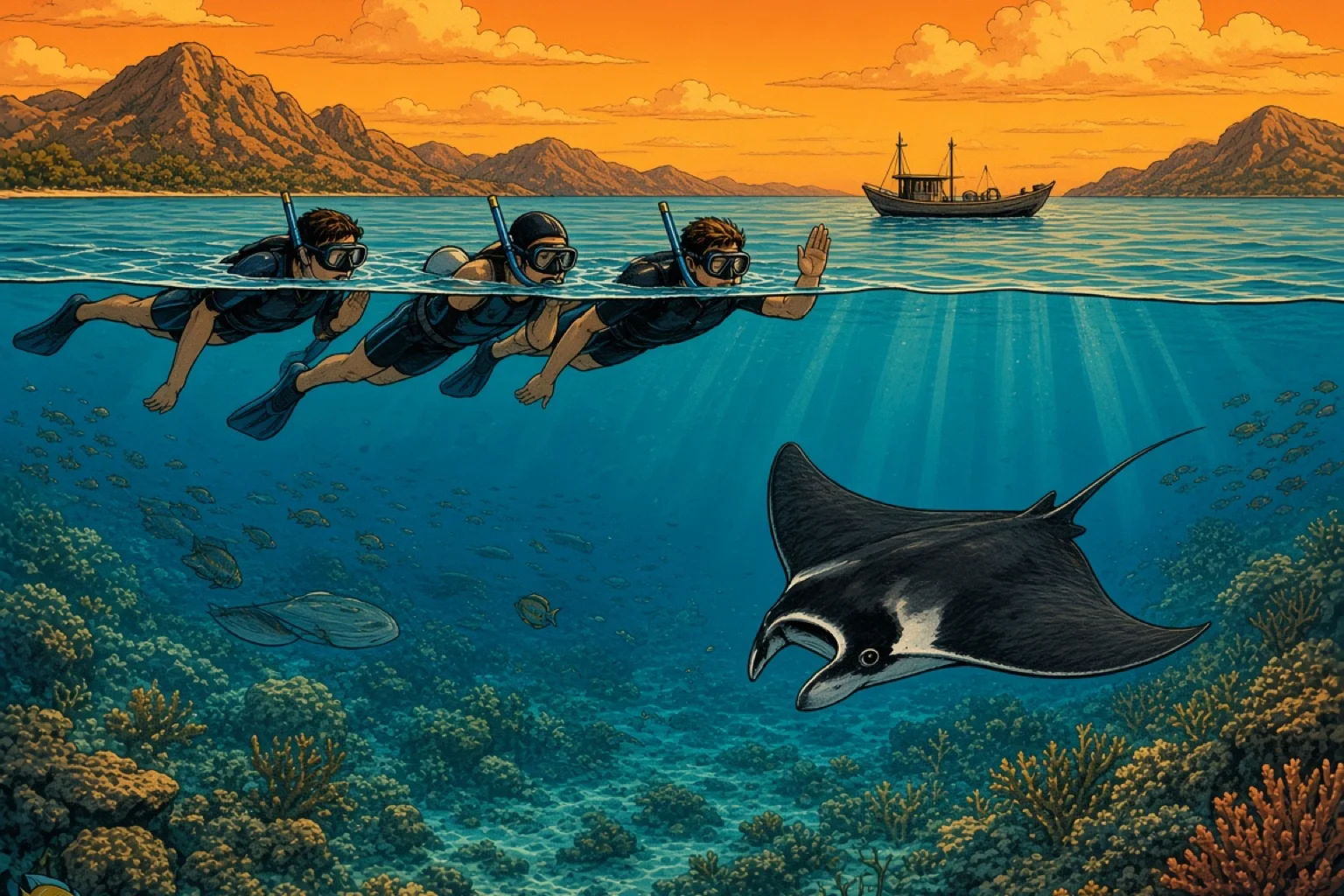
- Keep about three metres from the manta's body, measured sideways, and more from the tail.
- Never touch or chase one. Hold still and let it decide how close to come.
- Don't float directly above it or swim into its path, and don't duck-dive on top of it.
- Don't hover over a cleaning station, the coral heads where mantas queue to be cleaned.
- No flash. Strobes push mantas off the station.
Some rules bind the boat rather than you, and they're worth knowing because you'll see whether a crew follows them. Boats may not drop anchor in water shallower than 30 metres, except on pure sand, or anywhere in manta habitat and along their routes. They may not run at high speed through dive and snorkel sites. Jet skis, banana boats, flyboards and similar water toys are banned across the whole park. Our guide to swimming with manta rays in Komodo has more on how a good manta stop is run.
Drone rules in Komodo National Park
You can fly a drone in the park, but only with a permit, and the permit is real paperwork rather than a box to tick. Flying a drone without one is on the protocol's list of violations. If a ranger catches you, you'll be told to land and to delete every photo and video from the flight on the spot.
The permit is a SIMAKSI, an entry permit for activities in a conservation area. You apply on the SiORA website under Service, then Komodo National Park Permit, and the park asks for the documents that Indonesian aviation rules require:
- An application letter and a flight plan
- Your drone's registration and your pilot licence from the Indonesian aviation authority
- A flight permit and accident insurance for the drone
Apply up to seven days before you fly, and drone requests have to be in by noon on the working day before. Once the permit is approved, you pay the drone fee in the SiORA app, widely quoted at IDR 2,000,000 per drone per day. Paying without an approved permit doesn't make the flight legal.
For most holidaymakers, that's the honest answer: a casual flight over Padar or Pink Beach isn't realistic unless you already hold Indonesian drone papers. Even with a permit, rangers can ask you to stay away from dragons, nesting areas and wildlife colonies, so ask on arrival where you're allowed to fly.
The same SIMAKSI applies to more than drones. Commercial filming, pre-wedding photo shoots, research, sport fishing and birdwatching trips also need one, so a photographer planning paid work in the park should start the process before booking flights.
Rubbish, plastic and what you cannot take home
The protocol bans leaving rubbish of any kind anywhere in the park. That means everything you bring onto a beach or a trail goes back to the boat with you, wrappers, tissues and cigarette ends included. Crews are responsible for their guests here, so a good one will ask you to hand rubbish to them rather than tuck it under a rock.
Taking things is a heavier violation than leaving them. Sand, coral, shells, plants and animals, living or dead, may not leave the park without written permission from the head of the park authority. That includes a handful of sand from Pink Beach in Komodo, a bleached piece of coral from the tideline, a dragon's shed tooth or a seed pod from the savanna. It also covers damaging or taking anything from the park's facilities, signs and boardwalks.
Plastic rules sit with the local government rather than the park. A regency regulation in force since 27 May 2025 restricts single-use plastic bags, straws, bottles and styrofoam food boxes in Labuan Bajo and the surrounding district, and the regent has asked hotels to stop serving water in plastic bottles. A refillable bottle is the easy answer: most boats and hotels now have water to refill from.
How the rules work on a day in the park
The rules are easier to follow when you know where each one turns up. On a typical full-day boat trip, they appear in this order.
1. The ticket is booked the day before
Your operator reserves your place through SiORA by the day before at the latest, for a specific date and, if you're going to Padar, a specific session. Bring your passport; the names on the ticket need to match.
2. The crew briefs you on board
A good crew runs through the day's rules before the first stop: which sites need a ranger, the manta distances, no rubbish overboard, and where shoes stay on. If nobody briefs you, ask. It's a fair test of the crew.
3. You register with the rangers ashore
At Loh Liang or Loh Buaya, the ranger checks the group and walks you through the trail options. This is the moment to mention a cut or your period, and to ask how close the group will get.
4. You follow the code in the water
At snorkel and dive sites, the guide decides where you enter and how you approach wildlife. The boat should cut speed well before the site and stay off the reef.
5. Everything comes back on board
Rubbish, empty bottles and anything you picked up on the beach go back to the boat. If you collected a shell without thinking, put it back where you found it before you leave.
A worked example: Padar, Komodo Island, Pink Beach and Manta Point
Two friends book a full-day park tour for a Tuesday in August. On Monday the operator reserves their tickets in SiORA for Tuesday and picks Padar's session 1, 05:00 to 08:00, because the later morning session is already full. On the trail they stay on the marked path and leave the drone in the bag, since neither of them has a SIMAKSI. They're back at the boat before 08:00, when their session ends.
At Loh Liang on Komodo Island, they register, one of them mentions a grazed knee from the Padar steps, and the ranger keeps the group on the far side of the trail, about five metres from a dragon resting near the station. At Pink Beach they snorkel, take photos of the sand and leave it where it is. At Manta Point the crew switches to neutral before anyone gets in, and the guide holds the group three metres off a manta working a cleaning station. Their only "cost" for following every rule was the drone shot they didn't take.
What happens if you break the rules?
The protocol splits violations into two tiers. The light tier covers the first seven items on the list: ignoring staff or guide instructions, trekking outside your timed session, touching or crowding wildlife, diving without a certification, feeding animals, leaving rubbish and flying a drone without a permit. A first light violation earns a written warning.
Everything else on the list is a heavy violation. That covers:
- Entering without a ticket
- Taking sand, coral, plants or animals
- Walking off the trail
- Damaging facilities, or starting a fire
- Fireworks, beach cooking and water toys
- Anchoring on the reef, or speeding through dive sites
Three light violations also count as a heavy one. A visitor with a heavy violation is blacklisted from Komodo National Park for six months, and the ban can extend to other conservation areas in Indonesia.
Foreign visitors face one more step. If a foreigner does something dangerous, threatens public order or disregards Indonesian law, including immigration rules, the park hands the case to the immigration office in Labuan Bajo. Tour agencies and guides are punished too, with warnings, three-month bans and reports to their licensing authority, which is why good crews are strict with their guests.
Above all of this sits criminal law. Komodo dragons and manta rays are protected species, and under Indonesia's conservation law, as amended in 2024, hunting, injuring, keeping or trading a protected animal carries three to 15 years in prison. The park's protocol says plainly that criminal acts go to the police and onto the blacklist at the same time.
What to look for in a Komodo tour operator, rule by rule
Because operators answer for their guests, the way a company handles the rules tells you a lot about the rest of the trip. Our guide on how to choose a Komodo Island tour operator covers price and boats; these are the rule-related checks.
1. Tickets booked in your name, for your date
The operator should buy dated tickets in SiORA and tell you which Padar session you have. Ask: "Are the park tickets included, and which session are we booked into?"
2. A clear cancellation answer
Tickets are tied to a date. Ask: "If the boat can't sail because of the weather, what happens to our tickets?"
3. A proper briefing
Rules only work if guests hear them. Ask: "Do you brief the manta and dragon rules before each stop?"
4. Small groups in the water
A guide watching ten snorkellers at Manta Point can't keep anyone three metres off. Ask: "How many guests does each guide take in the water?"
5. Anchoring and mooring
Boats that drop anchor on coral are breaking a heavy rule. Ask: "Where do you moor at the snorkel stops?"
6. Rubbish and water
Look for refill water on board and a crew that collects rubbish. Ask: "Do you have drinking water to refill bottles, and where does the rubbish go?"
7. Honest answers about drones and beach dinners
An operator who offers a drone flight without asking about your SIMAKSI, or a barbecue on a beach inside the park, is offering to break the rules on your behalf. Ask: "Is that allowed inside the park?"
How to follow the park rules for your trip
Which rules matter most depends on what you're coming to do.
Snorkellers and non-divers spend the most time near mantas and turtles from the surface, so the manta code is the one to learn. Float flat, keep your fins below the surface and let the guide set the distance. Our Komodo snorkelling trips page lists the sites where you'll use it.
First-time divers dive in the park only on a course or a supervised introductory dive. If you want to dive independently on a later trip, our guide to how to learn to dive in Komodo explains the route to certification.
Certified divers should carry their card, keep their buoyancy off the reef and expect the guide to call the dive if the current is wrong. Reef hooks, if your guide uses them, go on rock, never on live coral.
Families need the dragon rules more than anyone. Children have to stay inside the group and behind the ranger, and running is the habit to break before you land. Our Komodo with kids guide covers age and trail choices.
Photographers should sort out a drone permit weeks before arriving or leave the drone at home, use a zoom rather than their feet near dragons, and switch off the flash for mantas.
Who Komodo Resort is for, and who it is not for
Komodo Resort is on Sebayur Island, inside the national park, about 30 minutes by speedboat from Labuan Bajo. For the trips that are part of your stay, our team buys your park tickets through SiORA in advance, and our own boats and guides run the park tours and the dive and snorkel days. The rules come with us rather than being something you have to research. Stay in one of the 31 rooms at Komodo Resort, use the Komodo Resort facilities between trips, and dive with our dive centre in Komodo National Park.
We hold ourselves to a stricter rule on our own reef. Diving on the Sebayur house reef isn't allowed, by our own dive centre or anyone else, and snorkelling there is supervised by our staff to protect the coral, turtles and sharks that live on it. If you were hoping to dive straight off the beach, we're the wrong choice. Our boats take you to the dive sites around the island instead.
We're also not the right base for travellers who want to plan every park day themselves, on a private boat at their own hours, or who are coming mainly to shoot drone footage. And if you want the park's remote southern sites, a Komodo liveaboard reaches places a day boat from any island can't.
Key takeaways
- The park authority's visitor protocol lists 22 banned activities, from touching wildlife and leaving rubbish to anchoring on reefs and flying drones without a permit.
- Tickets are booked through SiORA by the day before, for a fixed date, and Padar's viewpoint trail runs in three timed sessions.
- On Komodo and Rinca you walk only with a ranger. Keep three to five metres from dragons and never run.
- At Manta Point, stay about three metres from a manta, never touch or chase it, and keep off the cleaning stations.
- Drones need a SIMAKSI permit and Indonesian drone papers. Without them, a ranger will make you delete the footage.
- Heavy violations bring a six-month park ban, and harming a protected animal can mean three to 15 years in prison.