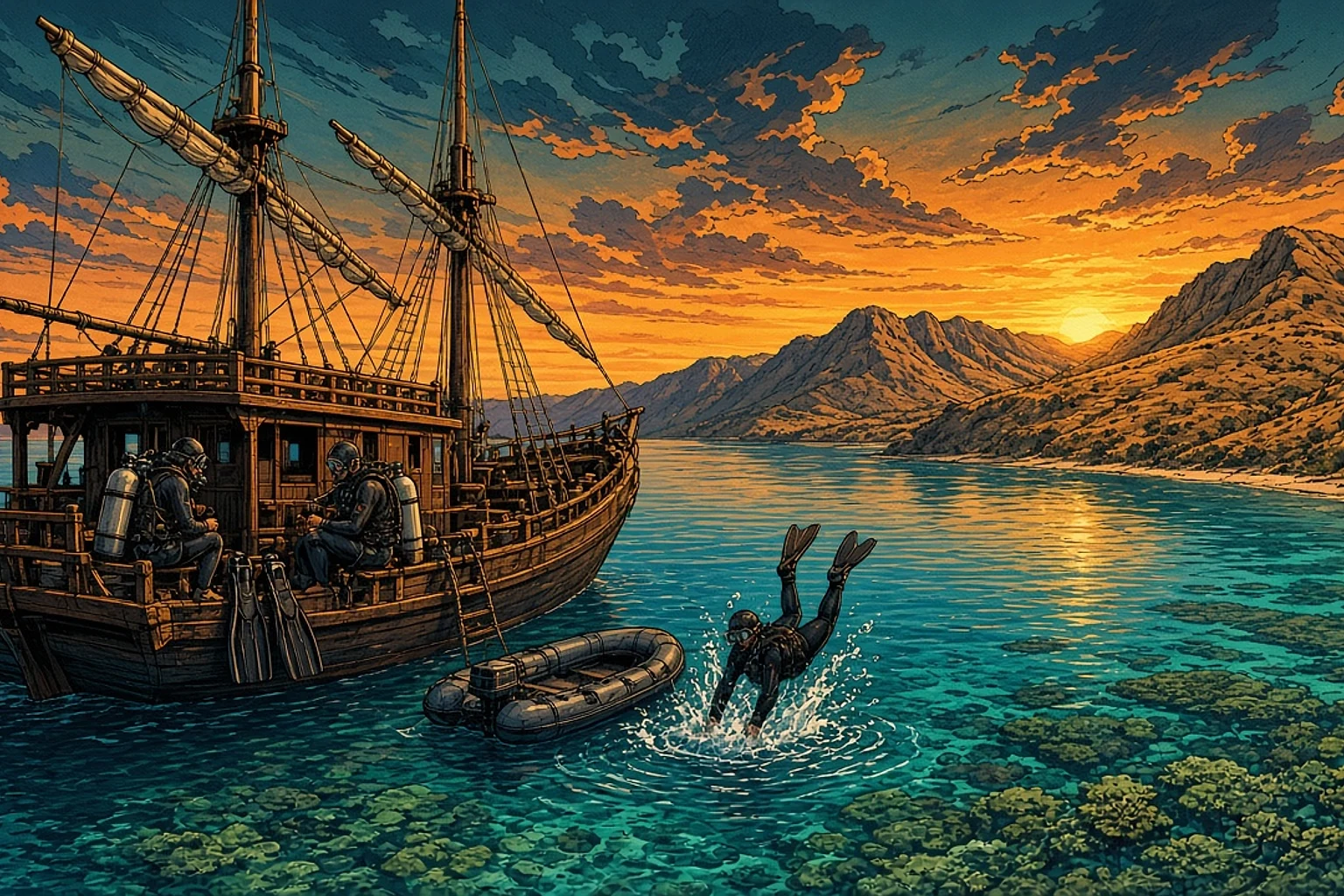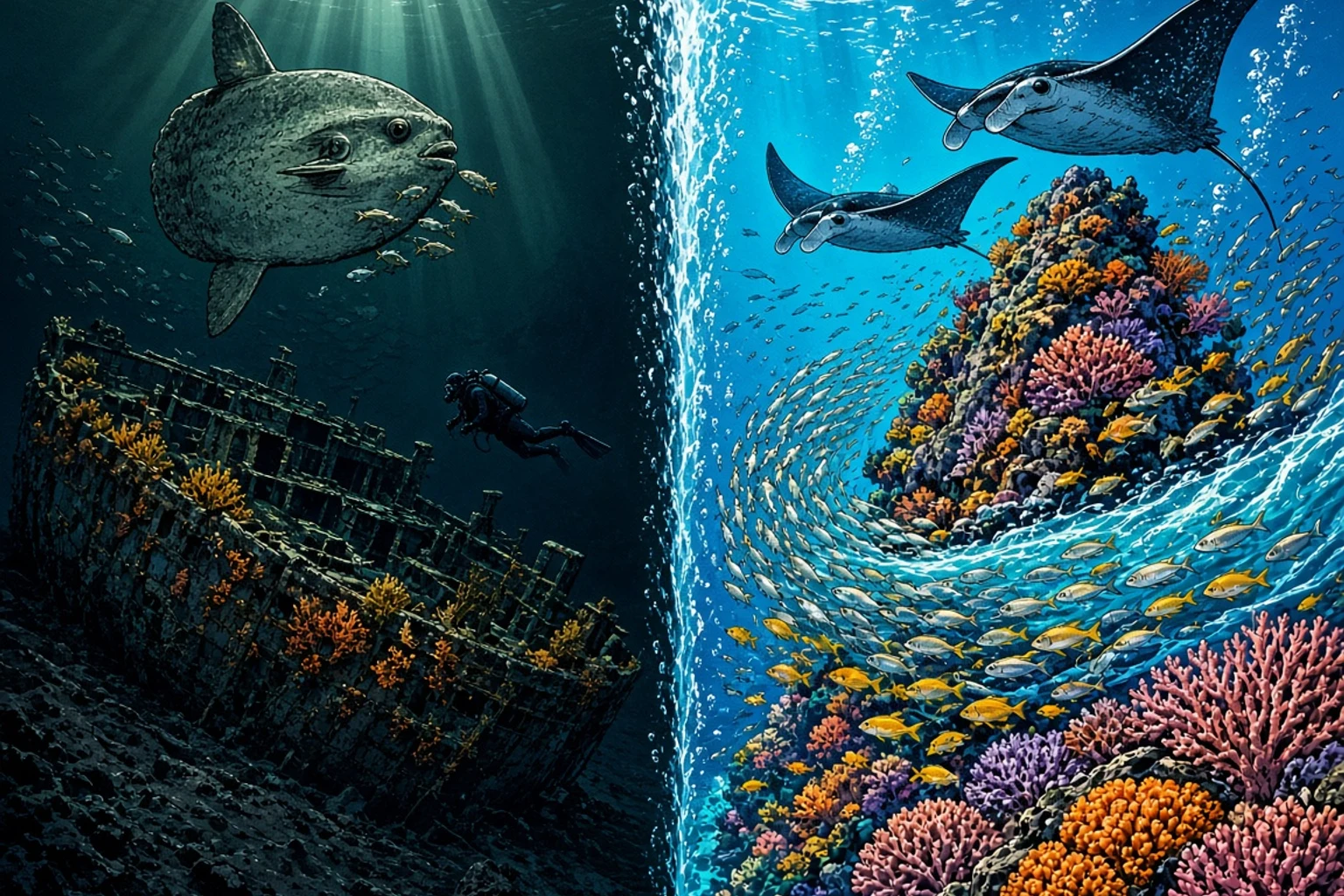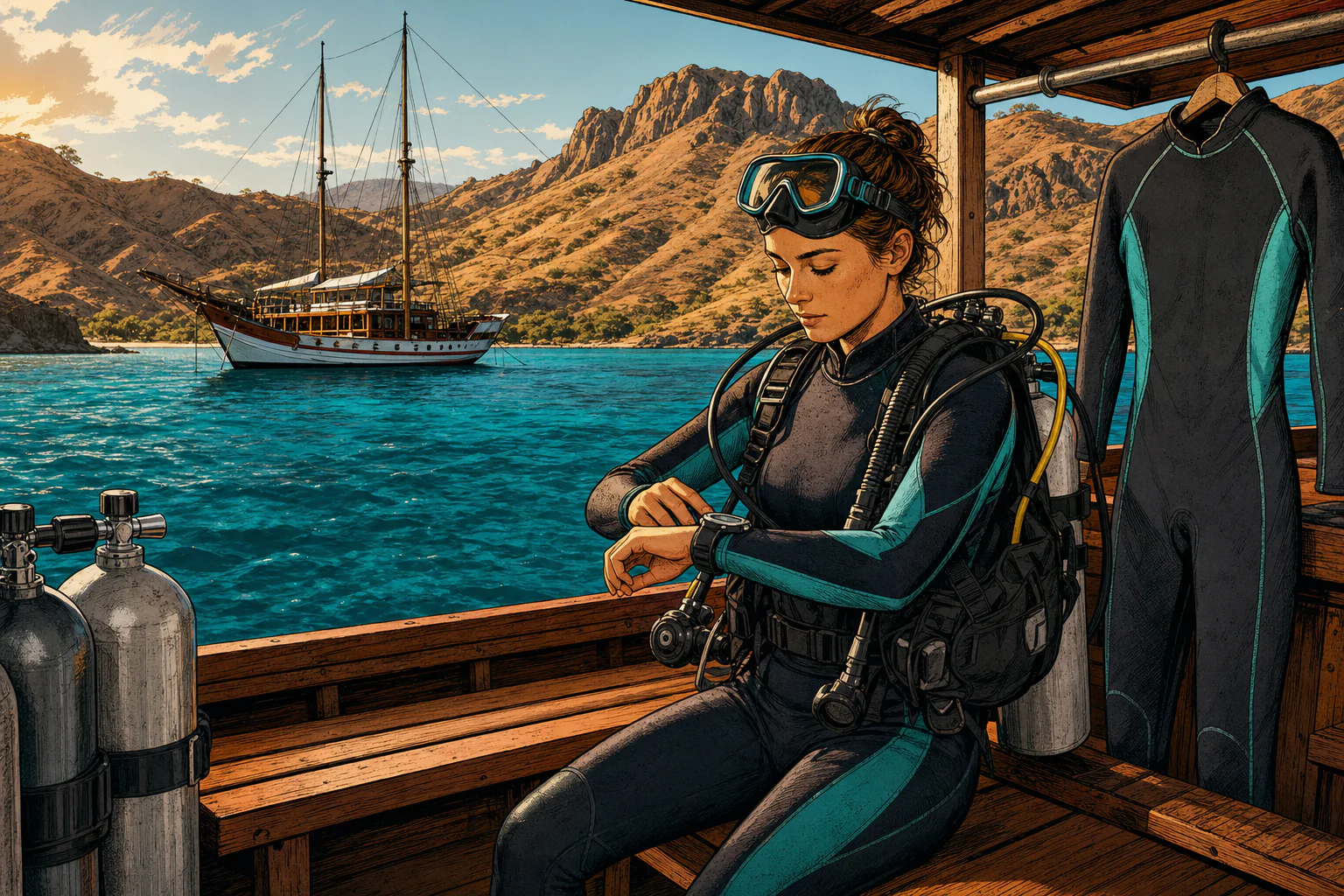
Komodo National Park is one of the planet's great underwater wildernesses. It is world-renowned for diving in Komodo, but there is a quieter, more intimate way to explore the same reefs that is growing fast among travellers: freediving. On a single breath, gliding silently down a coral wall or hovering above a cleaning station as manta rays drift overhead, you experience the park the way its inhabitants do, with no bubbles, no noise, and no heavy equipment between you and the ocean.
For many guests, that first weightless descent becomes the most memorable moment of the entire trip. Freediving strips the experience back to its essence: breath, body, and blue water. And because Komodo concentrates so much marine life in the shallows, you do not need to be an elite athlete or reach extreme depths to be rewarded. Some of the park's best encounters happen between five and fifteen metres.
This guide explains why Komodo is one of the best freediving destinations in Indonesia, the top freediving sites for every level, the marine life you can expect to meet, when to come, how to train and stay safe in the park's famous currents, and how to plan a freediving trip whether you are a curious beginner or a seasoned apnea diver.
What Freediving in Komodo Actually Feels Like
Scuba diving lets you stay down for an hour, but it comes with a soundtrack of your own breathing and a curtain of bubbles that keeps shy animals at arm's length. Snorkeling keeps you safely on the surface, looking down at a world you never quite enter. Freediving sits between the two, and it feels like neither.
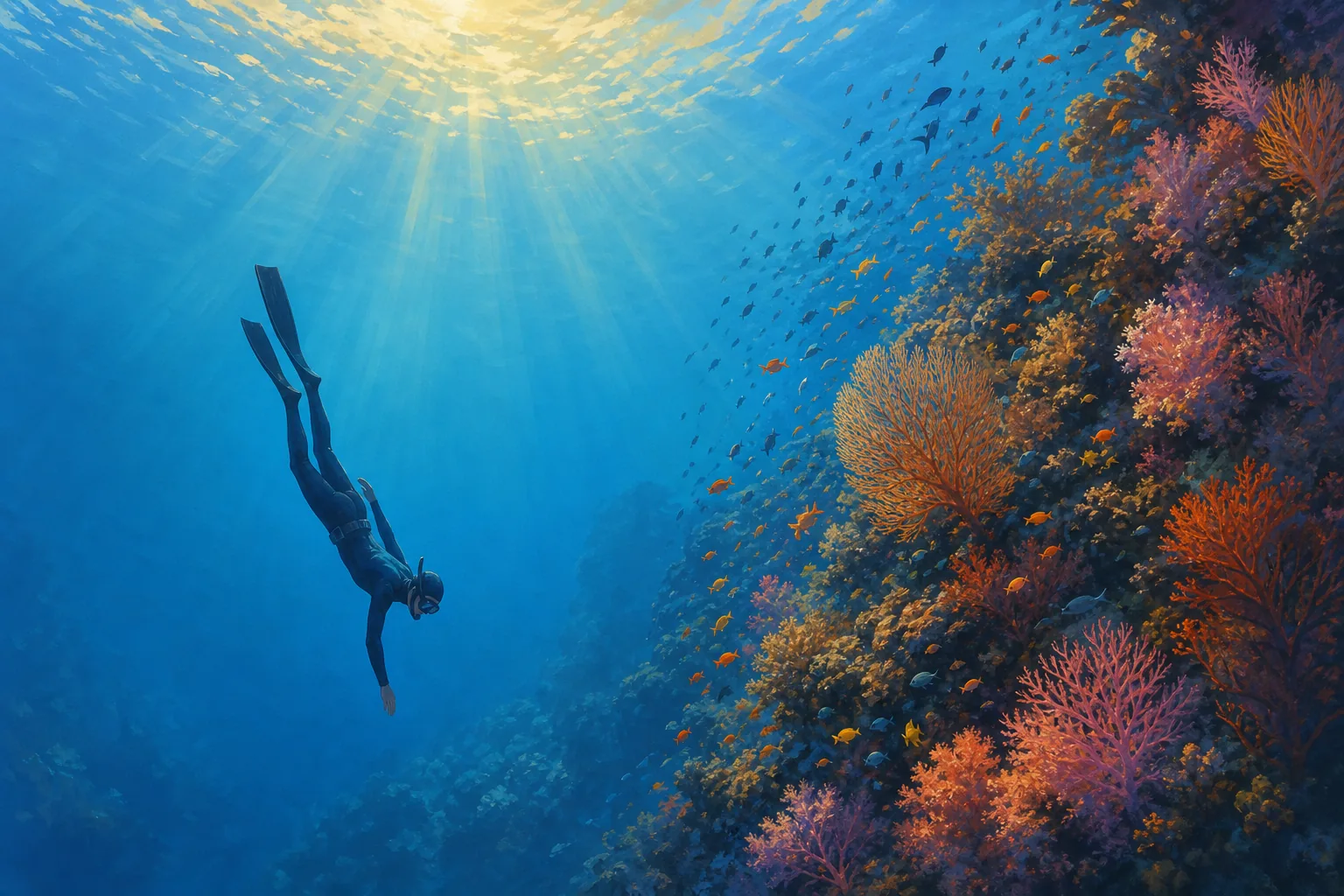
You take a slow, relaxed breath at the surface, fold at the waist, and slip downward with a few easy fin strokes. The pressure builds gently, the light shifts from silver to deep blue, and the reef rises to meet you. Without the noise of a regulator, turtles keep feeding, reef sharks hold their line, and mantas often swim closer than they ever would to a scuba diver. Then you turn, look up at the shimmering ceiling of the sea, and rise back to the light. It is calm, meditative, and surprisingly addictive.
Why Komodo Is a World-Class Freediving Destination
Komodo sits at the meeting point of the Indian and Pacific Oceans, where cold, nutrient-rich water pushes through narrow channels between volcanic islands. That same upwelling that makes the park a legendary scuba destination also creates ideal freediving conditions: dense marine life concentrated in the shallows, dramatic drop-offs that start just below the surface, and frequent encounters with large pelagic animals you can reach on a single breath.
What sets Komodo apart for freedivers specifically:
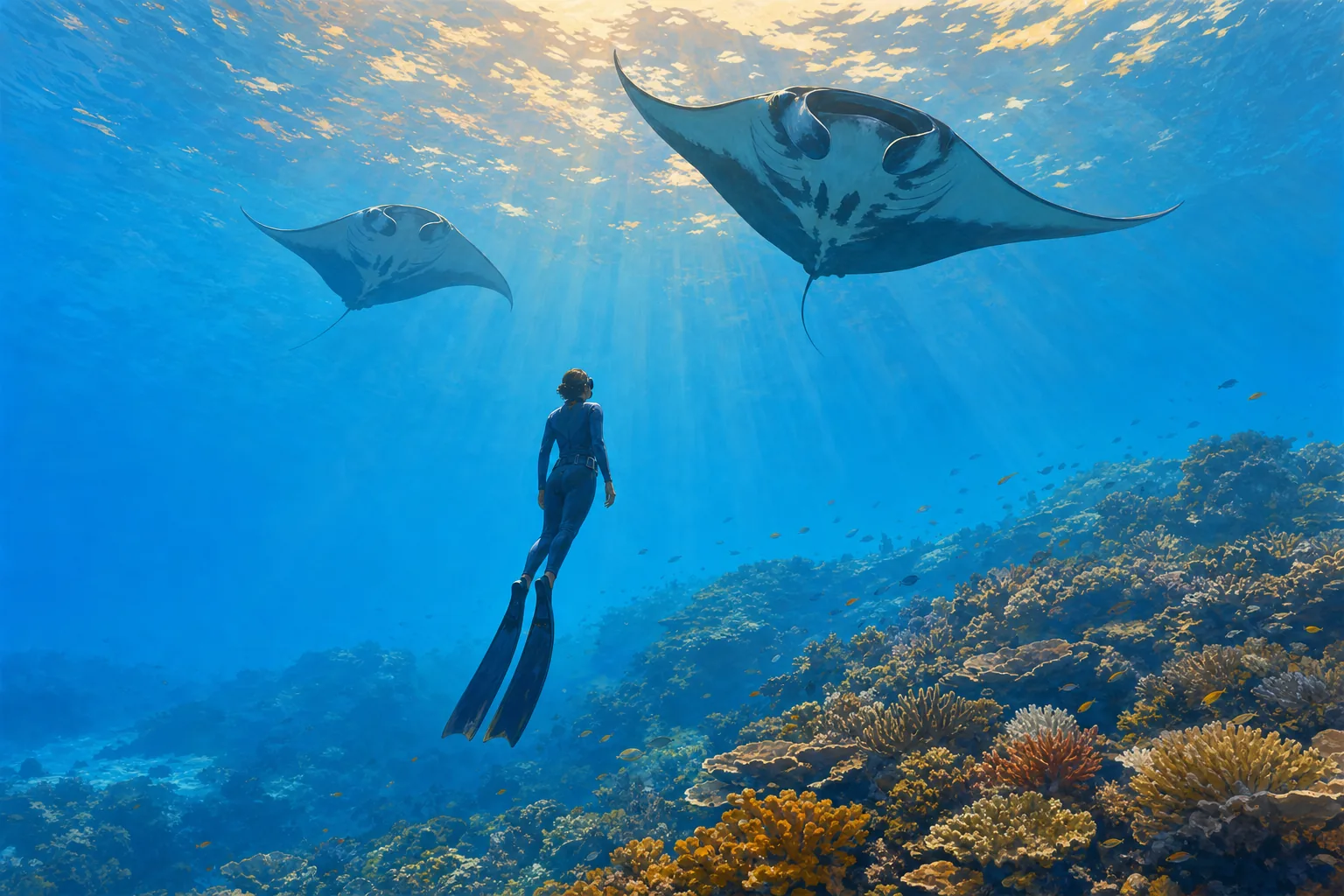
- Manta rays in shallow water. At Manta Point and Mawan, mantas often feed and get cleaned at 5 to 12 metres, comfortably within freediving range.
- Reefs that begin at the surface. Hard coral gardens start at waist depth and tumble into the blue, so even shallow dives are spectacular.
- Outstanding visibility. In the dry season, visibility regularly exceeds 20 to 30 metres, which makes depth feel safer and more inviting.
- Warm water. Northern sites sit around 27 to 29°C, so you can train and explore in a thin wetsuit.
- Variety in a small area. Calm, protected bays for beginners and deep, current-swept pinnacles for advanced divers are often only minutes apart by boat.
Freediving vs Scuba Diving vs Snorkeling in Komodo
People often ask how freediving fits between the two activities Komodo is already known for. If you are weighing your options, our guide to snorkeling vs diving in Komodo covers the scuba and snorkel side in detail. Here is where freediving sits:
- Snorkeling keeps you on the surface looking down. It is relaxing, requires no training, and is perfect for families.
- Scuba diving lets you stay down for 45 to 70 minutes and reach 18 to 30 metres, but you carry tanks and need certification.
- Freediving is the middle path: you descend into the reef like a scuba diver but stay mobile, quiet, and weightless like a snorkeler. Animals are far less wary of a silent freediver than a noisy scuba diver, which often means closer encounters.
Many visitors combine all three across a trip, and a good number arrive as snorkelers and leave hooked on freediving. If you are completely new to the underwater world, our Komodo snorkeling guide is a gentle place to start before you progress to breath-hold dives.
Is Freediving in Komodo Right for You?
The short answer is yes, for almost everyone, provided you choose the right sites and dive within your limits. Freediving is highly scalable: a first-timer can have a wonderful day duck-diving to five metres in a calm bay, while an experienced diver can chase 25-metre descents on a deep pinnacle. Here is roughly how it breaks down by level:
- Total beginners: You can join a guided "discover freediving" session with no experience. Expect shallow, sheltered sites, basic breathing and equalisation coaching, and turtles and reef fish at three to eight metres.
- Confident snorkelers: If you are comfortable holding your breath for 30 to 45 seconds and equalising your ears, you will get a lot out of Komodo's reefs and may meet mantas on day one.
- Certified freedivers: Komodo's walls, pinnacles, and drifts offer serious depth and adventure, ideally with a guide who knows the tides.
The one firm requirement is comfort in open water and the willingness to dive with a buddy. If you can relax, you can freedive.
Best Freediving Sites in Komodo
These are the sites that consistently deliver for breath-hold divers, grouped by experience level. Many also feature on our wider guide to Komodo dive sites.
Manta Point and Mawan (for everyone)
The headline experience. Both sites are manta cleaning stations and feeding zones where rays cruise at depths a freediver can easily share. The key is patience and stillness: drop down a few metres, relax, and let the mantas come to you. Avoid chasing them, which only pushes them away.
Pink Beach and Siaba Besar (beginner-friendly)
Calm, shallow, and protected, with gentle slopes and turtles, reef fish, and healthy coral. These are excellent places to practise relaxation, equalisation, and duck dives before moving to more demanding sites. They are also some of the best snorkeling spots in the park, so mixed groups are happy here.
Tatawa Besar and Tatawa Kecil (intermediate)
Sloping reefs and gentle drifts covered in orange soft coral and clouds of anthias. Tatawa Besar is usually relaxed enough for improving freedivers, while Tatawa Kecil can run faster and is better left to confident divers. Turtles are almost guaranteed.
Advanced drift and wall dives (with a guide)
Experienced freedivers can take on Komodo's faster channels and deeper walls, where the current does the work and the marine life is at its richest. These dives must always be done with a guide who reads the tides and provides boat cover.
One important note on the park's most famous pinnacles: Batu Bolong and Castle Rock are reserved for scuba diving and do not permit freediving, both because of their ripping, unpredictable currents and to manage traffic at these busy sites. Always check the current local rules and follow your guide's direction on which sites are open to breath-hold divers.
Karang Makassar (the Manta highway)
A long sandy channel where mantas drift in numbers during feeding season. Because the current does the moving for you, it is a superb drift experience, but it must be done with proper boat cover and a guide tracking your position at the surface.
Freediving With Manta Rays: Etiquette That Protects the Encounter
Freediving with mantas is a privilege, and how you behave decides whether the animals stay or leave. For everything about the season and the science of these encounters, see our dedicated guide to swimming with manta rays in Komodo. When you are in the water, follow these guidelines:
- Never touch, chase, or block a manta's path. Stay to the side and let it approach.
- Keep low and still at cleaning stations so cleaner fish can keep working.
- Descend smoothly and avoid sudden movements or splashing.
- Do not use flash if you are taking photos.
- Always keep a buddy at the surface watching you.
Marine Life You Will Meet on a Single Breath
Komodo's shallows are extraordinarily productive, which is exactly why freediving here is so rewarding. Within easy breath-hold depth you can expect to encounter:
- Reef manta rays at cleaning stations and feeding lines
- Green and hawksbill turtles grazing on coral, often within a few metres of the surface
- White-tip and black-tip reef sharks patrolling drop-offs
- Schooling fusiliers, snapper, and surgeonfish so dense they form moving walls
- Bumphead parrotfish, giant trevally, and Napoleon wrasse cruising the reef edge
- Macro life such as nudibranchs, anemonefish, and moray eels tucked into the coral
Because you move slowly and silently, you often see natural behaviour that scuba divers miss, from turtles ignoring you completely to mantas making repeated, curious passes.
Best Time to Freedive in Komodo
Komodo is a year-round destination, but conditions shift with the seasons. For a full month-by-month breakdown, see our guide to the best time to visit Komodo Island. For freediving specifically:
- April to October (dry season) brings the calmest seas, best visibility, and most reliable boat access. This is the prime window for freediving the northern and central sites.
- Manta season peaks around the cooler months, when plankton blooms draw large aggregations to the cleaning stations, though mantas are present year-round.
- December to February (wet season) can mean rougher surface conditions and reduced visibility at exposed sites, but quiet reefs and fewer boats at sheltered spots.
Safety and Courses: Never Freedive Alone
Freediving is safe when done correctly and dangerous when done casually. Komodo's currents add a layer of complexity that even strong swimmers underestimate. A few non-negotiable rules:
- Always dive with a trained buddy using one-up, one-down supervision. The vast majority of freediving accidents happen to people diving alone.
- Respect the current. Komodo's channels can rip, and a strong drift is never the place to push personal bests. Let a local guide read the tides and choose sites that are open to freediving.
- Take a course. A certified entry-level freediving course (typically two to three days) teaches breathing, equalisation, relaxation, and rescue skills, and will transform both your safety and your depth.
- Mind your surface intervals and never hyperventilate before a dive.
- Stay hydrated and rested, and if you are also scuba diving, do your freediving before your scuba dives, not after, and follow no-fly and surface-interval guidance.
If you have never tried breath-hold diving, Komodo's calm bays are a forgiving place to learn, much like trying scuba for the first time. Our guide to trying scuba diving in Komodo gives a sense of how first-timers ease into the water here.
Simple Breath-Hold Training Before Your Trip
You do not need months of preparation to enjoy freediving in Komodo, but a little training makes a big difference to your comfort and bottom time. In the weeks before you travel, focus on the basics:
- Diaphragmatic breathing: practise slow, deep belly breaths to lower your heart rate and relax.
- Equalisation: learn to equalise your ears early and often, before you feel pressure.
- Relaxation, not force: the goal of freediving is calm, not effort. Tension burns oxygen.
- General fitness: swimming, yoga, and cardio all help, but flexibility and relaxation matter more than raw strength.
Never practise breath-holds in or near water on your own at home. Save the in-water work for the supervised sessions with your guide in Komodo.
Freediving Photography in Komodo
Freediving and underwater photography are a natural pairing: no bubbles means clearer shots and calmer subjects, and the soft natural light of the shallows is flattering. If you want to bring home images of mantas and reefs, read our underwater photography guide for Komodo for camera, settings, and dive-site advice. A few freediving-specific tips:
- Use a wide-angle lens or a wide setting; you will rarely be close enough for macro on a breath.
- Shoot upward to capture mantas against the bright surface.
- Rely on natural light rather than strobes, which can disturb animals.
- Get the shot on the way down, then enjoy the ascent without fumbling with the camera.
A Sample Freediving Day in Komodo
A typical day from a resort or boat base inside the park might look like this:
- Early morning: a calm, glassy departure to a sheltered site like Mawan before the day boats arrive, warming up with relaxed dives.
- Mid-morning: a manta cleaning station, hanging quietly while the rays circle overhead.
- Midday: a surface interval on the boat, lunch, and rest, which is when your body recovers and your dives improve.
- Afternoon: a relaxed reef or wall with turtles and soft coral, then back to base for a sunset that Komodo does better than almost anywhere.
Beyond the Water: Pair Freediving With Komodo's Other Icons
Freediving rests your lungs between dives, so most visitors fill the gaps with the park's land and surface highlights. There is no shortage of things to do in Komodo on a non-diving morning, from hiking the famous viewpoint on Padar Island to walking with rangers among the legendary Komodo dragons. Building a trip that mixes breath-hold diving with these experiences gives your body recovery time and your trip variety.
Freedive Responsibly
Komodo is a protected national park and a UNESCO World Heritage site, and its reefs are fragile. As a freediver you already tread lightly, but you can go further: maintain good buoyancy and never stand on or touch coral, keep your distance from all marine life, use reef-safe sunscreen, take nothing but photos, and support operators who follow responsible wildlife guidelines. The stillness that makes freediving so special is also what makes it one of the lowest-impact ways to experience the underwater world.
What to Bring for Freediving in Komodo
Travel light, but bring the gear that matters for comfort and safety:
- Long freediving fins and a low-volume mask (rentals can be limited, so bring your own if you can)
- A thin 1.5 to 3 mm wetsuit for warmth and sun protection
- A freediving-specific weight belt (rubber, worn on the hips)
- A dive computer or freediving watch to track depth and surface intervals
- Reef-safe sunscreen, a rash guard, and plenty of water
For a complete checklist covering boats, treks, and reef days, see our Komodo Island packing list.
How to Plan Your Komodo Freediving Trip
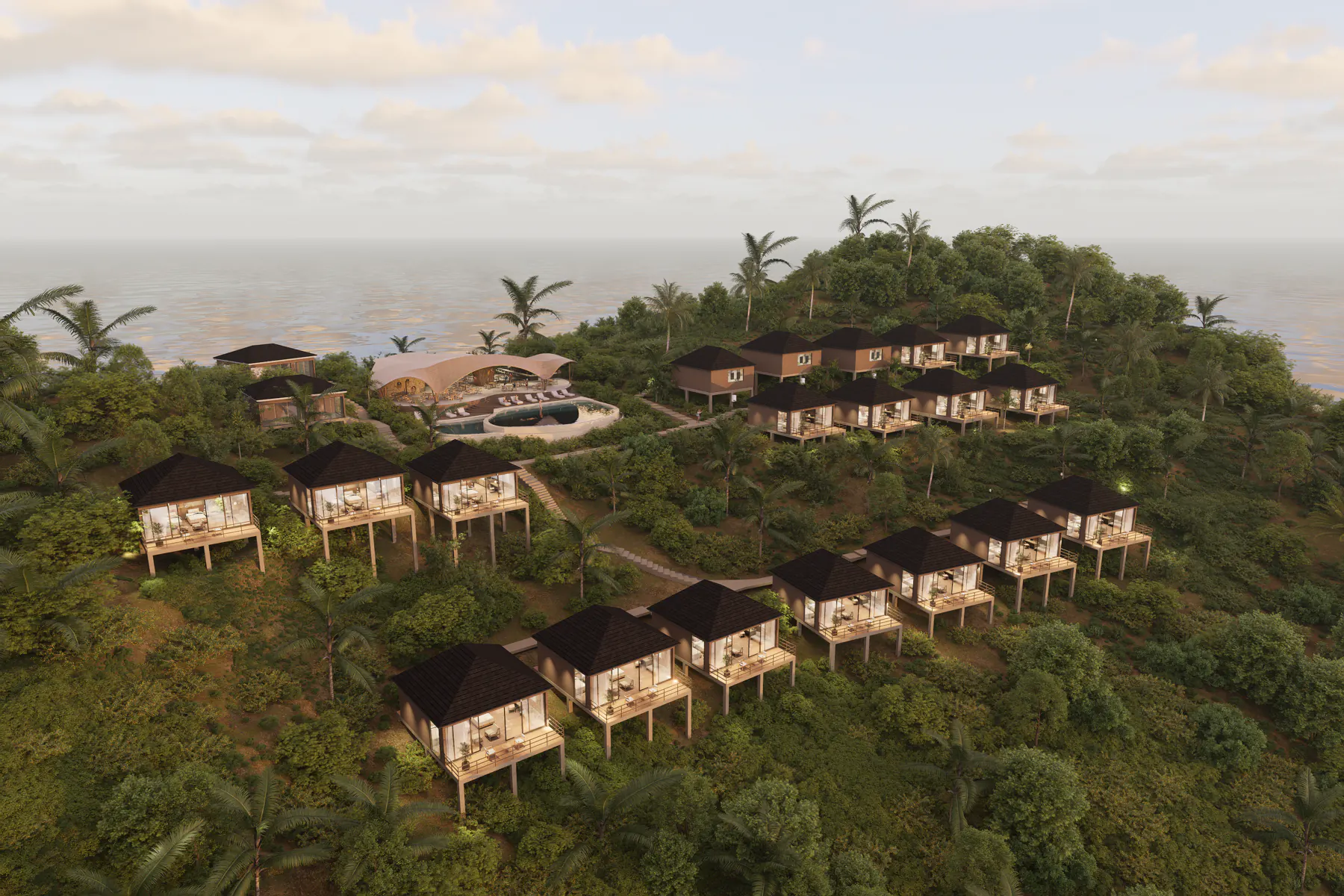
Most freedivers reach the park through Labuan Bajo on Flores and then base themselves either on a liveaboard or at a resort inside or near the park. For routes, airports, and connections, see our guide on how to get to Komodo. Staying close to the dive sites means short boat transfers, calmer morning conditions, and the flexibility to be first in the water before the day-trip crowds arrive. A relaxed, reef-side base also helps your breath-hold performance, because rest and low stress directly improve your dives.
Whether you come for a single magical session with the mantas or a week of dedicated training, Komodo rewards freedivers with encounters that are hard to match anywhere else in the world. Pack your fins, slow your breathing, and let the park show you its quietest, most beautiful side.