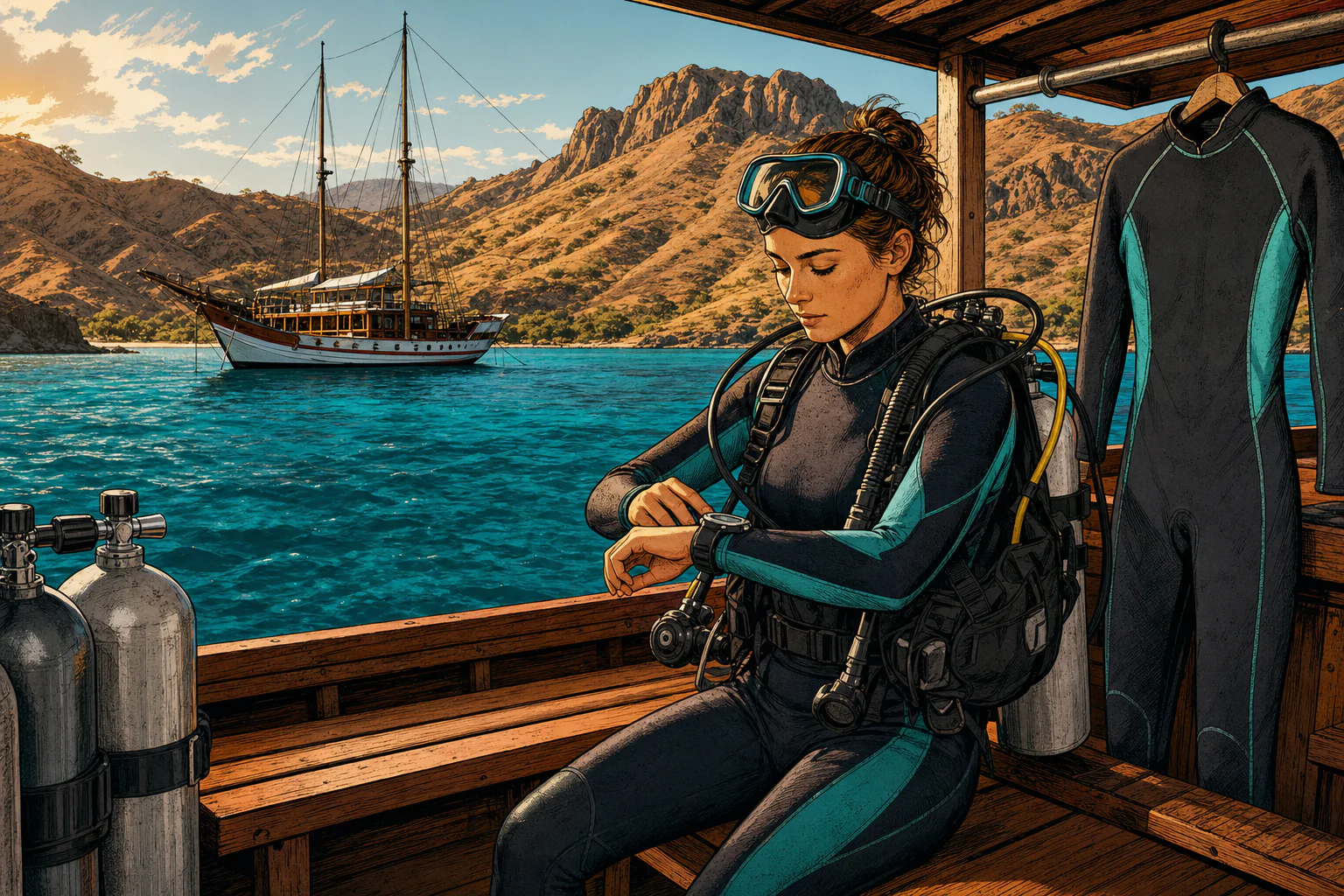
Almost every diver who reaches Komodo passes through Bali to get there, which makes this the question we're asked more than any other: if I only have one trip, is it worth flying on? The honest answer is that these two aren't really competing for the same week. Bali is the most accessible serious diving in Indonesia and it's the easier trip by a distance. Komodo is harder to reach and puts you somewhere Bali cannot. What surprises people, and surprised us when we put our own two price lists side by side, is that the diving itself costs less in Komodo. We run the Komodo dive centre here, so take the bias as read, but the numbers below are the real ones and several of them favour Bali.
The short version: if you're newly certified, short on days, or want diving to be one part of a broader holiday, Bali wins and it isn't close. If you've got fifty dives, you're comfortable in current, and you want the diving itself to be the reason for the trip, Komodo is what you came to Indonesia for. Whether you reach it from a resort or a Komodo liveaboard matters less than whether you're ready for the conditions.
Below: what each place actually delivers underwater, the one difference that decides it for most people, what both really cost, when to go, and why doing both in a single trip is easier than most people assume.
Bali vs Komodo Diving at a Glance
| Bali | Komodo | |
|---|---|---|
| Getting there | Fly to Denpasar, dive the same week | Denpasar, then a 1 hour flight to Labuan Bajo |
| Two guided fun dives | IDR 2,700,000 at Tulamben, 3,150,000 at Nusa Penida | IDR 2,500,000 from the resort |
| Daily park fees | Conservation fees at some sites only | IDR 400,000 per diver, per day, itemised below |
| Suits which diver | Open Water upward, plenty for beginners | Comfortable at 50 dives and up |
| Currents | Mild at most sites, serious at a few | Mild at a few, strong at most |
| Signature animal | Mola mola, July to October | Mantas all year, in the hundreds in the wet season |
| Water temperature | 26 to 30°C, down to 17°C in mola season | 27 to 30°C north, 20 to 25°C south |
| Best visibility | 15 to 30 m, April to November | 25 to 35 m in the north, dry season |
| Non-divers | An entire island of things to do | Dragons, islands, beaches, not much else |
| Time needed | Worth it for three days | Five days minimum to justify the flights |
They Are Not the Same Kind of Trip
Before comparing dive sites it's worth being clear about what you're actually choosing between, because the diving is only part of it.
Bali is a large, busy island with an international airport, thousands of hotels, roads that go everywhere, and diving spread around its coast in five distinct areas. You can dive on Tuesday, surf on Wednesday, take your partner who doesn't dive to a rice terrace on Thursday, and nobody in the party is bored. The diving is genuinely good and the logistics are trivial.
Komodo is a national park with a small town attached. You fly in specifically to be on the water. There's a dragon trek, a famous ridge to climb and some of the best beaches in Indonesia, but the day is built around the boat. If diving isn't the point of your trip, most of Komodo's expense is wasted on you.
That framing settles the question for a lot of people before a single dive site gets mentioned.
What Bali Diving Actually Is
Bali's diving splits into five areas, and the differences between them are larger than most first-timers expect.
Tulamben is the famous one. The USAT Liberty is a 125 metre cargo ship lying on a black sand slope about thirty metres off the beach, in five to thirty metres of water. You walk in. There's almost no current because the bay sits in the lee of the northeast coast. The top and middle of the wreck are within Open Water limits, which is why a great many divers do their first wreck here. Visibility runs 15 to 25 metres on an ordinary dry season day. The catch is crowds: be in the water by six or seven in the morning, because the day-trip vans from the south arrive around nine and the midship section gets busy.
Amed sits along the same coast and is the quiet option. Reef, macro, a small Japanese wreck, pygmy seahorses, and a strip of low-key guesthouses. It's also the cheapest diving on the island.
Nusa Penida is the serious one, and it's where Bali's reputation for big animals comes from. Manta Point on the south coast is a cleaning station where resident reef mantas return daily, hovering at 8 to 18 metres while cleaner wrasse work their gills. It runs all year. Crystal Bay is the mola mola site and we'll come back to it, because it's also the most dangerous diving in Bali.
Menjangan, in the northwest, is wall diving inside a national park. Steep drop-offs, big sea fans, clear water, and genuinely calm conditions suitable for anyone.
Padang Bai and the Gilis off Candidasa round it out, with reef and muck close in and a cluster of advanced, current-swept pinnacles at Tepekong and Mimpang that catch people out.
What Komodo Diving Actually Is
Komodo is one park running two opposite calendars, and it's more consistent in quality than Bali but far narrower in style.
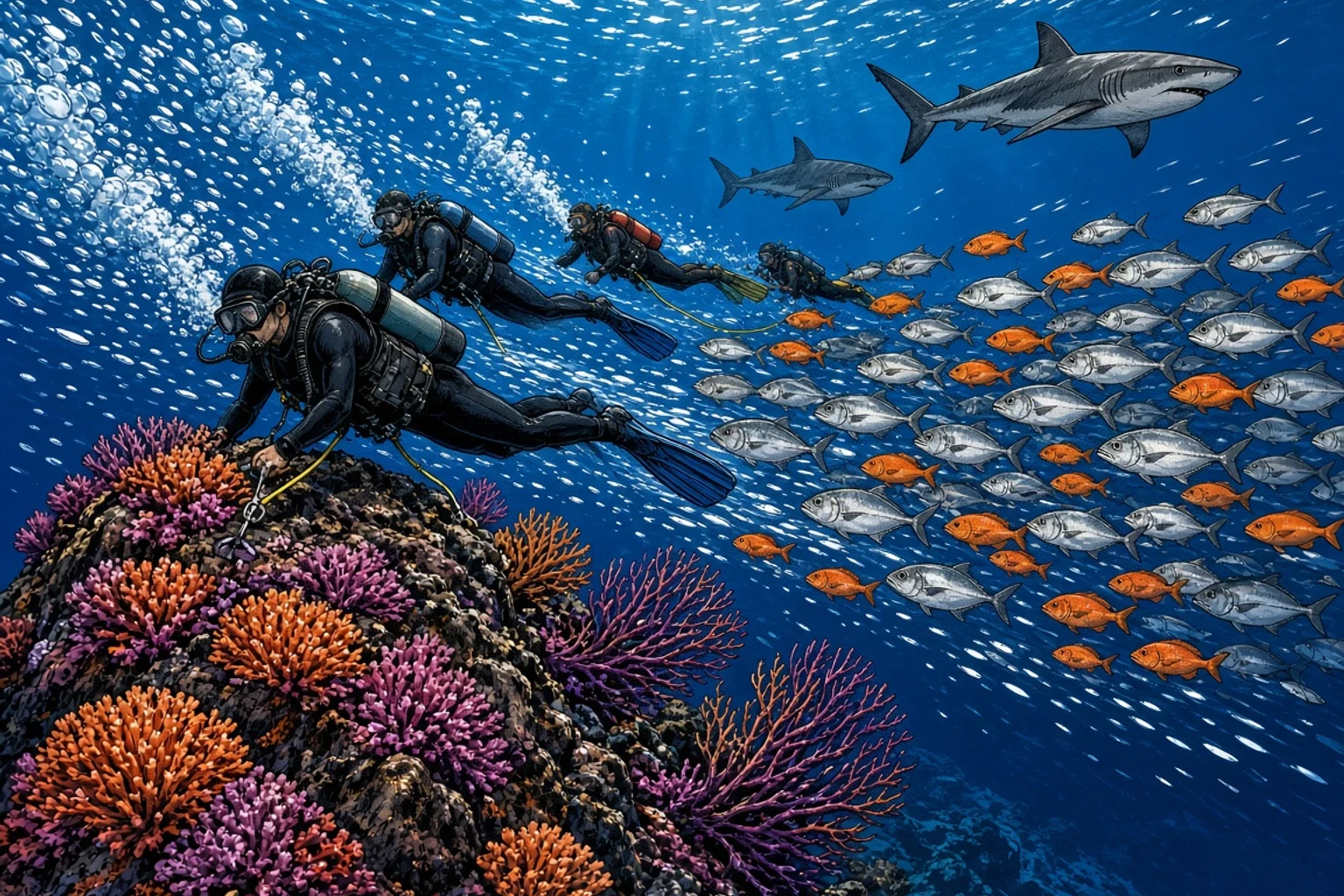
The north and centre hold the sites the park is known for. Castle Rock, Crystal Rock, Shotgun and Batu Bolong are current-swept pinnacles and channels where you hook in or drift and watch schooling fish stack up against the flow. In the dry season, visibility there regularly hits 25 to 35 metres, which is better than Bali gets anywhere. Karang Makassar, universally called Manta Point, is a shallow rubble run at 8 to 15 metres where mantas come to be cleaned, and unlike Bali's it produces numbers rather than individuals.
The south is a different ocean. Manta Alley, Horseshoe Bay, Cannibal Rock and Yellow Wall face the Indian Ocean and fill with cold, plankton-heavy upwelling in the wet season. The water drops to 20 to 25 degrees, the soft coral is absurd, and the macro life is as good as anywhere in the country. Reaching it realistically means a liveaboard of five days or more.
What you won't find in Komodo is a wreck worth the name, a proper muck site, or a gentle shore dive you can walk into. Bali has all three. Our guide to Komodo dive sites covers the park site by site.
Currents Are the Real Dividing Line
If you remember one thing from this comparison, make it this one.
In Bali, current is a feature of certain sites. Most of Tulamben, Amed and Menjangan are slack most days. You can dive Bali for a week and never work hard. The exceptions are real and they're concentrated at Nusa Penida and the Candidasa Gilis, where the channel between islands moves serious water and Crystal Bay in particular is known for sudden downcurrents that have caused fatalities. Those sites are not beginner diving regardless of what a booking desk in Kuta tells you.
Komodo is the other way round. A few sites are mild and most of them are strong, and the current isn't an inconvenience to be worked around: it's the mechanism that makes the park what it is. Komodo sits in a tidal chokepoint between two oceans, and the water forced through those channels is what feeds the reef, stacks the fish against the flow and brings the rays in. Down currents are documented at the edges of Crystal Rock and Batu Bolong. You'll be taught to hook in, to read the sheltered back of a pinnacle, to drift and be collected by the boat. Guides plan around slack windows and change sites when the tide says so.
So the honest framing is this. In Bali you can choose to avoid current for an entire week. In Komodo you can choose a gentler site on a given day, but you can't avoid it as a feature of the destination, and you wouldn't want to, because the current is the reason the diving is worth the flight.
This is why the fifty-dive guideline keeps coming up. It isn't gatekeeping. It's that a diver who's only ever dived in still water uses air fast, drifts away from the group, and is genuinely difficult to keep safe on a site like Castle Rock. Our guide to diving Komodo currents goes through the skills that actually matter.
Mola Mola or Mantas: The Big Animal Question
Both destinations have a headline animal and they're nothing alike.
Bali's is the mola mola, the oceanic sunfish, and it's a genuinely strange thing to meet underwater: two to three metres across, flat, and built like the front half of a much larger fish. They come up out of the deep to be cleaned at Crystal Bay between July and October, peaking from August, when cold upwelling drops the water at depth to somewhere between 16 and 22 degrees. They hang at 20 to 30 metres. The encounter is brilliant and the conditions are demanding, and the two facts are the same fact: the cold water that brings them up is the cold water that makes the dive serious.
Komodo's is the reef manta, and the difference is consistency and sheer quantity. Mantas are in the park all year, and at Karang Makassar you settle into the shallows and let a procession come to you.
Then there's the thing almost nobody factors in when they write off the wet season. The rains are manta season. From roughly December to February the water carries the most food it will carry all year, and the aggregations that draws in can run into the hundreds rather than the handful you plan a dry-season dive around. Eagle rays and mobula rays come with them. It's the one time of year when you can spend an entire dive, or an entire snorkel, inside a moving crowd of rays and run out of air before you run out of animals. The trade is rain, softer visibility and rougher crossings, which is a price plenty of divers would pay knowing what's underneath.
Bali's Manta Point is one of the most reliable single manta sites in the world, so this isn't a knockout, but Komodo delivers more of them, more often, in warmer and shallower water, and in the wet season it delivers numbers Bali simply doesn't see.
There's a straightforward way to think about it. If you want to see one specific weird animal and you can travel in August or September, Bali has something Komodo doesn't. For everything else with a wingspan, Komodo wins. Our guide to swimming with manta rays in Komodo covers the sites and the etiquette.
What You Should Actually Pack
Both destinations catch people out on wetsuits, in opposite ways.
Bali is warm nearly everywhere: 26 to 30 degrees, and a 3 mm suit is plenty for Tulamben, Amed, Menjangan and Padang Bai. The exception is Nusa Penida in mola season, when the thermocline can hand you 17 or 18 degrees at depth. People turn up in a shortie, hit that layer at 25 metres, and end the dive early and unhappy.
Komodo is warm in the north and centre, 27 to 30 degrees, where 3 mm is again fine. The south is 20 to 25 degrees with sharp thermoclines, and 5 mm plus a hood is the practical minimum.
So the rule is the same in both places and almost nobody follows it: if your itinerary includes the cold half, bring the thicker suit or confirm your operator stocks one in your size.
Seasons, and Why They Work Well Together
Bali's dry season runs roughly April to November, with the clearest water and calmest seas across the island. The wet season from December to March still dives well, especially at Nusa Penida and Menjangan, though runoff can soften visibility at the sites near river mouths.
Komodo's calendar is stranger because the park flips. The north is at its best from roughly April to October with 25 to 35 metre visibility. From November to March the northwest monsoon arrives, the north gets less reliable, and the southern sites come into their own with the biggest manta aggregations of the year.
The useful consequence: there's no month when both destinations are bad. July to October gives you Bali at its clearest and Komodo's north at its best, plus the mola window. December to March gives you Komodo's south at its peak, the manta aggregations described above, and Bali sites that are quieter. If your dates are fixed, neither destination is off the table. Our month-by-month guide to the best time to visit Komodo Island has the detail, and Komodo in October covers the one month when both halves of the park are open at once.
What Each One Costs
This is the part most people get backwards, us included until we put the two price lists side by side. The diving in Komodo is not more expensive than the diving in Bali. At comparable operators it's cheaper.
Here are real 2026 prices from our sister centre in Bali, Neptune Scuba Diving, for two guided fun dives including guide, equipment and boat:
| Two guided fun dives | Price |
|---|---|
| Tulamben, Amed or Padang Bai (Bali) | IDR 2,700,000 |
| Nusa Penida or Gili Tepekong (Bali) | IDR 3,150,000 |
| Menjangan (Bali) | IDR 4,500,000 |
| Komodo Resort, two morning dives | IDR 2,500,000 |
| Komodo Resort, full three-dive day | IDR 2,900,000 |
Two dives at Nusa Penida, which is the Bali site most people actually want, cost IDR 3,150,000. Two dives in Komodo National Park cost IDR 2,500,000. Menjangan costs nearly twice what a Komodo morning does. The boats are longer in Bali, the fuel is the same everywhere, and the price follows the distance rather than the destination.
Where Komodo does add cost is the national park itself, and those fees are fixed and public rather than approximate:
| Komodo National Park, per diver per day | Amount |
|---|---|
| Park entry | IDR 250,000 |
| Conservation fee | IDR 100,000 |
| Harbour fee | IDR 25,000 |
| Diving surcharge | IDR 25,000 |
| Total | IDR 400,000 |
A trek adds a ranger fee of IDR 200,000 per group of up to five on Komodo or Rinca, and IDR 150,000 on Padar. Bali has its own smaller charges, including a conservation fee at Nusa Penida and a higher one at Menjangan that rises at weekends, so the gap is narrower than the Komodo table alone suggests.
Put it together and a two-dive day in Komodo comes to IDR 2,900,000 with park fees included, against IDR 3,150,000 for two dives at Nusa Penida. The real extra cost of Komodo isn't the diving. It's the flight from Denpasar and the fact that you can't get there for a weekend. Our Komodo Island trip cost breakdown has the full picture including accommodation and gear.
How Busy Each One Gets
Crowding is the quiet difference nobody mentions in the brochures, and it now runs in Komodo's favour more than it used to.
Bali's popular sites get genuinely busy. The Liberty is the most dived wreck in Indonesia and by mid-morning the midship section can have more divers than fish on it. Manta Point at Nusa Penida draws a line of boats in peak season. None of this ruins the diving, and both problems have the same solution, which is to be in the water early and stay near the sites rather than commuting.
Komodo has a hard ceiling instead. Since April 2026 the national park has capped visitors at 1,000 per day across Padar, Rinca, Komodo and the dive sites around them, allocated in timed sessions and booked in advance rather than paid at the gate. Most days never come close to it, and the practical effect is that a site with four boats on it in August might have none in November. The exception is the Christmas and New Year fortnight, which is the one stretch where demand can meet the ceiling. Our guide to Komodo National Park entrance fees explains how the booking works.
Getting There and How Long You Need
Bali needs no explanation. You land at Denpasar, and depending on where you're staying you can be diving the next morning. Three days of diving is a perfectly sensible trip.
Komodo takes one more step: an hour's flight from Denpasar to Labuan Bajo, with several departures daily. It's straightforward, but it's a whole extra travel day by the time you've cleared both airports, and it puts a floor under how long the trip has to be to make sense. Five days is the realistic minimum, and a week is better if you want the southern sites. Our guide to Bali to Komodo covers flights, ferries and the sailing routes.
The corollary matters: because everyone routes through Bali anyway, adding Komodo to a Bali trip is one domestic flight rather than a separate holiday.
Which Diver Each One Suits
Bali suits new divers, and that's not a criticism. A freshly certified Open Water diver can have a superb week there, dive a famous wreck, see mantas at Nusa Penida with a good guide, and come home having genuinely progressed. It suits anyone learning, because the conditions are forgiving and there's a shore-entry wreck to practise on. It suits divers travelling with people who don't dive. And it suits anyone who only has a few days, because nothing about a Bali dive trip has to be planned far ahead.
Komodo suits divers with some water behind them. There's no hard rule and operators vary, but around fifty logged dives and real comfort in current is where people stop working hard and start enjoying it. It suits photographers who want big animals in clear water. It suits anyone who's dived Bali or Thailand and wants to know what the fuss about Indonesia is. And it suits divers who'd rather build a trip around the water than fit the water around a trip.
If you're not certified yet, the cleanest plan is to learn in Bali or at home and come to Komodo with a bit of experience, though we do teach here too. Our guide to learning to dive in Komodo explains which courses make sense in a park like this one.
Everyone Who Isn't Diving
This is the comparison people forget until they're arguing about it in an airport.
Bali has an entire island of alternatives. Temples, surf, volcanoes, rice terraces, restaurants, yoga, and a non-diving partner who will be perfectly happy for a week.
Komodo has a much shorter list, but it's a good one: the dragons on Rinca and Komodo, the Padar ridge, Pink Beach, and snorkelling that is genuinely world class, because the mantas at Karang Makassar sit shallow enough that a snorkeller sees them properly. Our Komodo snorkelling guide covers what works from the surface, and snorkeling vs diving in Komodo is worth reading if your group is split.
The honest version: a non-diver will enjoy three days in Komodo and start looking for the wifi on day five. In Bali they'd never run out.
Doing Both in One Trip
For most people reading this, the real answer isn't either. It's both, in that order.
Fly into Denpasar, dive Tulamben and Nusa Penida for three or four days, then take the morning flight to Labuan Bajo and spend five in the park. You'll arrive in Komodo already warmed up, with your buoyancy sorted and a few current dives behind you, which is exactly the shape a Komodo week wants. It also lets you find out whether you actually enjoy drift diving before you've committed a week to it.
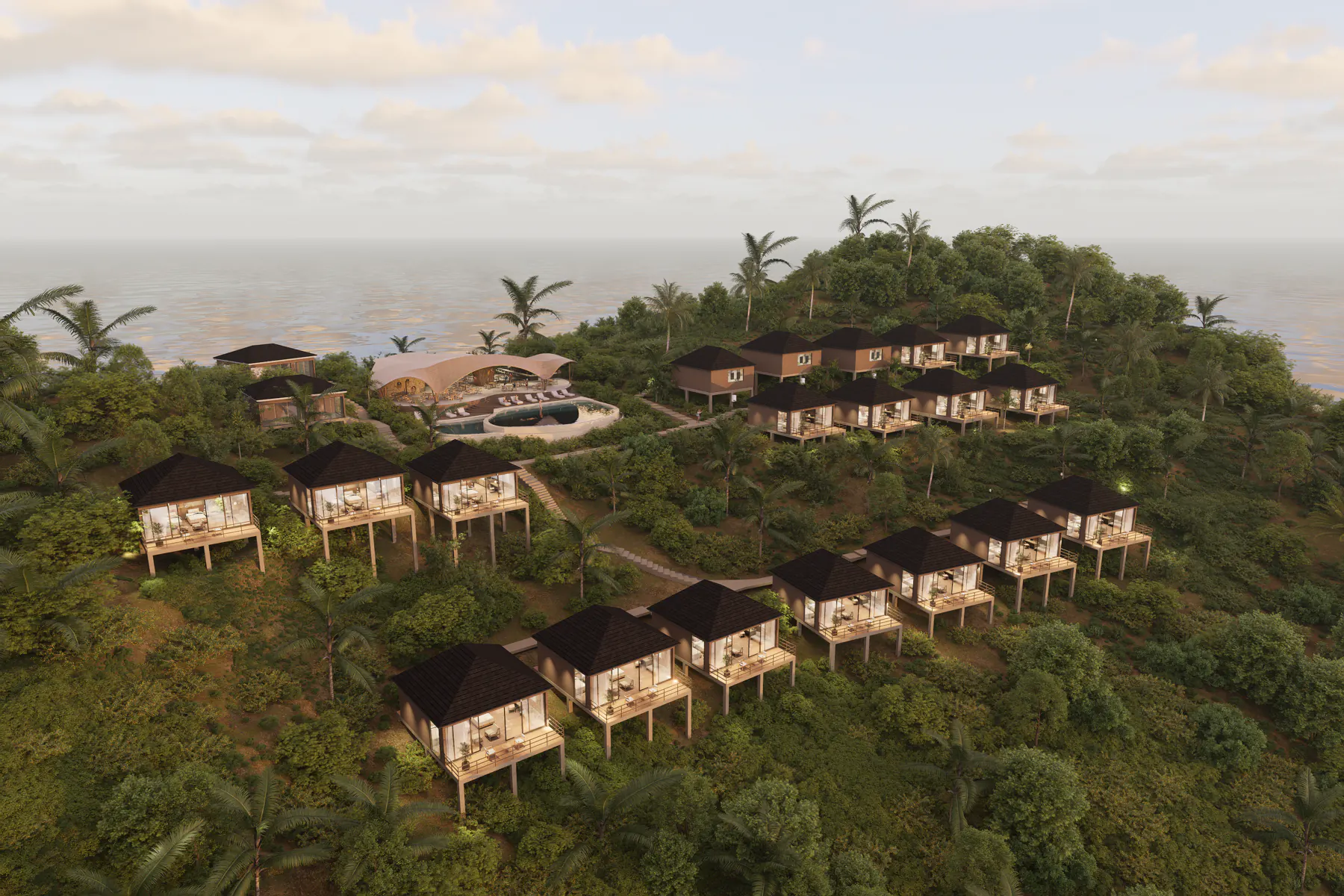
Ten days covers it comfortably. Fourteen covers it well. Our Komodo Resort rooms sit inside the national park with a house reef off the jetty, which shortens the crossings considerably compared with commuting from Labuan Bajo each morning.
If you're weighing up Indonesia more broadly, Komodo vs Raja Ampat is the other comparison worth reading, and the best islands in Indonesia takes a wider view. Both sit inside the Coral Triangle, which is why the diving in this part of the world is what it is.
The Short Version
Bali is easier, warmer at most sites, better for beginners, far better for non-divers, and has a shore-entry wreck and a sunfish that Komodo can't match. If you have three days or fewer than thirty dives, book Bali and don't feel short-changed.
Komodo is harder to reach and more demanding, and gives you clearer water, far more rays, better big-animal diving and a park with a fraction of the boats. The diving itself costs less than Bali's. What you're really paying for is the flight and the days. If diving is the reason for the trip and you're comfortable in moving water, it's worth both.
And if you can stretch to ten days, stop choosing. Dive Bali first, fly east with your skills sharp, and finish in the park. Almost nobody regrets that order.