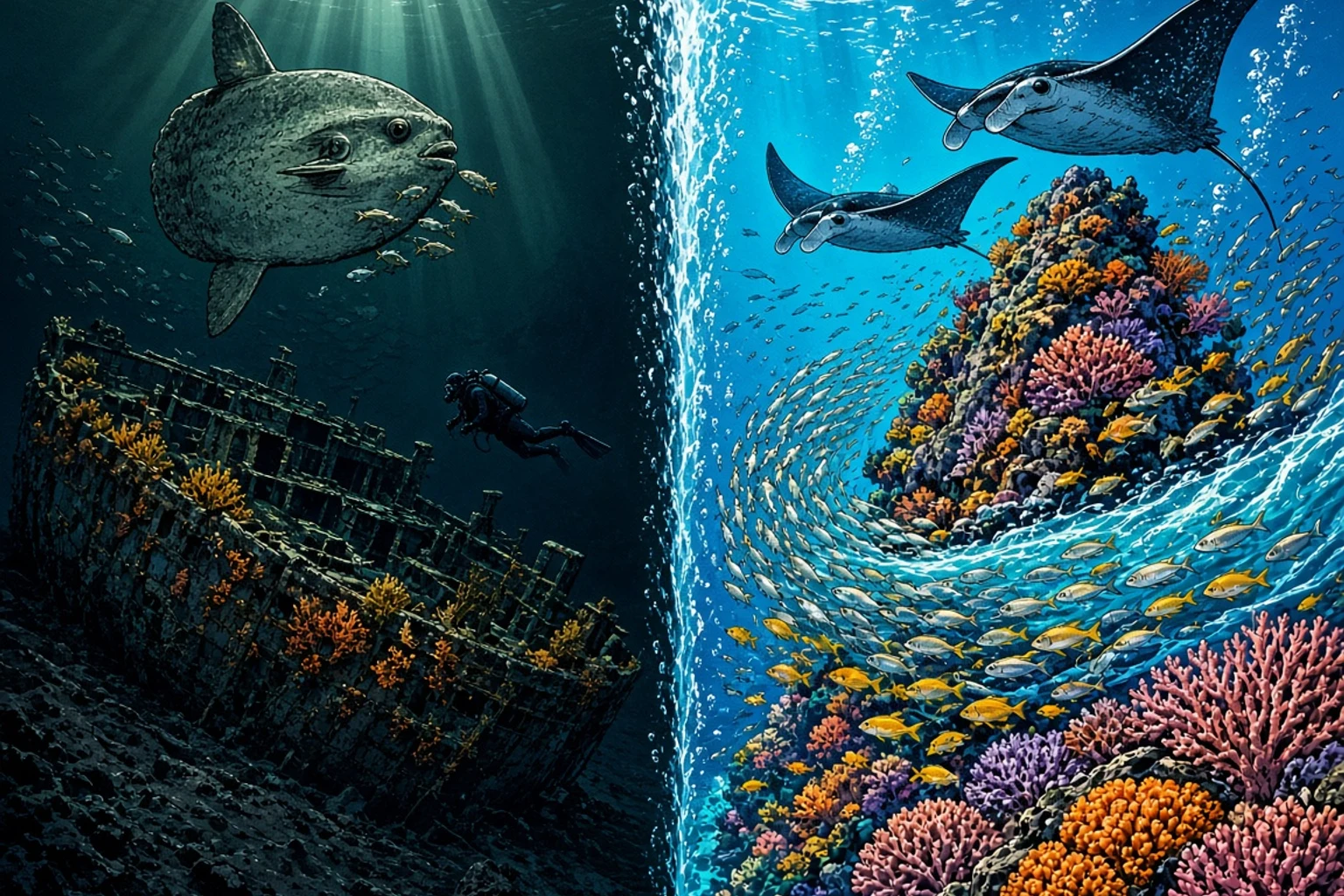
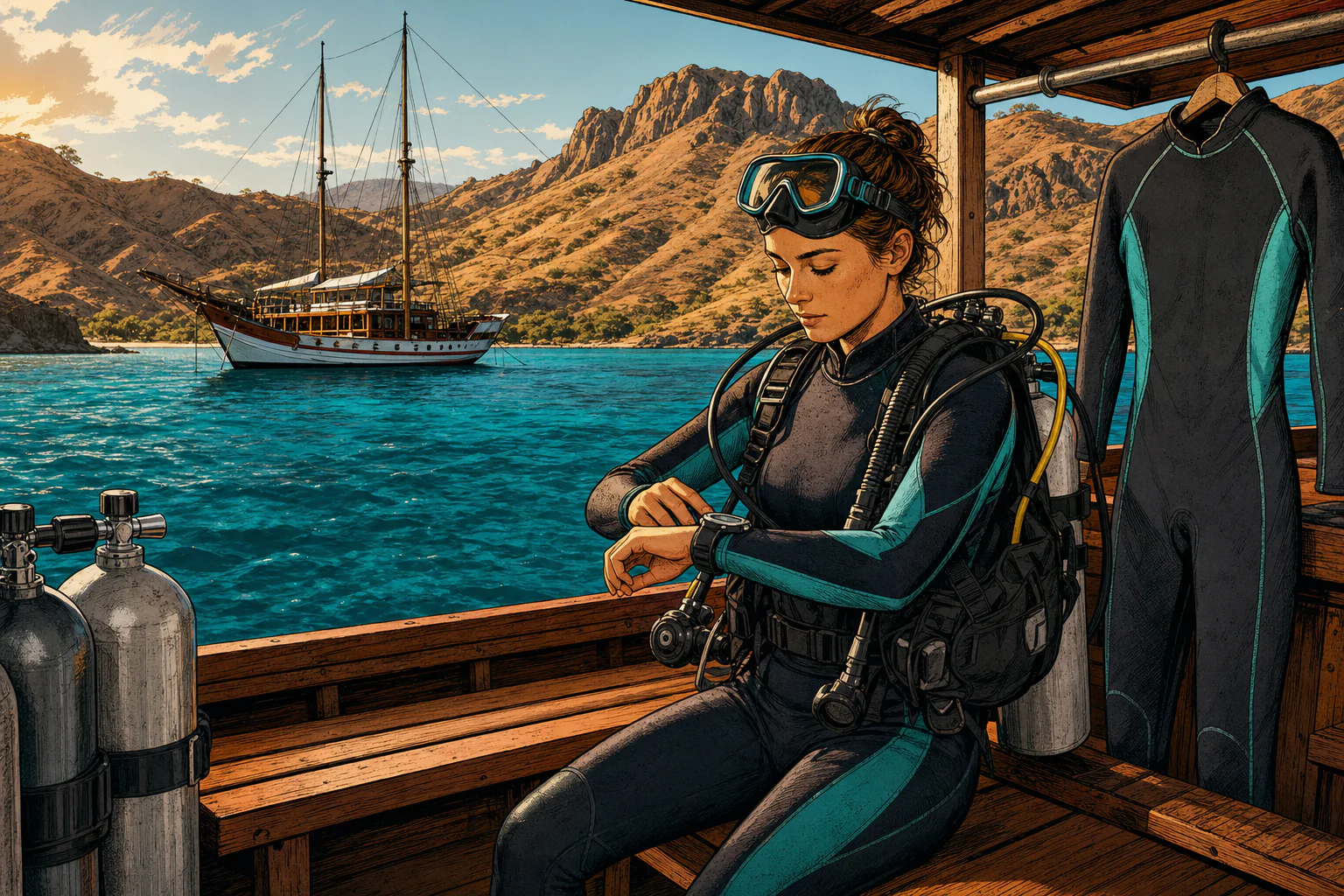
For a diving trip, five to seven nights is the right length for most certified divers. Three nights (4D3N) is the shortest trip that feels like a real liveaboard and covers the central and northern park. Six nights adds more of the famous current sites, and seven nights is usually needed to include the cold southern sites such as Manta Alley. Two nights (3D2N) is a sightseeing trip with snorkelling or a few dives. Compare trips by the number of dives rather than days: a 5 night trip typically includes around 14 dives, a 7 night trip around 21.
How many days you need on a Komodo liveaboard depends on three things: whether you are diving or sightseeing, how experienced you are, and when you travel. The length of the trip decides which dive sites a boat can reach, whether it goes to the south of the park at all, how much each dive costs, and how many days are lost at either end to flights and surface intervals.
This guide compares every common trip length, from 2D1N boat trips to a full week, using real 2026 schedules, route maps and prices. The detailed examples come from the Komodo Sea Dragon, a liveaboard that runs five, six and seven night trips from Labuan Bajo and publishes the route and dive count for each. Other operators route their trips differently, so treat those figures as a reference point and use the questions at the end of this guide to compare any boat you are considering.
Komodo Liveaboard Trip Lengths at a Glance
Komodo trips are named in the Indonesian style of days and nights, so 4D3N means four days and three nights on board. The first and last days are partial, which matters more than most people expect.
| Length | What it realistically covers | Best for |
|---|---|---|
| 2D1N | Padar viewpoint, Pink Beach, one dragon trek, a manta snorkel | Non-divers with one spare day |
| 3D2N | The sightseeing loop at a gentler pace, a handful of dives on dive boats | Sightseers, snorkellers, divers who only want a taste |
| 4D3N | Central and northern dive sites, the classic highlights | First liveaboard, short holidays |
| 6D5N | North and central properly, with repeat dives where conditions are best | Most certified divers |
| 7D6N | Adds the big current sites and more time at manta sites | Keen divers who want the headline sites |
| 8D7N | North, central and the cold, plankton-rich south | Experienced divers, manta and macro enthusiasts |
The rest of this guide explains each line, and where the general market and individual boats differ.
How Many Dives Do You Get on a Komodo Liveaboard?
A Komodo liveaboard typically offers around three dives for every night on board. The number of dives is the most useful figure for comparing trips, because the headline length includes travel time.
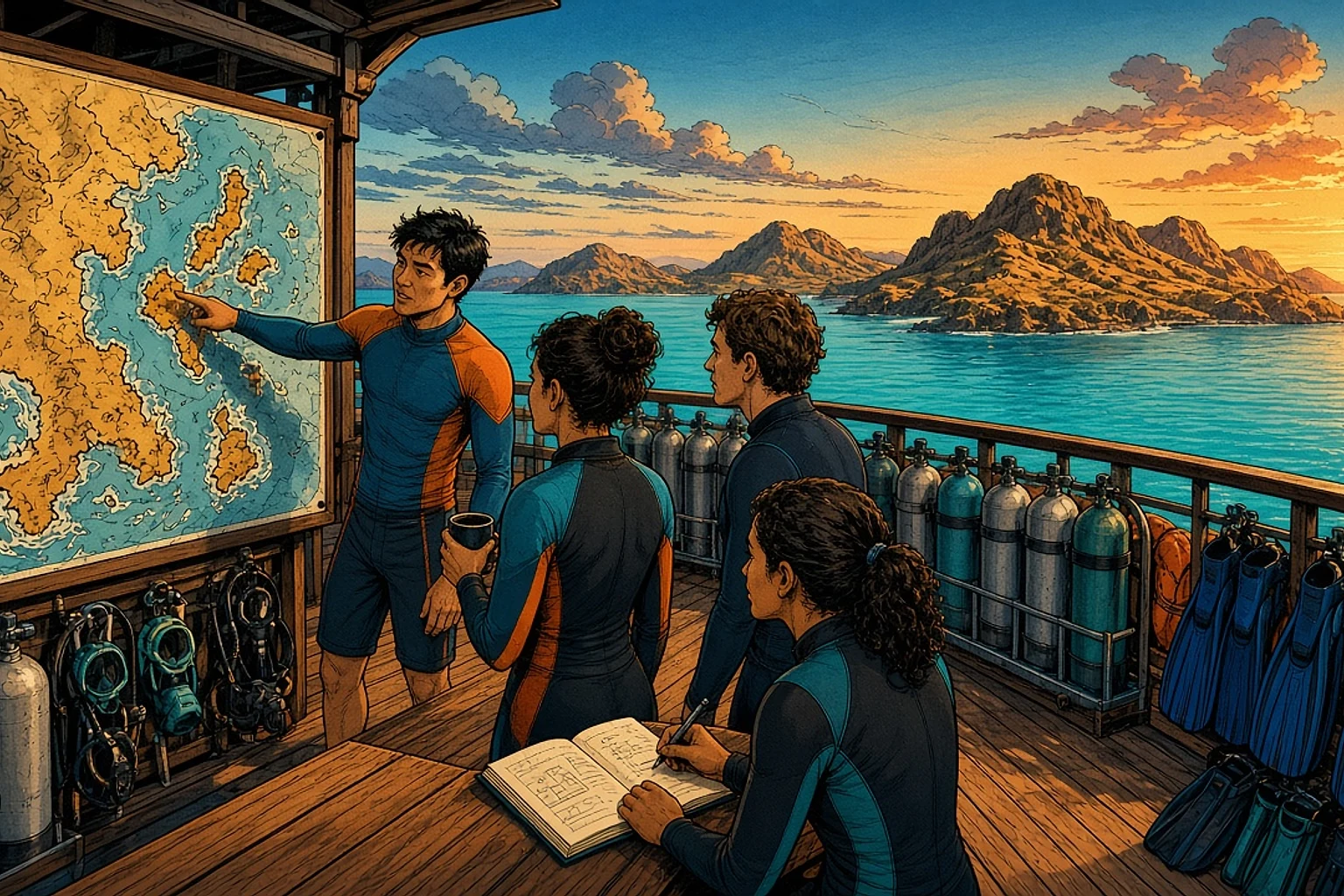
A published 2026 schedule shows how this works. On the Komodo Sea Dragon, guests are picked up before midday on day one from Komodo Airport or hotels in Labuan Bajo. On the final day they disembark by 10:00, because the boat sails back to Labuan Bajo the night before. A six day trip therefore contains four full diving days, a first afternoon and a last morning with no diving. The published dive counts reflect that:
- 6D5N: 14 dives
- 7D6N: 18 dives
- 8D7N: 21 dives
Applied to shorter trips, the same ratio suggests roughly five to seven dives on a 3D2N trip and eight to ten on a 4D3N. These are estimates rather than any operator's schedule, so always ask for the real number, but they show why short trips feel short: two of the days are largely travel.
This is also why divers who book four days often wish they had booked six, while divers who book six rarely wish they had booked four.
Is a 2D1N or 3D2N Komodo Trip Enough?
For sightseeing, yes. For diving, it is short. A 2D1N or 3D2N boat trip is the most popular way to see Komodo National Park, built around the famous land stops: sunrise on Padar Island, a ranger-guided dragon walk on Komodo or Rinca, the sand at Pink Beach Komodo, and a snorkel over a manta cleaning station. Most run on shared boats where guests book a cabin or a deck mattress rather than the whole vessel.
The shared-boat format, its prices and its typical itineraries are covered in detail in the guide to the open trip Komodo market. For divers the key point is that a two night trip is a sightseeing trip with diving attached, not a dive trip. Some boats offer two or three dives a day to certified guests, but the route is set by Padar at sunrise and the dragon trek, not by the tide tables at the best dive sites.
A certified diver with only two or three days will usually see more underwater by staying on land and diving by day boat. Dive operators in Labuan Bajo and on the islands inside the park reach the central and northern sites every morning, and divers sleep in a proper bed between dives. A Komodo dive centre on one of the islands, such as Sebayur, cuts the daily boat ride to the sites considerably compared with leaving from town.
Is 4D3N Long Enough for a Komodo Liveaboard?
4D3N is the shortest trip that feels like a real liveaboard, and it is the most common dive liveaboard length on the market. Three nights on board gives two full diving days plus two partial ones, enough to settle into the rhythm of wake, dive, eat, dive and sleep that defines the format.
A typical three night route stays in the central and northern park, where the famous sites sit close together. Expect a check dive near Labuan Bajo, then some combination of the central manta sites, the soft coral reefs around Komodo's northeast coast, and one or two of the northern pinnacles if conditions and experience allow. Most trips also include one land stop, usually Padar or a dragon trek.
Three nights makes sense when:
- It is a first liveaboard and the format is untested. The first liveaboard guide explains what life on board is actually like.
- Komodo is one stop on a longer Indonesia trip and three nights is genuinely all the time available.
- A non-diving partner wants a boat trip but not a week of dive briefings.
It is a poor fit for divers travelling a long way specifically to dive Komodo. After recovering from the flight, doing a check dive and adjusting buoyancy to a new weight belt, the trip is half over. For most divers, five nights with the option to skip a dive when tired is better value than three nights of trying to fit everything in.
Not every boat offers three night trips. Some of the larger dive liveaboards, the Komodo Sea Dragon among them, currently start at five nights.
What Does a 5 Night Komodo Liveaboard Cover?
Five nights is the length that works for most certified divers. Four full diving days give the cruise director room to put divers on the best sites at the best tide rather than whatever is nearby, and to return to a site when the first attempt had the wrong current.
As an example, the published 6D5N route of the Komodo Sea Dragon runs from Labuan Bajo and back and includes:
- Sebayur: a check dive, a short hop from Labuan Bajo.
- Crystal Rock: a northern pinnacle, known for fish life and clear water on the right tide, and a site for Advanced divers because the current can pick up quickly.
- Pink Beach: easy, colourful reef diving off Komodo Island's northeast coast.
- Padar: diving around the island, plus the viewpoint hike.
- Pengah Kecil: a small central island with pinnacles, walls and plateaus. Currents can be strong and change direction, so guides choose the sheltered side on the day.
The same route includes a dragon trek on Komodo Island, the Padar hike, and the evening bat fly-out near Kalong Island, when thousands of flying foxes leave the mangroves at dusk.
That five night route does not include Batu Bolong or the south. This is a routing decision rather than a rule: other operators build their five night trips differently, and some include one southern day. The practical lesson is to compare route maps, not trip lengths.
What Does a 6 Night Trip Add?
A sixth night typically adds the park's best-known current sites and more time at manta sites. On the Komodo Sea Dragon's 7D6N route, the extra night adds four dives and two notable changes.
First, Batu Bolong appears. It is the site most divers have heard of before they arrive: a small pinnacle in the strait between Komodo and Tatawa, covered in soft coral and fish, with current running past on both sides and a calm pocket in its lee. It is widely regarded as one of the most biodiverse dives in the park. It rewards good buoyancy and punishes poor timing, which is why it tends to appear on longer trips where there is room in the plan to wait for slack water.
Second, Pengah Kecil gives way to Mawan, a central site with a manta cleaning station on a sandy slope. On a normal day it is shallow and gentle, which makes it a good second or third dive, although the current can pick up around full and new moon. For divers travelling mainly for mantas, the guide to swimming with manta rays in Komodo explains which months and sites are most reliable.
For a diver with a solid logbook who wants the sites people talk about, six nights is the sweet spot. For divers with a lot of current experience, it is the minimum.
How Many Nights to Reach the South of Komodo?
Reaching the southern dive sites usually takes a trip of six to seven nights or more, and it depends on the season as much as the length. On the Komodo Sea Dragon's schedule, the south only appears on the 8D7N route, which adds two named sites:
- Manta Alley, off the south coast of Komodo Island, where mantas gather in the channels to feed and be cleaned. It is at its best in the cooler months, roughly December to February, when upwelling brings plankton-rich water up the southern cliffs.
- Yellow Wall, in Horseshoe Bay on the south of Rinca, a wall thick with soft corals, feather stars and the kind of macro life that photographers plan whole trips around.
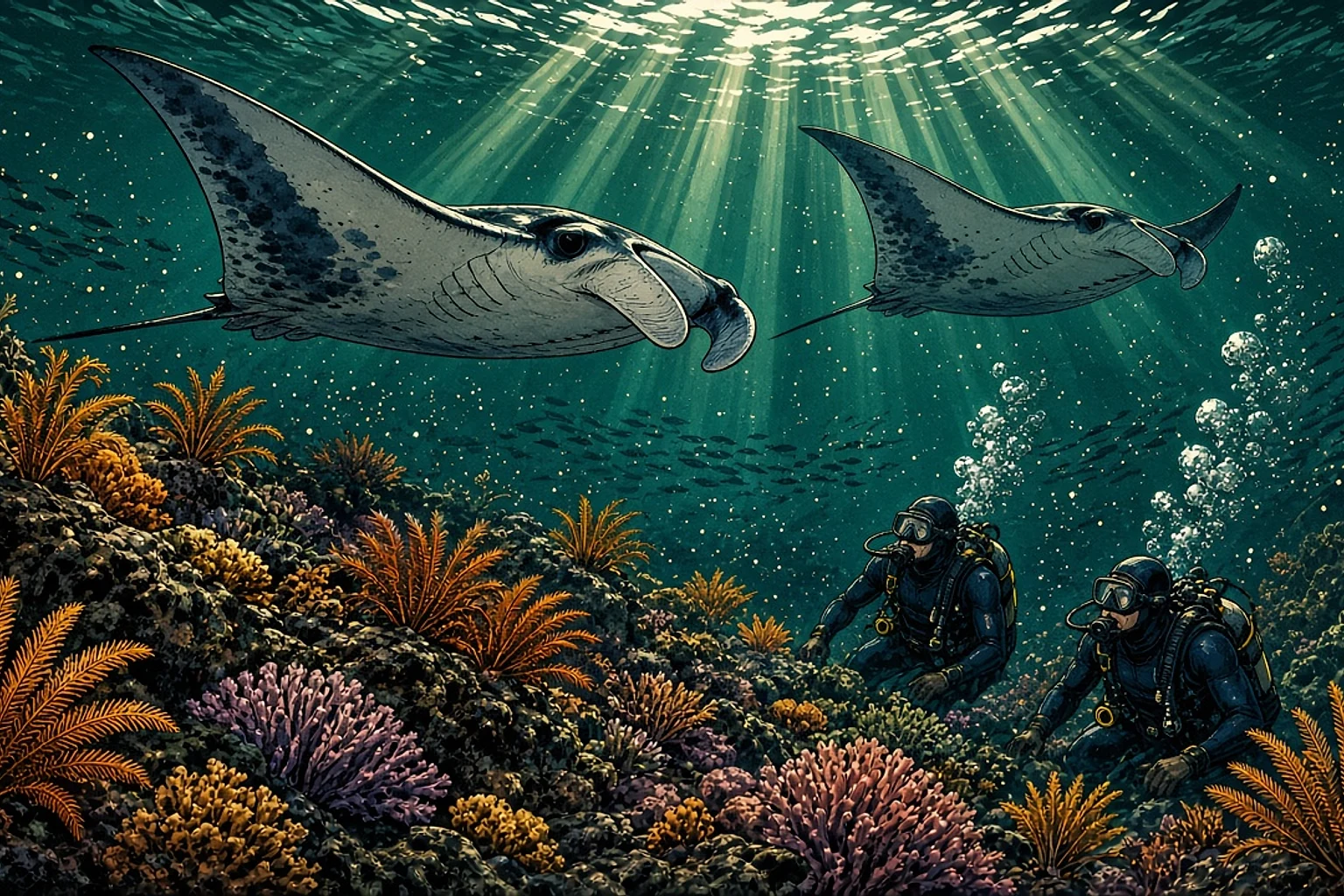
The south of Komodo feels like a different ocean from the north. It faces the Indian Ocean, the water is green with plankton rather than blue, and it is cold. Expect 20 to 25°C, with thermoclines that can drop well below that at depth. A 3 mm suit that is comfortable in the north is not enough; 5 to 7 mm with a hood is standard, and rental sizes should be confirmed with the boat in advance.
No day trip can reach these sites and return the same day, which makes the south the clearest argument for a longer liveaboard. Cannibal Rock, the other famous southern site, sits in the same area and is regularly dived on south-enabled routes when conditions allow.
Season matters here more than anywhere else in the park. The southern sites are exposed to Indian Ocean swell during the dry season and at their most reliable from around October to April. The shoulder months, October and November and then March and April, give the best chance of good conditions in both north and south on the same trip. A July trip of any length will usually stay north. The guide to Komodo in October explains this seasonal shift in more detail.
Are There Komodo Liveaboards Longer Than a Week?
Very few trips run longer than seven nights inside Komodo National Park alone, because a week covers the park thoroughly. Longer itineraries usually continue elsewhere: east along Flores, north to the volcano at Sangeang, or further across the archipelago.
Many Indonesian liveaboards spend part of the year in Komodo and reposition to eastern Indonesia for the rest. In autumn 2026, for example, King Neptune is running 9D8N trips with 23 dives and 11D10N trips with 27 dives from Ambon, Kaimana and Sorong, the ports for the Banda Sea, Triton Bay and Raja Ampat, priced from USD 4,100 to 7,200 depending on length and cabin. The Indonesia liveaboard overview shows where boats operate through the year.
How Much Does Each Extra Night Cost?
Longer liveaboard trips cost more in total but less per dive. Using the Komodo Sea Dragon's 2026 prices per person, from the lowest to the highest cabin:
| Trip | Price per person | Dives | Cost per dive |
|---|---|---|---|
| 6D5N | USD 2,268 to 2,760 | 14 | about USD 162 to 197 |
| 7D6N | USD 2,646 to 3,220 | 18 | about USD 147 to 179 |
| 8D7N | USD 3,024 to 3,680 | 21 | about USD 144 to 175 |
On that schedule each extra night costs USD 378 to 460 depending on the cabin. Going from five to six nights buys four more dives, under USD 120 a dive. Going from six to seven buys three more dives and, more importantly, the south of the park. Flights to Labuan Bajo cost the same whichever length is chosen, so a longer trip also spreads that fixed cost over more diving.
Across the market, most Komodo liveaboards cost between USD 150 and 600 per night depending on the boat, and the guide to the best Komodo liveaboard options breaks down what each price level includes. Whatever the boat, check what the price leaves out. The usual extras are:
- Park fees, charged per person per day, so they grow with the length of the trip. For a diver they come to roughly IDR 400,000 a day; see Komodo National Park entrance fees for the current breakdown.
- Equipment rental and nitrox, where needed.
- Crew tips, commonly around USD 10 to 15 per guest per day. Onboard purchases and tips are often cash only, so plan ahead; the guide to money, ATMs and tipping in Labuan Bajo explains where to get cash.
Does Experience Level Change the Right Trip Length?
Yes. Longer routes include more of the park's current-swept sites, and those usually come with entry requirements.
Many Komodo dive liveaboards ask for Advanced Open Water certification and a minimum number of logged dives; the Komodo Sea Dragon, for example, requires 20. The requirement exists for a reason. Komodo's best-known sites sit in channels where tidal water moves between two oceans, and the currents can be strong, change direction and run downward. The guide to Komodo currents and drift diving explains what that looks like underwater and how guides manage it.
Divers who do not yet meet the requirement are better off spending a few days diving from land first, building their logbook and current skills with a guide, and booking the liveaboard on a later trip. The overview of scuba certification levels explains the step from Open Water to Advanced, a course usually run over two days.
Experienced divers generally get the most from six or seven nights, because that length gives the cruise director the freedom to schedule the best sites at the best time.
Does the Season Affect How Long to Book?
Yes. Komodo has a dry season from roughly April to October and a wet season from November to March, and they favour different parts of the park.
- April to September: the north and centre are at their best, with calm mornings and good visibility, while the south is exposed to swell. Four or five nights covers the part of the park that is diving well.
- October to November, and March to April: the shoulder months, when both halves of the park can be dived. This is when a seven night trip that includes the south pays off most.
- December to February: manta season in the south, with afternoon rain, rougher crossings and routes weighted to the centre and south. Longer trips give the crew room to wait out a rough day.
The month by month guide to the best time to visit Komodo Island covers each month in detail. If the south is a priority, choose both the length and the month with it in mind, and confirm with the operator that the specific departure is planned to go there.
How Many Extra Days Should You Add Around a Liveaboard?
Plan at least one extra day at each end. A liveaboard is never just the nights on board.
Before the trip: most boats pick up guests around midday, so arriving in Labuan Bajo the day before is the safer choice. Flights into Labuan Bajo are short, but a delayed connection in Bali or Jakarta should cost a hotel night, not the first day of the trip. The guide to getting from Bali to Komodo lists the routes.
After the trip: after several days of repetitive diving, the widely accepted guideline is a minimum of 18 hours between the last dive and a flight, and many operators work on 24. The article on flying after diving explains the reasoning. Because boats usually sail back overnight and guests disembark in the morning, an evening flight on the same day may or may not be safe depending on when the last dive took place. A night on land after the trip removes the question without costing any dives.
In practice, a five night liveaboard is a seven day commitment and a seven night liveaboard is nine.
Will You Get Tired or Seasick on a Longer Trip?
Both are usually smaller problems than they seem.
Seasickness is mostly a first-day problem. Most people adjust within a day or two of consistent motion, and much of Komodo National Park is sheltered water between islands, with short and predictable exposed stretches. The guide to seasickness on Komodo boat trips explains which crossings to expect and what helps. A longer trip can actually suit people who are prone to it, because the first uncomfortable day becomes a smaller share of the whole.
Tiredness is real. Three or four dives a day adds up, and many divers hit a flat day around day four. The fix is simple: skip a dive. A rested diver enjoys the next site far more than an exhausted one. Night diving in Komodo is worth doing, but spacing night dives out works better than doing every one on offer. A seven night trip leaves room for that; a three night trip tempts people to do everything, which is when fatigue and mistakes creep in.
Food and cabin comfort matter more the longer the trip. Anyone with allergies or a restricted diet should raise it before booking; the guide to food on a Komodo liveaboard covers what to ask.
Can You Combine a Liveaboard With Nights on Land?
Yes, and many of the best Komodo trips do. Combining the two suits couples and families where not everyone dives at the same level.
- Land first, boat second. Two or three days diving from land to refresh skills and buoyancy, then a five or six night liveaboard. Divers arrive on the boat already comfortable, which is when the famous sites are most enjoyable.
- Boat first, land second. A seven night liveaboard, then two or three quiet nights on land with no diving. This also covers the flying-after-diving gap.
- Split party. The keen diver takes the liveaboard while the rest of the group stays on land with day trips, and everyone meets at the end.
The Komodo Island itinerary guide has day by day plans for trips of different lengths, including combinations like these.
What to Ask an Operator Before Booking
These questions reveal more about a trip than its name:
- How many dives are planned? Compare this number, not the days.
- Is there a route map for this specific departure? If the south or Batu Bolong matters, check they are on it.
- What are the certification and logbook requirements? Know before paying, not at the check dive.
- What time is pick-up, and when is disembarkation? This sets the flights.
- What is not included? Park fees, equipment, nitrox and tips add up on a long trip.
- What happens if weather changes the route? A good operator explains how they adapt rather than promising sites they cannot guarantee.
Book early for the popular months. Komodo liveaboards carry small numbers of guests, and in autumn 2026 many departures were fully booked weeks in advance, with the longer trips in the shoulder months filling first.
So, How Many Days on a Komodo Liveaboard?
For non-divers who want to see Padar, the dragons and Pink Beach, two nights on a shared boat is enough. For a first liveaboard or a short holiday, three nights is the minimum that feels like the real thing. Certified divers travelling to Komodo specifically to dive should book at least five nights, six for Batu Bolong and more manta time, and seven for the south of the park in the months when it is diving well.
Then add a day at each end. It is the part most itineraries leave out, and it decides whether the trip is remembered for the diving or for the rush to the airport.