Somewhere between booking the flight and packing the dry bag, almost every traveler planning this trip types the same question into a search bar: can you actually stay on Komodo Island? It's a fair thing to ask. The island gives the national park its name, the dragons live there, and in most places on earth the famous destination is exactly where the hotels cluster. Komodo is different. There is not a single hotel, resort, or guesthouse on Komodo Island, and there never has been. But that answer, on its own, is misleading, because you can sleep closer to the dragons than most people imagine. Komodo Resort, on private Sebayur Island, is the closest resort to Komodo Island and the national park, and our guests wake up in a beachfront bungalow at the park's doorstep, eat breakfast barefoot on the sand, and are drifting over coral before most day-trip boats have cleared Labuan Bajo harbor.
This guide answers the question properly. We'll cover why Komodo Island itself is off-limits after dark, what the park's rules actually say, and the three real ways to spend your nights here: an island resort, a liveaboard boat that anchors inside the park, or a hotel back in town. I'll be honest about the trade-offs of each, including our own, because travelers who pick the right base for their style come back raving, and travelers who pick the wrong one spend their holiday commuting.
The Short Answer: No Hotels on Komodo Island Itself
Komodo Island is part of Komodo National Park, a UNESCO World Heritage Site since 1991, and the island is managed as a conservation zone, not a destination. Visitors come ashore at Loh Liang, walk the trekking trails with a mandatory ranger, photograph the dragons from a respectful distance, and return to their boat. That's the entire menu. There is no jetty-side hotel, no eco-lodge in the hills, and no legal way for a tourist to spend the night on the island.
People are sometimes confused by the fact that Komodo Island isn't empty. Kampung Komodo, a stilted fishing village of well over a thousand people, sits in a bay a short distance from the ranger station, and its families have lived alongside the dragons for generations. The village is a living community, not a tourist facility. Some boat tours pass by, and a few stop so guests can buy carved wooden dragons, but there's no licensed visitor accommodation, and the park authority keeps it that way deliberately.
The reasons hold up under scrutiny. Fewer than 3,500 dragons survive in the wild, and Komodo Island holds the largest population. Overnight tourism means light, noise, waste, generators, and food smells, and food smells are a genuine problem when the neighbor is a 70-kilogram lizard that hunts primarily by scent. There's a practical layer too: the island has no reliable power grid, no fresh-water infrastructure for guests, and no medical facilities. Every serious injury in the park already means a boat ride to Labuan Bajo. The rangers who work at Loh Liang sleep in basic staff quarters and would probably laugh at the idea of room service.
What the Rules Mean for Your Trip
Since April 2026 the park operates under a daily visitor cap, 1,000 people across the whole park, with site limits of 250 at Loh Liang on Komodo Island, 150 at Loh Buaya on Rinca, and 60 on Padar. Every visit needs an advance booking through the SiORA reservation system or, far more commonly, through an operator or resort that handles permits for its guests. Walk-up tickets are gone. Our guide to Komodo's entrance fees and regulations breaks down the numbers in detail, but the practical effect on accommodation planning is simple: day access to the islands is now a scarce resource, and where you sleep determines how easily you use it.
A visitor based two-plus hours away competes for the same morning time slots as everyone else, then spends a third of the day in transit. A visitor sleeping inside the park area, on a boat or a nearby island, is at the ranger station when it opens, walks the trails in the cool hour when dragons are actually moving, and is back in the water by mid-morning. Same permit, completely different day.
Option 1: A Private Island Resort Inside the Park Area
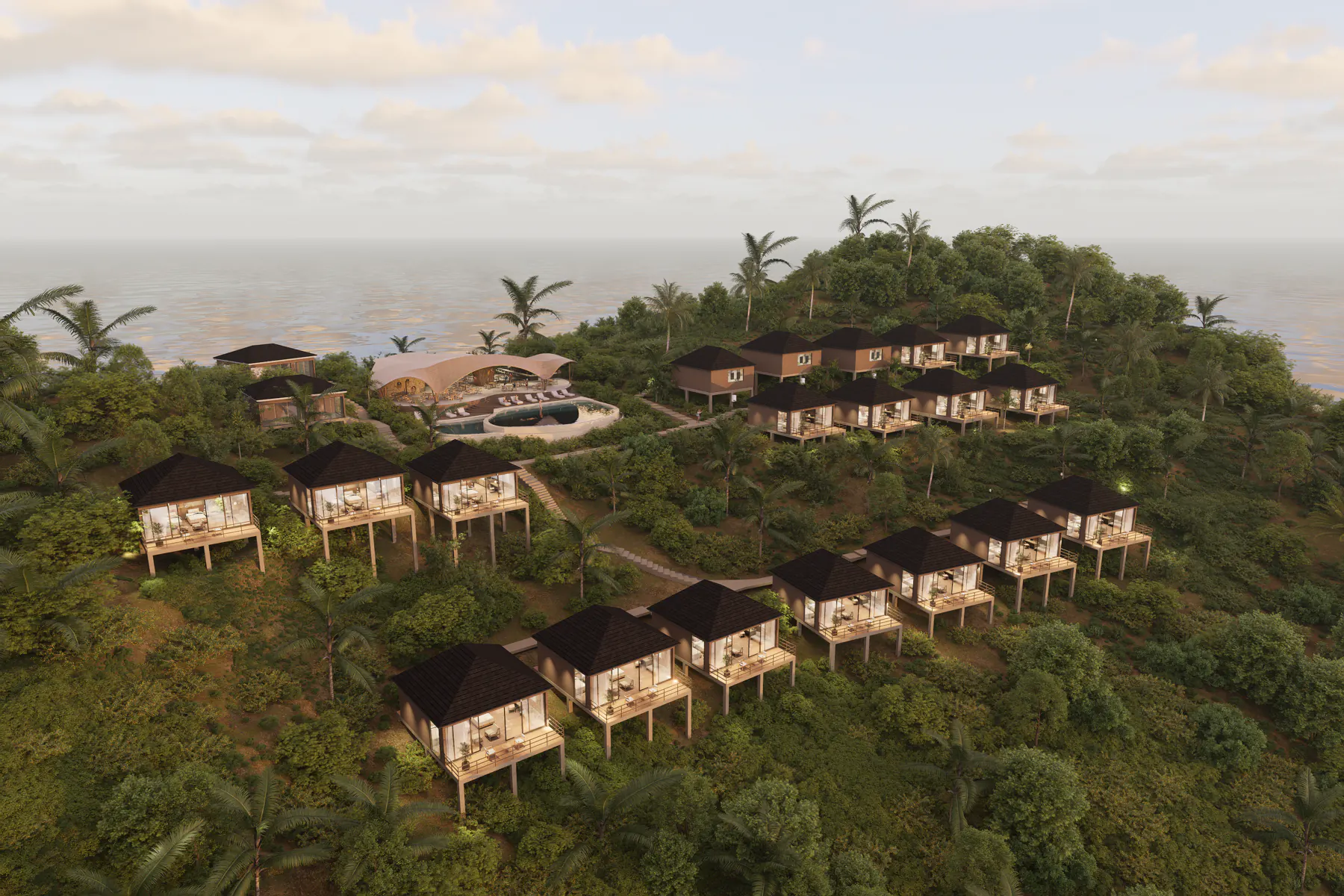
The closest thing to "staying on Komodo Island" that actually exists is staying on one of the small islands at the park's edge, and no property sits closer to the park than Komodo Resort. Our 31 teak bungalows line the beach of Sebayur Island, a private island in the Flores Sea between Labuan Bajo on Flores and the park's famous northern dive sites, which makes us, quite literally, the closest resort to Komodo Island and the national park's boundary. The transfer from town takes about 45 minutes by boat, and after that the ocean is your front yard: a house reef begins a few fin-kicks from the sand, and Batu Bolong, one of the park's most celebrated dive sites, is roughly 45 minutes away by dive boat.
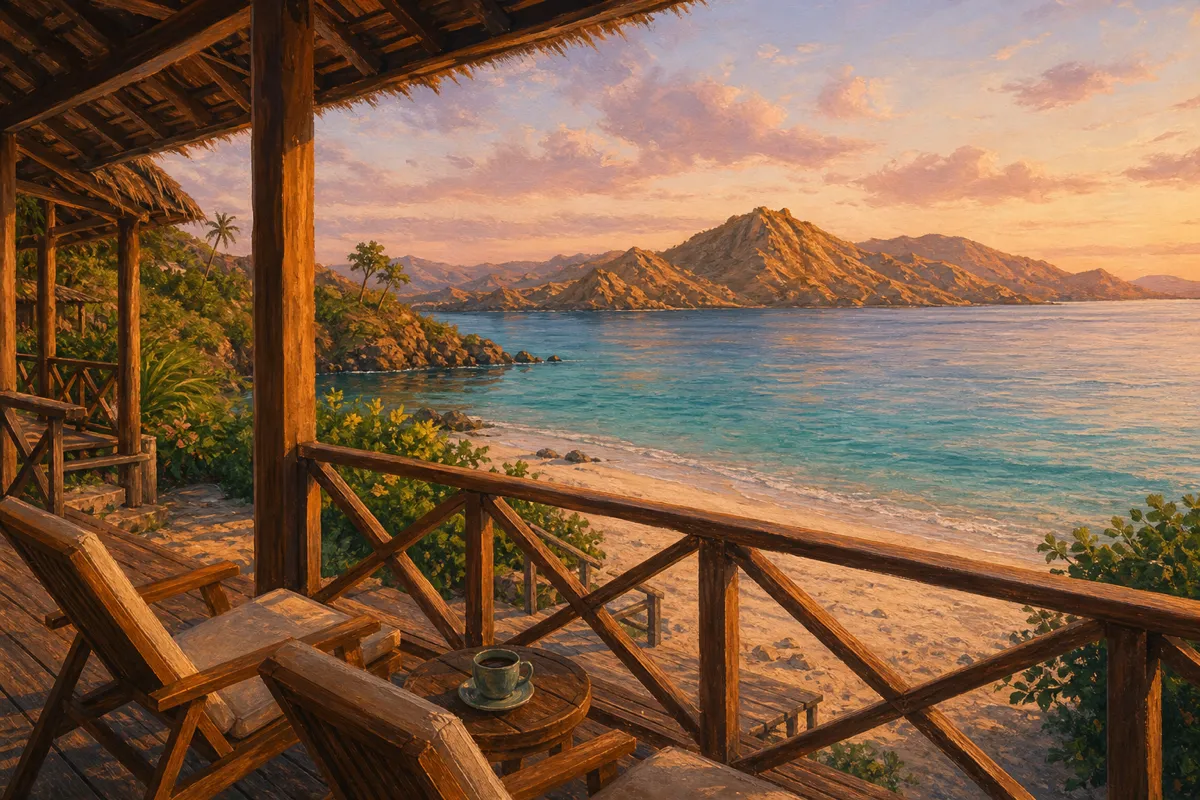
Life on an island resort has a rhythm that surprises people who assumed a boat or a town hotel was the only choice. Mornings are for the park: a dragon trek on Komodo or Rinca, a dive at a site the day boats haven't reached yet, or a slow snorkel with turtles on the house reef. Afternoons come back to solid ground, a real bed, a freshwater shower, a massage at the spa, dinner that didn't come out of a galley. Nights are silent in a way that neither a town nor an anchored boat with a generator ever quite manages.
The honest trade-offs: an island resort is a base, not a cruise, so the far southern corners of the park, Manta Alley, Horseshoe Bay, are beyond comfortable day range, and reaching them still means joining a liveaboard for a few nights. Island resorts also run on full-board packages by necessity, there's no restaurant strip to wander, so travelers who like choosing a different warung every night will feel the isolation. For couples, families with kids who need land under their feet, and divers who want world-class sites without living out of a cabin, it's the sweet spot. We wrote more about that balance in our couples' guide to Komodo.
Option 2: Sleep on the Water, a Liveaboard Inside the Park
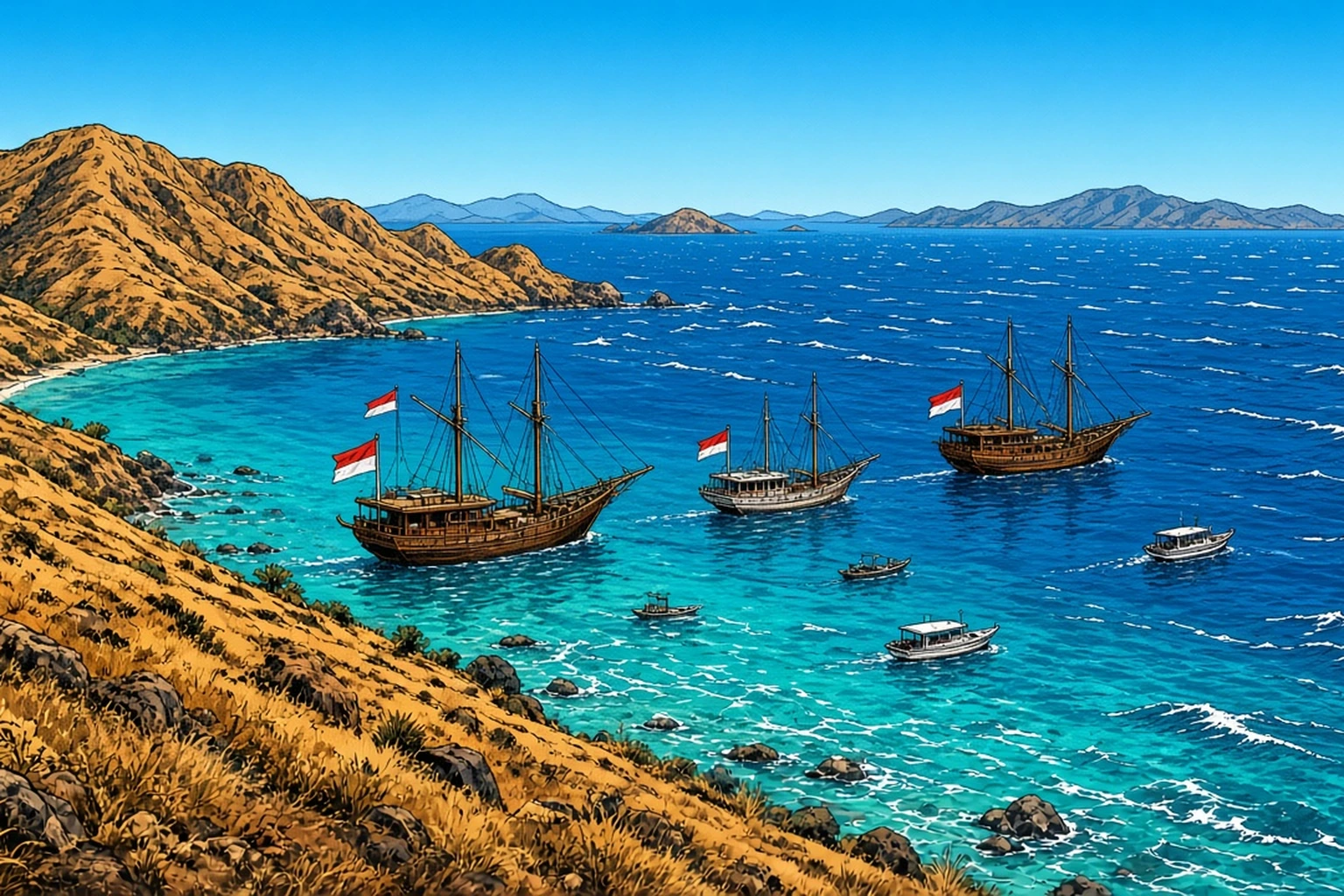
The second real answer to "can I sleep near the dragons" floats. Liveaboard boats, from budget wooden phinisi to genuinely luxurious yachts, anchor overnight in the park's bays, which means you fall asleep a few hundred meters from Komodo Island itself. No land accommodation gets you closer. On our own vessels, the Komodo Sea Dragon and King Neptune, guests routinely wake at anchor below Padar's ridgeline, climb the viewpoint at sunrise before the day boats arrive, and are eating breakfast on deck while the first crowds are still an hour out of Labuan Bajo.

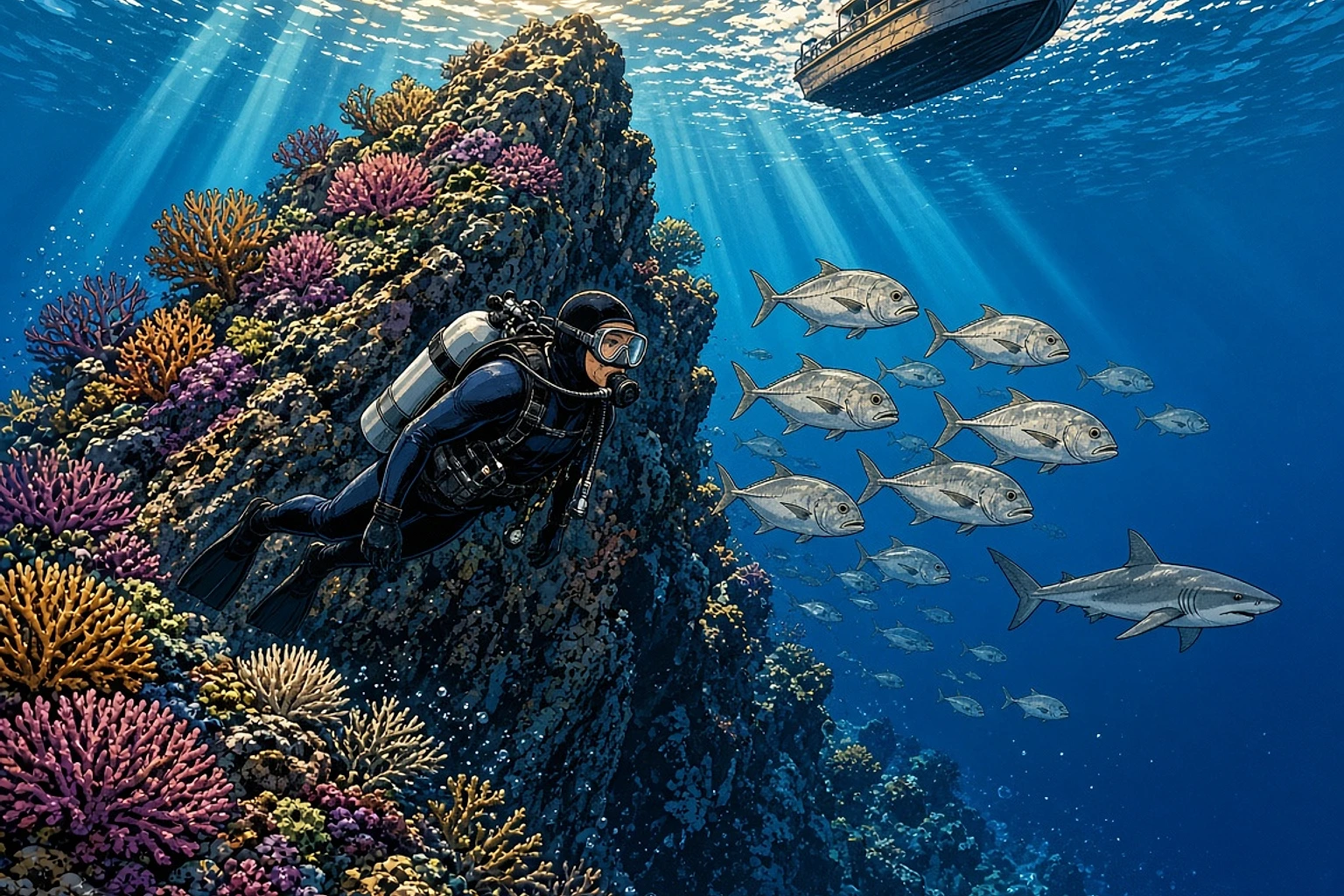
Liveaboards win on reach and rhythm. Multi-day itineraries cover the whole park, including the southern sites no land base can serve, and divers log three to four dives a day, night dives included, with zero commuting. The trade-offs are equally real: cabins are compact even on premium boats, itineraries are fixed, seas between Flores and the islands can be lively in the wrong season, and travelers prone to seasickness need to think honestly before committing to five nights afloat. Costs span an enormous range, roughly $150 per person per night on shared budget boats to $500 and beyond on luxury vessels; our guides to luxury Komodo cruises and first liveaboard trips cover how to choose without expensive surprises.
Plenty of guests refuse to choose at all, and honestly it's what we'd recommend with a week or more: a few nights on a liveaboard for the far sites and the sunrise anchorages, then a few nights on the island to slow down, dive the north at leisure, and sleep in a bed that doesn't move. The two reservation systems talk to each other, luggage gets shuttled, and nobody has to pick a favorite child.
Option 3: Labuan Bajo, the Town Base
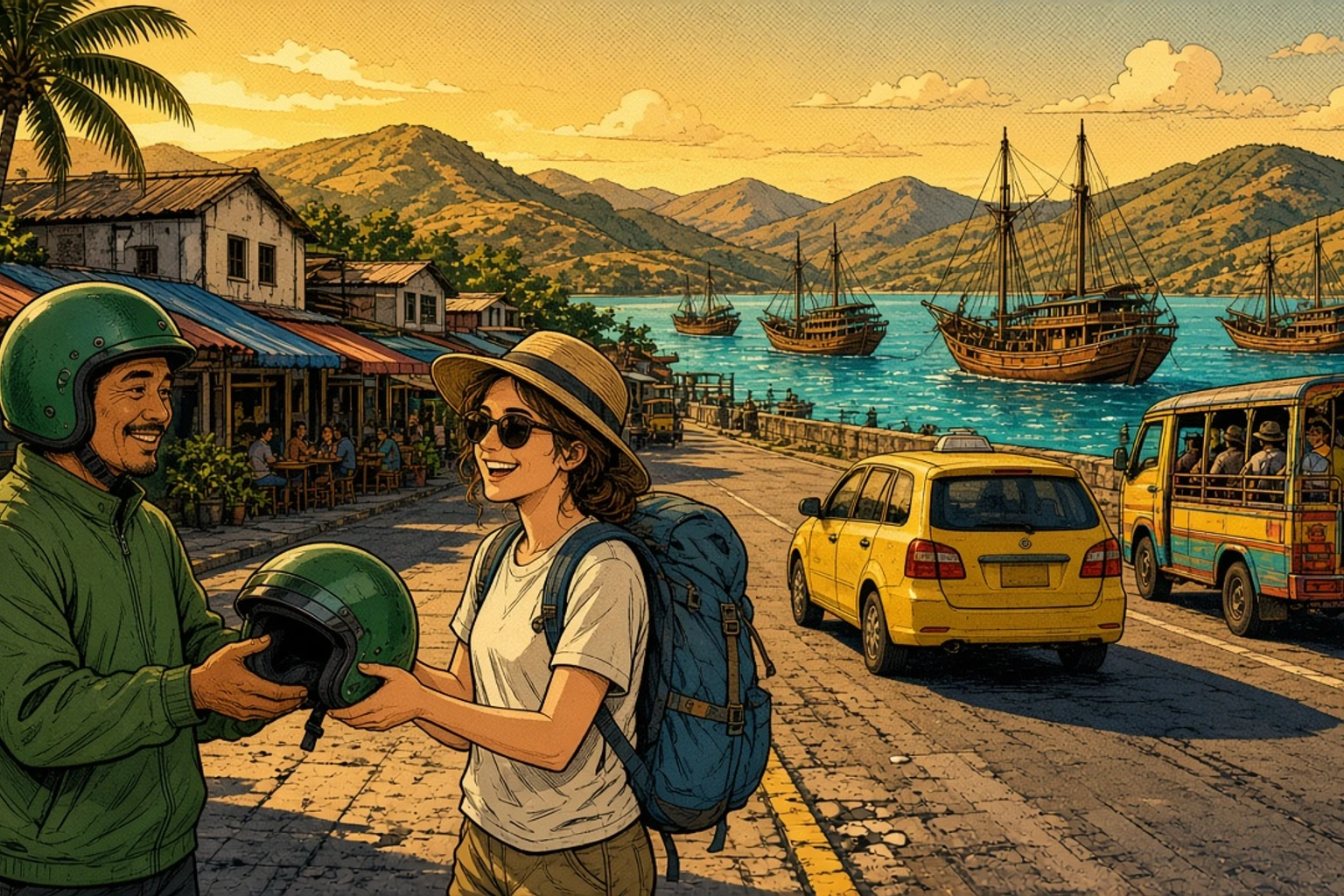
The third option is the one most first-time visitors default to: a hotel in Labuan Bajo, the harbor town on Flores that serves as the park's gateway. And to be fair, the town has grown up fast. There are international-brand hotels on the hills, boutique guesthouses near the harbor, hostels for backpackers, restaurants ranging from grilled-fish warungs to Italian, plus ATMs, pharmacies, and an airport ten minutes from the waterfront. Our Labuan Bajo travel guide walks through the town in detail.
What the town cannot change is geography. Labuan Bajo sits outside the park, and everything you came for, dragons, Padar, Pink Beach, mantas, sits one and a half to two-plus hours of boat away, each way, every day. A three-day stay built on day trips means nine-plus hours of commuting, mostly across the same stretch of water. Day boats also all leave around the same morning window and converge on the same handful of sites at the same times, which is precisely how a place earns a reputation for crowds. The park's daily caps have softened that somewhat, but they've also made the logistics less forgiving: miss your time slot because the harbor was chaotic, and there's no walk-up plan B.
Where the town base genuinely makes sense: one-day visits squeezed into a bigger Flores or Indonesia itinerary, tight budgets, travelers who want restaurant variety and nightlife, and anyone joining an open-trip shared boat departing at dawn. If your Komodo ambitions are one good day of dragons and viewpoints, sleeping in town and joining a well-run day tour is efficient and cheap. If the park is the point of the whole trip, the commuting math turns against you fast.
What About Rinca, Padar, and the Other Islands?
The same "can I stay there" question comes up for the park's other headline islands, so here are the short answers. Rinca, the second dragon island, has ranger facilities at Loh Buaya and no visitor accommodation; it's a day-visit island, typically the first or last park stop on many itineraries because it sits closest to Labuan Bajo. Padar, the one on every postcard, is uninhabited and strictly protected, with a 60-person daily cap; the sunrise hikes you see on social media are almost all launched from liveaboards anchored in its bay overnight, because reaching Padar from town for first light means a brutal pre-dawn crossing. Pink Beach and the smaller islets follow the same rule: visit, swim, leave.
Around the park's rim, though, a handful of small islands do host accommodation. A few simpler eco-stays sit on islands like Seraya Kecil and Kanawa, close to Labuan Bajo, while our own Sebayur Island lies much deeper out, among the park's northern dive sites, which is what makes Komodo Resort the closest resort to Komodo National Park of any of them. The distinction matters when you're comparing options online: "near Komodo" can mean a ten-minute hop from Labuan Bajo's harbor or a genuine position among the park's dive sites, and the difference shows up every single morning of your stay. Ask any property one question: how long is the boat ride to Batu Bolong, to Loh Liang, to Padar? The honest answer tells you what their "inside the park" really means. For a broader comparison of every category, budget to luxury, our complete Komodo accommodation guide puts them side by side.
How Each Base Handles a Dragon Day
Since seeing dragons is the reason most people ask the original question, it's worth walking through what the same excursion looks like from each base. The park's trekking rules are identical for everyone, ranger-guided walks at Loh Liang or Loh Buaya, morning slots when the animals are most active, so the variable is purely how you arrive, and in what state.
From Komodo Resort, the closest resort to the dragon islands, a dragon morning is a 60-to-90-minute boat ride timed to the reservation, trails walked in the cool early hours, and lunch back on your own beach. From a liveaboard, it's even shorter: boats anchor near the ranger stations the night before, so you're first on the trail, often sharing it with more deer than people. From Labuan Bajo, the same morning starts before 6 a.m. at a crowded harbor and lands you at the station in the warmer mid-morning, when the dragons have mostly settled into their famous impression of sun-warmed statues. They're still magnificent. But every ranger will tell you the early trail is a different animal, sometimes literally. Our guide to hiking and trekking in the park covers the trails themselves, and if you're weighing the risks, our honest piece on whether Komodo dragons are dangerous answers the question everyone privately wants to ask.
A Three-Day Plan That Sleeps Inside the Park Area
To make this concrete, here's the shape of a stay our guests actually book, three nights on the island, park permits arranged by the resort, no repeated commuting.
- Day one. Morning speedboat transfer from Labuan Bajo, about 45 minutes. Settle into a beachfront bungalow, snorkel the house reef before lunch, afternoon dive or spa, sunset from the restaurant deck with the park's silhouettes on the horizon.
- Day two. Early boat to Loh Liang for the ranger-guided dragon trek, reserved slot, cool-morning trail. Continue to Pink Beach for a swim and snorkel, lunch on board, back mid-afternoon with the whole evening free.
- Day three. Two-dive morning at the northern sites, Batu Bolong, Siaba Besar, or Tatawa depending on tides, afternoon kayak or simply a hammock, night dive on the house reef for the certified.
- Day four. Sunrise swim, breakfast, transfer back to town or, for the ambitious, straight onto a liveaboard heading south.
Swap the elements freely, families trade the night dive for a second beach day, photographers add a Padar morning, but notice what the plan never includes: a two-hour commute repeated daily. That's the entire argument for sleeping close, made by an itinerary instead of an adjective. For a longer version, our Komodo itinerary guide lays out five- and seven-day variations.
What It Costs: a Night-by-Night Comparison
Prices in the Komodo area move with season and fuel costs, but the shape of the spending is stable enough to plan around, and comparing the three bases fairly means counting the whole day, not just the bed. In Labuan Bajo, guesthouses start around $20 to $40 per night, mid-range hotels run $60 to $150, and the international resorts on the hills reach $250 and beyond. Sleeping cheap sounds like the budget winner until the excursions are added: a decent shared day boat to the park runs $70 to $120 per person, a private charter $350 to $700 per boat, and park fees, now bundled into the permit system, come on top. Three days of day trips from a $30 guesthouse frequently costs more than the same three days based inside the park area, with a fraction of the time on-site.
Island resorts price as packages because they have to feed and move you, typically $200 to $450 per person per night at the quality end, including full board, transfers, and, crucially, the excursion boats and permit handling that a town-based traveler buys piecemeal. Liveaboards span the widest range of all: roughly $150 per person per night on shared budget phinisi, $250 to $400 mid-range, and $500-plus on luxury boats, always full board, with diving either included or added as a package. The like-for-like comparison most people never do: add your hotel, three days of boat tours, meals, and permits, then set that number against a package price. The gap is usually far smaller than the nightly rates suggest, and sometimes it points the other way entirely.
Seasons Change the Answer
One more variable belongs in the decision, because Komodo is not the same trip in February as it is in August. The dry season, roughly April through November, is the classic window: calm seas in the north, reliable crossings, and the golden-brown hills that made Padar famous. It's also when the daily caps bite hardest and boats and bungalows sell out weeks or months ahead. The wet season, December through March, brings green hills, dramatic skies, fewer visitors, and lower prices, but also rougher water on the exposed crossings, which matters far more to a day-tripper commuting from town than to someone already sleeping beside the sites.
That's the quiet seasonal argument for staying close: when the afternoon chop picks up, the island-based guest has already finished the morning's park visit and is reading in a hammock, while the day boats are pounding their way back to the harbor. Divers should also note that the park's southern sites actually peak in the wet months, manta activity included, which is when liveaboard itineraries flip southward. The full month-by-month picture is in our guide to Komodo's seasons, and our best time to visit Komodo breakdown weighs the trade-offs month by month.
Choosing What Fits: an Honest Decision Guide
Strip away the marketing, ours included, and the choice comes down to a few plain questions. How central is the park to your trip? One day of dragons within a grander Flores journey points to Labuan Bajo. A trip built around the park points to sleeping inside it, island or boat. Do you dive? Casual snorkelers and non-divers get everything they came for from an island base; divers chasing the full site list, including the far south, need at least some liveaboard nights. How do you feel about boats? Be honest, five nights afloat delights some people and quietly ruins the week for others, and the middle path of resort-plus-short-liveaboard exists precisely for the undecided. Who's coming? Kids, grandparents, and anyone who treasures a long freshwater shower vote for land; dive buddies on a mission vote for the boat.
And whatever you choose, book it earlier than feels natural. Between the 1,000-visitor daily cap, 31 bungalows on our island, and a finite fleet of decent boats, Komodo in high season, June through September, now sells out in a way it simply didn't a few years ago. The dragons aren't going anywhere. The good beds near them do.
So, can you stay on Komodo Island? No, and once you've stood on its trails you'll be glad it stays that way. Can you fall asleep a few kilometers from a wild dragon, with the park's islands stacked on your horizon and tomorrow's reef already booked? That part is easy, and nowhere does it from closer range than Komodo Resort, the nearest resort to Komodo Island and the national park. It's what we do every night.