A Komodo day trip is the way most people see the national park, and it is the format most likely to disappoint them. Not because the park is overrated, but because a single day is a tight budget and the itineraries sold hardest are the ones that spend it worst. Get the shape of the day right and you will see dragons, stand on the Padar ridge and drift over feeding manta rays before dinner. Get it wrong and you will spend six hours on a boat to tick off three photographs. Our guide to Komodo boat tours covers the full range of options; this is specifically about what one day can hold.
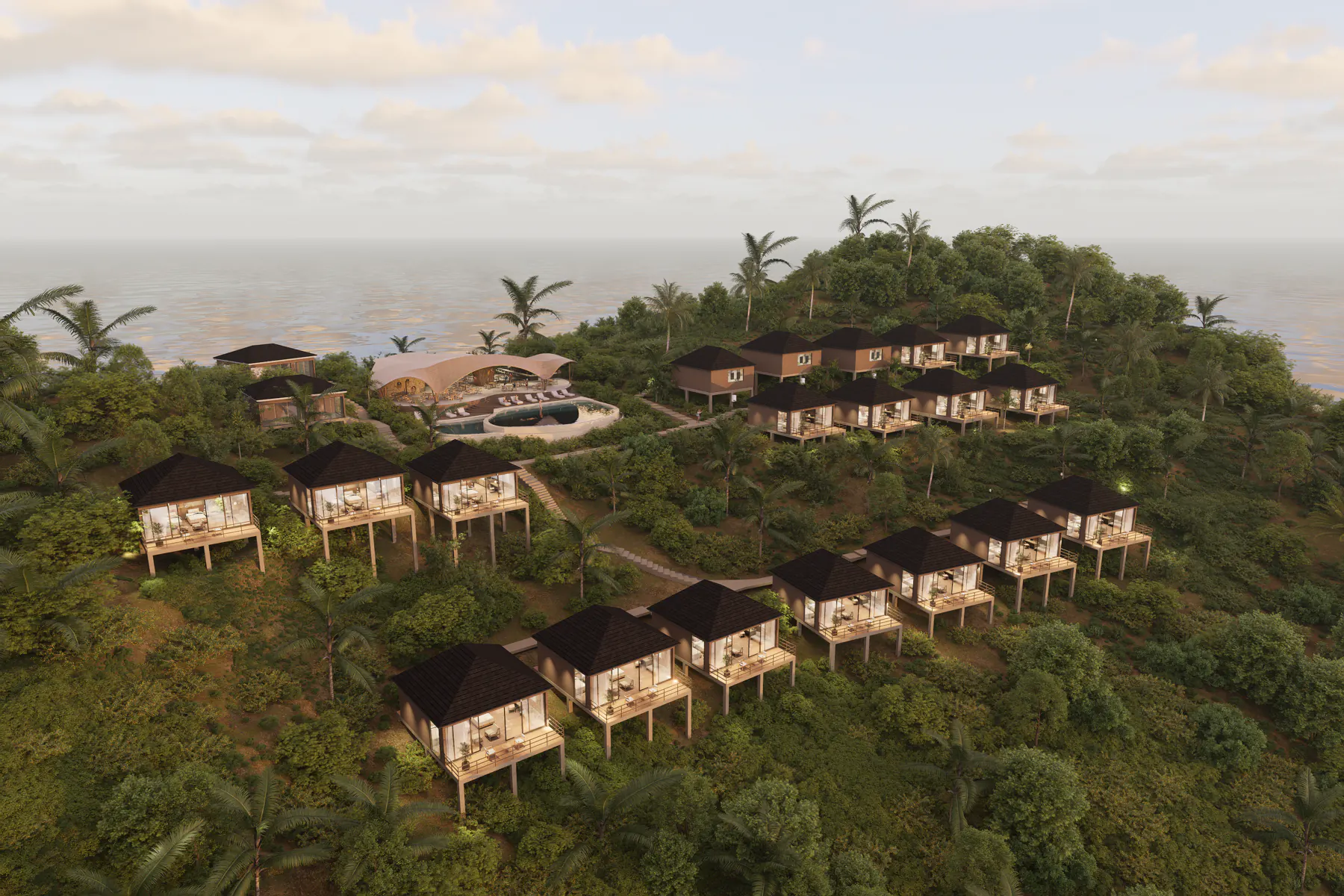
The difference between those two days is rarely the boat and almost never the price. It is where you start from, what time you get on the water, and how many stops you are honest enough to leave off the list. We run day trips from our own jetty inside the archipelago, and the single most useful thing we do for guests is talk them out of a fourth stop. Guests staying in our Komodo Resort bungalows on Sebayur get to do this repeatedly across a week, which is a luxury a one-day visitor does not have, so the one day has to be planned properly.
This guide covers what a day realistically buys you, the transit maths nobody puts in the brochure, the three itineraries that actually exist, which stops deserve a slot, how diving works on a day trip, the new dive-site rotation rule and why your departure time now matters more than it used to, what it all costs, and when you should admit that one day is not enough.
What One Day in Komodo Actually Buys You
Two to four stops. That is the honest answer, and the number shrinks the further your boat has to travel to reach the first one.
Komodo National Park covers roughly 1,700 square kilometres of islands and water. The famous stops are not clustered conveniently: Padar sits in the middle, Komodo Island lies west of it, Karang Makassar is a long shallow strip in the central channel, and Kalong is back toward Flores. A boat cannot visit them all in a day at any speed, and any operator promising five major stops in one day is quietly planning to give you fifteen minutes at each.
A well-built day looks like this: one hike, one wildlife stop, one time in the water, and one thing that happens at the right hour. Four things, done properly, with time to actually be somewhere rather than photograph it and reboard. That is a genuinely excellent day. Five things is a worse day than four, every time.
The Transit Problem Nobody Puts in the Brochure
This is the part that decides everything else, and it is almost always left out of the itinerary you are shown.
Boats leaving Labuan Bajo face a run of roughly one and a half to two and a half hours each way to reach the central park sites, depending on the boat and the sea state. Round that up and you have spent three to five hours of daylight in transit before you have swum anywhere or climbed anything. On a twelve-hour day that is a third to nearly half of it gone, and it is the reason so many day trips feel rushed at every stop: the schedule was eaten by the crossing before anyone got wet.
It also means everyone arrives together. The town fleet leaves within the same window each morning, so the boats travel as a loose convoy and land on the same stops at the same time. The Padar ridge at eight in the morning in July is not a wilderness experience.
Starting from inside the archipelago changes the arithmetic completely. Our boats leave from Sebayur Island, already past most of that crossing, so central sites are minutes away rather than hours. In practice that means reaching Padar or a dive site ahead of the town boats, coming back for a real lunch, and going out again in the afternoon. If you are choosing between commuting from town and sleeping inside the park, our guide to staying on Komodo Island lays out the trade-offs.
The Three Day Trips That Actually Exist
Operators advertise dozens of itineraries. Structurally there are three, and picking the right one matters more than picking between operators.
The classic sightseeing day
Padar for the viewpoint, Komodo or Rinca for the dragons, a snorkel stop, and Pink Beach or Kalong depending on timing. No scuba. This is the right choice for a first visit, for families, for anyone travelling with people who do not dive, and for photographers who want the landscape rather than the reef.
It is also the busiest itinerary, because it is what most visitors book. The fix is departure time rather than a different route: an hour earlier changes the Padar experience more than any other decision available to you.
The diving day
Two or three dives, no hiking, lunch on the boat or back at base. Divers consistently get better value from a day in Komodo than sightseers do, because the dive sites sit closer together than the island attractions and the transit between them is measured in minutes.
Our standard diving day is two tanks in the morning with an optional afternoon dive at 14:30, run through our PADI five-star Komodo dive centre. Nobody sensibly tries to combine three dives with the Padar hike in one day; the surface intervals and the walking do not fit together, and attempting it is how people end up doing both badly.
The mixed day
One or two dives plus one land stop, usually the dragons. This works, with one caveat that catches people out: you cannot dive and then hike a ridge in the heat without thinking about it, and you certainly cannot dive and fly the same day. If your trip ends soon after, read our guide to flying after diving before you build the itinerary.
Which Stops Deserve a Slot
Not all of the famous stops repay the time they cost. Here is our honest ranking for a single day.
Padar Island: yes, and go first
The three curving bays below the ridge are the image that sells Komodo, and unlike a lot of famous viewpoints it genuinely delivers. It is also a real climb: steps and loose ground, thirty to forty-five minutes up for most people, no shade at all.

Go at sunrise if your itinerary allows it. The light is better, the temperature is survivable and the ridge is far emptier. Anyone with knee trouble or unmanaged asthma should think honestly about it, because there is no shortcut back down.
The dragons: yes, but pick your island deliberately
Both Komodo Island and Rinca have dragons, both are walked with a ranger, and that ranger escort is compulsory rather than a formality. The experience differs more than people expect.
Komodo Island feels wild. The trek goes into the animals' habitat and the medium loop of about an hour is the sweet spot between a token walk and a route that eats your day. Rinca has been developed with elevated walkways and viewing platforms, which makes sightings more reliable and the whole thing more managed, closer to a very good wildlife park than to wilderness. Rinca is nearer to Labuan Bajo, so short trips default there. If the dragons are your main reason for coming, go to Komodo Island and accept the extra travel; our guide to how dangerous Komodo dragons really are explains why the rangers matter, and our Komodo dragon tours set out the options.
Karang Makassar: yes, and it works for everyone
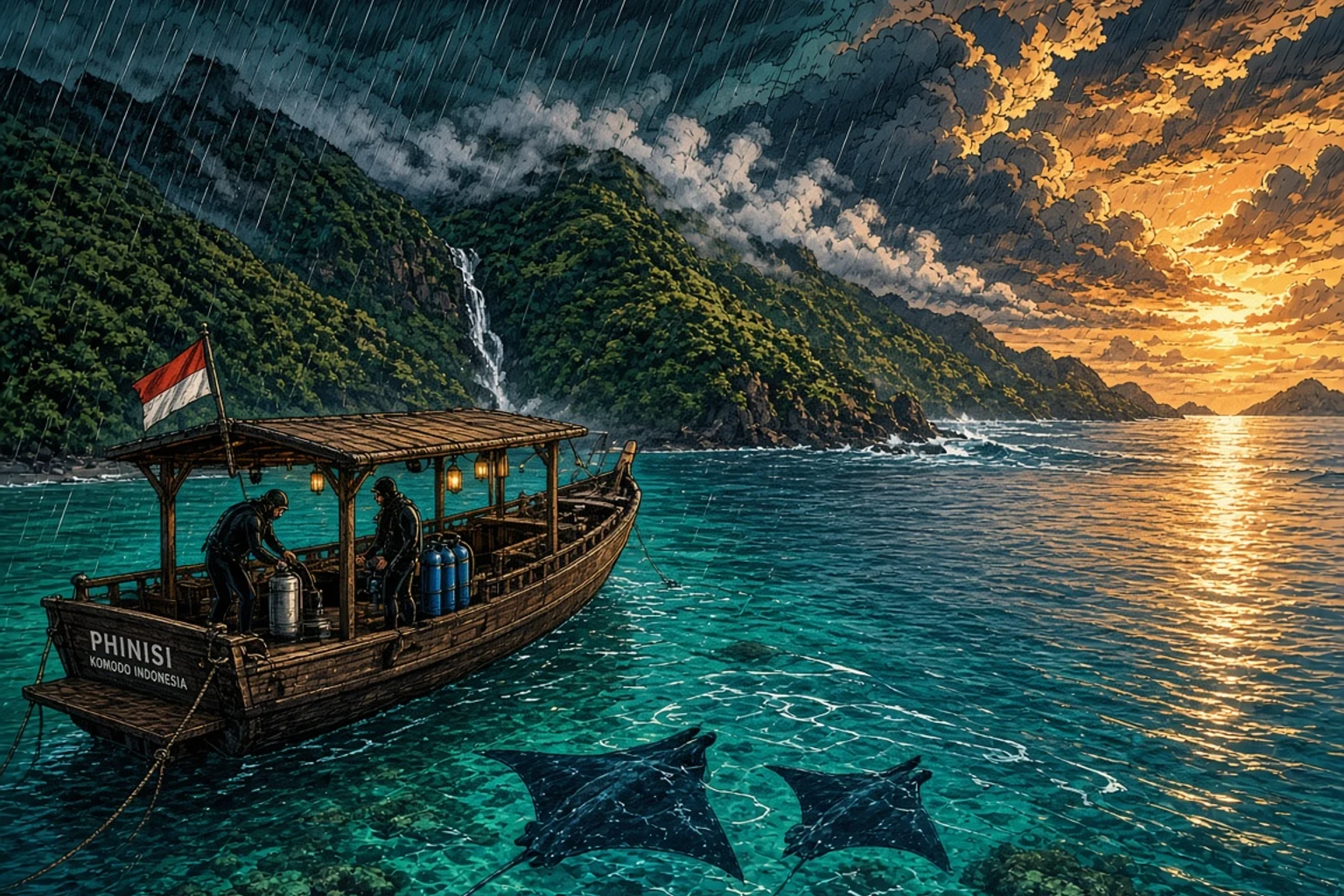
The manta drift is the best value stop in the park for a mixed group, because it is shallow enough that snorkellers and divers see the same animals. Reef mantas are resident here year round, so no month writes the site off.
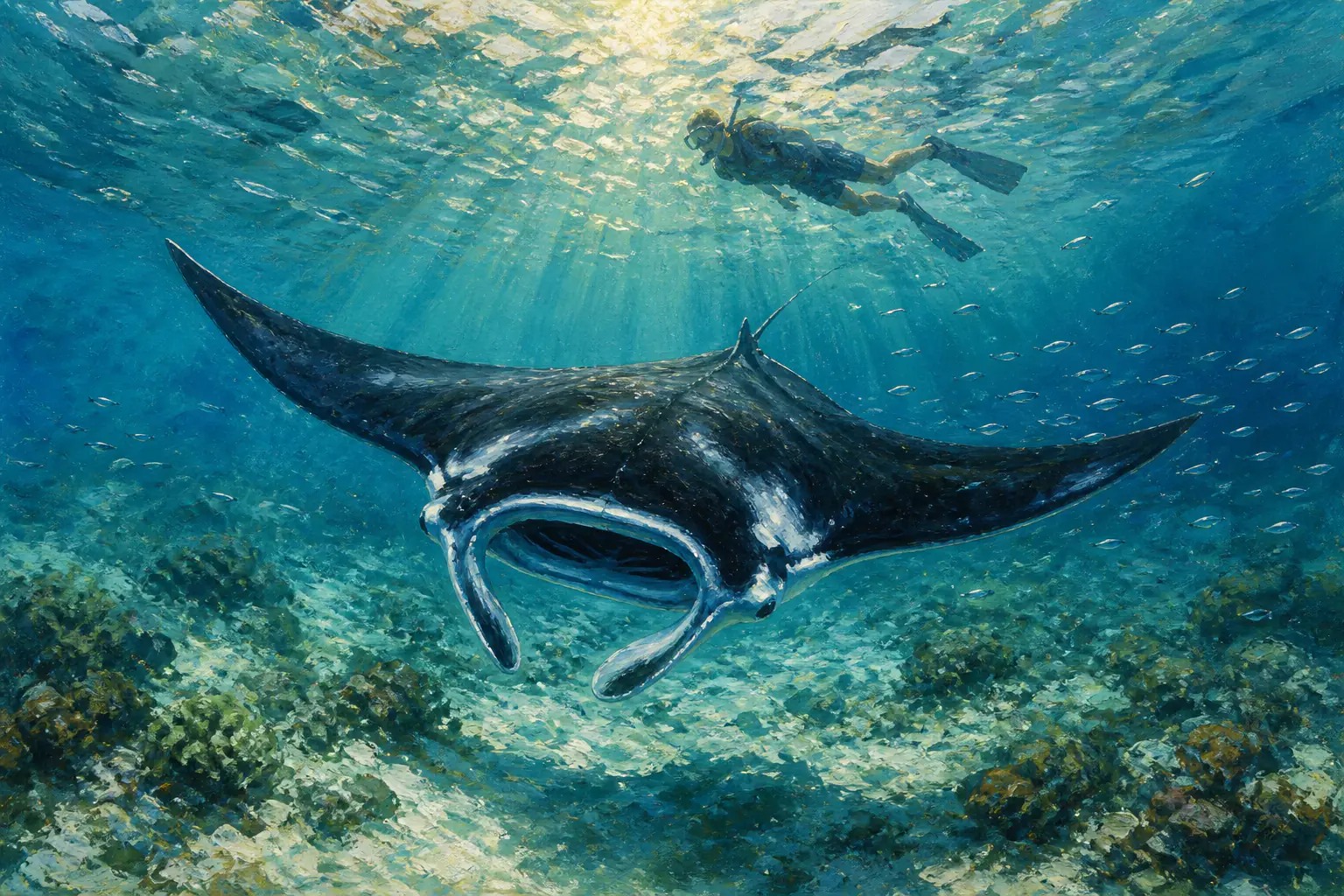
Numbers do shift with the plankton. The largest feeding aggregations come in the wet season, roughly December to February, while the dry months from June to September produce mantas most days in smaller groups and clearer water. The shoulder months either side are the best all-round compromise. What matters more than the month is the tide, which your operator should be planning around. Our guide to swimming with manta rays covers the etiquette that decides whether they stay or leave.
Pink Beach: only if it is on the way
The sand really is pink, coloured by red-pigmented foraminifera ground up among the white grains, but the effect is subtle rather than the saturated rose of the photographs. It reads strongest in soft light and where the sand is wet.
The snorkelling off the beach is better than the beach itself and is the actual reason to stop. As a destination in its own right it does not justify a long detour on a single day.
Kalong: yes, if your day runs to dusk
Thousands of flying foxes lift off the mangroves at sunset and stream across the sky toward Flores. It is one of the genuinely unforgettable half hours in the park and it costs you nothing but the timing, since it happens on the way back toward town.
The catch is that it only works if your boat is still out at dusk, which many day trips are not.
Diving on a Day Trip
Komodo is one of the best dive destinations in the world and one of the more demanding, because the tidal currents that feed the reefs also decide which sites are safe on a given day.
The famous sites are advanced. Batu Bolong is a rock in mid-channel dropping vertically on both sides, carrying extraordinary fish density on its sheltered face, and the standing hazard is drifting off that face into moving water. Castle Rock and Crystal Rock are submerged seamounts where groups descend fast on a negative entry to get under the flow. Shotgun fires you through a channel gap at Gili Lawa. All of these want an Advanced Open Water certification and recent drift experience, and our guide to diving Komodo's currents covers the skills honestly.
The park is not uniformly demanding, though, and that myth puts off divers who would love it. Siaba Besar is a sheltered turtle bay with almost no flow. Mawan is a calm slope that mantas also visit. Tatawa Besar is a soft coral drift you ride rather than fight. Our own house reef runs about a kilometre along Sebayur Island and is where we run try dives and Open Water courses for anyone wanting to learn to dive in Komodo. One naming trap worth knowing: Tatawa Kecil, despite sitting beside the gentle Tatawa Besar, is an advanced site notorious for split currents and downcurrents that has to be timed to slack tide. The full picture is in our Komodo dive sites guide.
If You Would Rather Snorkel
Snorkellers lose far less in Komodo than they do in most dive destinations, and on a day trip they arguably lose nothing at all.
The reason is depth. A lot of what makes this park remarkable happens in the top ten metres, and several of the best sites are shallow enough that snorkellers and divers are looking at the same animals. Karang Makassar is the clearest case: the mantas feed near the surface with their cephalic fins unfurled, and a snorkeller hanging quietly overhead frequently gets a longer, calmer look than a diver working to hold position on the bottom. The reef off Pink Beach, the shallows at Kanawa and Kelor, and the house reef in front of the resort are all excellent from the surface.
There is also a scheduling advantage that nobody mentions. Snorkelling carries no surface interval and no depth obligation, so a snorkelling day can include the Padar hike without any of the compromises a diving day forces on you. That makes it the most flexible way to build a single day, and the reason mixed groups work better here than people expect. Our Komodo snorkelling trips run on the same boats as the diving, so nobody has to split off.
The one thing worth insisting on is a guide who knows where the current runs. Karang Makassar is a drift, and a snorkeller who drops in at the wrong end of it spends the session swimming rather than watching.
The 20-Minute Rule, and Why Your Departure Time Now Matters More
This one is new, widely misreported, and worth getting right because it changes how a day trip is planned.
In 2026 the Komodo National Park authority introduced what it calls the 20 Minutes Rule. A wave of coverage described it as a twenty-minute limit on dive duration, which caused predictable alarm. The park authority corrected this publicly at the end of April: the twenty minutes is the minimum interval between successive groups of divers entering the same site, not a cap on how long you dive. Its marine division head put it plainly, that it is not dive time being limited but the gap between dive groups.
The rule is applied first-come, first-served at the busiest sites, with Batu Bolong, Crystal Rock and Castle Rock named as priorities. Boat captains and guides coordinate on the water, and where a site is congested operators are expected to wait their turn or move to a different site. The stated aims are reducing pressure on the reef, improving safety in strong current, and keeping the experience from turning into a queue.
The practical consequence for you is simple. At a popular site in a busy month, arriving late means waiting or being relocated. Arriving early means diving the site you came for, on the tide you wanted. In July and August that is the difference between the dive you booked and a substitute; in a quiet month you will barely notice the rule exists.
What a Komodo Day Trip Costs
Prices vary enormously by boat, group size and what is bundled, so treat any single number with suspicion. For reference, these are our own current rates from the resort, per person: two morning dives IDR 2,500,000; a full three-dive day IDR 2,900,000; a single afternoon dive IDR 1,225,000; a try dive for complete beginners IDR 1,600,000; snorkelling on a shared boat IDR 2,200,000. A private guide is IDR 2,000,000 per day and nitrox is IDR 130,000 per tank.
Two things routinely catch people out. National park fees are charged separately from the boat, per person per day, with an additional permit for diving, and every visitor is now pre-registered through the park's online system before boarding. Our guide to Komodo National Park entrance fees sets out what you will actually pay, and money in Labuan Bajo covers cash and cards, which matters because not everything here takes a card.
The second is that the cheapest shared boats are cheap for reasons that show up on the day: more passengers, less shade, minimal safety equipment and the longest transit times. If budget is the priority, our guide to open trip Komodo explains how shared departures work and what to check before booking one.
Speedboat or Wooden Boat
Speedboats buy you stops. They cover ground fast, which is what makes a three or four stop day possible, and they are the right answer for the classic sightseeing itinerary. They also slam in chop, so a windy day is markedly less pleasant.
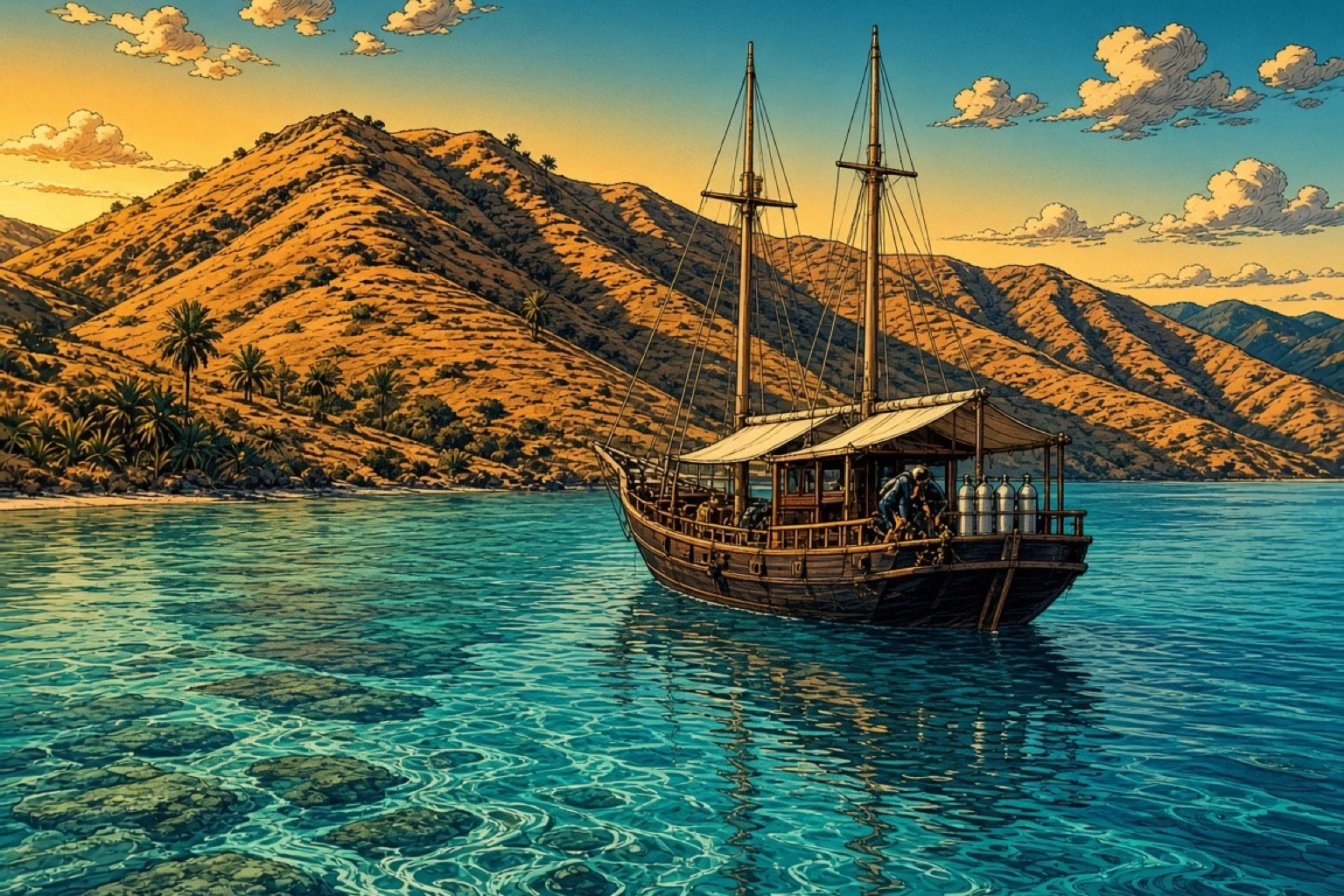
Wooden boats are slower and sit far more kindly in a swell, with shade, room to lie down and space to spread dive gear. They are the better platform for a diving day and for anyone who gets queasy. If that is you, our guide to seasickness on Komodo boat trips is worth reading before you choose, because the crossing is when it bites.
How to Not Waste the Day
A handful of things separate a good day from a frustrating one, and none of them cost money.
Leave earlier than feels reasonable. Every good thing about a Komodo day trip follows from being on the water before the fleet, and every bad thing follows from being in the middle of it. Cut a stop rather than compressing all of them. Take sun protection seriously, because the breeze on a moving boat hides how hard the sun is working and a burn ruins the rest of your trip; our Komodo packing list covers the rest of the kit. Bring closed shoes with grip for the Padar steps and the dragon trails. Take motion sickness tablets before departure rather than when you first feel it, because by then they are much less effective. And carry cash for park fees.
One more, less obvious: ask your operator what the plan is if the weather turns. A good answer describes alternative sheltered sites. A vague answer usually means the day gets cancelled or pushed through uncomfortably.
When One Day Is Not Enough
A day trip is a sample, and for some trips it is the wrong tool entirely.
If you came primarily to dive, one day gives you two dives at whichever sites the tide allows, and Komodo has more than thirty. If you want the southern sites or the remote north, no day trip reaches them at any speed and you need a Komodo liveaboard, which is also the only way to dive the park at night. If you want the dragons on Komodo Island and Padar at sunrise and the mantas, that is comfortably two days rather than one heroic one.
Three days is the point where the park stops feeling like a checklist: dragons, Padar, a couple of dives or snorkels, and a spare day so that one bad-weather morning does not cost you the trip. Our Komodo itinerary guide maps out three, five and seven day plans, and our guide to the best time to visit Komodo Island covers when to come.
The Short Version
One day in Komodo holds two to four stops done properly, and the enemy is transit rather than money. Start from as far inside the park as you can, leave before the fleet, choose one hike, one wildlife stop and one swim, and let the fourth thing be whatever happens at the right hour. Divers get more from a day than sightseers because the sites sit close together, and everyone gets more from Karang Makassar than from Pink Beach.
Above all, resist the itinerary with five headline stops. It is the one that sells best and the one that leaves people saying Komodo was beautiful but rushed. We run day trips daily from our island and can build one around what you actually want to see; our Komodo National Park tours page has the options, or just get in touch.