October is the hinge of the Komodo year and the only month when the whole park tends to be open at once. The northern sites are still in dry-season shape, roughly 18 to 28 metres of visibility at 28 to 29C, while the southern sites that the southeast monsoon makes unusable through July and August start coming back. The trade-offs are that the south is at the opening of its window rather than its peak, and the last week of the month can bring the first showers.
Ask ten people when to dive Komodo and nine will say July or August. They are not wrong about the north, where visibility in those months is the best in the region. What that answer quietly leaves out is that roughly half the national park is closed to you at the time. October is the month that stops being true, which is why the guides at our Komodo dive centre tend to name it when guests ask what we would book for ourselves.
This is not the usual shoulder-season pitch about smaller crowds, though the crowds are smaller. It is a point about geography. Komodo is really two dive destinations that run on opposite calendars, and October is the short overlap where both are working. Getting to the southern half needs a Komodo liveaboard rather than a day boat, so it also changes how you should plan the trip. Here is what the month actually delivers, and where it falls short.
The One Thing October Does That No Other Month Does
Komodo sits where the Pacific and Indian Oceans squeeze through the Sape and Lintah Straits. That produces the currents the park is famous for, and it also produces two hydrographically distinct worlds inside one set of boundaries.
The northern and central sites, the ones almost everybody means when they say Komodo, sit on Flores Sea water. Castle Rock, Crystal Rock, The Cauldron, Batu Bolong, Tatawa Besar, Siaba Besar and the manta cleaning stations at Karang Makassar and Mawan are all in this group. Their good season runs roughly April to November, and their peak is July and August, when visibility can hit 25 to 35 metres.
The southern sites face the Indian Ocean, and they run the calendar backwards. Manta Alley, Cannibal Rock, Horseshoe Bay, Yellow Wall and Three Sisters are exposed to the full fetch of the southeast monsoon. The same wind that scrubs the north clean from June to August drives swell and murky upwelling straight into the south. Manta Alley in July can mean short, choppy seas and 5 to 10 metres of visibility, and most operators simply drop it from the itinerary. The southern window opens around October and runs through to March or April.
Put those two calendars side by side and the shape of the year is obvious. In July and August the north is superb and the south is shut. In January and February the south is at its best while northern day trips get cancelled for weather, which is the trade-off we go through in detail in our guide to Komodo in January. October is the overlap. The north is still holding 18 to 28 metres at 28 to 29C, the southern sites are becoming workable again, and for a few weeks a single itinerary can reach both.
One honest caveat, because this is the sort of claim that gets oversold. October opens the southern window, it does not guarantee it. Some years the swell settles in the first week and some years it takes until November. If the south is the entire reason you are coming, book December to February and accept the northern compromise instead.
What the Weather Actually Does in October
Days run hot. Expect 30 to 33C in the afternoon and around 25C overnight, with about nine hours of sunshine and a UV index that sits in the extreme band. Sea surface temperature is around 28C. This is the end of the dry season, and the land feels it: the hills are burnt gold, the dust is up, and the heat on an exposed ridge at midday is genuinely punishing.
Rainfall is where the sources stop agreeing, and the disagreement is informative. One long-term dataset puts Labuan Bajo at 89mm across about four rainy days in October. Another gives 99mm, then contradicts itself further down the same page with 146mm across twelve days. When climate averages scatter that widely for a single month, it usually means the month is a hinge rather than a settled season, which is exactly what October is.
The practical version is simpler than the statistics. The first half of October generally behaves like September: dry, bright, steady. The second half starts hinting at what is coming, with occasional heavy showers that arrive fast, soak everything for twenty minutes and clear. Rain almost never cancels diving here. It affects the sunset cruise and the ridge hike far more than it affects the water.
Diving the North and Central Park
This is the half of the park you can reach on a day boat, and in October it is still in good order. Visibility across the northern and central sites typically runs 18 to 28 metres, down slightly from the July peak but well above what most divers are used to at home. Water sits at 28 to 29C, which is a 3mm suit for most people and a shorty for the warm-blooded.
What does not soften in October is the current. Komodo's flow is tidal and it can be fierce regardless of season, and the sites that make the park famous are famous precisely because of it. Castle Rock and Crystal Rock are exposed pinnacles where the fish action depends on the water moving. The Cauldron has a downcurrent feature that is a thrill when it is read correctly and a problem when it is not. Batu Bolong is a knife-edge pinnacle with a permanently sheltered side and a permanently exposed one. None of that is beginner territory, and the skills that matter are covered in our guide to diving Komodo currents. Bring a reef hook, be comfortable with negative entries, and be able to deploy an SMB without thinking about it.
The reward is biomass. Grey reef and whitetip sharks patrol the pinnacles, and the schooling trevally and dogtooth tuna show up where the current concentrates them. Our overview of the sharks of Komodo covers which species you can reasonably expect and which are rarer than the internet suggests. Siaba Besar is the gentle counterweight, a turtle-heavy slope where nothing is trying to push you anywhere.
From the resort on Sebayur Island, a standard day is two morning dives at IDR 2,500,000 or three at IDR 2,900,000, run at a four guests to one guide ratio, with park entrance fees charged separately. Nitrox is available to certified divers. If you want a low-effort afternoon, the house reef with a guide is IDR 350,000 per person, and in October the visibility on it is usually good enough to make that worthwhile rather than a consolation prize.
The South Comes Back Online
The southern sites are a different park wearing the same name. Cold, green, plankton-heavy water, soft coral in colours that look artificially saturated, and a critter list that draws macro photographers who have no particular interest in mantas or sharks. Cannibal Rock and Yellow Wall in Horseshoe Bay hold pygmy seahorses, frogfish, Coleman shrimp on fire urchins and nudibranchs in volume. Manta Alley is the park's biggest manta aggregation site.

The access question catches people out. Nothing in the south is reachable on a day trip. Manta Alley is four to five hours from Labuan Bajo harbour, and the southern sites realistically need a five or six night itinerary to include properly. That is a liveaboard trip, and if you want the south you should be looking at Komodo Sea Dragon or a comparable boat with a southern route, not at a day-boat schedule with an ambitious extra hour bolted on.
Conditions in the south in October usually mean 10 to 20 metres of visibility, moderate to strong current, and surge that can shift direction mid-dive. Manta Alley wants an Advanced certification and real drift experience. This is the beginning of the window rather than its best, and it is worth being clear-eyed about that: December to February is when the southern sites are most reliable and the manta numbers are highest. What October offers is access to both halves in one trip, which no single month between December and February can match.
Two Water Temperatures, Two Wetsuits
This is the part of an October trip people get wrong, and it is worth its own section because being cold in current is a safety issue rather than a comfort one.
The north runs 28 to 29C. The south runs 20 to 25C, with thermoclines that are standard rather than occasional. Descending through a sharp drop of 3 or 4C somewhere between 15 and 22 metres is normal, and the cold layer is frequently where the interesting animals are. Cannibal Rock's richest zone sits between roughly 15 and 25 metres, which means you are working at the colder end of the range for most of the dive rather than dipping into it briefly.
A 5mm wetsuit with a hood is the practical minimum in the south, and a 7mm is not an overreaction if you feel the cold. Divers who arrive with the 3mm that served them perfectly at Batu Bolong in the morning will notice by the second southern dive. The reason to take this seriously is not that being cold is unpleasant. Sustained cold shortens bottom times, drains air faster and measurably degrades decision-making, and southern Komodo is not a place to be making worse decisions than usual. If your itinerary crosses both zones, you need thermal protection for both, and most rental fleets in Labuan Bajo are stocked for the warm north.
Mantas in October, Honestly
Reef mantas are in Komodo year-round. The central cleaning stations at Karang Makassar and Mawan produce sightings in every month of the year, including the July and August window when numbers are at their lowest.
What changes seasonally is the size of the aggregations. The trains of twenty, thirty or more animals at a single station are most reliably seen from roughly September through May, with December to February the standout period. October sits on the rising edge of that curve. You have good odds of quality manta time and poor odds of the spectacle that January produces. Anyone promising you a fifty-manta day in October is selling something.
Manta Alley in the south is the exception that proves the geography. Mantas are there all year, but the site is only safely accessible from about October to April, so the season is set by the swell rather than the animals. If you want the full picture of where and how to see them, our guide to swimming with manta rays in Komodo goes through the etiquette that actually matters: stay low, stay off the cleaning station itself, and never chase. Mantas will approach a still diver and leave a moving one.
The Dragons Are Guarding Nests
October is a specific and slightly overlooked point in the Komodo dragon calendar. Mating runs from around May to August. Females lay their eggs in August and September, usually 15 to 30 of them, frequently by reusing the abandoned mound nests of orange-footed scrubfowl, which one study found accounted for about 60 per cent of nests. Incubation takes seven to eight months, so the eggs laid a few weeks before your October trip will not hatch until March or April.
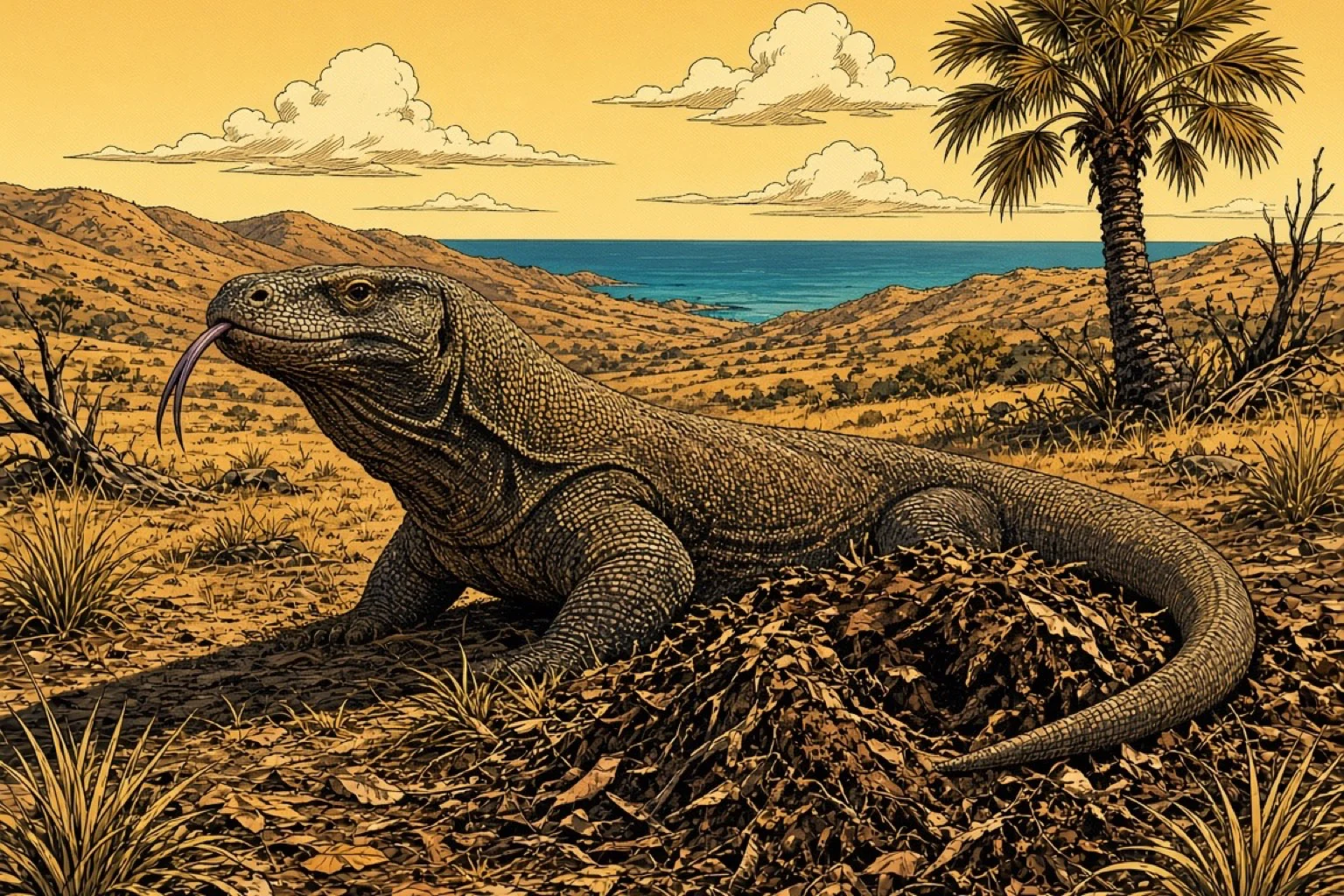
What that means on the ground is that the eggs are already buried and the females are still guarding them, since nests are defended for the first few months rather than the whole incubation. Rangers know where the active nests are, and a female holding station near a mound is a more predictable animal to find than one ranging for food. Females also dig decoy chambers to confuse egg-raiding rivals, which is one of the odder pieces of behaviour in the park and something a good ranger will point out. There is more of this in our collection of Komodo dragon facts.
Practically, go early. Dragons are most active in the cooler hours, and by late morning in October most of them are lying in whatever shade they can find, which makes for duller viewing and a hotter walk. Stay with your ranger, keep the distance you are told to keep, and do not crouch down for a photograph, because dropping to eye level changes how you read as a shape to an animal that hunts by ambush.
The Islands Are Gold, Not Green
Anyone who has seen the famous Padar photograph, three bays radiating from a spine of dry ridge, has seen the dry season. That golden-brown landscape is an October landscape. The green version that appears in other people's photos arrives after the rains, from about December, and by then the diving calendar has moved on.
If the classic view is what you came for, October is the last dependable month to get it, and the light in the second half of the month can be excellent when the first clouds start building without yet delivering rain. Start the Padar climb at dawn. The steps are exposed, there is no shade worth the name, and the heat by nine in the morning is the reason people describe the walk as harder than the distance suggests. Our guide to hiking in Komodo covers the trails and how long each one honestly takes.
Crowds and Prices After the July Peak
July and August are the absolute tourist peak, and they behave like it. Popular moorings get stacked with boats, the good liveaboards want booking six to twelve months out, and the Padar steps at sunrise turn into a queue.
October is not empty, and describing it that way would be dishonest. It is noticeably lighter. Availability tends to be a six-months-ahead problem rather than a twelve-months-ahead scramble, mooring buoys are less contested, and the ridge at dawn has space on it. Rates ease from the peak too, though October is not the cheapest month of the year and nobody should pretend otherwise. That title belongs to the wet season, when the north is unreliable and the discounts reflect it.
If your priority is the emptiest park rather than the widest access, the month to read about next is Komodo in November, which trades a little northern visibility for a genuinely quiet park and building manta numbers. And if you have only one day rather than a week, our honest accounting of what a Komodo day trip buys you is worth reading before you book anything.
Snorkellers and Non-Divers
October suits the surface as much as it suits depth. Seas are generally calm, the water is around 28C, and visibility at the shallow sites is good. Karang Makassar is a snorkelling site as much as a diving one, since the mantas there feed and get cleaned in water shallow enough to watch from the top. Pink Beach, Kelor and the shallows at Siaba are all comfortable in this month, and our Komodo snorkeling trips run the same boats as the dive schedule.
The one thing to take seriously is that current does not care whether you have a tank on. The same tidal flow that makes the diving good can move a snorkeller off a site quickly. Wear the flotation vest, stay on the guide's side of the group, and if you are a nervous swimmer say so before you get in rather than after. Our Komodo snorkeling guide goes through which sites suit which ability.
What to Pack for October
The packing list is mostly the standard tropical one, with three additions specific to this month.
- Thermal protection for whichever zones you are diving. A 3mm covers the north. If your itinerary goes south, bring or reserve a 5mm and a hood, and do not assume the boat has one in your size.
- Serious sun protection. The UV index is extreme, the boat decks are exposed and the ridge hikes have no shade. A rash guard does more good than repeated sunscreen application, and reef-safe formulations matter in a marine park.
- A light rain shell. Not for the diving, for the twenty-minute downpours that can arrive late in the month while you are on a top deck at speed.
Everything else, from the dry bag to the reef hook to the question of how much cash to bring to an island with no ATM, is in our what to pack for Komodo Island list.
How to Build an October Trip
There are three sensible shapes, and which one fits depends entirely on whether you want the south.
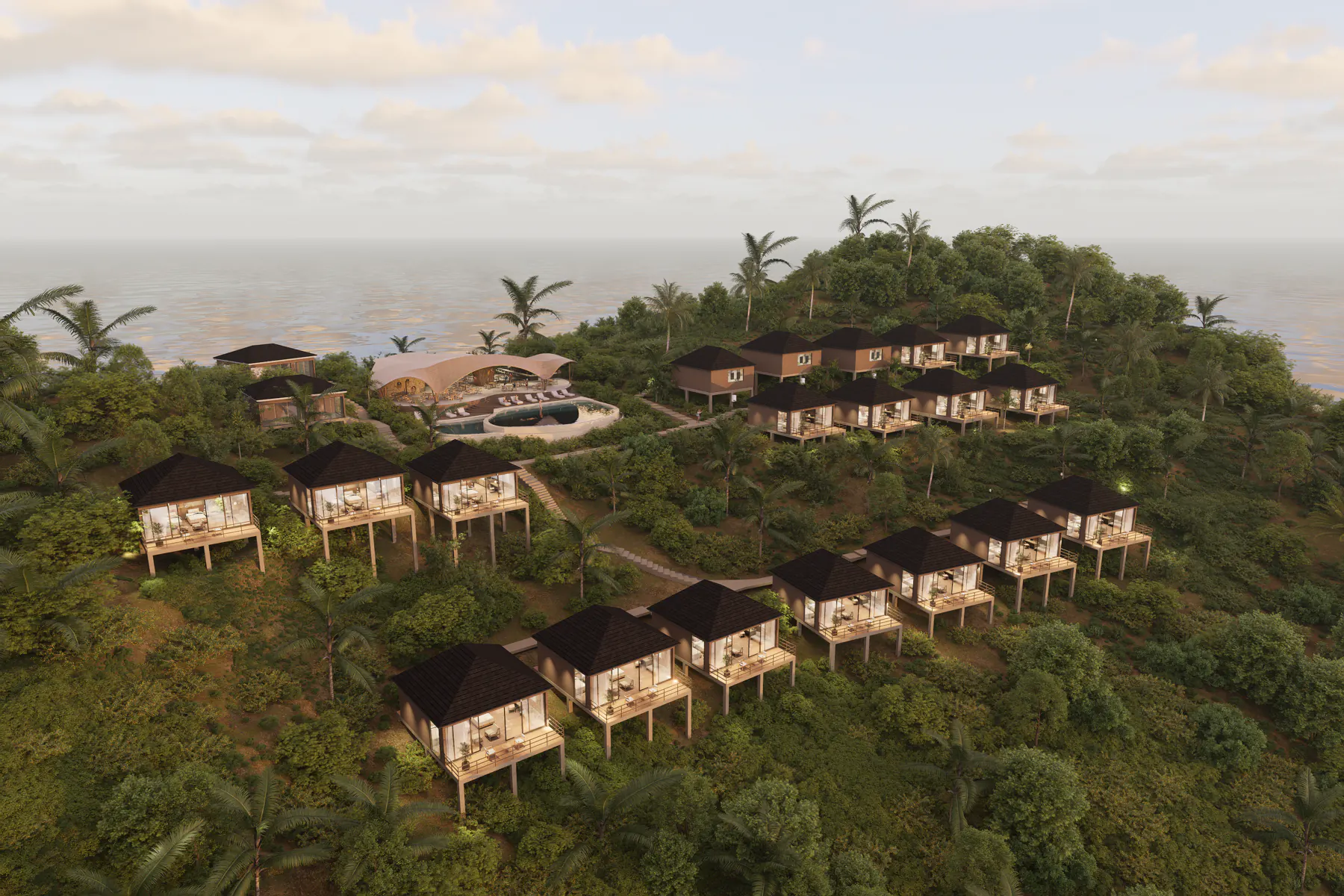
Resort based, north and central. Stay on Sebayur, dive two or three times a day from the day boat, and use the house reef or the spa on the day you want off. This reaches everything from Castle Rock to Karang Makassar, it does not reach the south, and it is the most comfortable and the most flexible of the three. Our Komodo Resort rooms put you inside the park rather than an hour of boat transfer away from it, which matters most on the early starts.
Liveaboard, south focused. Five or six nights minimum, taking in Horseshoe Bay and Manta Alley alongside the central sites on the way through. This is the only way to dive the south, and October is the earliest month it reliably works.
Both, in that order. A few days at the resort to settle in, get your weighting right and knock the rust off in warm water, then the southern liveaboard leg. Arriving at Cannibal Rock as your fourth dive of the trip rather than your first is a better plan than most people realise, particularly if you have not dived in cold water or strong current recently.
Whichever shape you pick, remember that park entrance fees sit outside the dive price, and that they are charged per day in the park rather than per trip.
Who October Is For, and Who Should Book Another Month
October is the right call if you want the widest possible access in a single trip, if you are a photographer who wants the gold landscape and both underwater zones, or if July prices and July queues have put you off. It is a particularly good first Komodo trip, because it lets you see what the park actually contains before deciding which half you want to come back for.
Book a different month if you want the specific things other months do better. Maximum northern visibility is July and August. Maximum manta aggregations and the southern sites at their most reliable are December to February. The quietest park with the lowest prices is the wet season, with the northern compromise that comes with it. And if your dates are fixed in the last week of October, plan on the assumption that you may get the first showers of the season, and treat a dry week as the bonus rather than the plan.
The Short Version
October is the hinge. The north still delivers 18 to 28 metres at 28 to 29C, the south starts becoming diveable after four months of monsoon swell, and for a few weeks the whole park is available to one itinerary. Crowds and rates are below the July peak without collapsing into wet-season uncertainty. The dragons are guarding nests, the hills are at their most photogenic, and the mantas are building toward their December peak without being there yet.
What you give up is certainty. The south might open in the first week or the third. The last days of the month might be dry or might not. If you can live with that, October gives you more of Komodo than any other month on the calendar. If you would rather have a guarantee, pick the month that guarantees the one thing you care about most, and let the rest go.