Komodo has a reputation problem among solo travelers, and it's mostly undeserved. Look at any booking page and you'll see couples on sunset decks, families on dragon treks, dive groups toasting on the back of a boat. Almost every price is quoted per person based on two people sharing. The whole destination seems to assume you brought somebody. So the question arrives early and honestly: can you do this alone, and will it be worth it? Having watched hundreds of solo guests arrive at our jetty over the years, some nervous, some seasoned, our answer is yes, emphatically, with a handful of decisions that make the difference between an expensive lonely week and one of the best trips of your life. A Komodo vacation is unusually kind to people traveling by themselves, because almost everything here happens in small groups on boats, and boats make friends of strangers faster than any hostel bar.
This guide is the practical one. Not "follow your heart and go", but the real mechanics: how to dodge the single supplement that quietly doubles solo accommodation costs, whether to base yourself in town, at an island resort, or on a liveaboard, how dive centers pair up solo divers, what solo female travel actually looks like in Flores, what a week costs when nobody's splitting the bill, and the small logistical traps that only bite people traveling without a partner. I'll be blunt about the downsides too, because there are a couple.
Is Komodo Actually Good for Solo Travelers?
Start with the honest audit. Komodo is not Bali, where a solo traveler can wander into a cafe, join a yoga class, and have three friends by lunchtime. Nearly everything in the national park requires a boat, a permit, and usually a booking, which means spontaneity is limited and you can't simply drift. That's the argument against.
Now the arguments for, and there are more of them. First, the activities here are inherently communal. You don't visit Komodo alone even when you travel alone: you're on a boat with eight other people, walking a trail behind a ranger with a group, diving in a buddy pair. Enforced togetherness is built into the destination. Second, the crowd skews friendly. Divers and adventure travelers are unusually easy company, and a shared morning of manta rays dissolves social awkwardness better than anything I know. Third, and this is underrated, Komodo rewards the solo traveler's superpower: flexibility. You can take the last cabin on a departing liveaboard, fill a cancellation at a resort, change your plan on a weather call, and join whichever boat is going where you want. Couples and groups can't move like that.
The one genuine drawback is money, and it deserves its own section, because it's the thing that surprises people.
The Single Supplement: Solo Travel's Quiet Tax
Here's the mechanism nobody explains until you're at checkout. Accommodation, whether a resort bungalow or a liveaboard cabin, costs the operator roughly the same whether one person or two sleep in it. So rates are built around double occupancy, and a solo guest either pays a supplement or pays the room rate outright. In practice, across Komodo and Labuan Bajo in 2026, expect one of three structures.
Land accommodation usually just charges the room. A guesthouse room in Labuan Bajo at 300,000 to 600,000 rupiah costs the same alone as shared, so the solo penalty is real but modest, you simply lose the ability to halve it. Island resorts price per person including meals and transfers, which is friendlier to solo travelers than it first appears, though a single occupant typically pays a supplement of roughly 30 to 50 percent of the per-person rate to cover the empty half of the bungalow. At our own resort, the flexibility we added recently helps here too: alongside the standard full board plan, we offer bed and breakfast and room-only rates, which lets a solo diver who's out on boats all day stop paying for lunches they aren't eating. Ask any property about rate plans before assuming the headline number is your number.
Liveaboards are where solo travelers can either win or lose big. Most boats offer two options: pay a single supplement, commonly 30 to 60 percent on top of the per-person price, and keep the cabin to yourself, or accept a shared twin cabin with another same-gender solo guest at no extra cost. The second option is the great solo bargain of dive travel, and it's how many people afford a Komodo liveaboard at all. If you're comfortable sharing with a stranger for a few nights, say so at booking; you'll frequently be matched with another solo diver who made the same call, and by day two you'll have a dive buddy. A few boats also waive supplements in shoulder season to fill berths, so it's always worth asking rather than accepting the first quote. Our full breakdown of what a trip here costs, in every category, lives in the Komodo trip cost guide.

Where to Base Yourself When You're on Your Own
Your base shapes the entire solo experience, more than in any other kind of trip, because it determines who you eat dinner with. Three options, three quite different weeks.
Labuan Bajo is the sociable, cheap, chaotic choice. Hostels and guesthouses cluster near the harbor, there are bars and restaurants along the main street, and it's easy to meet other travelers over a beer and end up on the same boat tomorrow. It's also the option with the most commuting: every park excursion means one and a half to two-plus hours of boat travel each way, which eats a large slice of every day. Good for budget solo travelers and extroverts, frustrating for anyone whose priority is time on the water. Our Labuan Bajo travel guide covers the town in detail.
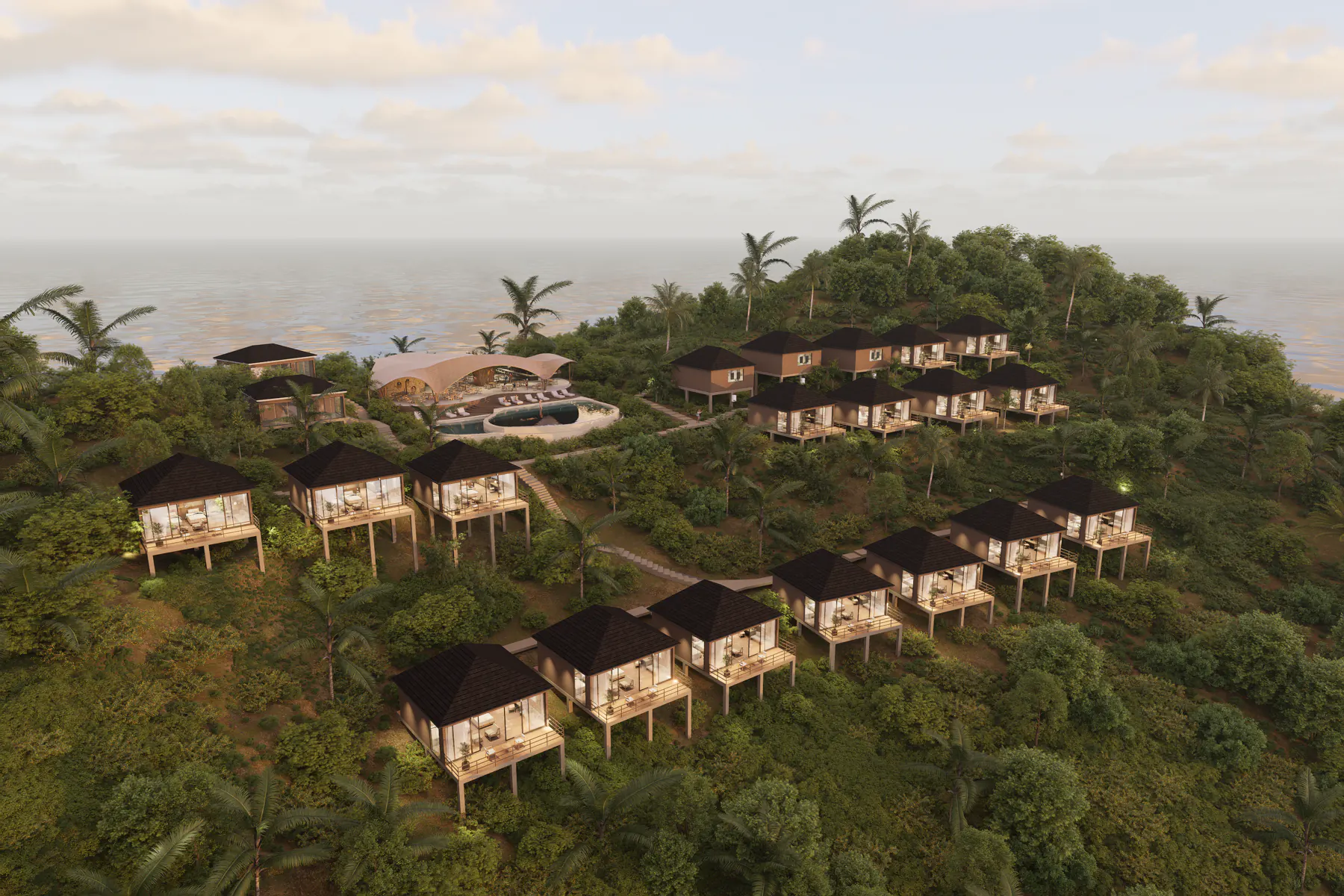
An island resort is the quiet, structured choice, and it's better for solo travelers than most people expect. Meals happen at set times in a shared restaurant, boats leave together each morning, and by the second day you know everybody's name. There's no hunting for dinner alone in an unfamiliar town, no negotiating with tour touts, and no risk of a wasted day. The trade-off is cost and the lack of a nightlife exit ramp; if you dislike the crowd, you're on an island with them. The full comparison of where to sleep near the park, including why nothing is actually on Komodo Island itself, is in our guide to staying near Komodo Island.
A liveaboard is the intense, immersive choice, and for solo divers it's often the best value in the entire destination once you take the shared-cabin option. You live with the same twelve to twenty people for several days, dive four times a day, and emerge with a small group of friends who have your photos. The risk, and it's a real one, is that the social chemistry is out of your hands; a boat with a bad mix is a long few nights. Choose an operator with reviews that mention the crew and group atmosphere, not just the dive sites. First-timers should read our first liveaboard guide before booking.
The hybrid that a lot of experienced solo travelers land on: a couple of nights in town on arrival to get your bearings and meet people, then a liveaboard or a stretch at an island resort for the actual park time. It hedges every risk.
Open Trips: The Solo Traveler's Shortcut
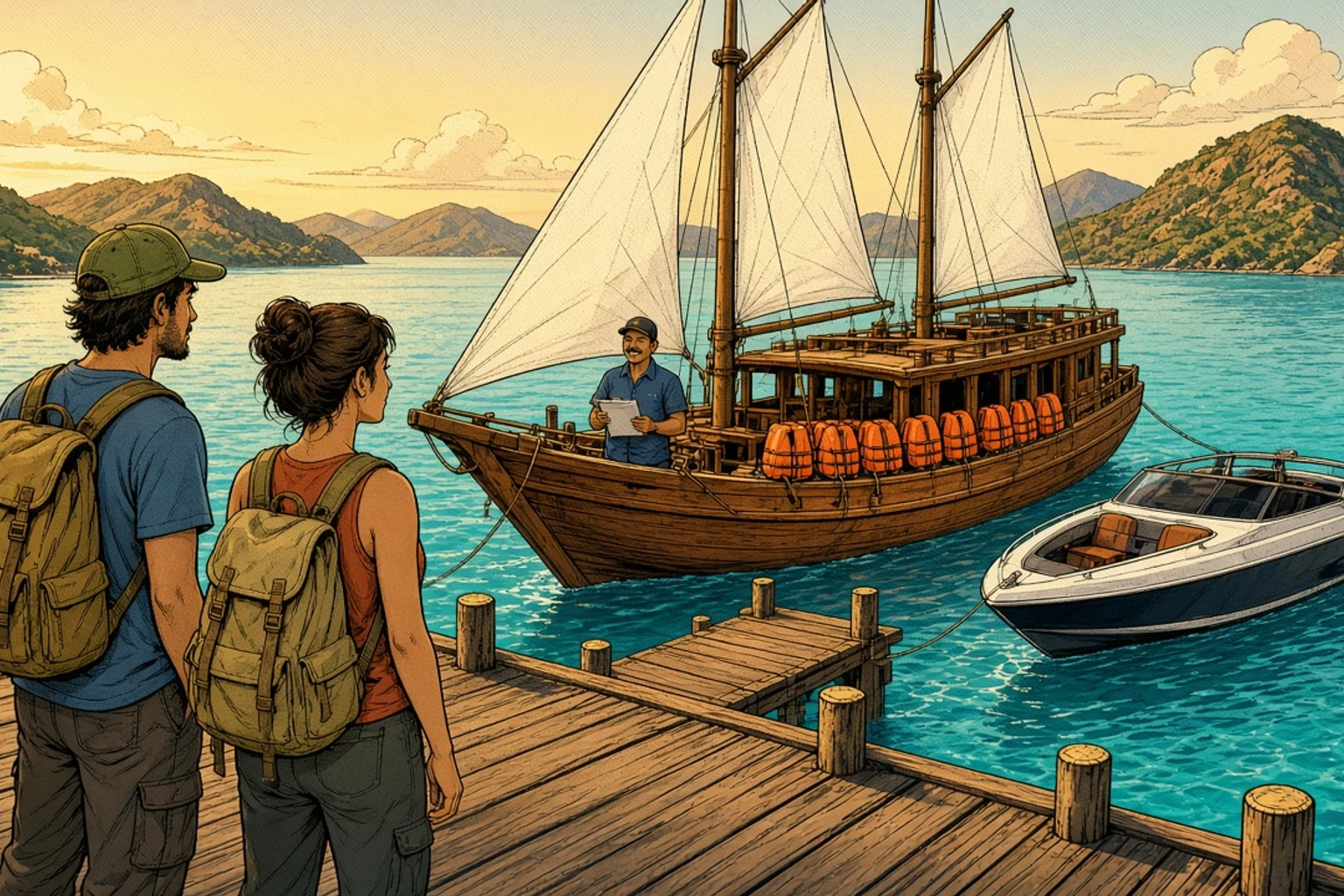
If there's one Komodo institution built for people traveling alone, it's the open trip: a shared boat tour where individual travelers buy single seats and the operator fills the boat. You get group pricing without needing a group, and you get instant company. Day open trips run roughly $70 to $120 per person, and multi-day versions, typically three days and two nights sleeping aboard a simple wooden boat, are the backpacker classic of the region.
Two honest warnings. First, quality varies enormously at the budget end, and the cheapest boats cut corners on safety equipment, crew, and sleeping arrangements; read our full open trip guide before booking one, because the difference between a good operator and a bad one is significant. Second, an open trip is a lottery with your fellow passengers. Most of the time you'll meet lovely people. Occasionally you'll spend three days with a group whose only interest is filming each other on Padar. That's the deal you accept for the price.
One practical trick solo travelers use here: book a day open trip on your first full day. It costs little, it shows you the park, and it produces a handful of travel acquaintances you can arrange the rest of your week with, which sometimes means splitting a private charter later at a price that beats what either of you could have booked alone.
Diving Solo, Which Isn't Solo at All
Divers arriving alone often worry about the buddy question. Relax: recreational diving is organized around pairs, and every dive center on earth handles unaccompanied divers as a matter of routine. At our dive center you'll be paired with either another solo diver of similar experience or with the guide, and our guiding ratio is a maximum of four guests to one guide, which means nobody is drifting off unnoticed in Komodo's currents. Tell the shop your certification level and honest recent experience, not your best-ever self, and the pairing will be better for it.
A few things that make solo diving here smoother. Bring your certification card and logbook, since a recent, credible logbook is what gets you onto the more demanding sites. If you haven't dived in a year or two, book a refresher on the house reef before the boat days rather than discovering your buoyancy on a drift dive at Batu Bolong. If you're chasing certification while you're here, going solo is an advantage rather than a handicap, because courses run on your schedule and you'll often get near-private instruction; our guides to scuba certification levels and learning to dive in Komodo explain the ladder and what it costs. Divers who want genuine independence can look at the self-reliant or independent diver specialties, which teach redundant gas and true solo technique, though these are about competence and not about diving unsupervised on a guided boat.
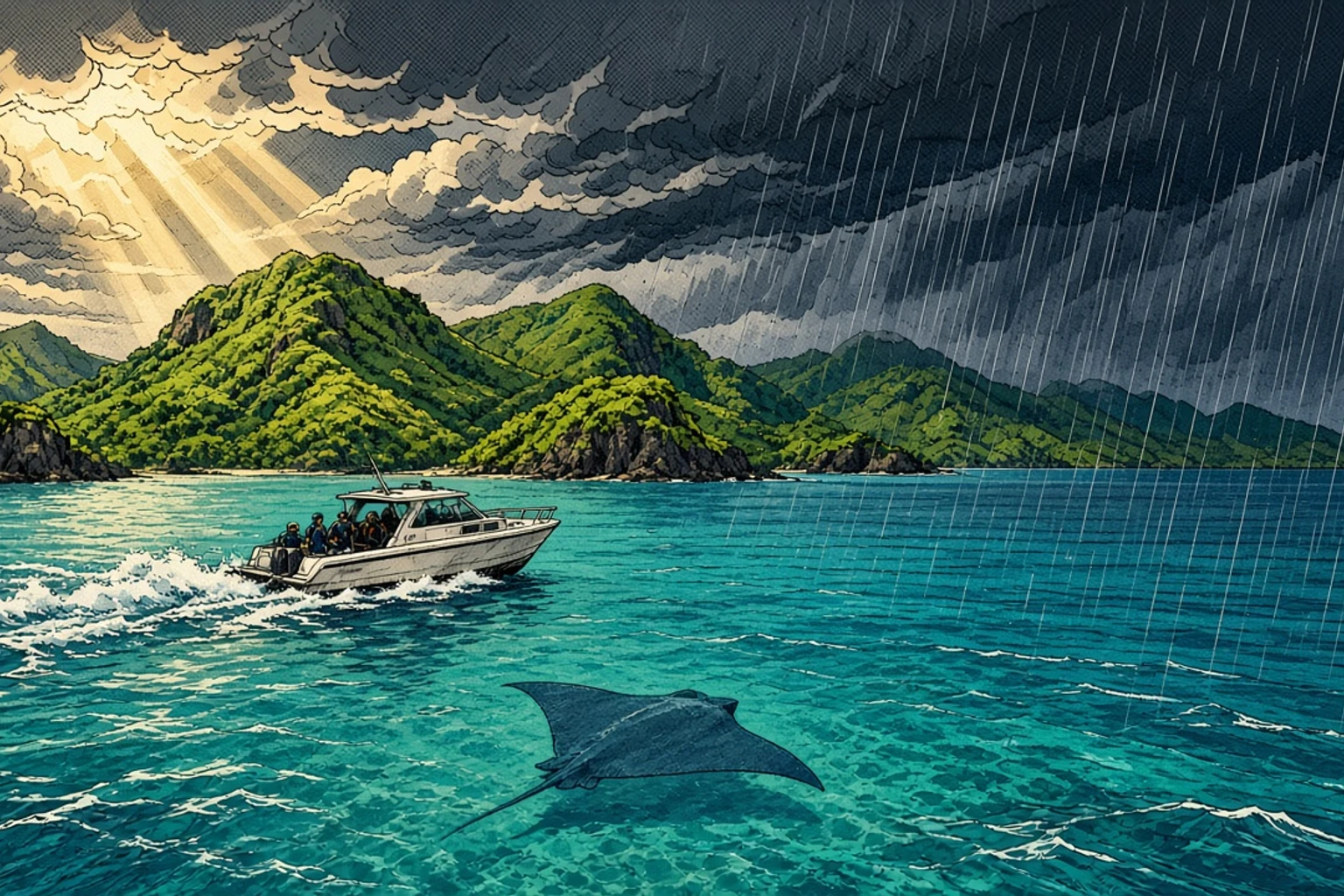
The nicest surprise for most solo divers is how quickly the boat becomes a social unit. You share a bench, a surface interval, and a spectacular manta encounter with the same six people for three days, and you leave with a group chat. Diving is the least lonely solo activity there is.
Solo Female Travel in Flores
Worth its own section, because the questions are specific and deserve straight answers rather than reassurance. Flores is generally considered one of the easier parts of Indonesia for women traveling alone. The island is majority Catholic rather than Muslim, which changes the social atmosphere from what travelers may have experienced in Java or Lombok, and Labuan Bajo is a tourism town where foreign women alone are entirely unremarkable. Serious harassment is rare. Staring, friendly curiosity, and requests for photos are common and almost always harmless.
The practical advice is the ordinary kind, applied consistently. Dress modestly away from the beach and boats, particularly in villages and around the ranger stations, shoulders and knees covered. Take a registered car or a hotel transfer at night rather than an unknown motorbike. Keep your accommodation informed of which boat you're on, which is automatic if you're booked through a resort or a reputable operator. Be more careful about alcohol than you might be at home; the harbor bars are relaxed, but you're a long way from help, and the number one risk factor in any traveler incident here is having drunk more than you meant to. And use the operator filter that experienced solo women use worldwide: book with companies that have a professional booking process, visible reviews, and crew who look like employees rather than friends of the captain.
The liveaboard question comes up often: is it safe to be the only woman on a boat for four nights? Broadly yes, with the same operator filter applied more strictly. Reputable boats have mixed crews, cabin locks, and a professional culture, and dive travel attracts a self-selecting, generally decent crowd. Solo women who prefer certainty often choose an island resort instead, where you have your own lockable bungalow, staff on hand around the clock, and the option to close the door on the day whenever you like.
Staying Safe Without Becoming Paranoid
Traveling alone changes the safety math in one specific way: nobody is automatically noticing if something goes wrong. That's the whole difference, and it's addressed with habits rather than anxiety. Tell someone your plan, whether that's your hotel's front desk or a family member at home receiving a screenshot of your itinerary. Keep your phone charged and a power bank in the daypack, though be realistic that once you're inside the park the signal disappears entirely. Carry a copy of your travel insurance details and your emergency contacts somewhere that isn't your wallet, along with the number of the nearest hyperbaric facility if you're diving, which is in Labuan Bajo, roughly 30 minutes by speedboat plus a short car ride from most northern sites.
The rest of the risk picture, dragons, currents, boats, health, is the same for solo travelers as for anyone else, and we've covered it thoroughly in our guide to whether Komodo is safe, the practical notes on malaria and vaccinations, and the honest assessment in are Komodo dragons dangerous. Two solo-specific additions. First, insurance matters more when you're alone, and if you're diving it must explicitly cover diving, including chamber treatment and evacuation, because an evacuation from the park is a boat and then a flight, and that gets expensive quickly. Second, cash: there are no ATMs anywhere in the national park, and a solo traveler has nobody to borrow from, so withdraw before you sail. Our guide to money, ATMs and tipping in Labuan Bajo has the details, including how much to carry across.
Meeting People, and the Right to Not Meet People
Most solo travel advice assumes you want company. Some people do; some are here precisely because they want a week without conversation. Komodo accommodates both, if you choose deliberately.
To meet people: stay in town on arrival, take open trips rather than private charters, eat at the shared table if your accommodation has one, join the group excursions, and say yes to the sunset drink. Dive boats are the highest-yield social environment in the destination, and a multi-day liveaboard is essentially a small floating community with a shared obsession. The people who struggle socially here are usually the ones who booked entirely private everything and then wondered why they hadn't met anyone.
To be alone: an island resort is the better call, because the structure removes the logistics without forcing the socializing. You can eat at your own table, take a kayak out at dawn, snorkel the house reef with nobody in sight, and spend an afternoon in a hammock reading, and nobody will find that odd. Komodo is genuinely good for this. The islands are enormous and empty, the sunsets are theatrical, and there's a specific quality to sitting on a beach in a national park with your own thoughts that people fly a long way to find. Solitude and loneliness are different things, and the difference is usually whether you chose it.

What Komodo Costs When You're Paying for One
Rough 2026 numbers, per person, for a traveler who isn't splitting anything. A budget week based in Labuan Bajo: guesthouse at $25 to $40 a night, two or three open trips at $70 to $120 each, meals at $10 to $20 a day, plus flights and park permits, lands somewhere around $700 to $1,100 for five or six days on the ground. A mid-range week combining a few town nights with a three-day open-trip or budget liveaboard: roughly $1,200 to $1,800. An island resort week with diving, full board, transfers and permits handled: figure $2,000 to $3,200 depending on the room and the single supplement. A quality liveaboard week with a shared cabin: $1,800 to $3,000 including diving, or considerably more with a private cabin on a luxury boat.
Three cost levers only solo travelers can pull. Take the shared cabin on liveaboards, which is the single biggest saving available and often removes the supplement entirely. Fly and book in shoulder season, roughly April to early June and late September to November, when operators are more willing to waive supplements to fill space. And be the flexible one: solo travelers get offered last-minute cancellations, spare berths, and short-notice discounts constantly here, because a single space is exactly what operators are trying to fill. Set your dates loosely and ask around in town, and you'll frequently pay less than the couple next to you.
A Five-Day Solo Itinerary That Works
Shaped for someone arriving alone who wants both park time and company, without a private charter budget.
- Day one. Fly into Labuan Bajo, check into a well-reviewed guesthouse near the harbor, walk the main street, eat grilled fish at a waterfront warung, and book tomorrow's day open trip. Withdraw cash tonight, not tomorrow morning.
- Day two. Day open trip to Padar, Pink Beach, and a snorkel stop. This is your orientation day and your friend-making day. Take seasickness precautions if you're susceptible, our seasickness guide explains what actually works and when to take it.
- Day three. Transfer to your island base or board a liveaboard. Afternoon check dive or a slow snorkel on a house reef to shake off the travel.
- Day four. The main event: a ranger-guided dragon trek in the cool early morning, then two dives or a long snorkel at the northern sites. Dinner with the same faces you've been on a boat with all day.
- Day five. A dawn hike for the view, a final dive or a lazy morning, then the transfer back to town. Build in a buffer day before any onward flight, especially after diving.
Stretch it to seven days and the obvious addition is a liveaboard segment to reach the southern sites, or a couple of extra days on Flores itself, which most visitors skip entirely and which our guide to Flores makes a decent case for.
Six Mistakes Solo Travelers Make Here
- Booking everything private "to be safe". You'll spend two or three times as much and meet nobody. Shared boats are both the cheaper and the more social choice, and the good ones are perfectly safe.
- Not asking about the single supplement before booking. It's often negotiable, waivable in shoulder season, or avoidable entirely with a shared cabin. Nobody volunteers this; you have to ask.
- Cutting the connection too fine. Traveling alone means no one else is tracking your flight change. Komodo's flights are weather-sensitive and the airport is small; leave real buffers, particularly on the way home.
- Arriving in high season with nothing booked. Flexibility is a solo advantage, but between June and September the daily park quota and full boats turn it into a liability. Book the anchor pieces, improvise the rest.
- Overestimating what a day trip covers. Solo travelers on a tight budget often try to see the whole park in one long day from town and spend most of it in transit. Two shorter days beat one heroic one.
- Skipping insurance, or buying the kind that excludes diving. The most expensive mistake available, and entirely avoidable in ten minutes before you fly.
Going Alone, Not Feeling Alone
The solo travelers who leave here happiest tend to have made the same three decisions. They picked a base that matched their temperament rather than their budget spreadsheet. They accepted a shared boat or a shared cabin and let the destination introduce them to people. And they booked the anchor pieces of the trip, the park days, the transfer, the flight buffer, in advance, then left the rest open so they could say yes to whatever came up.
Do that, and Komodo turns out to be a surprisingly gentle place to travel by yourself. You'll spend your days in small groups of people pointed at the same reef, and your evenings with whichever version of company or quiet you feel like. Somewhere around the second morning, standing on a deck with coffee while the hills go gold and a manta rolls past the boat, it stops feeling like a compromise. Plenty of our guests arrive alone. Almost none of them describe the trip that way afterward.