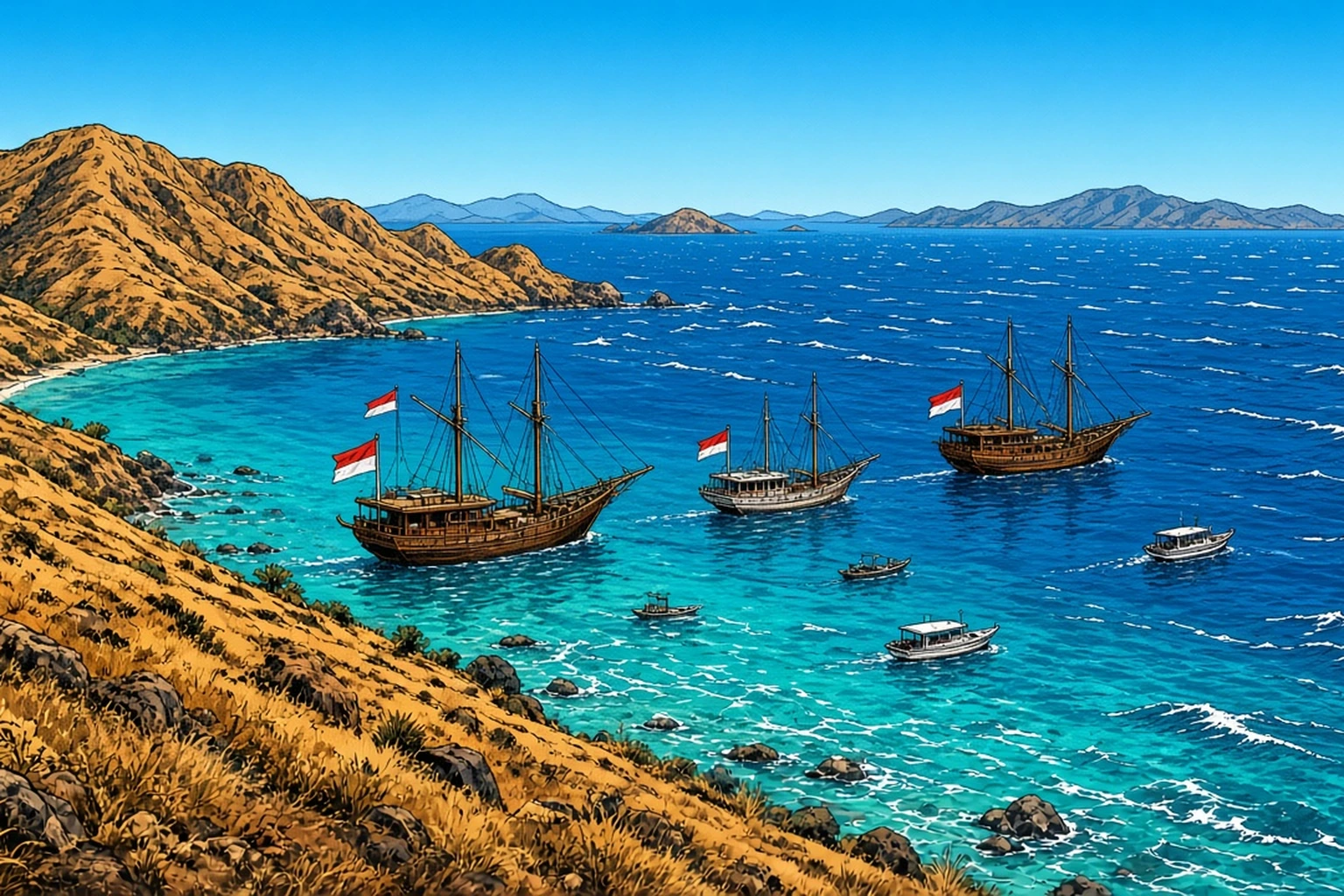
No. Komodo National Park is open as of 1 September 2026, and it stayed open throughout the August 2026 earthquake. Tickets must now be booked in advance rather than bought at the gate, and a cap of 1,000 visitors a day applies. The real annual risk is rough weather in January, not policy.
Every few months a version of the same question arrives in our inbox, usually from somebody who has already paid for flights. Is Komodo Island closed? Somebody read a headline, or found a forum thread from 2019, or heard that the park has a visitor cap now and assumed a cap means a locked gate. In reality the park is open, boats are sailing out of Labuan Bajo every morning, and the dragons are where they have always been. If you are looking at Komodo National Park tours for later this year, nothing in the current situation should stop you booking.
The longer answer is more useful, because the park genuinely does close sometimes, just never for the reasons the rumours suggest. It closed for most of January 2026, and almost nobody outside Indonesia noticed. It did not close after the magnitude 7.7 earthquake in August 2026, which everybody noticed. Understanding which of those is normal and which was exceptional is the difference between planning a trip that works and one that does not. This guide separates the four completely different things people mean when they say Komodo is closed, tells you what is actually shut on Flores right now, and explains how to check for yourself rather than trusting an article, including this one, that ages badly. Our Komodo dive centre operates from inside the park year round, so the seasonal pattern below is not theory to us.
The Short Answer, Dated
Anything written about closures needs a date on it, so here is ours. This section was written on 1 September 2026.
- Komodo National Park is open. Padar, Komodo Island (Loh Liang) and Rinca (Loh Buaya) are all receiving visitors, and so are the dive sites.
- The park never closed after the August earthquake. Sailing resumed the same morning. Within two days, tourist arrivals were back above two thousand a day.
- You cannot buy a ticket at the gate any more. Entry and activity tickets have to be booked in advance through the park's SiOra system, or by an operator doing it for you. This is the change most likely to catch out an independent traveller.
- There is a cap of 1,000 visitors a day. It has been in force since 1 April 2026. It is a queue, not a closure, and outside peak season it rarely bites.
- Several inland Flores sites are still shut or restricted after the earthquake, including Liang Bua and the Riung marine park. Kelimutu has reopened on shortened hours. This affects overland Flores itineraries, not Komodo ones.
- The genuine annual risk is weather, not policy. Peak rainy season, roughly late December to February, is when the harbourmaster can stop boats leaving for days or weeks at a time.
Four Different Things People Call "Closed"
Almost every confused search about Komodo closures collapses four unrelated situations into one word. They have different causes, different durations, and completely different implications for a booking.
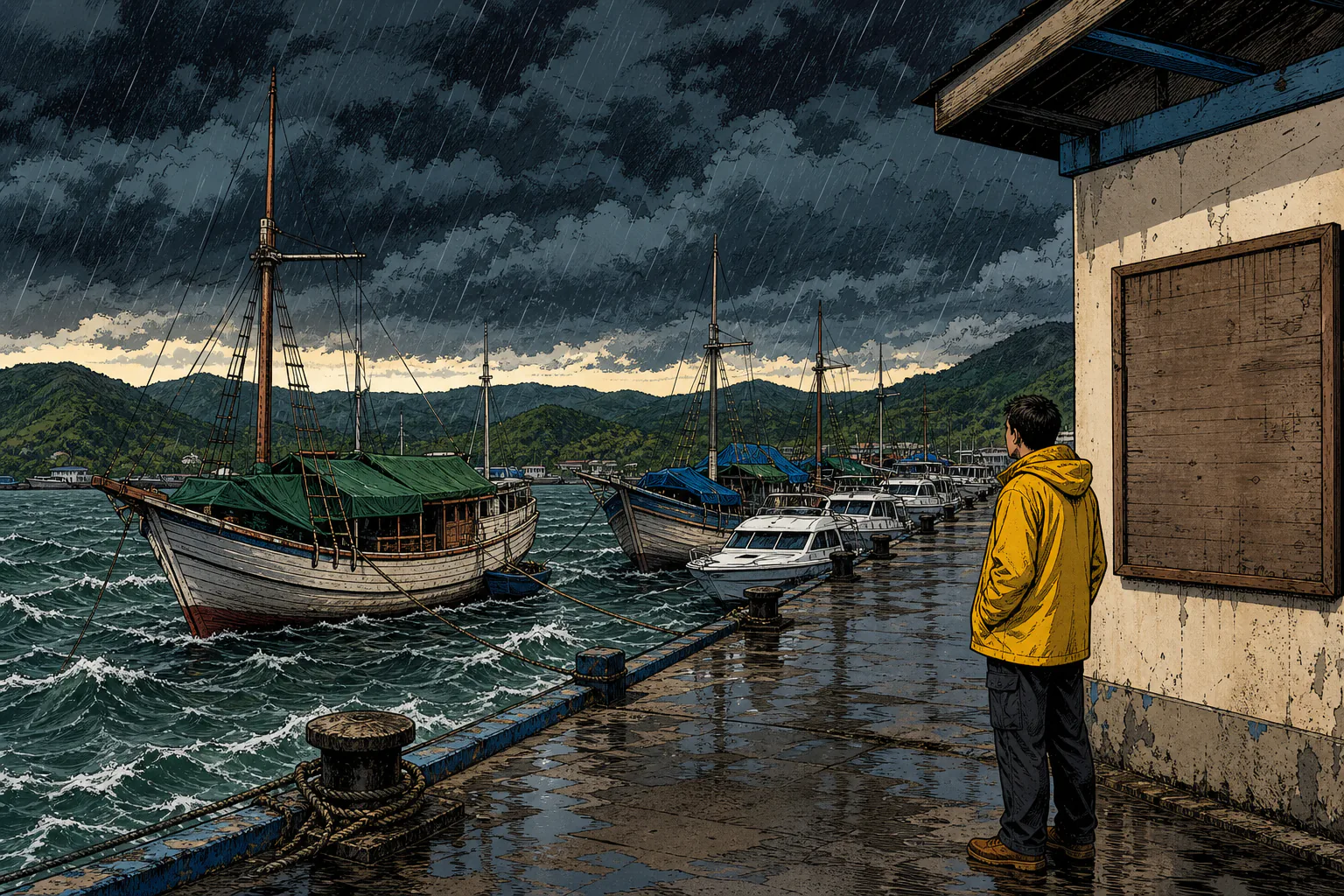
One: the harbourmaster stops the boats. This is the real one, and the one nobody warns you about. Komodo National Park is only reachable by sea, and every tourist vessel leaving Labuan Bajo needs a sailing approval letter, an SPB, from the local port authority. When the meteorological agency forecasts strong winds and high waves, that office simply stops issuing them. No permit, no boat. The park itself does not have to announce anything, and often does not, which is why these episodes are invisible in English-language media.
Two: an individual site closes. A single island, viewpoint, cave or trail can be shut while everything around it operates normally. Causes range from landslide risk to boardwalk repairs to a ranger station being rebuilt. Most "Komodo is closed" panic traces back to a headline about one site.
Three: the daily quota fills. Since April 2026 there is a hard ceiling on how many people can be inside the park on a given day. If you turn up in August without a booking and are told there is no space, the park is not closed. You are late.
Four: a closure was proposed, reported worldwide, and then never happened. This is the source of most of the stale search results. Two proposals were announced loudly, covered everywhere, and then quietly dropped: a year-long closure of Komodo Island, and later a very high annual conservation fee. Articles about both are still circulating as though they describe current rules.
What Actually Closed: January 2026
If you want to understand how a Komodo closure really works, forget the dragons and look at what happened at the start of this year.
After a fatal boat accident near Padar in late December 2025, and with forecasts of strong winds and high waves, the port authority in Labuan Bajo suspended sailing approvals for tourist vessels. That single administrative decision closed the park to tourism, because with no sailing letters there are no boats, and with no boats there is no park. It held for roughly a month, and access came back in stages during the first week of February with three new conditions attached: online-only ticketing through SiOra, a requirement that operators monitor maritime forecasts themselves, and a ban on sailing inside the park at night. All three are still in force, and the first is the reason walk-in tickets no longer exist.
The useful part is not the episode but what it tells you. A month-long closure happened, it was driven entirely by sea conditions rather than by policy, and it produced almost no English-language coverage, so the absence of alarming news is not evidence that boats are running. It also happened in January, which is exactly where you would expect it. Our guide to Komodo in January covers what that month is like when it does go ahead, and it is worth reading alongside the wider best time to visit Komodo Island comparison before you commit to dates.
Which Months Carry the Risk
The park does not have a published closed season, and it is important to be precise about that: nobody shuts Komodo on a calendar. What exists is a window in which the sea is more likely to stop you, and it maps onto the peak of the northwest monsoon.
- Late December to February. The highest risk of sailing suspensions, and the window in which January 2026 happened. Crossings can be rough even on days when boats do sail.
- March and November. Shoulder months. Occasional bad spells rather than sustained ones. Komodo in November makes the case for one of them.
- April to October. The dry season, settled seas, and the period when suspensions are rare. This is also when the daily quota is most likely to matter.
None of this makes a January trip a bad idea. The diving in the wet season has real advantages, and the park is empty. It does mean that if you are travelling in that window, the flexibility of your booking matters more than the price of it, and travel insurance that covers weather disruption stops being optional. If rough crossings are the part that worries you, our notes on seasickness on Komodo boat trips are honest about what helps.
The August 2026 Earthquake: What Closed and What Did Not
On 15 August 2026, a magnitude 7.7 earthquake struck East Nusa Tenggara, with its epicentre in the sea about thirty kilometres from Mbay in Nagekeo regency and roughly two hundred kilometres northeast of Labuan Bajo. It was a serious event, with lives lost and tens of thousands of people displaced in the centre and east of Flores. There was no tsunami alert.
Because Flores is long and thin and the shaking was concentrated well to the east, the effect on tourism was extremely uneven, and the part of Flores that most visitors come for got off lightly. Our own statement on the earthquake sits at the top of every page on this site; the damage here amounted to cracked bathroom tiles in two rooms and some superficial cracking to walls.
Komodo National Park did not close. The harbourmaster reauthorised sailing the same morning, and within two days daily arrivals in the park were back over two thousand. Labuan Bajo's marina was working, Komodo Airport stayed open, and the large hotels reported minor damage and no early checkouts.
Inland was a different story, and this is where itineraries broke. The highlands took the shaking, and a long list of sites closed for safety assessment. Several have since reopened, some have not, and a couple reopened with restrictions that change what the visit actually is.
| Site | Status | Detail |
|---|---|---|
| Komodo, Rinca, Padar, Gili Lawa | Open throughout | Never closed. Sailing resumed 15 August. |
| Kelor Island, Batu Cermin | Open | Batu Cermin reopened 16 August. |
| Kelimutu | Open, restricted | Reopened 25 August. Ticket office 07:00-12:00 only, so the pre-dawn climb is off. The Tiwu Ata Polo viewpoint is shut and there is an exclusion zone around cracks at the first crater. |
| Wae Rebo | Reopened 1 September | Limited and staged, after landslide risk on the trekking route. Managers have said visits can be halted again at any time. |
| Liang Bua | Closed | No reopening announced. The surrounding rice-field walk has been possible, but the cave itself is unsafe. |
| Riung 17 Islands | Closed | Snorkelling suspended. |
| Ruteng and Bajawa airports | Closed | Ende reopened to commercial flights from 20 August after runway damage. Maumere is open but not on a daily schedule. |
Two practical consequences. If your plan was Komodo, it survived the earthquake essentially untouched. If your plan was a Flores road trip (Labuan Bajo out to Ruteng, Bajawa, Moni and Maumere), then it needs rechecking site by site, and the road network itself was disrupted by landslides even where it has since been cleared. Anyone building a trip around Kelimutu's crater lakes should know that the sunrise climb every operator sells is not currently possible, and anyone hoping to see Liang Bua and Homo floresiensis should have a fallback. The same caution applies to Wae Rebo, which reopened on the day this was written and could close again.
What Is Open, and What a Trip Looks Like Now
Because this question is nearly always asked from the wrong direction, the positive version is worth stating plainly. Everything the park is known for is running.
The dragon treks operate as they always have, on Komodo at Loh Liang and on Rinca at Loh Buaya, with rangers leading every group. Rinca is the quieter of the two and, for a lot of visitors, the better walk. Padar is open, including the climb to the viewpoint over the three bays, which is probably the most photographed view in the country. Kelor and Batu Cermin are open. Komodo dragon tours have not been interrupted at any point this year apart from the weather suspension in January.
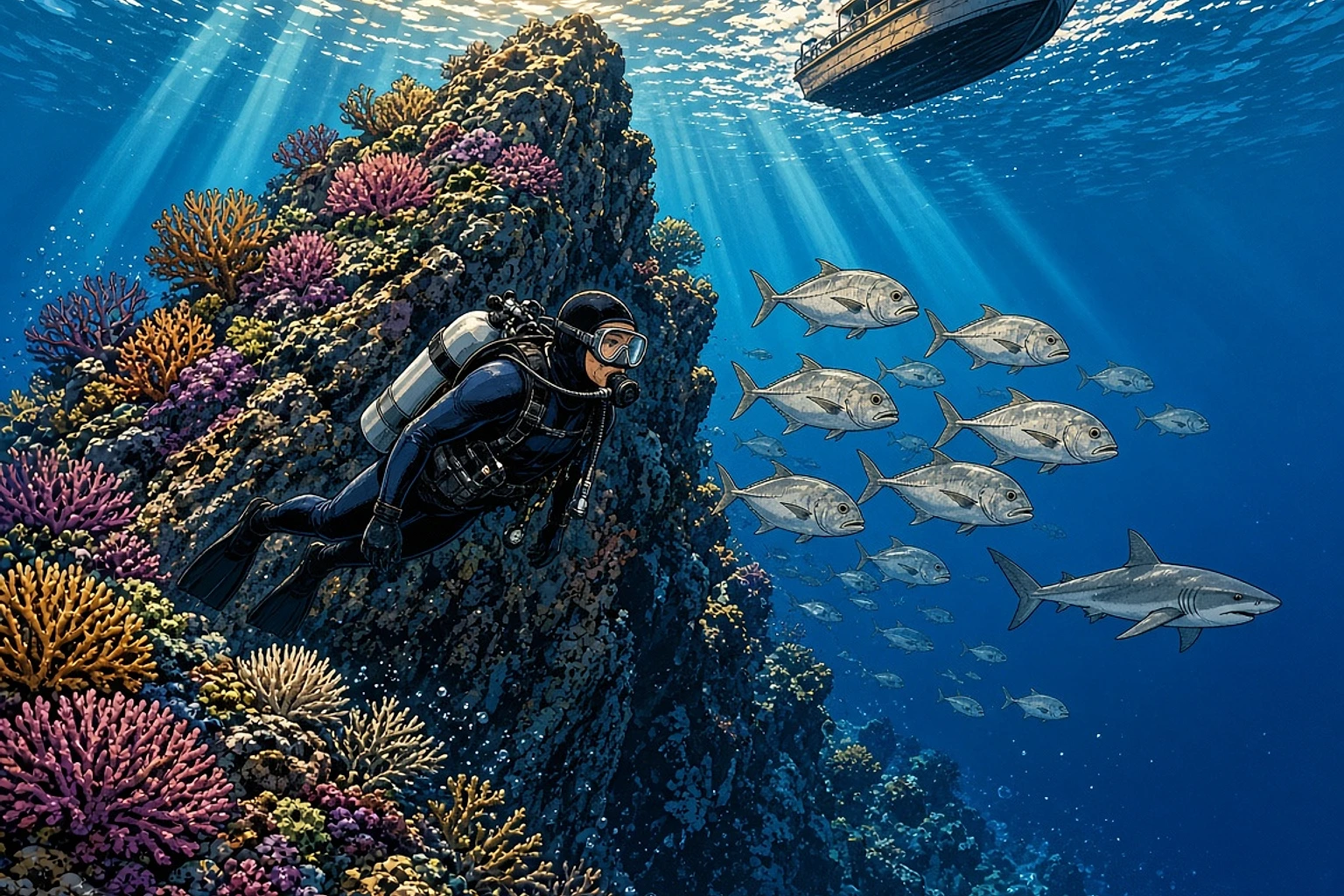
Underwater, all of it is available. The northern sites are diving normally, and the southern ones open and close with the season rather than with anything administrative, which is a function of swell and visibility and has always been true. Manta Point is working, and Komodo snorkelling at Pink Beach needs no certification at all. The 23 dive sites inside the quota system are counted, not restricted.
What has genuinely changed is smaller than the rumours and almost entirely procedural. You book in advance rather than at the gate, your operator files passport details through SiOra, nothing sails inside the park after dark, and in July and August the specific day you want may fill up. That is the whole list. It is a different park from 2018 in the sense that it is administered rather than improvised, and the same park in every way that bears on what you came for.
The 1,000-a-Day Quota Is Not a Closure
Since 1 April 2026 the park has enforced a cap of 1,000 visitors per day, which works out at around 365,000 a year. It applies across Padar, Rinca and Komodo Islands and to 23 dive sites, which means divers and snorkellers count towards it too, not just trekkers.
The reasoning is straightforward arithmetic. A carrying-capacity study put the park's sustainable annual total at roughly 378,000 visitors. Arrivals in 2025 came to 429,509, with about 68 per cent of those international. The park authority has been explicit about the consequences it was seeing: pressure on coral in the dive areas, and behavioural change in the dragons themselves, which become less alert and less wary around constant human traffic. The cap was trialled from May 2025 and monitored through to February 2026 before being made permanent, and the Minister of Forestry defended it to parliament in April as research-led rather than administrative.
For a traveller, three things follow.
- Book ahead, properly. Walk-in tickets no longer exist. Entry and activity tickets go through the SiOra system, using passport details, and most people let their operator handle it. If you are on a liveaboard or with a dive centre, this is done for you.
- Peak season is where it bites. In low season the park sees somewhere around 400 to 500 visitors on a quiet day, so the cap is theoretical. In July and August it is not.
- "Sold out" is not "closed". If a date is full, other dates are not, and being told no on arrival is the avoidable version of this problem.
None of this changes what you pay, but the fee structure has its own history of confusion and its own set of outdated articles. We keep the numbers in one place, in our guide to Komodo National Park entrance fees, and we would rather you checked there than trusted a figure quoted in this one.
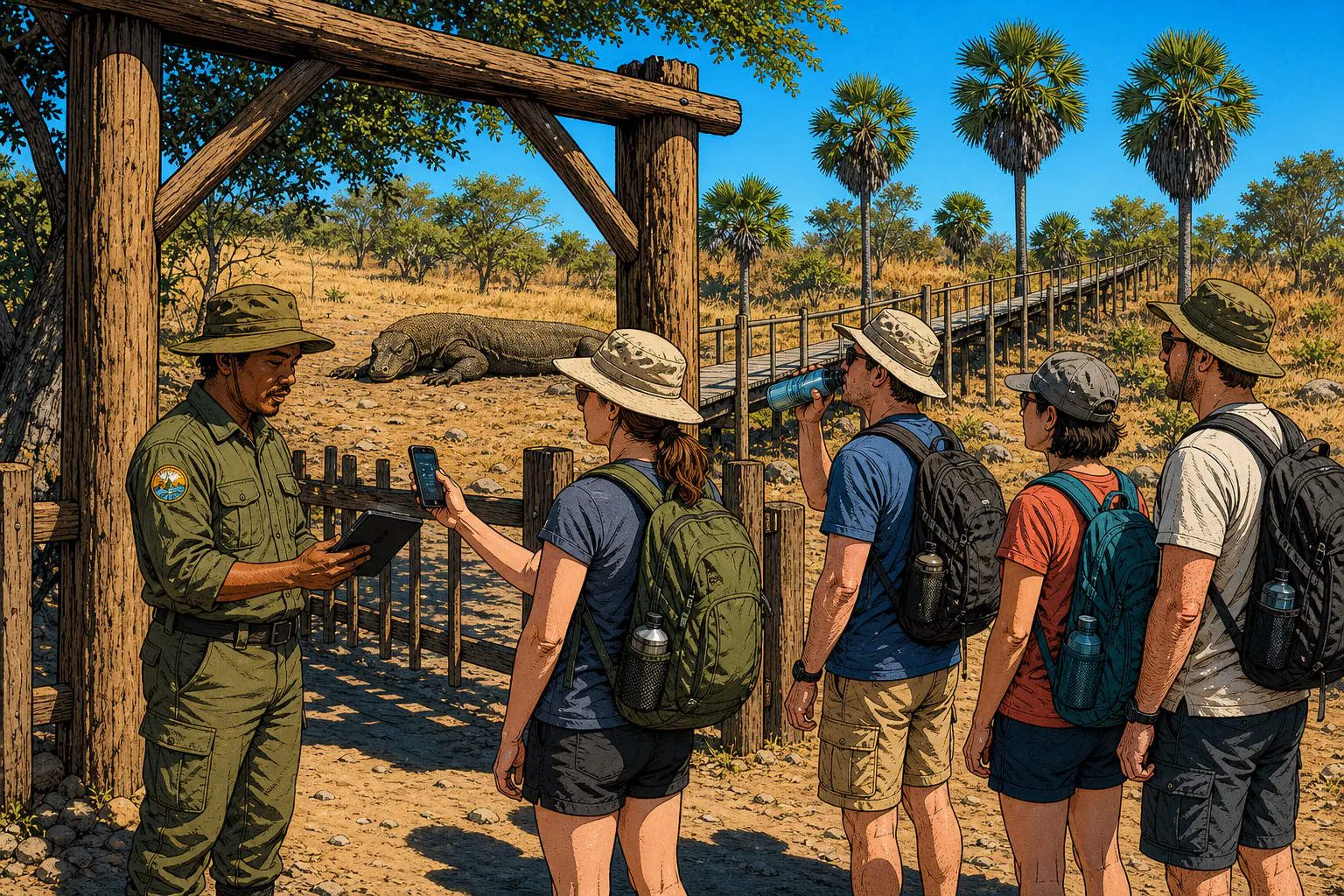
The Closures That Never Happened
If a search sends you to an alarming article, check its date before anything else. Twice now a major restriction has been announced, reported worldwide, and then dropped, and both still surface as though they described current rules.
In 2019 the provincial governor proposed closing Komodo Island to visitors for a full year. It was covered everywhere, opposed locally, and scrapped that September, after monitoring showed the dragon population stable. Visitor numbers, the responsible minister said at the time, would be managed through ticketing instead. That sentence from 2019 is precisely the quota that eventually arrived in 2026. Then in 2022 a conservation charge many times the standard entrance fee was announced for Komodo and Padar; operators in Labuan Bajo protested, the measure was suspended, and it never became the settled rate, though it is still quoted as fact often enough to wreck a budget.
The pattern is consistent enough to be a rule. Big Komodo access announcements are frequently walked back, and the things that actually change your trip, like a port office suspending sailing letters or a ticketing system going online-only, get a fraction of the coverage.
How to Plan So a Closure Cannot Ruin the Trip
You cannot forecast the weather nine months out, and no amount of research prevents a monsoon. What you can do is build a trip that bends instead of breaking.
Put the park at the start, not the end. If Komodo is the reason you are flying, give it days at the front of the itinerary. A closure that eats your first two days leaves room to recover; one that eats your last two costs you the whole point of the trip.
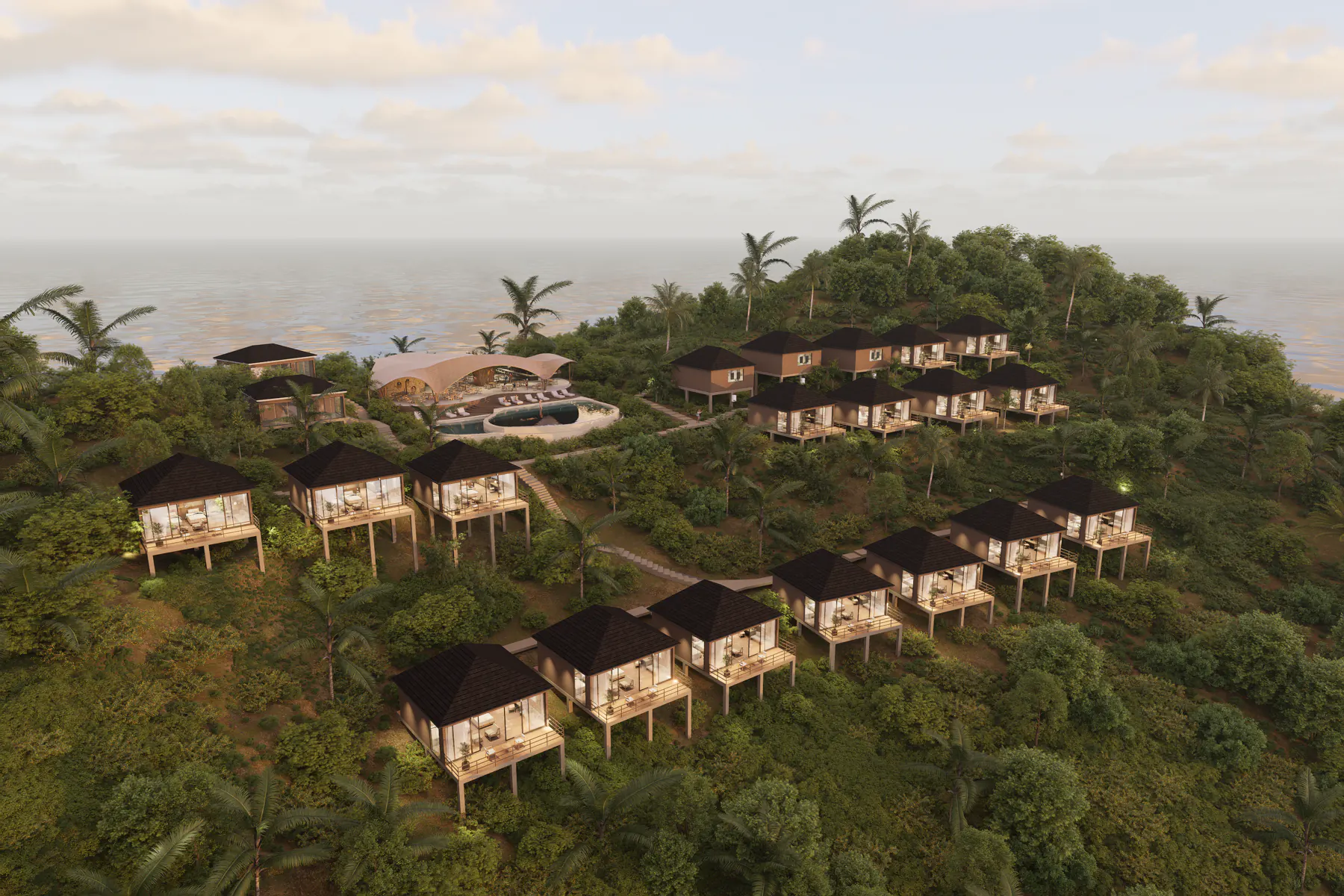
Stay inside the park if you are diving. Being based in the park rather than in town removes the long daily crossing, which is the first thing cancelled when conditions are marginal. It is worth being straight about the limit of that advantage: when the harbourmaster suspends sailing outright, nothing moves, transfers included. What it does change is the much more common case, a choppy day when a two-hour run from Labuan Bajo is called off and short local dives go ahead. Our Komodo Resort rooms sit about thirty minutes from town by speedboat, which is the shortest version of that crossing anyone offers.
Choose the boat for the season, not the photographs. A liveaboard itinerary that ranges into the far south of the park is the best way to dive Komodo and the most exposed to a bad forecast. In January, a shorter and more sheltered plan will simply survive more days. Our comparison of what a Komodo liveaboard gives you against a fixed base goes into the trade-off properly.
Buy insurance that names weather disruption. Not medical cover, not dive cover, though you want both. Trip interruption and cancellation cover that pays out when a port authority grounds the fleet is the specific thing you need in wet season, and it is not standard.
Do not book connecting flights tight. An extra night in Labuan Bajo before an international flight has saved more trips than any other single piece of advice on this page. Our guide on how to get to Komodo covers the realistic connection times.
Have a bad-weather day planned. If boats are grounded, Labuan Bajo has hot springs, caves, viewpoints and a decent food scene, and the resort has a house reef that does not care about the forecast. A Komodo day trip is the version of this trip with no slack in it at all, which is fine until the one day you have is the one day nothing sails.
How to Check the Status Yourself
Any list of closures, including the one above, is a snapshot. Site managers and local authorities make these decisions individually and often at short notice, which is why a table with dates on it is more honest than a table without them. Before you fly, check in this order.
- Ask your operator, and ask a specific question. Not "is Komodo open" but "have sailing approvals been issued this week, and what is the forecast for my dates". Anybody working out of Labuan Bajo knows the answer within an hour.
- Check the park authority's own channels. Balai Taman Nasional Komodo publishes announcements, and the SiOra booking system is the practical test: if tickets are being sold for your date, the park is expecting you.
- Read the meteorological agency's maritime forecast. Operators are now formally required to monitor it, and it is the input that decides whether boats sail.
- For inland Flores, check each site separately. There is no single authority. Kelimutu, Wae Rebo, Liang Bua and Riung are all managed by different bodies and have reopened, or not, on different timetables.
- Distrust undated articles. If a page tells you about Komodo access without saying when it was written, it is not information.
One more thing worth saying, because it sits underneath the whole question. Komodo has spent seven years being described as on the verge of closing, and in that time the number of people visiting has more than doubled. The direction of travel is not towards a locked gate; it is towards managed access: booked in advance, capped in number, with rules about where boats go and when. If you are wondering whether to go now or wait, the honest answer is that waiting has consistently meant more rules and more people, not fewer.
If you want to know what conditions are actually like on your dates, or whether a wet-season week is a good idea for the diving you have in mind, get in touch. We are in the park all year and we will tell you when the answer is no.