Most people fly into Labuan Bajo, spend four days on a boat, and fly out again having seen roughly two per cent of Flores. That is a perfectly good holiday and we sell it happily. But the island behind the harbour is one of the strangest and least-visited places in Indonesia, and there is a single road running the length of it that connects almost all of it. Drive that road and a Komodo island vacation turns into something considerably larger: dragons and reefs at one end, colour-changing crater lakes at the other, and in between a cave where a species of tiny humans was discovered, megalithic villages still arranged around ancestral stones, and rice fields laid out in spider webs.
The Trans-Flores Highway is about 600 kilometres from Labuan Bajo to Maumere. That sounds like a long day of driving to anyone who has driven 600 kilometres in Europe or America. It is not. It is five to seven days, because the road spends most of its length climbing over mountains in third gear. Almost everyone underestimates this, and the single most common way to ruin the trip is to plan it like a motorway journey. The sensible pattern is to dive Komodo first, from our Komodo dive centre or a boat, and then head east once you have salt in your hair and nothing left to prove underwater.
This guide is about the driving rather than the sights, because the sights are the easy part to research and the logistics are where trips fall apart. Real distances and real hours for each leg, what each stretch of road is like, what a car and driver costs in 2026, which direction to go, where to break the journey, and the thing nobody mentions until you are standing in an airport in the east wondering why the next flight is in three days.
The Route, Leg by Leg
Here is the whole thing in one table. Times are for a private car and assume you stop for photographs, because you will.
| Leg | Distance | Driving time | The road |
|---|---|---|---|
| Labuan Bajo → Ruteng | ~135 km | 3.5 to 4 hours | Sealed, steady climb. The easiest leg. |
| Ruteng → Bajawa | ~130 km | 4 to 5 hours | Mountain hairpins. The hardest leg. |
| Bajawa → Ende | ~140 km | 3 to 3.5 hours | Good surface, volcano views. |
| Ende → Moni | ~50 km | About 1 hour | Short climb inland. |
| Moni → Maumere | ~125 km | 2.5 to 3 hours | The best road of the trip. |
Add it up and you get roughly 14 to 16 hours of pure driving. Spread over five days that is a civilised three hours a day with the afternoons free. Compressed into three days it is a blur of hairpins and you will hate it. If you want the full crossing to the eastern tip at Larantuka, add another three hours beyond Maumere and about 70 kilometres, which takes the total nearer 700 kilometres.
One warning about journey planners. Mapping apps are consistently optimistic about Flores because they underestimate what a road with several hundred switchbacks does to your average speed, and they do not know about the truck grinding up the pass in front of you. Take any app estimate and add a third. Local drivers quote the numbers above and they are the ones who are right.
How Many Days Do You Actually Need?
This is the question people ask first and it has a clean answer.
- Three days. Possible. Not advisable. You will drive every daylight hour, see Kelimutu, and remember the trip as a car interior.
- Five days. The comfortable minimum, and what most people should book. Nights in Ruteng, Bajawa, Moni and Maumere, with the dawn climb at Kelimutu on the fourth or fifth morning.
- Seven days. The version I would choose. The two extra nights let you add Wae Rebo village, which needs an overnight of its own, and give you a spare day for the weather or a road closure.
- Ten days. Now you can add Riung, detour to hot springs, spend a second night at Moni in case the crater is clouded in, and finish with a few days diving at the eastern end.
The mistake is not being too slow. Nobody has ever come back from Flores complaining they gave it too long. If you are still working out how the island fits together before choosing a length, our Flores Indonesia travel guide covers it area by area, and where Flores Island is sorts out the Flores, Komodo and Labuan Bajo confusion that trips up a lot of first-time planning.
Which Direction to Drive
West to east, starting at Labuan Bajo. Three reasons, and they all matter.
The first is arithmetic: Labuan Bajo has by far the best flight connections on the island, so it is the easy end to arrive at. The second is that the drive gets easier as you go, with the hardest mountain sections in the first two days while you are fresh and the fast coastal road at the end when you are tired of switchbacks. The third is dramatic: Kelimutu at dawn on day five or six is a far better finale than an opening act, and the diving in Komodo makes more sense at the start when your dates are flexible.
East to west works if you are coming from Timor or Alor and it saves nothing. If you must do it that way, reverse everything below and be aware that you will hit the worst roads on your last two days.
How to Travel It
Private car and driver, which is what most people should do
This is the standard, and on Flores it is not the extravagance it sounds. Expect roughly IDR 700,000 to 1,200,000 per day in 2026, including fuel and the driver, for the whole car rather than per person. Split between three or four people it is cheap. Booked as individual legs rather than a multi-day package, quotes run about IDR 700,000 to 1,000,000 for Labuan Bajo to Ruteng, a similar amount for Ruteng to Bajawa, and less for the shorter eastern legs.
Two things to settle before you agree a price. First, whether fuel and the driver's own meals and accommodation are included, because different operators bundle differently and the gap is not trivial over a week. Second, the return: a one-way trip means your driver has to get himself and the car back across the island, and that is priced in somewhere whether or not anyone mentions it. A multi-day package usually handles this more cleanly than stringing together one-way legs.
The driver is also the reason this option wins. A good Flores driver is a guide, a translator in villages where nobody speaks English or much Indonesian, and the person who knows which pass is washed out this week. Ours is not a country where that knowledge is easily replaced by a phone.
Public buses
Cheap and characterful: somewhere around IDR 50,000 to 100,000 per leg, so the entire crossing costs less than a single day of private car hire. The trade is time and control. Buses leave when they are full rather than when the timetable says, take considerably longer than a car on the same road, and stop wherever a passenger wants. You cannot pull over at the spider-web rice fields, which is one of the better reasons to be on this road at all.
Worth doing if you have weeks rather than days, you travel light, and the journey is the point. Not worth doing if you have a flight to catch at the other end.
Self-drive and motorbikes
Motorbike hire runs around IDR 100,000 a day and a fair number of travellers ride the length of Flores. It is a genuinely wonderful ride and I am not going to pretend otherwise. It is also several hundred kilometres of blind mountain corners, trucks that use the whole road, dogs, chickens, unlit night traffic and occasional landslip debris, on an island where serious medical care means being flown out. If you ride, ride within yourself, do it in the dry season, wear a proper helmet, and make sure your travel insurance actually covers a motorbike in Indonesia with the licence you hold, because most policies do not.
Self-driving a car is legal and possible but rarely sensible here. You give up the local knowledge and the translator, you take on the parking and the police, and you save very little, since most of the cost is the vehicle rather than the man driving it.
Leg One: Labuan Bajo to Ruteng
Sort your cash, your snacks and anything you have been meaning to buy before you leave town, because the shopping thins out fast; our Labuan Bajo travel guide covers what is available there. If you have a spare half-day at this end, Rangko Cave is west of town rather than on the road east, so it belongs to the Komodo half of your trip rather than this one.
You climb almost immediately. Labuan Bajo is hot and coastal; Ruteng sits at around 1,200 metres and is properly cool, which comes as a shock if you have spent a week on a boat. Bring a layer you have not needed until now.

Two stops make this leg. The first is the Lingko spider-web rice fields at Cancar, just west of Ruteng, where fields are divided in radiating segments from a central point rather than in rectangles. It is a genuine land-tenure system rather than a photo opportunity built for tourists: each household's share widens outward from the middle, which is a rather elegant way to divide land fairly. You walk up a hill to see the pattern, and someone will ask for a small entrance contribution, which is fair enough since it is their land.
The second is Liang Bua, the cave where Homo floresiensis was found in 2003, the metre-tall hominin the world's press instantly named the hobbit. It is a large, cool limestone chamber with excavation pits marked out and a small display. Whether it moves you depends on how much you like standing in the actual place where something happened, because there is not a great deal to look at. I find it remarkable: for a long stretch of prehistory there was another kind of human on this island, and this is the room where we learned it.
Ruteng itself is a working highland town rather than a resort: churches, a market, cool evenings, decent cheap food. This is also where you decide about Wae Rebo, since the turning for Denge is on this road, and reaching that village needs a hard drive plus a walk and a night. It is the best thing on Flores outside the water, and it does not fit into a day.
Leg Two: Ruteng to Bajawa
The hardest driving of the trip and the most beautiful. Four to five hours of near-continuous mountain road, through cloud forest and terraced valleys, over the spine of the island. If anyone in your party gets carsick, this is the morning it will happen, so take something before you set off rather than after. Our notes on seasickness on Komodo boat trips cover the same medications, which work the same way on hairpins.
Bajawa is the base for the Ngada country, and this is where Flores gets genuinely unusual. The villages around it, Bena being the best known and Luba and Wogo close by, are laid out as two rows of houses facing each other across a central avenue filled with megalithic stone structures and small thatched shrines representing male and female ancestors. People live there. It is not a museum, and the correct posture is that of a guest: pay the contribution, take the guide, ask before photographing anyone.
Mount Inerie stands behind all of this, an almost perfect cone, and on a clear morning it is the defining image of central Flores. The Soa hot springs north of town are the standard afternoon: hot volcanic water running through a river in a series of pools, at their best late in the day.
Leg Three: Bajawa to Ende
Easier driving, and the scenery changes character as you come down toward the south coast. Two stops worth making.
Penggajawa, the blue stone beach, is a stretch of coast covered in smooth, deep-blue pebbles, which people gather, wash and sort in piles along the roadside for export. It is an odd and rather beautiful working landscape and it takes ten minutes.
Ende is a hot port town most travellers pass straight through, but it holds something significant: the house where Sukarno, later Indonesia's first president, was exiled by the Dutch in the 1930s. He wrote and staged plays here and by his own account worked out a good deal of his political thinking under a breadfruit tree in the town. For anyone interested in how modern Indonesia came about, it is worth the hour.
Leg Four: Moni and the Kelimutu Dawn
Moni is a small, cold, friendly village an hour inland from Ende and it exists, as far as visitors are concerned, to get you up the mountain in the dark. You will be woken at about half past three, drive fifteen minutes to the car park, walk half an hour up, and stand in the cold waiting for light.
What you are waiting for is three crater lakes sitting side by side in the same mountain, each a different colour, each capable of changing colour independently of the others over months and years. Not seasonal, not predictable: the chemistry of each lake shifts and the colours go with it. Whatever combination you get, you get. Our full guide to the Kelimutu crater lakes covers what the colours mean to the Lio people, why they change, and the safety rules about the crater rim, which people ignore and should not.
Two practical notes. It is genuinely cold up there before sunrise, far colder than anything else on your Flores itinerary, so bring a fleece and do not rely on buying one in Moni. And the crater can be clouded in, which no amount of planning prevents. If Kelimutu is the reason you crossed the island, build in a second morning.
Leg Five: Moni to Maumere, and Getting Home
The last leg is the easy one, dropping through coffee country to the north coast on the best surface of the trip. Koka Beach, a pair of curved bays off the main road, is the standard stop and a good one.
Maumere is where the road trip meets water again. The diving here is the opposite of Komodo's: no current to speak of, black volcanic sand, and a reputation built on very small things rather than very large ones. It is the best macro diving in Flores and it is a reasonable place to finish a trip if you like nudibranchs and frogfish. Our guide to Maumere diving is honest about what the 1992 earthquake and tsunami did to the reefs and what has grown back.

The flight home is the part that catches people out
Here is the single most useful piece of planning advice in this article, and almost nobody puts it in an itinerary.
Ende has daily flights back to Labuan Bajo. Maumere has three a week. Wings Air flies Ende to Labuan Bajo every day, a fifty-minute hop, with a second departure on some days. From Maumere the same airline runs the route roughly three times a week, an hour in the air. Maumere is the bigger airport with more destinations overall, including Nam Air to Denpasar, so it is the better exit if you are heading for Bali or onward through Kupang. But if your plan is to return to Komodo, or you are connecting through Labuan Bajo, finishing at Ende is materially easier and can save you two days of waiting.
So the decision is not "which town is nicer". It is: are you flying back west to Komodo, in which case consider stopping at Moni and dropping to Ende, or flying onward to Bali, in which case carry on to Maumere and dive while you wait. Check the actual schedules for your dates before you commit, because regional Indonesian routes are re-cut seasonally.
One more thing, and divers will care. These are Wings Air ATR 72 turboprops, the same operation as the Lombok route, which means no free checked baggage as standard and a very small cabin allowance. We covered the arithmetic in the Lombok to Komodo guide, and it applies identically at this end of Flores: buy your baggage online in advance, never at the airport counter.
When to Go
April to November, without much argument. The dry season gives you firm roads, clear mountain views, and a much better chance that Kelimutu is not sitting inside a cloud at six in the morning.
December to March is the northwest monsoon, and on a mountain road that matters more than it does at sea. Landslides are a routine occurrence on the highland sections, and the practical effect is not usually a cancelled trip but a delayed one while a digger clears the road. Rivers rise, some minor side roads to villages become impassable, and the views you drove all this way for are frequently grey. None of that makes the trip impossible, and the island is spectacularly green, but it does mean you should carry a spare day and take local advice on the day rather than trusting a plan made a month ago. The wet season has real compensations underwater, which we go through in Komodo in January, and the month-by-month picture is in our guide to the best time to visit Komodo Island.
What It Costs
A rough budget for two people driving Labuan Bajo to Maumere over six days, in 2026 rupiah. Treat it as an order of magnitude rather than a quote.
| Item | Cost | Note |
|---|---|---|
| Car, driver and fuel, 6 days | IDR 4,200,000 to 7,200,000 | For the vehicle, not per person. The main expense. |
| Accommodation, 5 nights | IDR 1,500,000 to 4,000,000 | Guesthouses in Ruteng, Bajawa and Moni are simple and cheap. |
| Food and drink | IDR 600,000 to 1,500,000 | Local warungs cost very little. Hotel restaurants cost more. |
| Entrance fees and village contributions | IDR 400,000 to 800,000 | Kelimutu, Liang Bua, Cancar, Bena and the hot springs. |
| Flight out (Ende or Maumere) | IDR 700,000 to 1,600,000 each | Plus prepaid baggage, which is not optional in practice. |
Cash matters more here than on the coast. There are ATMs in Labuan Bajo, Ruteng, Bajawa, Ende and Maumere, and effectively nothing useful in the villages in between, including Moni. Draw money in the towns and carry more than you think you need. Our guide to money in Labuan Bajo covers which cards work and what tipping looks like, and the same conventions hold across the island. For the bigger picture on what a Flores and Komodo trip costs together, see our Komodo Island trip cost breakdown.
Things Nobody Tells You
- The road is the attraction. Some of the best hours are between the named stops: a market spilling onto the tarmac, kids walking to school along a ridge, the whole Ngada valley appearing at a switchback. Do not treat the driving as dead time between sights.
- Highland nights are cold. Ruteng, Bajawa and Moni all sit high enough to need a jacket, and guesthouse rooms rarely have heating or hot water worth the name. Our what to pack for Komodo Island list is written for the coast; add a fleece and long trousers for this trip.
- Mobile signal is patchy and unreliable between towns. Download offline maps and do not plan to work from the car.
- Sundays are quiet. Flores is overwhelmingly Catholic, and in the smaller towns much of the morning belongs to Mass. Shops and some services close. Plan driving rather than errands.
- Fuel stations thin out. Between towns, fuel is sold from roadside stalls in bottles. Drivers know this and fill up in towns; if you are riding, adopt the same habit.
- Your visa needs to cover it. A Komodo trip plus a proper Flores crossing runs past the 30-day mark surprisingly easily once you add Bali at either end, so check the Indonesia visa guide before assuming a visa on arrival is enough.
Should You Do This At All?
An honest answer, because this trip is not for everyone and a week of mountain roads is a poor way to find that out.
Do it if you like travel where the infrastructure is thin and the reward is that almost nobody else is there. Do it if villages and landscapes interest you as much as reefs. Do it if you have at least five days spare after your diving, and preferably seven.
Do not do it if you are prone to serious motion sickness, if you have under a week, or if what you actually want is another few days on the water. In that case fly: Labuan Bajo to Ende is fifty minutes and puts you at Kelimutu the same afternoon, which is the right call for a short trip and no shame in it. The overland crossing is a thing you do because the middle of the island is the point, not because it is the efficient way to reach a lake.
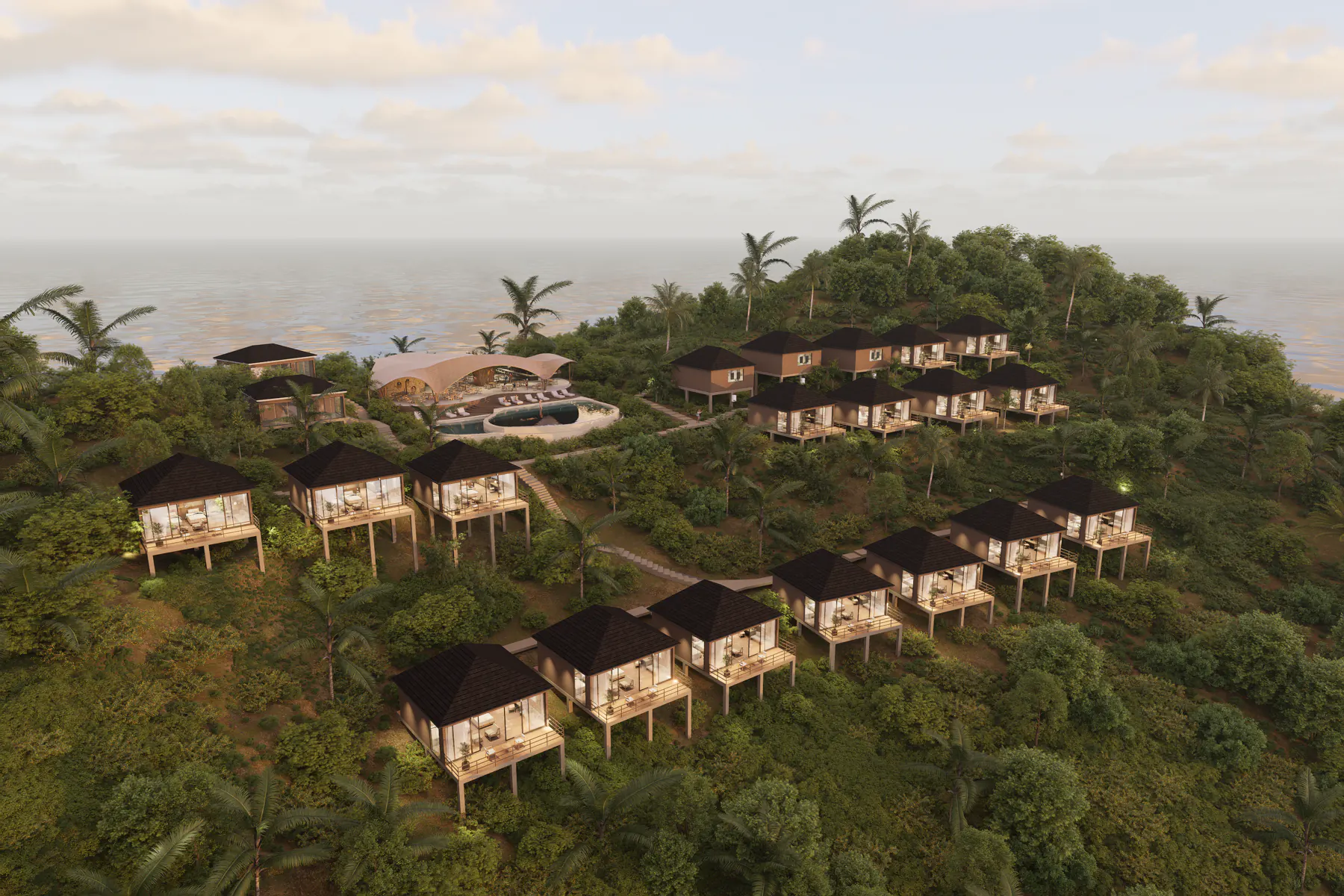
And if you are combining it with diving, do the water first. Komodo's conditions reward you for being unhurried and flexible with your dates, and there is no sense burning your best-weather days in a car. Stay at the resort, dive the park until you have had your fill, then drive east. You can see the Komodo Resort rooms for the diving half of the trip, and if you want help lining up the two halves, get in touch and tell us your dates. We know the drivers.