Kanawa Island is a small island about 13 to 15 km west of Labuan Bajo in Flores, Indonesia, known for its white beach, long wooden jetty and a reef that starts a few metres from the sand. It is 20 to 35 minutes away by speedboat or about an hour by wooden boat, and it is one of the easiest places near Komodo National Park to see turtles, reef fish and small blacktip reef sharks with only a mask and snorkel. The old bungalow resort on the island is not reliably operating, so in 2026 Kanawa is a day-trip destination rather than a place to stay.
Kanawa Island appears on almost every boat itinerary out of Labuan Bajo, usually as a single line: "snorkelling at Kanawa". For anyone planning Komodo snorkeling, that line hides the most useful questions. Where exactly is it, is it inside the national park, can you still stay there, what will you actually see in the water, and how do you get the best of it rather than arriving with twenty other boats at midday?
This guide answers those questions with current information for 2026. It covers the reef and what lives on it, the short hike to the viewpoint, the state of the old resort, landing fees and park rules, the different ways to get there, and how Kanawa fits into a Komodo boat tour with Kelor, Manta Point or Padar. Prices and rules around Labuan Bajo change often, so the sections on fees and access say what has been reported and what to confirm before you go.
Where Is Kanawa Island?
Kanawa lies in the Flores Sea, roughly 13 to 15 km west of Labuan Bajo harbour, in the West Manggarai regency of East Nusa Tenggara. It sits among the cluster of small islands between the town and the heart of Komodo National Park, together with Sebayur, Sabolan, Seraya and Bidadari. Boats heading into the park from Labuan Bajo pass close by, which is why local guides sometimes call it a gateway to Komodo.
The island is small, around 32 to 35 hectares, with one main beach and jetty on its eastern side, a grassy hill in the middle and quieter beaches on the far side. Its closest neighbour of any size is Sebayur Besar, about 5 km to the west.
The rest of the region is laid out on the Komodo island map, which shows how Kanawa relates to Kelor, the central dive sites and the big islands of Komodo, Rinca and Padar.
Is Kanawa Island Part of Komodo National Park?
Kanawa is on the edge of the park rather than in its core, and local operators treat it as outside the formal park boundary. In practice, that means a trip that only visits Kanawa normally does not need a Komodo National Park ticket or a slot in the park's daily visitor quota.
This matters because since April 2026 the park has limited visitors to 1,000 a day, booked in advance through the SiOra online system, with no tickets sold at the gate. A day that combines Kanawa with Padar, Komodo, Rinca or Manta Point needs park tickets and a quota slot for the part of the day inside the park. The guide to Komodo National Park entrance fees explains the current prices and what they include.
No official boundary map covering Kanawa was found while researching this guide, and the status has been described differently in different places over the years. If fees or permits matter to your plan, ask the boat operator to confirm in writing which parts of the day are inside the park.
What Is There to Do on Kanawa?
Kanawa is a simple island, and that is most of its appeal. A typical visit includes some combination of:
- Snorkelling straight off the beach and around the jetty, over seagrass, sand and a coral reef.
- Diving on the sheltered reef, usually as an easy first dive or a relaxed second dive of the day.
- A short hike to the viewpoints and the hut on top of the hill.
- Beach time on soft white sand with shade under the trees.
- Walking around the island to the quieter beaches on the far side.
There are no shops, bars or organised activities, and facilities are minimal. Most visitors spend between one and three hours on the island as one stop on a longer boat day.
What Is the Snorkelling Like at Kanawa?
Kanawa has some of the easiest good snorkelling near Labuan Bajo. The reef begins close to the beach, the water is usually calm on the main side of the island, and much of the marine life sits in the top few metres, where a snorkeller can see it from the surface.
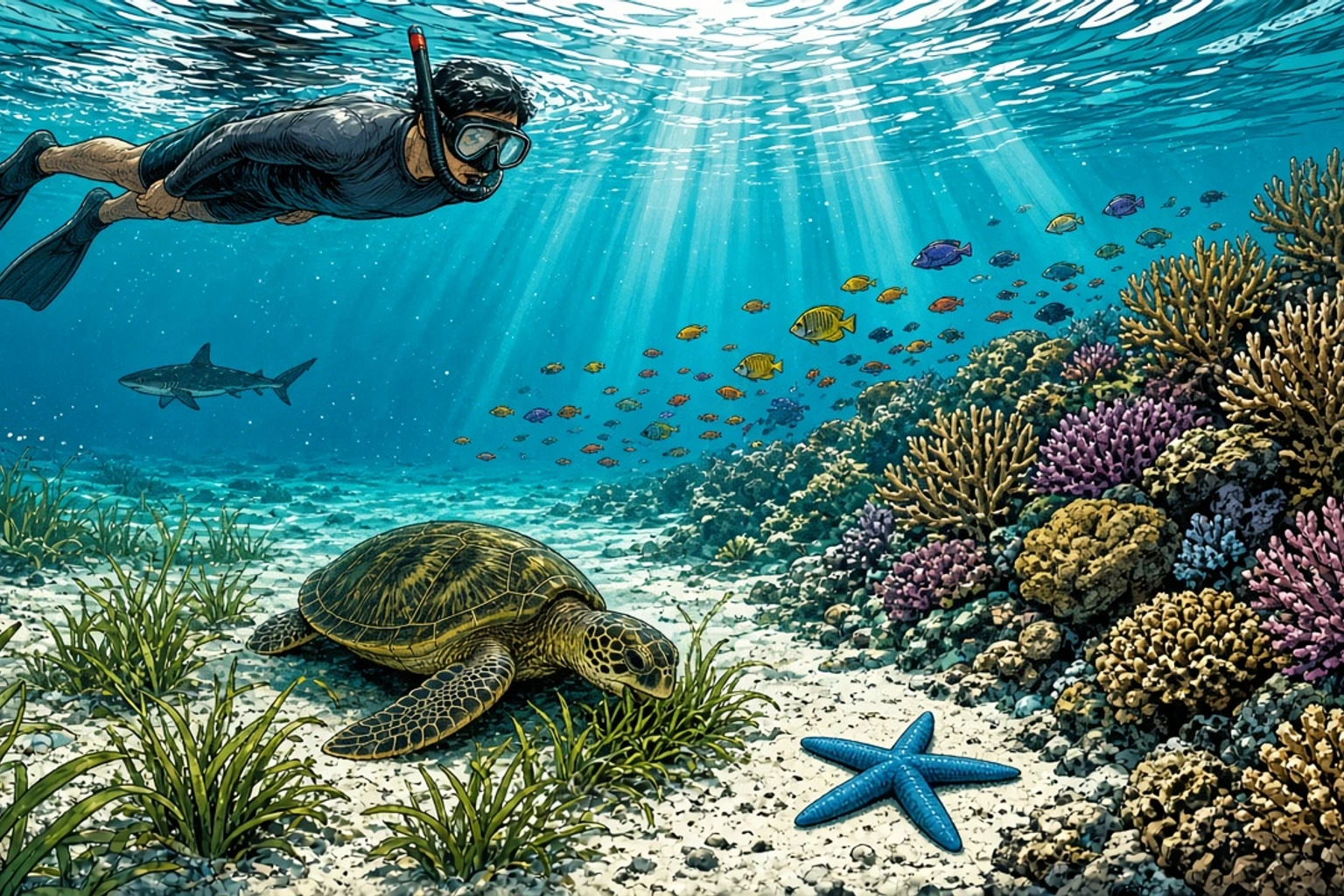
The underwater layout is easy to understand once you are in:
- The shallow flat. From the beach and the jetty, a sandy flat with patches of seagrass runs out at a depth of around 1 to 3 metres. This is where green turtles graze, stingrays rest on the sand and juvenile blacktip reef sharks, usually well under a metre long, patrol the shallows. Blue starfish are common on the sand.
- The reef edge. Further out, particularly off the northern end of the main beach, the bottom drops away from around 5 metres onto a coral slope. The top of the slope has hard coral, soft coral and dense schools of reef fish, and hawksbill turtles often rest here.
- Around the jetty. The pilings attract fish, and many snorkellers start here. It is also the busiest area for boats, so stay well clear when they are coming in or leaving.
Visibility in the dry season is typically 15 to 25 metres, and the water is usually 26 to 29°C. A 1 to 3 mm wetsuit or a rash guard is enough for most people.
Is Kanawa's reef still in good condition?
Mostly, yes, but it is not pristine. The reef around the jetty and the most visited shallows shows wear from boat anchors and heavy visitor numbers, and several visitors have reported broken coral near the pier. Swimming out and along the reef, away from the jetty, makes a clear difference. As with any reef, avoid standing on coral, keep fins high over the shallow flat and do not touch or pick up turtles or starfish.
Is it safe for beginners and children?
The shallow flat is one of the best places around Labuan Bajo for nervous swimmers and children, because the water is shallow, clear and usually calm. Currents on the main side of the island are generally mild, but they can pick up around the points and at the outer edge of the reef, especially during strong tides. Watch how the seagrass and sand are moving before you swim out, stay inside your comfort zone and ask the boat crew about the current that day. Life jackets and snorkel vests are usually available on tour boats.
Families planning a trip around calm-water stops will find more options in the guide to Komodo with kids, and the broader Komodo snorkelling guide compares Kanawa with the other snorkel sites in the region.
Will you see manta rays at Kanawa?
Not reliably. Kanawa is a reef and turtle site, not a manta site. The reliable manta encounters in the region happen at cleaning stations inside the national park, above all at Karang Makassar, better known as Manta Point. The guide to swimming with manta rays in Komodo explains where and when to go.
Can You Dive at Kanawa Island?
Yes. The reef around Kanawa is a regular dive site for operators from Labuan Bajo and the nearby islands, usually at depths of about 5 to 20 metres. It is used for check dives, refresher dives, beginner experiences and relaxed second or third dives after more demanding sites.
Divers following the reef slope can expect the same turtles and reef fish as snorkellers, plus more of the coral structure, occasional rays and a good selection of small creatures such as nudibranchs and shrimps for anyone who slows down to look. Most operators describe the current as mild on most days, although it can run along the outer parts of the reef. As with every site in the region, the dive guide chooses the side of the island and the direction of the dive on the day.
For a first dive without a certification, a try scuba diving in Komodo experience often starts on a sheltered reef like this one. Divers who want to get certified can find how the courses work in the guide to learning to dive in Komodo.
Honestly, many visitors get as much from Kanawa with a snorkel as with a tank, because so much of the life is shallow. The case for diving is the reef slope and the chance to stay longer underwater. The difference between the two is covered in the guide to snorkelling vs diving in Komodo.
How Do You Get to the Top of Kanawa's Hill?
A path leads from behind the main beach up the grassy hill in the centre of the island. It is an easy climb for most people, taking well under half an hour, with several viewpoints along the way and a simple hut at the top. From the summit you look over the jetty, the turquoise shallows and the chain of islands towards Labuan Bajo and the national park.

The best light is early in the morning or late in the afternoon. At midday the hill is hot, exposed and has almost no shade, so bring water and wear something on your head. The path can be loose and dusty in the dry season and slippery after rain, and trainers are better than flip-flops. You may meet goats on the way up.
From the top, trails continue down to the far side of the island, and it is possible to walk right around Kanawa on foot. Allow plenty of time for the full loop, and check with the crew what time the boat is leaving before you set off.
Can You Still Stay on Kanawa Island?
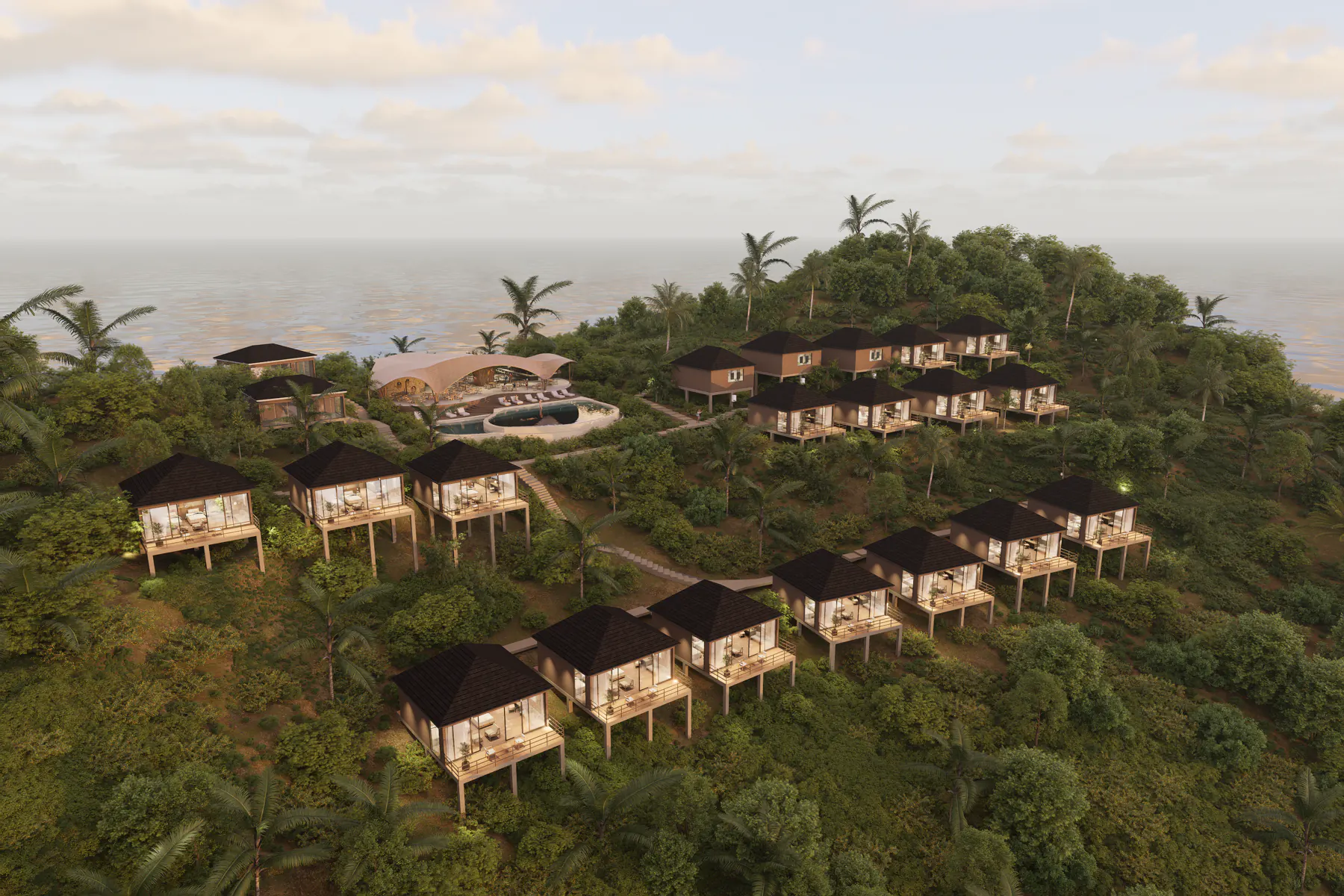
Not reliably. For years Kanawa was known for a simple bungalow resort on the main beach, popular with backpackers who wanted a few quiet nights on an island. That operation has run on and off for a long time, and by 2025 it had largely stopped. Visitor reports describe a mostly deserted site with limited water and electricity and a caretaker presence rather than a working hotel.
Some booking websites still show listings for the Kanawa Island resort. Do not book an overnight stay on Kanawa based on an online listing. If you are set on sleeping there, ask an operator in Labuan Bajo to confirm in writing that the accommodation is open, what facilities are working and how meals and boat transfers will be arranged. Occasionally, travellers have been allowed to camp with the caretaker's permission, but this is informal and not guaranteed.
Food and drinks on the island are limited and expensive when available. On a day trip, bring your own water and snacks, or check what the boat provides.
Where to stay near Kanawa instead
Travellers who want the same island setting overnight have two main choices. Labuan Bajo has the widest range of hotels, from hostels to five-star resorts, and every Kanawa trip starts from its harbour. The guide to where to stay in Komodo compares the areas and types of accommodation.
The alternative is an island resort. Komodo Resort sits on Sebayur Island, around 5 km west of Kanawa, with bungalows on the beach and a house reef of its own; from there Kanawa is a short boat ride away rather than a day trip. The guide to whether you can stay on Komodo Island explains the options for sleeping inside or near the national park.
How Do You Get to Kanawa Island?
There is no public ferry to Kanawa. Everyone arrives by boat from Labuan Bajo or from one of the nearby islands. The main options are:
- A shared day trip. Many "open trip" boats from Labuan Bajo include Kanawa, often with Kelor, Manta Point, Padar or the bat colony at Kalong. This is the cheapest way to go, although you share the timing with everyone on board. The guide to the open trip Komodo market explains how these work and what they cost.
- A private boat. Chartering a speedboat or a wooden boat lets you choose when to arrive and how long to stay. Prices depend on the boat type, the size of the group and whether the route enters the national park.
- A dive or snorkel trip. Dive operators in Labuan Bajo and on the nearby islands use Kanawa as a dive site and a lunch or surface-interval stop.
- A multi-day boat trip. Kanawa is a common first or last stop on liveaboards and overnight trips, because it sits so close to Labuan Bajo.
By speedboat, the crossing from Labuan Bajo takes about 20 to 35 minutes. A traditional wooden boat takes around an hour, sometimes more if the sea is choppy or the boat is heavily loaded. The guide to a Komodo day trip sets out what fits into one day from town, and why speedboat and wooden boat itineraries differ so much.
How Much Does It Cost to Visit Kanawa?
The cost of a visit depends mainly on the boat. The island itself charges a small landing fee, which has been reported at between IDR 100,000 and 150,000 in 2024 to 2026. Sometimes it is charged per person and sometimes per boat or group, and it is often included in tour prices. It is a local charge, separate from the national park fees.
As a rough guide for 2026:
- A seat on a shared snorkelling day trip that includes Kanawa usually costs around USD 50 to 120 per person, depending on the boat and how many stops are included. Speedboat day trips that also enter the park sit at the top of that range.
- A private boat costs anything from a few hundred US dollars for a simple wooden boat to USD 800 or more per day for a speedboat that also enters the park.
- Park tickets are extra for any part of the day inside Komodo National Park.
- Snorkel equipment is usually included on tours; fins and masks can be rented in Labuan Bajo.
Cash is essential. There is no ATM on the island and card payments cannot be relied on, so bring rupiah for the landing fee, food, drinks and tips. The guide to money, ATMs and tipping in Labuan Bajo explains where to get cash in town.
When Is the Best Time to Visit Kanawa?
The dry season, roughly April to November, brings the calmest sea and the clearest water, and it is the best time for Kanawa. December to March is the wet season, with more rain, stronger winds and choppier crossings. Kanawa is sheltered and close to town, so it is often still visited on days when the longer trips further into the park are uncomfortable or cancelled.
The time of day matters as much as the month:
- Early morning is the best window. The water is usually glassy, the visibility is at its best, turtles are feeding on the flat and most day boats have not arrived yet.
- Midday is busiest, with the most boats at the jetty and the strongest sun.
- Late afternoon brings softer light for the hill and quieter water on some days, although the wind often picks up after lunch.
In rough weather, the harbourmaster in Labuan Bajo can suspend sailing for all boats, which affects Kanawa trips as well as trips into the park. The guide to whether Komodo Island is closed explains when this happens. The month-by-month guide to the best time to visit Komodo Island covers the seasons in more detail.
What Can You Combine With Kanawa on the Same Day?
Kanawa's position near Labuan Bajo makes it easy to add to almost any route. Common combinations include:
- Kelor Island, a small island even closer to Labuan Bajo with a short, steep climb to a viewpoint and snorkelling off its beach. The guide to Kelor Island describes it.
- Kalong Island, where thousands of flying foxes leave the mangroves at dusk. This is usually the last stop of the day; see the guide to Kalong Island.
- Manta Point, for manta rays at the cleaning stations inside the park, when conditions allow.
- Padar and Pink Beach, on a longer speedboat day, with Kanawa as a relaxed final swim on the way back to town.
Because Kanawa is sheltered and shallow, it works well as the first snorkel of the day for people who have not snorkelled for a while, or as a gentle last stop after a long day in the park.
What to Bring to Kanawa Island
Facilities on the island are basic, so pack for a day without shops:
- Plenty of drinking water and some food or snacks.
- Reef-safe sunscreen, a hat and a long-sleeved rash guard, because the sun reflecting off the white sand and shallow water is intense.
- A mask and snorkel that fit you well; fins help on the reef edge.
- Water shoes or trainers for the hill and the rocky parts of the shore.
- Cash in small notes for the landing fee and any food or drinks.
- A dry bag for your phone and valuables on the boat.
- A bag to take your rubbish back to Labuan Bajo.
The Komodo packing list covers the rest of what to bring for a trip to the region.
Is Kanawa Island Worth Visiting?
For most visitors, yes. Kanawa is not the most dramatic reef in the region, and the dive sites inside the park have more current, more fish and more big animals. What Kanawa offers is a combination that is hard to find elsewhere so close to Labuan Bajo: calm, clear shallow water where beginners and children can see turtles and reef sharks within minutes of stepping off the beach, a short hike with one of the best views over the islands, and a beach that is still beautiful when the day boats have gone.
Go early, swim away from the jetty, climb the hill for the view and treat it as a day trip rather than a place to stay. Combined with Kelor, Manta Point or a sunset at Kalong, it makes a relaxed and rewarding day on the water. For planning the wider trip, the Labuan Bajo travel guide covers the town, and the Komodo Island itinerary guide shows how to fit it into three, five or seven days.